
Quantcast

Capcom Not Looking To Merge With Japanese Developers

By Ishaan . August 31, 2011 . 2:31pm

Capcom Not Looking To Merge With Japanese Developers

Faced with an evolving industry, game publishers across the world have turned to mergers and partnerships to remain relevant and better position themselves to interact with a wider range of consumers than in years prior. In the Americas, the merger of Activision and Vivendi to form Activision Blizzard is one such notable example.


In Japan, the 2008 merger of Tecmo and Koei comes to mind. If one were to look for a more recent example, the upcoming merger of Marvelous Entertainment and AQ Interactive, effective from October 1st, is an exciting prospect as well. Finally, we also have last year’s merger of Atlus with mobile games developer Index, both companies originally owned by Index Holdings. The year prior, Atlus themselves acquired Gonzo Rosso Online KK, an online content distribution company and MMO operator.


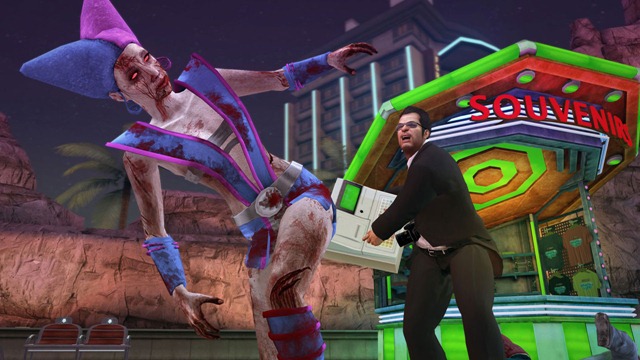
Capcom, too, have made few acquisitions over the last couple of decades. In 1991, they turned Yunika Co., Ltd, an arcade operator, into a wholly owned subsidiary. Then, much later in May 2008, they acquired K2 Co., Ltd, developers of Tenchu: Wrath of Heaven and Valhalla Knights: Eldar Saga. Finally, more recently in October 2010, they acquired Vancouver-based Blue Castle Games (now Capcom Game Studio Vancouver, Inc.), and set them to work on the Dead Rising series.


Going forward, it appears as though Capcom intend to focus on similar western acquisitions rather than Japanese ones. The company recently posted a note regarding their M&A (Merger & Acquisition) objectives to investors.


“Capcom must increase sales in the Consumer Online Games Business outside Japan, where the market for these games is larger and there is much more growth potential, in order to maintain growth,” the note begins. “Acquisitions and partnerships are one of the important strategies for increasing our market share overseas. We aggressively seek the opportunities of acquisitions and partnerships for the purposes of creating game content with universal market appeal and acquiring technologies and know-how required for our ‘Single Content Multiple Usage’ strategy.”


“However,” the note continues, “a merger with a large Japanese game or toy manufacturer is not being considered as a serious option since it would not make a significant contribution to growth in our overseas sales. Furthermore, this type of merger also poses the risk of limiting our activities involving the licensing of game content.”


At present, Capcom have multiple ongoing collaborative partnerships with western development studios. Enslaved developer, Ninja Theory, are collaborating with Capcom on DmC, a reboot of the Devil May Cry series. Meanwhile, SOCOM developer, Slant Six Studios, are developing Resident Evil: Operation Raccoon City.


Other partnerships in the recent past have included Swedish developer Fatshark (Bionic Commando, Bionic Commando ReArmed), Airtight Games (Dark Void) and Bionic Games (Spyborgs). In 2007, Capcom also contracted God of War: Ghost of Sparta developer, Ready at Dawn, to port Okami to the Nintendo Wii.


Read more stories about on Siliconera.

  • Guest

    Square + Enix _Eidos
    Bandai + Namco + Banpresto
    Sega + Sammy
    Koei + Tecmo
    Activision + Vivendi
    Takara + Tomy
    Konami + Hudson
    Nintendo + Monolith
    Microsoft + Bungie
    EA + Bioware

    • godmars

      Activision + Blizzard is far more relevant, especially considering how Blizzard had the monster which is WoW and yet went under the other company’s umbrella when they were facing issues with Rockband.

      Likewise Bungie wasn’t that big a company but bought themselves from under MS. 

    • MrSirFeatherFang

      Nvm my mistake :(

    • http://pulse.yahoo.com/_2WNP7FYA3VYJQKEYYV5GXH3K5Y yahoo-2WNP7FYA3VYJQKEYYV5GXH3K5Y

      Yes, but let’s not forget about the minuses as well. Microsoft purchased Bungie, but then they went and closed down Ensemble Studios (Age of Empires).
      Another example would have to be EA. They purchased Bioware, but then went and closed down Pandemic Studios(Mercenaries).
      Where there is a plus, there also has to be a minus unfortunately. 

  • Tom_Phoenix

    “Faced with an evolving industry, game publishers across the world have turned to mergers and partnerships to remain relevant and better position themselves to interact with a wider range of consumers than in years prior.”

    More like faced with an ailing industry. Aquisitions and mergers are a surefire sign of an industry in trouble.

  • http://pulse.yahoo.com/_Q6NXXGMO5XNSMJ64NIHYHFP56A Vince

    Whaaaat? Too much pride Capcom? Does a merger mean the end of cash milking of gaaaaames? >: D

  • http://twitter.com/Pedazodezoquete Gabriel

    As for Capcom’s business practices, I think they are looking to partner with Activision, you know rehashing games, and selling lots of useless DLC…

    • http://pulse.yahoo.com/_Q6NXXGMO5XNSMJ64NIHYHFP56A Vince

      And earning fan criticism a lot.

    • Thomas Maloney

      At least DICE doesn’t charge you $15 for lousy map packs :V

      • Neckbear

        Say that to EA.

        • Thomas Maloney

          What do you mean?

          They don’t XD
          This isn’t CoD we’re talking about.

      • xXDGFXx

        yea, but at least activision release map packs. the vip crap was all just redone maps already included. later on, vietnam comes out with a price tag for everyone, vip or not.

  • pressstart

    “We aggressively seek the opportunities of acquisitions and partnerships
    for the purposes of creating game content with universal market appeal
    and acquiring technologies and know-how required for our ‘Single Content
    Multiple Usage’ strategy.”

    Nah, they want to expand their milking and porting :P

  • http://www.facebook.com/santd Daniel Sant

    “Going forward, it appears as though Capcom intend to focus on similar
    western acquisitions rather than Japanese ones. The company recently
    posted a note regarding their M&A (Merger & Acquisition)
    objectives to investors.”

    I’m not an expert economist or anything, but I’m pretty sure this is a trend for larger Japanese companies on a general scale, not just the gaming industry.  For example, Asahi just flat out bought a large beverage company in New Zealand for a billion+ dollars.  The yen is so strong now that its hard for Japanese companies to keep up with domestic costs.  Their money goes a lot further when investing over seas, so the natural progression for them is to branch out.  So, this is in a sense smart for Capcom, since they simply seem to be taking advantage of the yens strengths and evading its weaknesses.

    (Similar to why so many jobs are sent to China.  Of course there are other factors, but their currency is artificially made weak by the Government so that its cheap to operate there.  Meanwhile, Americahasnojobs.)

    Especially when other currencies like USD get weaker because of US problems (debt cieling fiasco also caused a jolt in Japanese markets) people invest in Japanese currency because it is seen as safe, which, this might seem a little counter-intuitive, but it makes it harder for Japanese companies to operate.  Which sucks for them, because they are very dependent on exports, and this makes them less competitive.  Er…what was my point again?

    Uh, so what I was trying to say…This seems smart of Capcom on the immediate end.  Of course I’m no expert, but personally, if possible, I think outright BUYING studios is much smarter than outsourcing.  Outsourcing I’d consider as an evalution, like, “okay, lets see what you got, make a game for us (and if you’re good I might consider buying you altogether).”  On the other hand, outsourcing will end up biting you in the ass since you are basically training your potential competition.  Ninja Theory’s ass is on the line right now, but when they are finished with DmC they could be more uh…competent than ever before.  And then what if they don’t want to bother with Capcom anymore, who (could possibly, in a dumb version of the future) no longer has their own means to develop, because they abandoned all of their internal studios.  So yeah, you might save a couple million dollars on the immediate end but what are the long term effects of relationships like that?  Are you really positioning to make your company more competitive or are you just handing off the torch to someone else? 

    IMO, they gotta get in more on the acquisition side, so far its too much partnerships only.  Square-Enix seems to be ahead of the curve on this front, since they’ve already outright purchased some very talented studios, who THEMSELVES had great IP, experimented with outourcing, trimmed the fat, etc. So they are in a great position moving forward. Bleh there were some other points I wanted to bring up but this is getting too long already x_x;;

    • http://www.siliconera.com Ishaan

      Great post. I wanted to reply to this yesterday but couldn’t find the time. 

      You’re right in that outsourcing is definitely one way of evaluating what a studio is capable of, and I think that line of thinking is probably more logical than getting into acquisitions right away. I don’t know how Blue Castle + Capcom happened, and it’s great that it’s working out for them, but it could just as easily have gone the other way and not worked out.

      Sometimes, developers just don’t know what to do with certain studios any more. This is just an assumption on my part, but Namco and Monolith Soft come to mind. Why would you want to hand a talented studio like Monolith off to another company (Nintendo in this case) unless you had no idea what to do with them? I mean, they were developing Dragonball DS games…

      On the flip-side, looking at it from Nintendo’s perspective, they probably did think ahead to how Monolith could benefit them in the long term when they made the deal, and as we’ve learnt from Xenoblade’s development, proceeded to train them to develop games the way Nintendo do, NOT the way they were used to developing under Namco. Now they’re even funding a new Monolith studio in Kyoto, closer to their own headquarters, which is a fantastic growth opportunity for Monolith Soft.

      Again, that’s a case where everything worked out, but it could have gone very wrong and been a giant waste of money. For example; Retro Studios had four cancelled projects before one of them (Metroid Prime) finally clicked. 

      Coming back to Capcom and Blue Castle, it appears to be the same situation. Blue Castle got acquired and turned into a Capcom studio, which means there’s  a cross-cultural exchange and both companies learn a little something from each other. Hopefully, they’ll continue to be useful to Capcom well past their work on Dead Rising.

      Honestly, I’d love to see Capcom expand more with western acquisitions, too. They’re already a fun mix of East-meets-West type of design, so I don’t think having more western studios would make too much of a difference at all…especially when they’re studios like Ninja Theory with such strong personalities of their own. That’s super-important, imo. You want studios with their own personalities and voices that make people take notice of them.

      But again, I think they need to be careful. Look how Fatshark (GRIN) and Airtight Games turned out for them. After being stung so many times, I doubt they’re eager to rush into an acquisition uninformed.

      • http://www.facebook.com/santd Daniel Sant

        Thanks for the reply! haha

        Yeah, I agree with what you are saying.  There are definitely a lot more factors to consider when it comes to making a purchase or doing a collab, and though I was advocating acquisition pretty strongly in my previous post, you’re right, you definitely have to be prudent and not get stuck with a new branch that isn’t satisfying.

        I think the main thing I just want to see Capcom avoid though, is becoming one of these companies that just wants to license their ideas–where your only assets are your intellectual property. Out of all the Japanese powerhouses I think they scare me the most here.  Again I’m no expert but I don’t think that’s a very secure or healthy way to run business.  If all you do is contract outside companies, well, for one, those companies would have tons of leverage, and you’ll have to kiss their ass more as you’re more dependent on them.  If you don’t satisfy them enough, eventually they could just bounce and make their own IP.  I think Capcom is already getting bitten in the ass by Platinum for letting them go, now working a lot with Sega, especially with Bayonetta since its so similar to Devil May Cry, so we can already see this.  And even Monolith I think was started by and comprised of some old Squaresoft employees if I recall correctly. What I hate to see the most, is when IP are basically held hostage (some more than others) after developers break off. Sometimes you get a brief reprise like with Tactics Ogre, but gah, its so frustrating!

        In the end, I’m probably thinking with too selfish a frame of mind. I’m sure there are more uh, positive feelings at work here too, since everyone finds their niche in the economy, etc. like with Namco, Monolith, and Nintendo (and even Square Enix if you want to go that far back). I guess this is all just competition, which is ultimately healthy for everyone (unless you die). Yay capitalism!

        • http://www.siliconera.com Ishaan

          Yea, talent definitely is more important than I.P. The rest of the investor note actually did make mention of that; I just didn’t post it because it wasn’t directly connected to the subject about western acquisitions. Here’s what it says:

          “We have never made any takeover bids (TOB). We understand that the human resources that create content are the most important assets in the entertainment industry. With a TOB, employee departures could significantly erode the value of the acquired company. We believe choosing an appropriate partner company that complements our strengths will lead to subsequent successful acquisition and contribute to the growth of our business. The first objective, therefore, is to form partnerships that meet our needs as well as those of our partners.”

          So it does seem like after so much talent leaving the company, they might be starting to understand the importance of retaining their creative leaders. Or rather, they’re looking to acquire new creative leaders from the west in a more harmonious relationship than they might have afforded their studios in the past.

  • skymap

    Well, naturally they want to merge with other western companies such as themselves.

Video game stories from other sites on the web. These links leave Siliconera.

Popular