

 By
By 
Editor’s note: Do note that some external links in the following post may be NSFW. Hiya, this is EvoSpace, translator at MangaGamer.com! As some of you know, in Japan, there exists a unique genre of games that is almost unheard of in the western world. The bishoujo (pretty girl) and visual novel genre. Some of the most famous titles in the genre include games like Clannad, To Heart and Fate/stay night. I’m sure people have heard of the term “Hentai games” before, and it is true that sexuality is one aspect of these games. However there’s a lot more to visual novels than just sex. I would like to borrow this space to introduce this genre, beginning with its roots, and touch briefly upon its different branches. The first bishoujo games date back to the early days of personal computers, even before the Windows operating system came into being. In the 1980s to early 1990s, on unique platforms such as the MSX and PC98, game companies began to hand-draw attractive anime-esque female characters, using pixel art, and added pornographic elements to these games, in order to differentiate themselves from regular, “boring-looking” games. Even big name Japanese companies today, such as Squaresoft (now Square Enix), were part of the bishoujo game revolution (look up Alpha for PC98 — Nobuo Uematsu and Hiromichi Tanaka worked on it as one of their earliest projects!) during this period. Even Enix produced their own offshoots of visual novels well into the Nintendo 64 days.
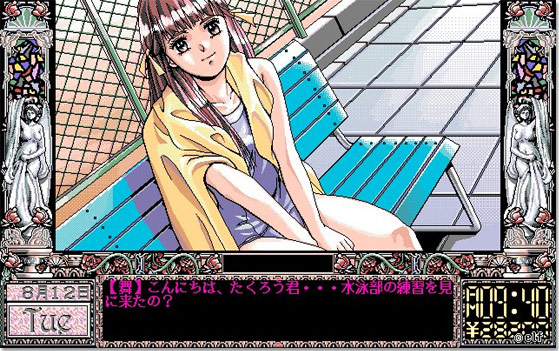
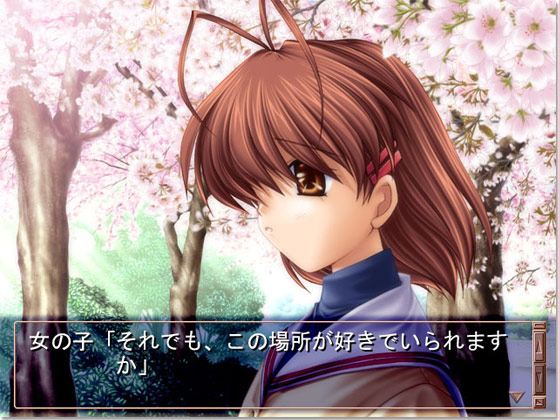
Since bishoujo games were a branch of regular PC games, many of them incorporated actual gameplay elements, essentially making them RPGs and puzzle games. In a sense, these games were — and still are — ahead of their time, as they not only include conventional game mechanics, but also deal with sensitive topics most games tend to avoid, such as love, relationships and sex. When discussing the rise and influence of the bishoujo and visual novel genre, several games deserve a mention. One of these is Dokyuusei, developed by ELF in 1992, which was a game where you would try to hit on school girls, which later became an established part of what we now know as dating-sims. The spirit of the dating-sim continues to be upheld today, even in more mainstream games in Japan, such as Konami’s famous Tokimeki Memorial and Love Plus, Sega’s Sakura Wars, and of course, Atlus’s recent Persona games. While these games peacefully simulate interaction with a virtual girlfriend, the bishoujo games on PC have continued to evolve in their own way. I believe a major turning point was Leaf’s Visual Novel series in 1996. Their first two games, Shizuku and Kizuato, were text-heavy games, just like the term “novel” implies, but with character art, CG, and music. And these weren’t just your average novel, but a well-executed story with sci-fi elements. This, coupled with the colorful expressions of the bishoujo characters, brought forth a strong emotional stimulation. Personally, I believe this expanded the limits of a simple “picture story.” Leaf later released To Heart, a normal school-love story compared to their previous games, but they kept up the same spirit of emotionally touching story-telling. Meanwhile, other companies began to emerge with their own versions these games. Key are the first to come to mind. Their series of titles — Kanon, AIR, and Clannad — continue to raise the standards of the genre higher, even today, in terms of artwork, soundtrack, and character-building. Their latest major release, Little Busters!, is likely the single most popular title in the genre today.
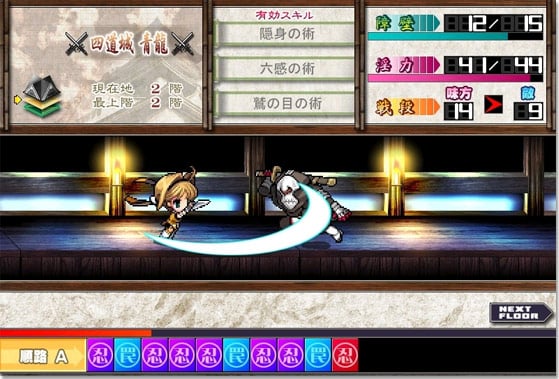
But Key aren’t the only company with an influential claim to fame. Visual novels are a diverse genre, and there’s plenty of room for variety. One example is Nitroplus, which makes dark titles such as their first work, Phantom of Inferno, which features a female assassin working for a Mafia group based in Los Angeles. Then there are companies like Alicesoft, who continue to expand the scope of gameplay-based bishoujo games by incorporating RPG elements, but never developing for console. Of course, there are many others that choose to adhere more to the pornographic aspect as well. Another unique trend seen today is the outbreak of doujin (fan work) bishoujo games. Type-Moon, now famous for their Fate/Stay Night franchise, were originally working on their first creation, Tsukihime, within the confines of a doujin convention. There are many other companies and groups such as August and 07th Expansion — known for their thriller, Higurashi — who have eventually become commercial or famous from creating doujinshi. The niche doujin world where the authors can freely express their imagination and talent was a perfect fit for the also-niche genre of visual novels.
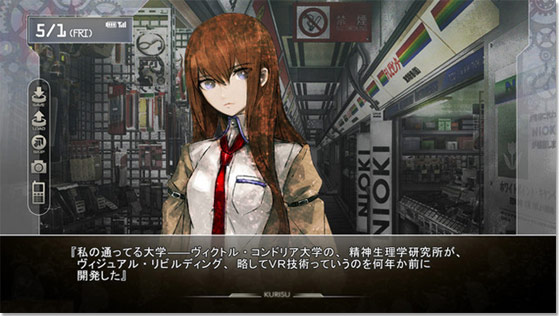
One of the reasons visual novels are continued to be released primarily on PC is the low cost of production and relatively “loose” restrictions associated with the platform. However, some of these games are also ported to consoles, in an attempt to reach a more mainstream audience. This trend began during the days of the Sega Saturn and original PlayStation. After all these years, the market has grown itself to the extent that some visual novel companies are able to release their products on consoles first — such as Nitroplus with Stein’s;Gate — and port to PC later. I personally used to play a lot of RPGs, especially because of their fascinating stories and characters. Nowadays, I’ve been digging into visual novels a lot more, partly because of my job and partly because if you want to experience great stories and characters, I’ve realized they do a surprisingly better job with those elements. After all, this is what the genre built a name for itself on. Of course, the “novel” aspect makes one wonder whether these products can still be classified as games. However, for those that are curious, this is an extremely interesting world to look into…! Next time: In my next post, I would like to start introducing and discussing classic bishoujo games and visual novels, whether they have been translated to English already or not, especially for those who are new to the genre! MangaGamer are a global publisher of visual novels and have localized popular games such as Higurashi no Naku Koro ni, Shuffle!, and Da Capo. You can learn more about their games at www.mangagamer.com. Developers, are you interested in guest blogging? Contact us at [email protected].