

 By
By 
Siliconera’s conversation with visual novel localizer MangaGamer continues, as we discuss differing tastes in eroge across the East and West, and talk about why some of those incredible-looking games you’d think would be a shoo-in for localization haven’t been published outside of Japan yet.
Participants:
Localization Editor, MangaGamer – EvoSpace
Siliconera – Ishaan
 Ishaan: You recently started up a MangaGamer blog, and it already seems to be attracting fans that like being able to interact with the team, which I was really happy to see. Whose idea was that? Can you talk about how it came about internally, because even more relatively mainstream Japanese game publishers don’t have their own blogs yet.
 EvoSpace: The idea of the blog was there from a while ago, but there wasn’t anyone who was fit for writing. Just recently, one of our ambitious translators said he would do it, and I hopped onto it as well.
I’m glad we did because till then, we probably looked like a site that releases games like a factory. We also have a column section ready but we haven’t figure out how to implement that one yet.
Ishaan: Now, this is a question I’ve seen a lot of fans ask: why is it that we don’t see some of the really interesting games making it over in terms of localization? The situation has definitely improved in recent times, but there’s still a lot of interesting games out there that no one seems to be picking up.
EvoSpace: I can only say that there are many issues of business involved.
Generally speaking, these visual novel companies are running on a tight fund and schedule. Many of them only have enough staff and funds to concentrate on their next project, and can’t think or move so broadly yet.
There’s also a special nature of Japanese people, where they feel an obligation to the companies around them. Let’s say a company is working closely with “Distributor X” within Japan. They may feel hesitant to sell their games worldwide without talking to them first and/or the distributor may decline. It could also be a political thing.
The bigger companies also consider the simple matter of trust and image, and don’t want their title to go to waste when the market is still small or unknown. The localization companies themselves are also small, so they probably can’t work on so many titles at once.
For the reasons above, negotiations could take a long time, and must be communicated through the right people, instead of a random company going directly to them. Not to mention, there could be a gap between the interests of the current western fans, what actually sells, and which companies in Japan are actually interested in the world market.
Until the market is stable, until more consumers actually make purchases from the respective localization companies, I think the situation won’t improve. Hopefully that will be soon though.
Ishaan: So, a lot of publishers would rather not sell their game overseas at all, than have it sell to a small audience?
EvoSpace: I just merely pointed out some reasons they might feel reluctant. I can’t speak for all the different companies, but I’m sure many of them want to wait and see first. It’s now up to us localization companies to open up a path so many developers can follow suit without any risk.
Ishaan: What do you make of the western markets for these games then? Are there any trends you’ve noticed that differ significantly from Japan in terms of the kind of games that tend to be more popular than others?
EvoSpace: There is an obvious difference in taste in Japan and the western market, especially in the area of artwork.
I notice English-speaking Asians tend to have similar tastes to the Japanese — the moe style of work that’s popular right now — but most others usually like something more graphical with busty characters. Our site will have both kinds of games, but I would personally like to push the moe titles because they are usually the ones with more content. But at the same time, they tend to be long and text-heavy, so it might be difficult for starters and casual fans to get into.
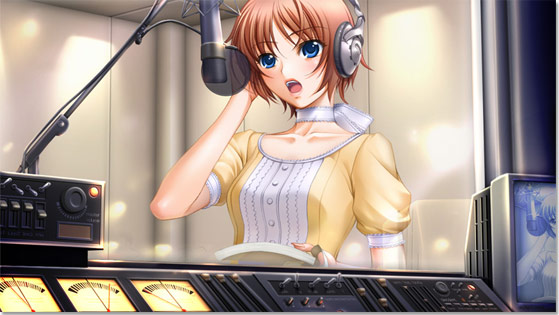
Ishaan: For the sake of reference, would you define KiraKira as "moe," or is that somewhere in between moe territory and a more "realistic" art style?
EvoSpace: I would say KiraKira is in the moe territory.
Missed out on part one? Read it here.