


 By
By 
There are few games as easy to explain as Beyond Words: it’s Scrabble Balatro. If you’ve played those two games? You’ve got this one sorted. And there’s value to that! But is there more than meets the eye? Let’s explore.
It’s wild how much they want you to know it’s from the designers behind GoldenEye and TimeSplitters, because as far as we can tell, no design was done here at all. This is the exact formula of Balatro, copied and retained with no regard for what would work better or worse changing out poker for Scrabble. Tiles have two types of modifications because cards did in Balatro. Power cards copy jokers in the same way. The same for how the shop works, and how booster packs work, and… you get it! These things aren’t necessarily bad on their own, but it can’t help but feel unsavory and we certainly didn’t get anything here from “the minds behind TimeSplitters.”
On the other hand, they did seem to have programmed some stuff! For an indie effort, it does feel polished, and we didn’t encounter any bugs (which is rare for what we do, the first few days of public availability understandably do a lot for most games). The dictionary in use here, though, is a strange one. Extremely normal words are missing (like “itch”), while some real weirdos are fair game. This isn’t a huge problem as long as you’re at peace with trial and error a little bit while placing a word! Oh, and as long as you avoid the timed runs. Not a great combo! We had a lot more frustration at the dictionary during those.
Oh, and they’re responsible for the aesthetic.
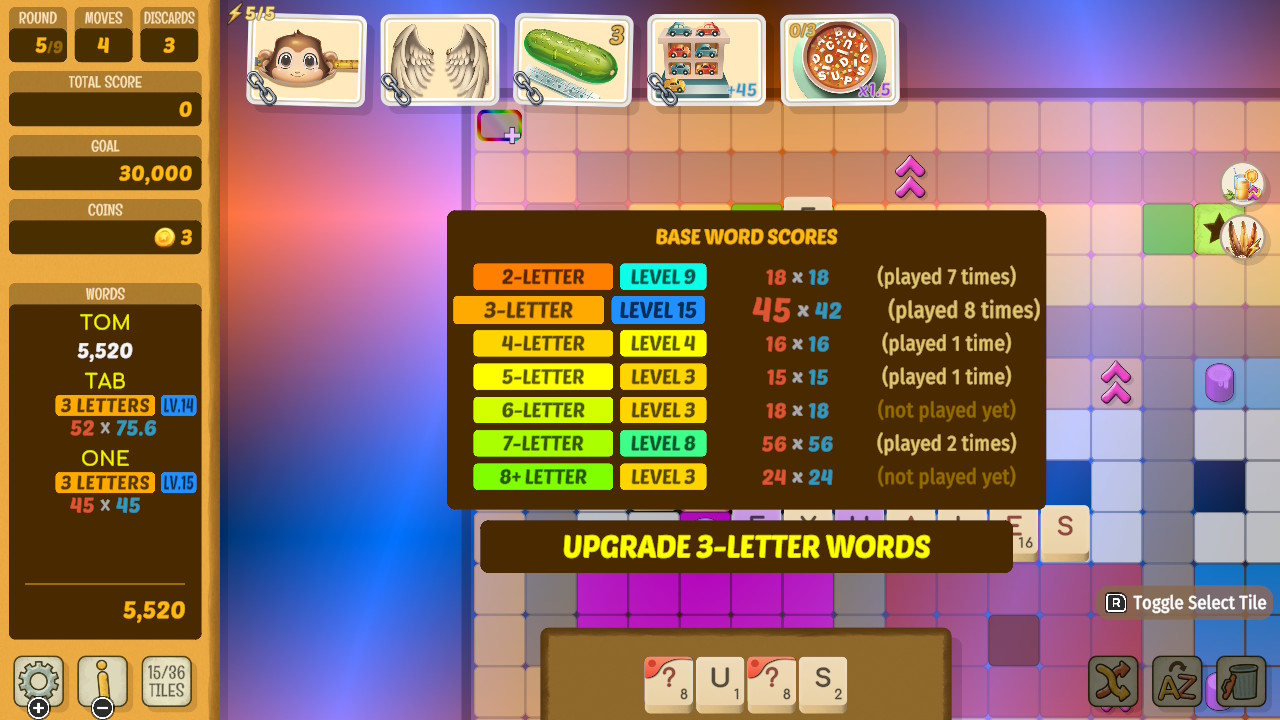
The final release, to our knowledge, contains no AI art (or else we wouldn’t cover it). However, the demo originally featured allegedly generated illustrations, and though the team hired professionals to redo them, this game shows how using that at any point in the process is harmful and bad. This game looks boring and soulless! And all the references feel like “what’s popular on the Internet in the 2000s.” Monkeys, zombies and robots are here in large number. Why? Who’s to say. Combined with the hyper-generic sound effects, Beyond Words feels like a mobile game you’d see in a YouTube ad and skip as fast as possible.
It truly is a shame, because there are some compelling elements of the game! Playing Scrabble by yourself is fundamentally different, since you are encouraged to set yourself up for later rather than avoid making opportunities for your opponent. And the persistent board means that a run is much more about what you’ve done before than just changing your loadout. It’ll train your brain to look for not just high-scoring words, but words that can become other words with one more letter. And also two? How about three? Arm, Warm, Swarm, Swarms.
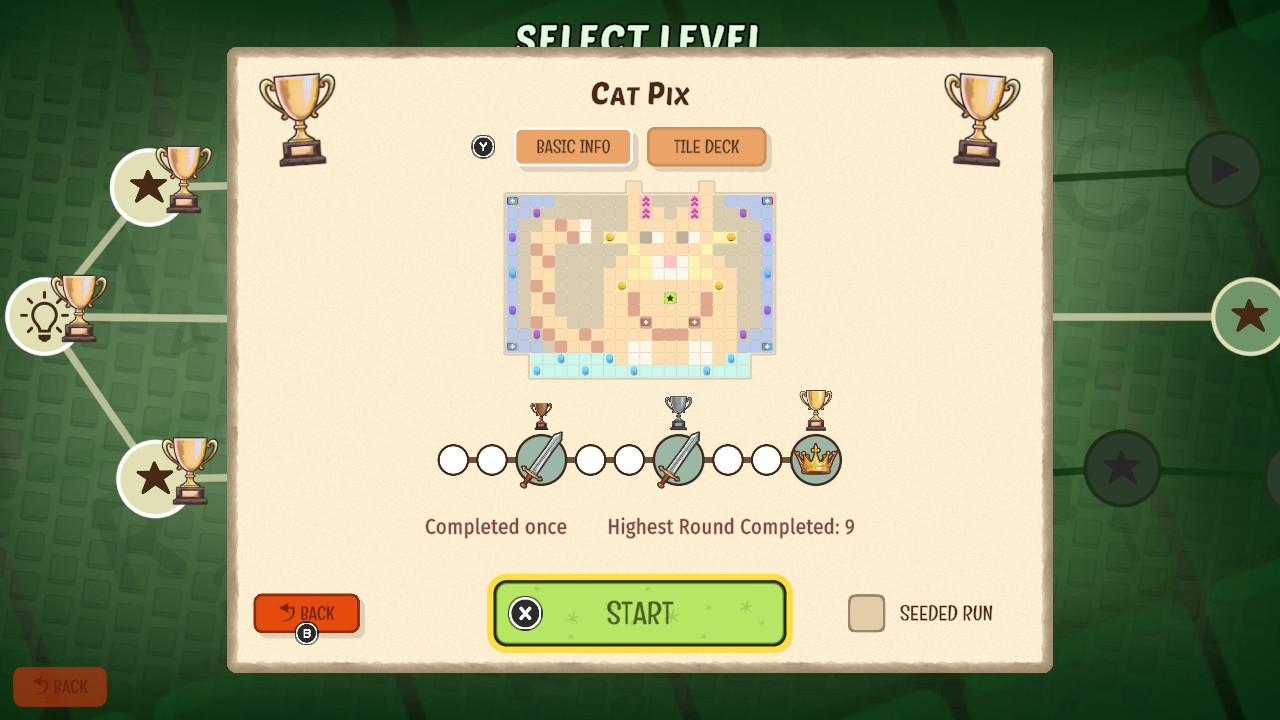
The scale of each run is steep. We found a lot of success slow-playing in the early game, making words that could be amended and using moves to power up the build rather than actually make a big word. Is that good? It’s hard to say. But there are tons of games on the market that unreservedly reward wordsmiths, so we’re happy to have something with a different appeal.
A minor gripe: as we’ve been taking a look at the Switch version, we’ve played with a controller. The mapping is inconsistent, with the R button meaning select a tile to use it with something, but an instant sell for the power cards in the top row. The sell button should probably be the same as the discard tile button, as we’ve accidentally sold stuff more than once.
If we sound bummed about Beyond Words, it’s because we are! Fundamentally, when playing the game, we’re having a decent time. This combination is a good idea! And it’s okay to borrow game design elements here and there when you know they work. It’d just be a lot better if it was done with some craft and care, giving the game its own look and molding its own ideas of what abilities and progression systems can be.
Beyond Words, developed by MindFuel Games and published by PQube, launches April 9, 2026 on PC, Switch, PlayStation 5 and Xbox Series.