


 By
By 
When I first learned about InKonbini: One Store Many Stories, I figured it looked like a very relaxed life simulation about working in a Japanese convenience store, but now I realize it’s more an experience about the atmosphere and vibes. It’s more about the concept of it and the people who can show up around those late hours in the evenings and early hours of the day. It’s like a slice of life anime or manga! Of course, the downside means if you head into it hoping for more of those management elements, extended experiences, or even consequences, you’ll be disappointed.
Makoto is in town for a week before classes start, but she’s not relaxing. Instead, she’s doing her Aunt Hina a favor. She’s temporarily filling in at the Honki Ponki convenience store. It’s a small town and it’s not very busy, meaning she can spend her nights taking her time and getting to know the people who come in the late evening and early morning. By getting to know them, she’ll come to understand why this place and position is so special to Hina. At the same time, it shows how important the services it and its employees provide can be.
Since this is more of a temporarily life sim and experience with visual novel elements, InKonbini: One Store Many Stories is a game that feels like it’s about the vibes and existing in the moments. Every shift begins with Makoto thinking a bit about the current situation and evening. Perhaps she’ll get nostalgic about things. Maybe she’ll contemplate the weather. In some cases, you’ll have time to set up and check out the store before it opens. This allows you to see notes and instructions left by folks on the day shift, restock shelves, add to existing delivery orders, and rearrange things that got misplaced during the day. You can also check out little elements in the store and staff room, which might lead to finding little insights and secrets.
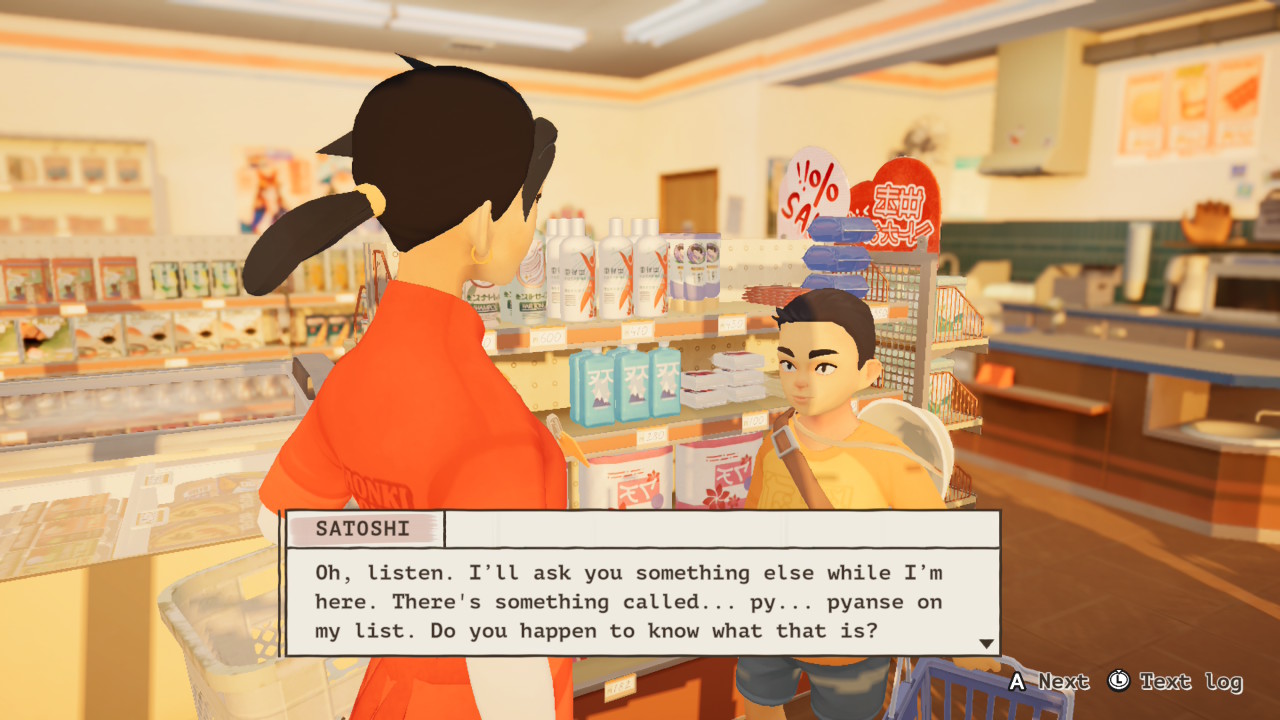
Once a shift begins, it isn’t as though folks will constantly be coming in to buy things. That’s when InKonbini: One Store Many Stories feels most like a visual novel. Someone comes in, and walking up to them triggers a greeting. Maybe a callback to a past conversation. They’ll then amble around the store, occasionally asking you to find a product or make a recommendation. This means checking items in sections or storage and reading decisions to make an informed choice. They might also bring up something about themselves, leading you to offer some insight or an opinion that might determine what they do next. You then ring them up when they’re done, scanning each item and handing out proper change. (Don’t forget Satoshi wants his in 25 yen coins for the capsule machine!) Once that’s done, you wait until the next visitor or two stops by and your shift ends.
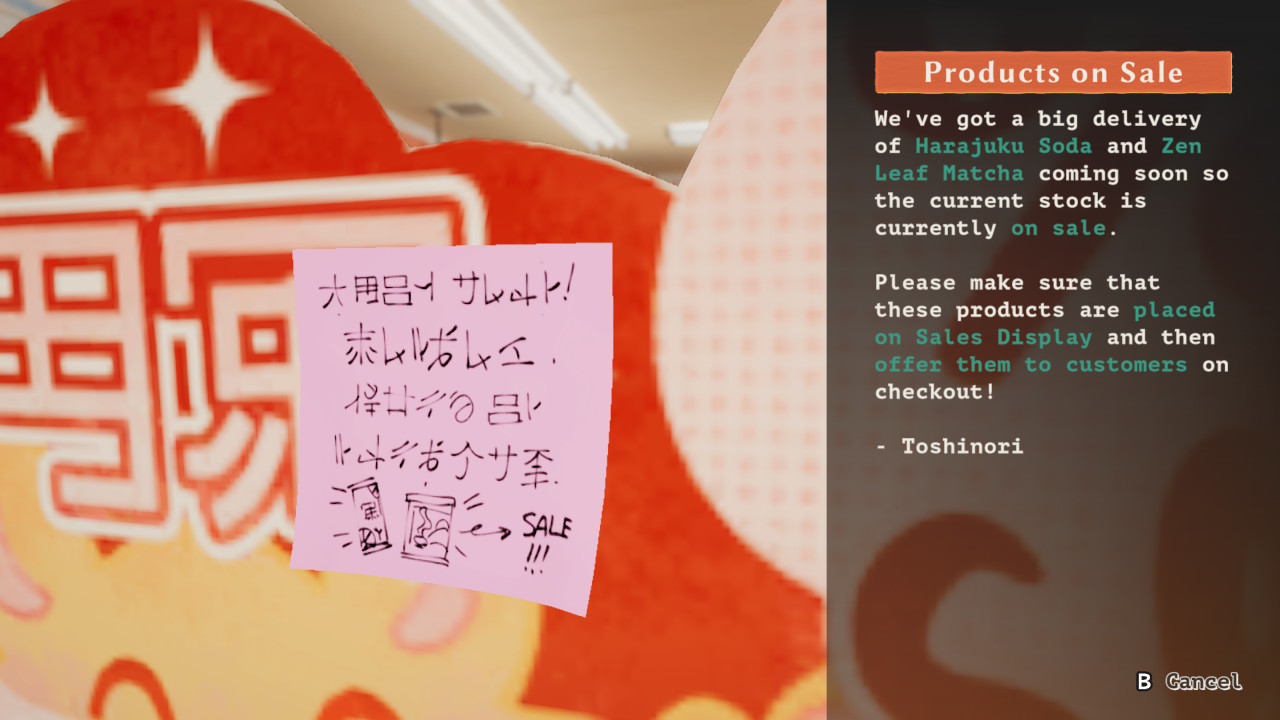
I mentioned earlier that InKonbini: One Store Many Stories is a game in which it feels like consequences don’t apply to you, and I think that’s one of its weakest elements. Especially considering it is more about the vibes and experience than actively managing a shop. When you start the game, the first evening involves an explanation about an employee handbook, paying attention to post-it notes from other staff members, and restocking. The thing is that in practice, none of that matters. Did you not grab the exact item somebody wanted? They’ll be fine, take what they’re given, and their story advances anyway. I didn’t move the ice cream that was incorrectly placed because I wasn’t aware that, oh right, I could put it in the storage freezer? It wasn’t wasted. There’s a warning about a specific customer giving a cat milk? I can’t tell the person who is going to buy it, “DON’T GIVE YOUR CAT MILK.” At one point I forgot to move products on sale to the sale shelf, but I still got a message the next morning saying I did a good job of doing that and they sold out.
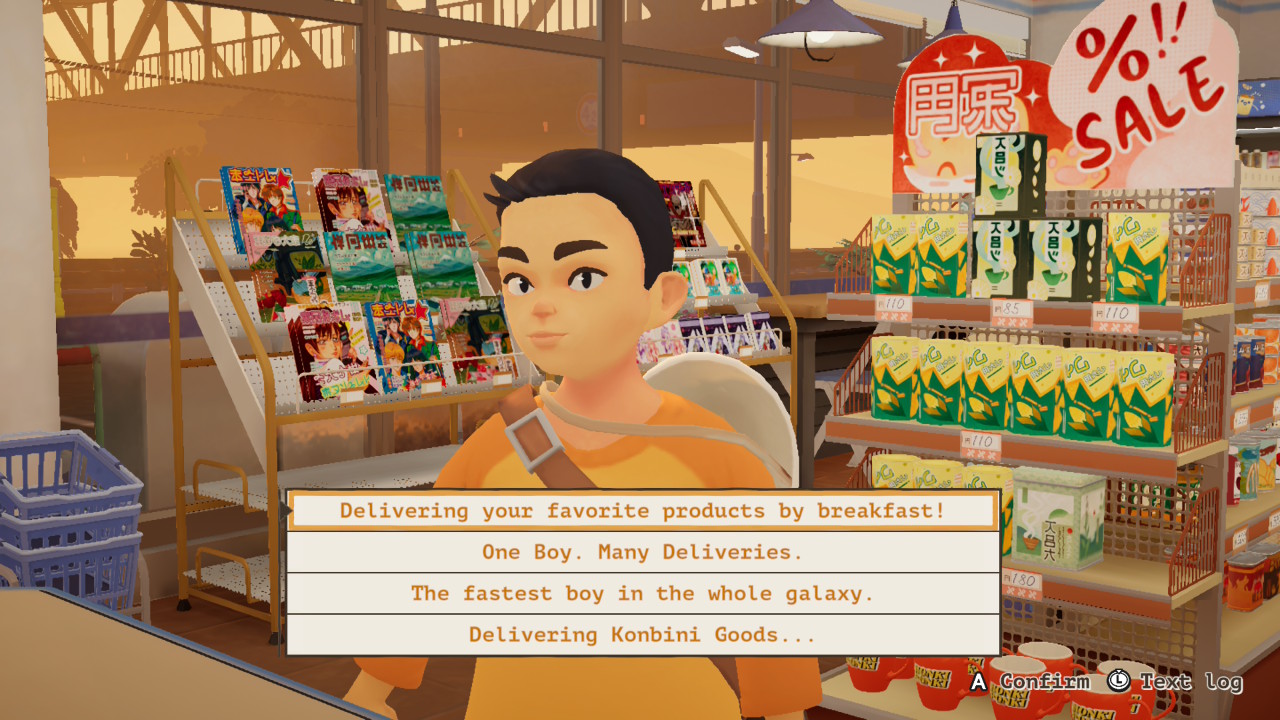
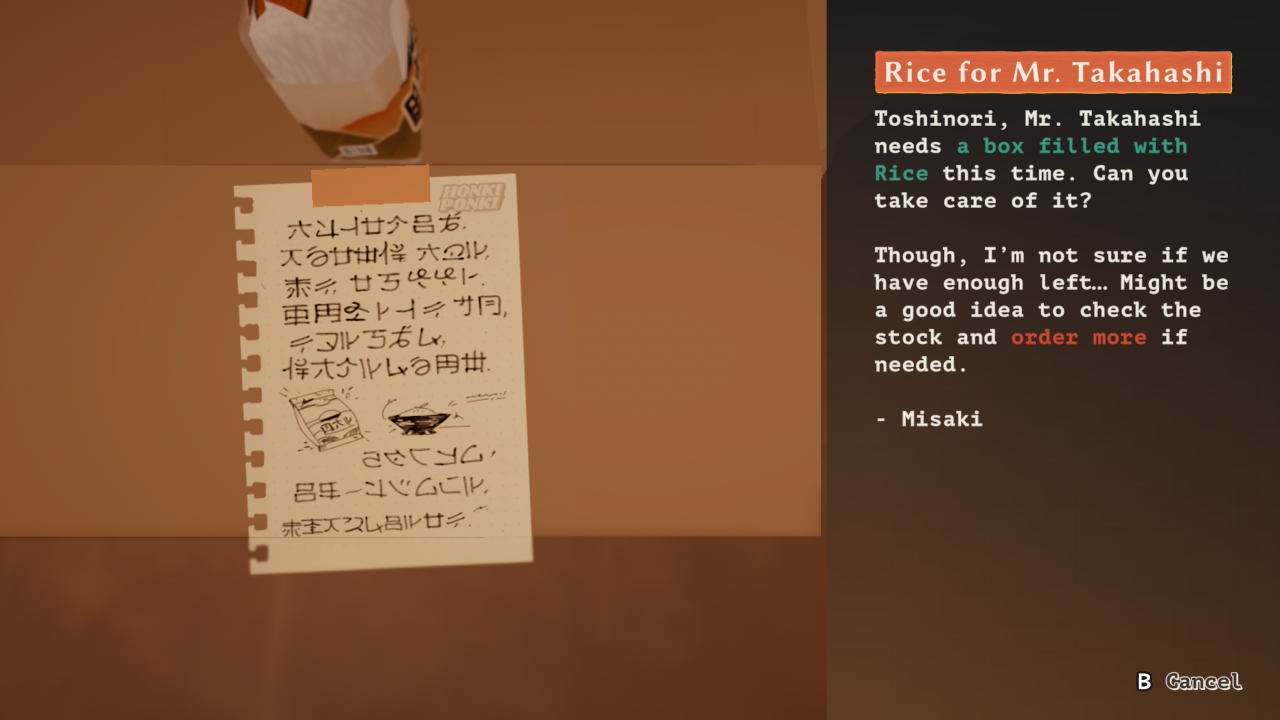
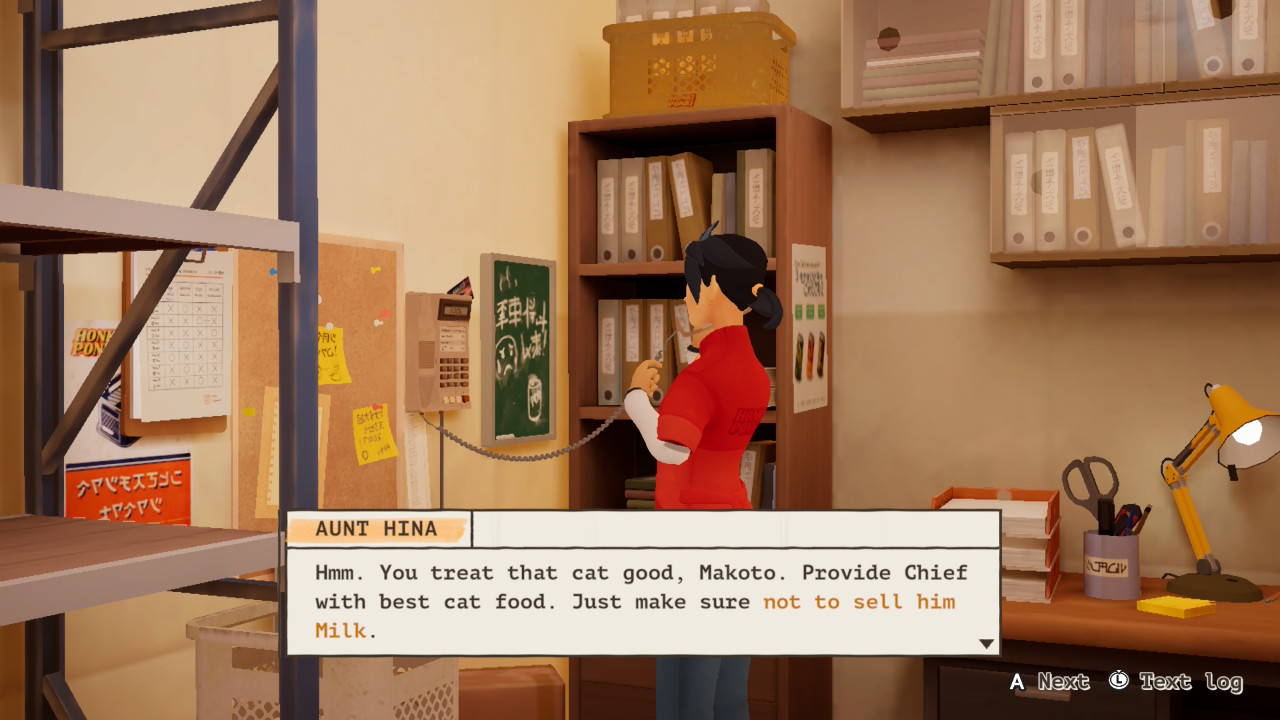
Touching on that point, the nature of InKonbini: One Store Many Stories also made it feel like sometimes there would be elements that would be used more often, but weren’t. They’d come up once or twice, then fade away. If this was a game with an endless mode to it after the original story mode, I could understand that choice. But why even call attention to a concept or element if it won’t matter? Or bring up the idea of doing something like, say, placing an order over the phone when I’d get the extra milk needed whether or not I did it? Was it a bug or genuine example of things not really mattering in the grand scheme of things?
Speaking of bugs, another odd issue would come up in the Switch version of InKonbini: One Store Many Stories. Sometimes, text responses in conversations would all appear black. Which you’d take to mean you hadn’t said any of them yet. But sometimes, these were in a darker orange as though they’d already been selected even though I’d never chosen any of those responses before.
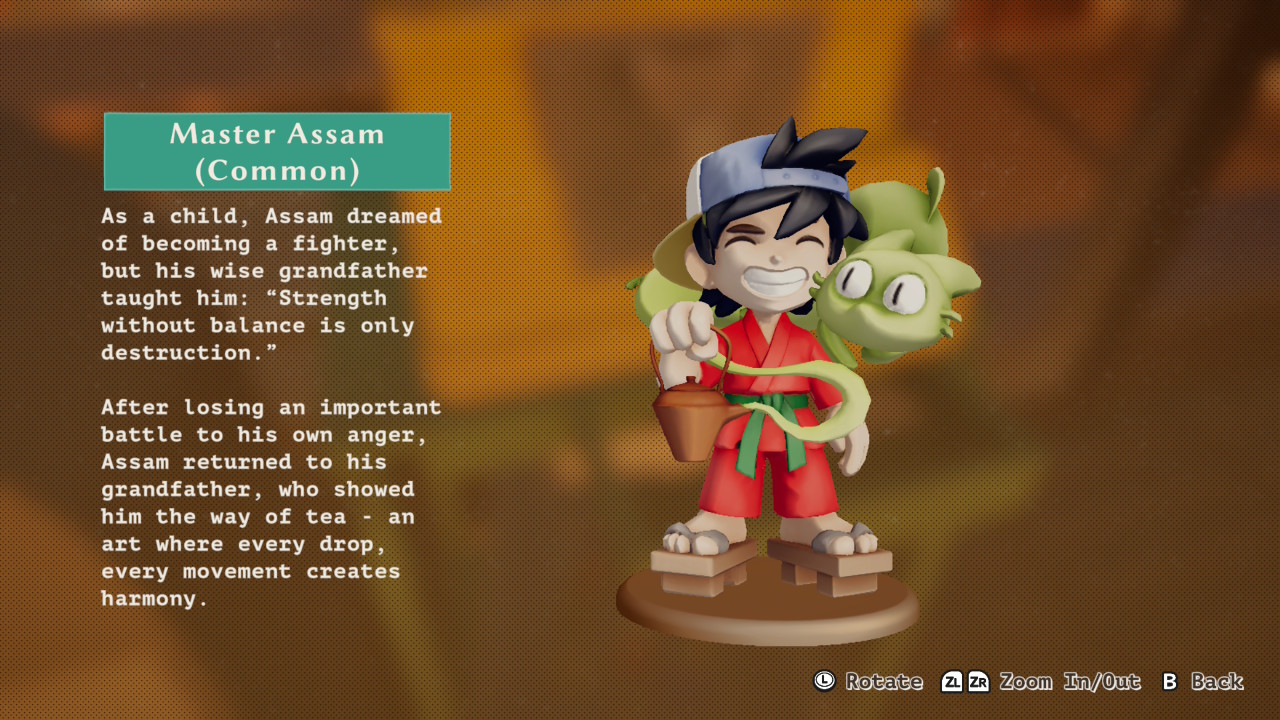
The thing is that if you don’t let the fact that your actions seem to carry no weight sometimes, InKonbini: One Store Many Stories is a lovely and relaxing little game. The products all look good on the shelves, and there’s a lot of detail put into packaging to make them look like what they are or reference. Organizing shelves is soothing. Especially since we can take as much time as we want ensuring they look how we want since the story won’t advance until we interact with customers. (And they will patiently wait for us.) I really enjoyed the product recommendation element and seeing people’s responses. (Especially since they won’t get mad.) It’s almost a meditative experience.
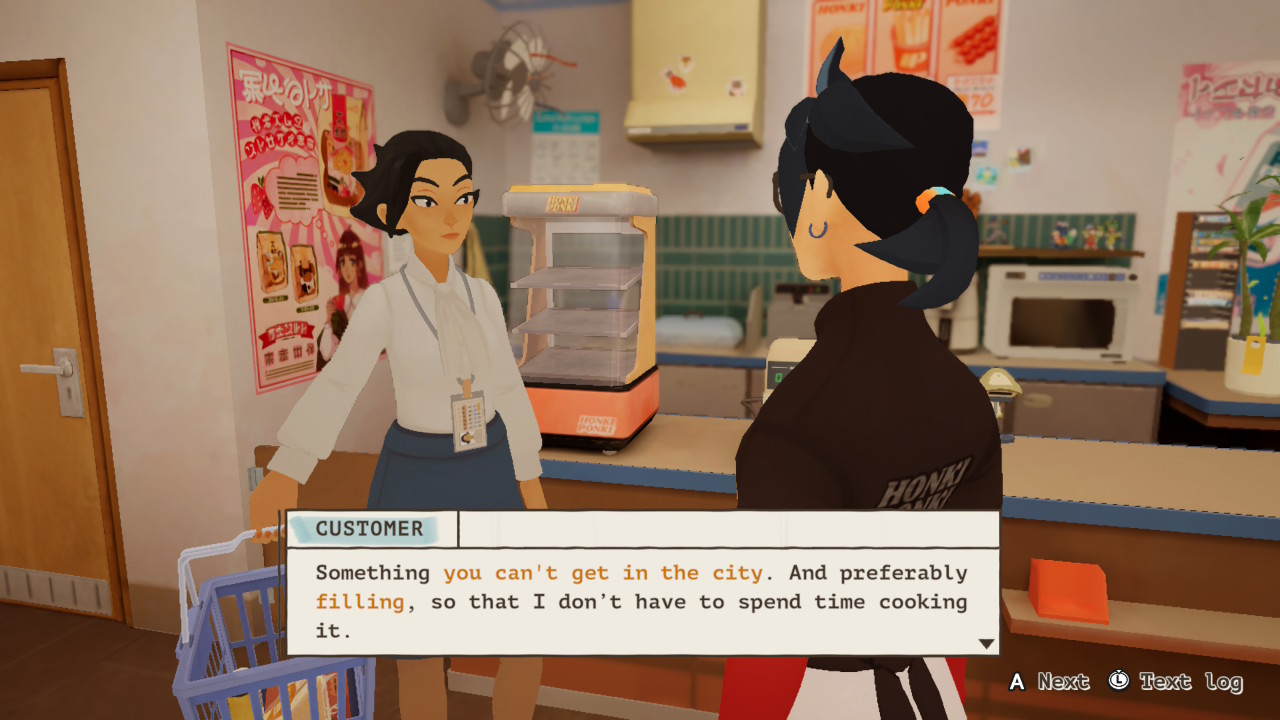
That said, it’s so enjoyable that I wished InKonbini: One Store Many Stories ended up being a longer game. It’s pretty short, and I’m pretty sure I was done between six and seven hours. (You know how it can be difficult to tell exact timing on the Switch sometimes.) What’s here feels solid and tells a distinct story. However, I can’t help feeling like there’s still room for more of Makoto’s story. Especially as we see her thoughts and feelings about working at the store evolve. Not to mention the gameplay loop is enjoyable and frankly, I sort of felt like I didn’t get enough time to mess around more with it. Once I was done, I found myself feeling like the campaign felt like an introduction to a more open-ended experience where we could endlessly clock in, organize the store, and perhaps help nameless individuals or ones with the existing character models with no story attached to them every evening.
While InKonbini: One Store Many Stories is pleasant, I wish there was more impact associated with some of my actions. It is very much about the vibes of working at a desolate convenience store in a small town filled with warm people. However, I’m not sure if it was tied to bugs or the idea of ensuring every shift is comfortable, but it seemed actions made during my shift often didn’t matter or like knowledge I had and certain situations never took effect in certain situations. I suppose I would have liked a little more agency, not to mention more time engaging in certain sorts of assignments in that role.
InKonbini: One Store Many Stories is available on the Switch, Switch 2, PS5, Xbox Series X, and PC.