


 By
By 
The original Monster Crown felt designed to be difficult. Part of it ended up feeling intentional, such as with game balancing, the raising and breeding execution, and the gritty worldview. The number of experience-hampering bugs definitely was unintentional. Monster Crown: Sin Eater feels designed to remedy some of those things, due to an array of adjustments and smoother experience. The result is a Studio Aurum game that does feel stronger, but now feels a little frustrating in new ways.
Asur and his family are getting by, farming in Crown Nation. Life isn’t easy. In addition to the monsters roaming around, they need to deal with the mercurial Lord Taishakuten who rules over everything from Meru Sprite, with his Four Heavenly King and their Inquisitors demanding taxation and fealty under the threat of death. His elder brother left in the hopes of becoming a monster tamer and finding something better. He Dyeus returns one evening to talk with his brother about the state of the world and warn him an even greater danger lurks. After putting him through some tamer training, Inquisitor Nefer captures him for sedition and treason. Not willing to stand by, Asur takes his savings and heads out to become the kind of tamer who can rescue his brother and fight back against Inquisitors, Heavenly Kings, and Taishakuten himself.
Honestly, I’d say the narrative in Monster Crown: Sin Eater is stronger in this sequel to a point, at which point the fact that it does open up means things get a little more loose in the game. In addition to flat out explaining things, Studio Aurum also uses environmental storytelling like destroyed regions and towns to paint a picture of what cyclical violence and oppressive rule has done to Crown Nation. It’s a dark game! While there is hope in the idea that Asur might be able to make life better with his choices, there may be times when you won’t know if it’s even possible to break the cycle. However, it is interesting getting through things along the way, and the fact we can make decisions about factions we do or don’t associate with as we help Asur pursue his goals. It feels very open-ended. However, keep in mind that this isn’t a happy world, so even the “right” answer will probably be morally ambiguous at best and bad in another way at worst.
Which is a bit of a double-edged sword. When you start in Windy Province, things in Monster Crown: Sin Eater feel rather structured. But once you are done there and able to start heading to Desperado Province, Frost Province, and Scarred Province, the lack of structure can hurt things on many levels. From the very start, this is a pretty hands-off game. I felt a bit like it assumed I was familiar with the original or the genre in general.
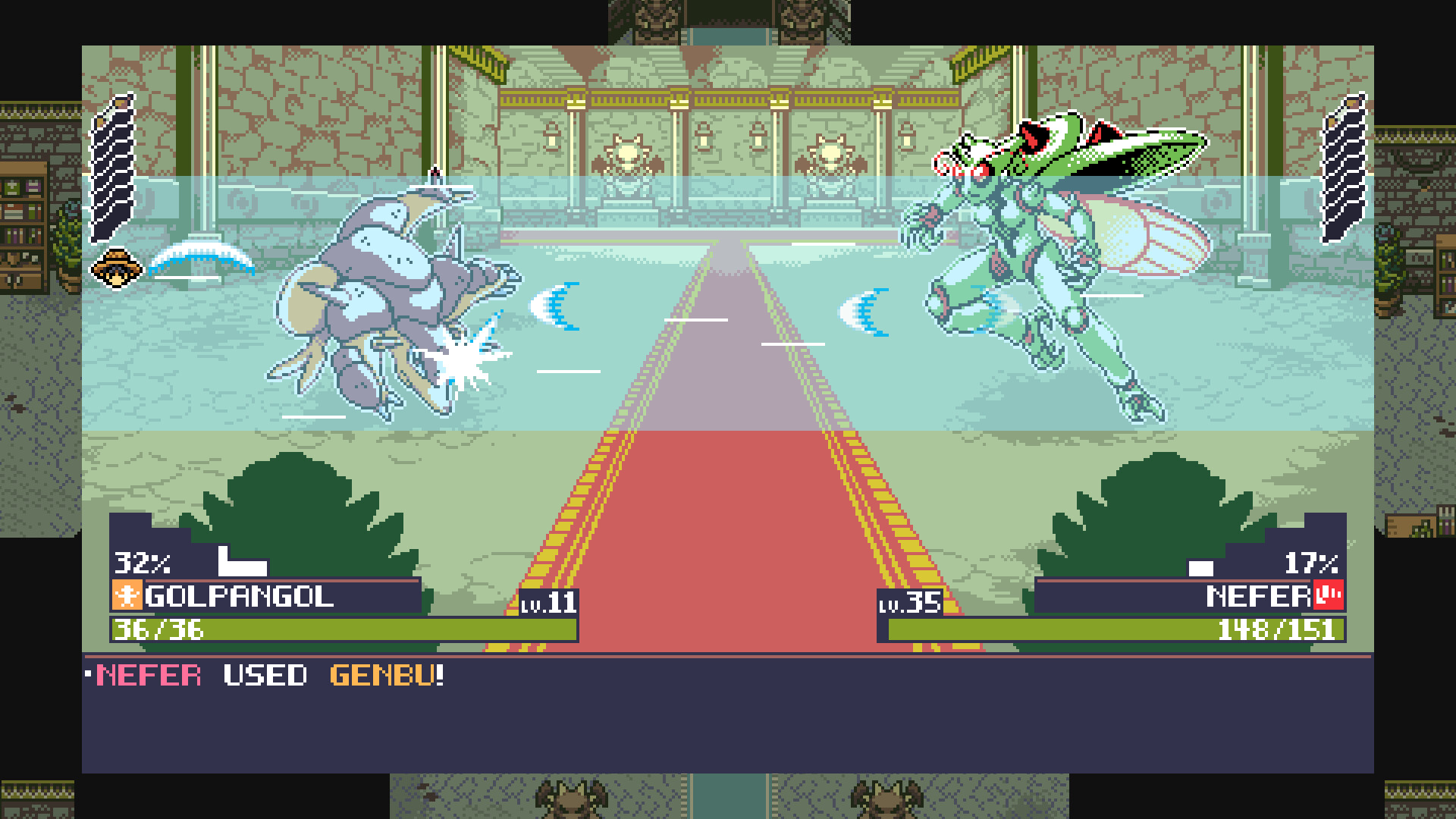
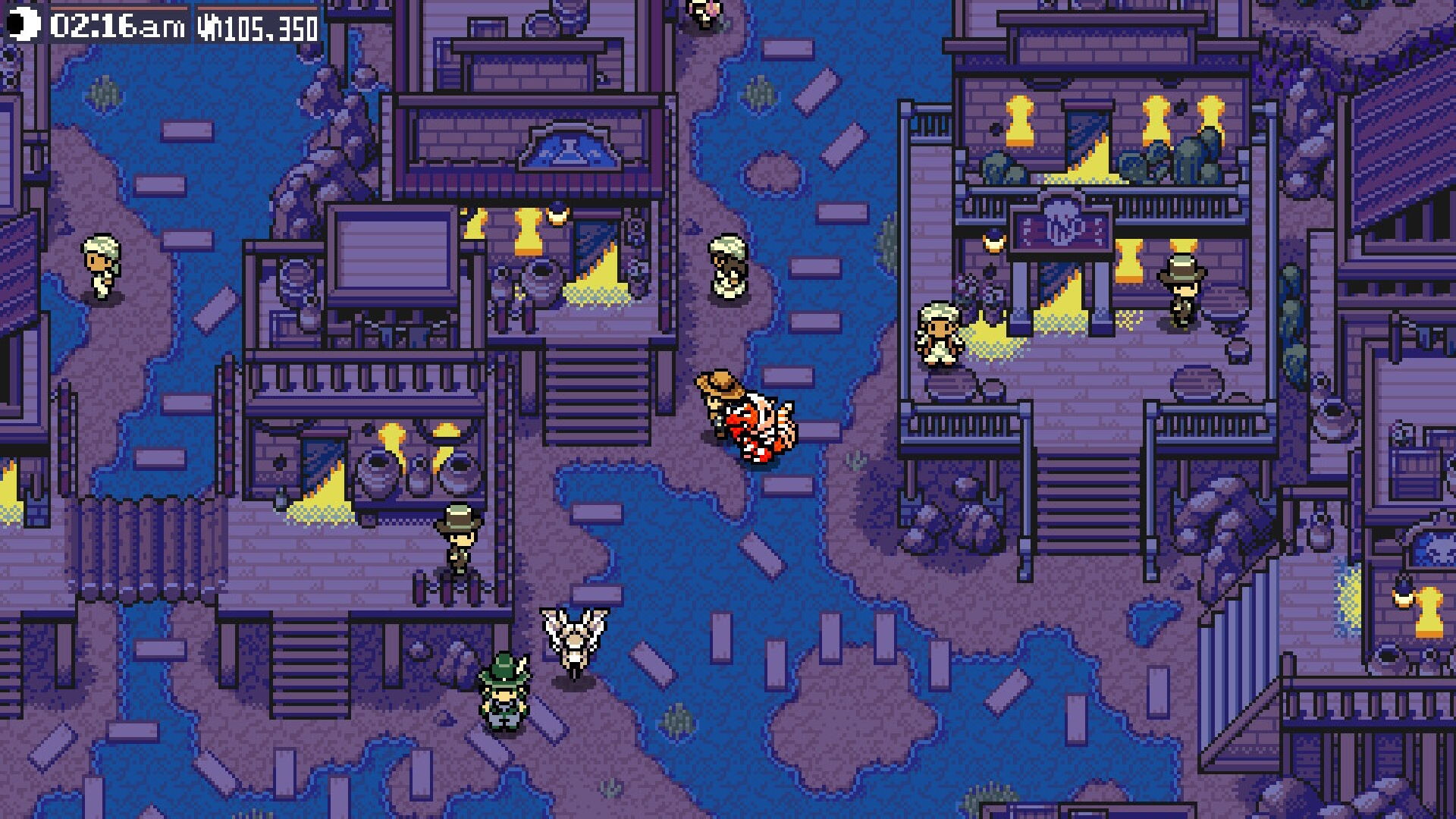
While the game balance in the original Monster Crown could skew toward things being a little unreasonable sometimes, Monster Crown: Sin Eater sort of goes in the opposite direction. Yes, you can choose from three difficulties at the start, with one being a “story” option that’s more forgiving. In the first area, getting past the first boss and opening up the world further can feel a little tough. However, the fact that this is a more freeform experience with an open world type of approach, works against it regardless of the difficulty you chose after Windy Province. If you grind too much, it immediately becomes too easy after surpassing that first challenge. Combine that with the breeding mechanic allowing you to create super-powered monsters out of any character, and you’ll definitely hit a point at which little poses a challenge anymore.
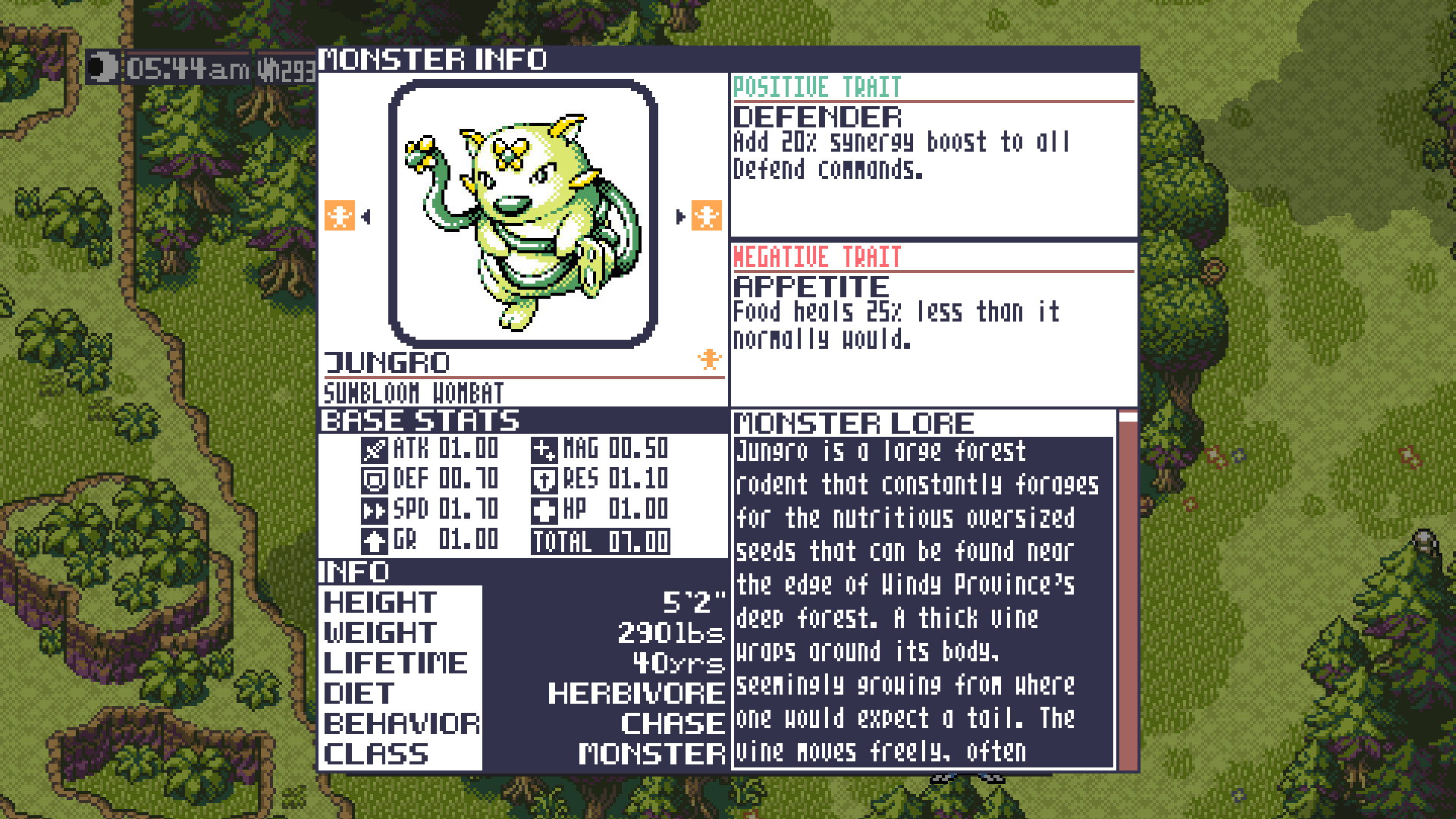
Speaking of the monsters, Studio Aurum does its best to make them interesting and building them up appealing in Monster Crown: Sin Eater. There are fewer typings than Pokemon, since you only need to worry about Will, Brute, Malicious, Unstable, and Relentless type creatures and attacks. Will bests Brute, Brute is strong against Malicious, Malicious will be more harmful to Unstable, Unstable is best against Relentless, and Relentless can top Will. All of them have an innate positive and negative trait, which affect the combat. There is a transformation element, which changes their stats, appearance, and capabilities. You can breed two together, affecting the move list and appearance of the resulting creature. You can fuse two, but I honestly didn’t appreciate that as much due to the costs involved (both losing the original two monsters and monetary), even though it did give me a battle-ready character with genomes I could influence.
This system has positives and negatives. The good is that any monster can be viable either via training or the breeding and fusion systems. You just aim for the typing, moves, and stats you want and keep grinding. The downside is, I didn’t feel the same connections to characters on my team as I did in games like Pokemon, Digimon, and Dragon Quest Monsters. When anyone can basically become all powerful or anything, everything can bleed together a bit. The variety with sprites is interesting and there’s a lot of creativity, but it can all come down to what’s most effective and powering through with it.
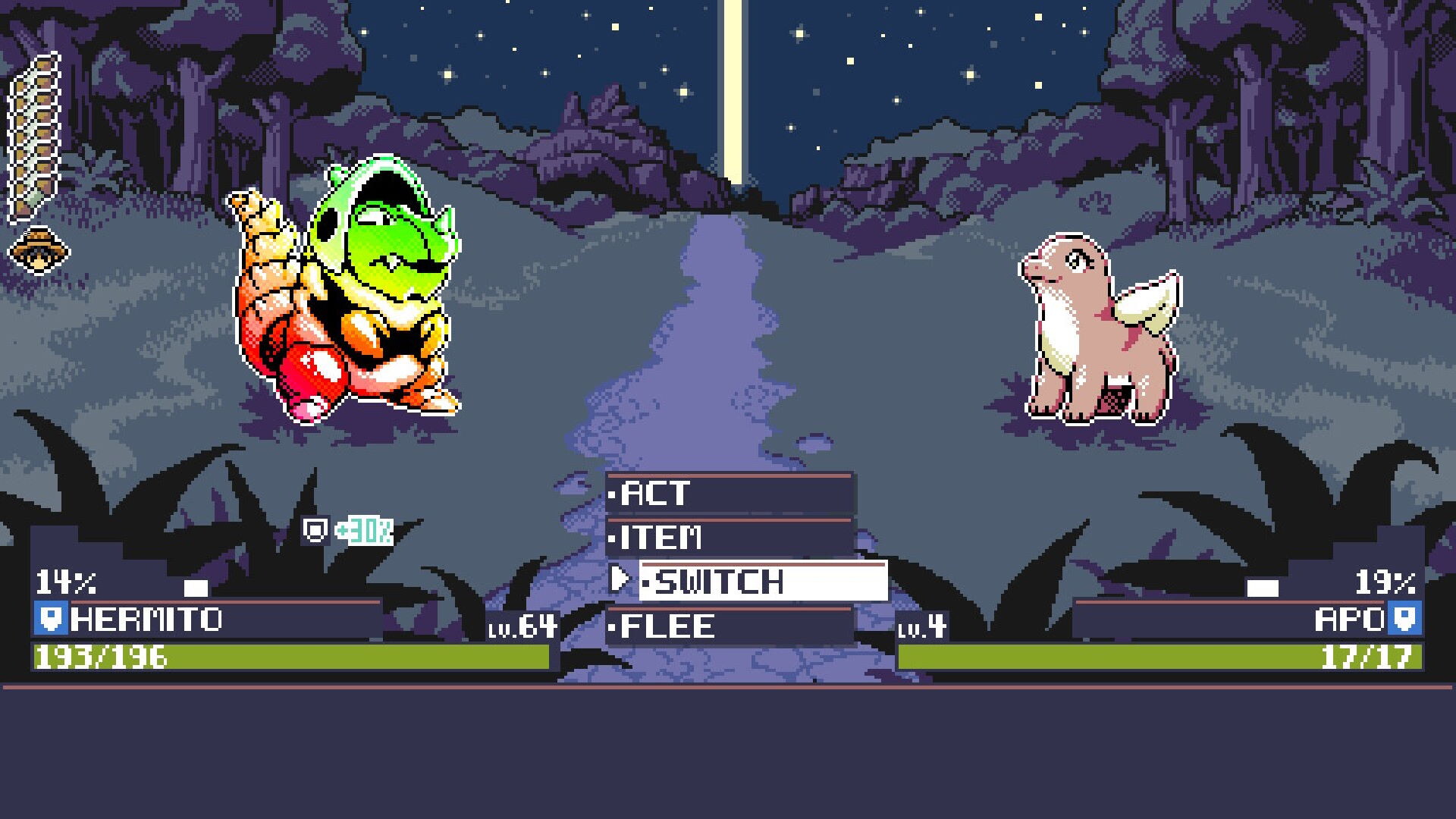
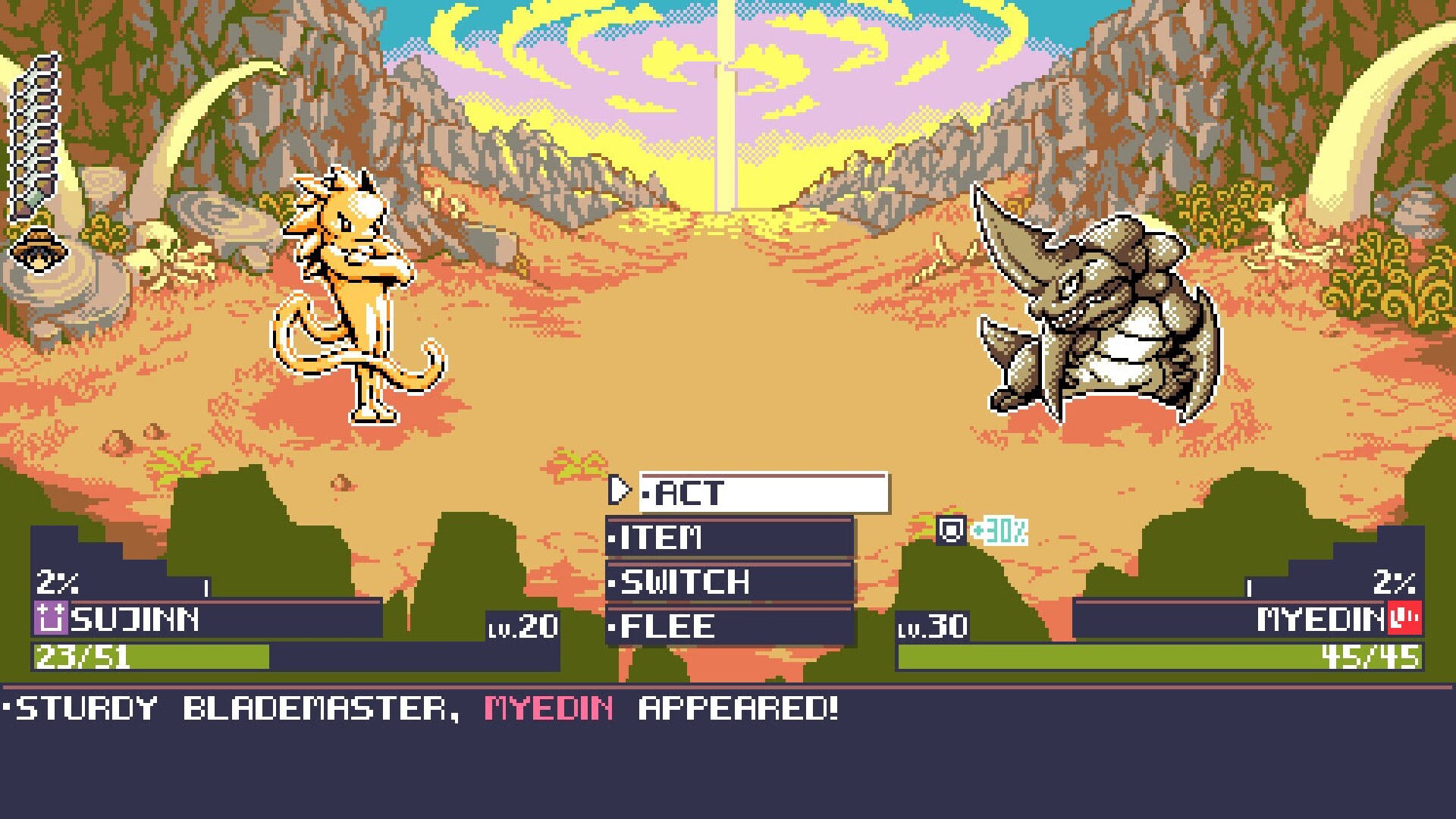
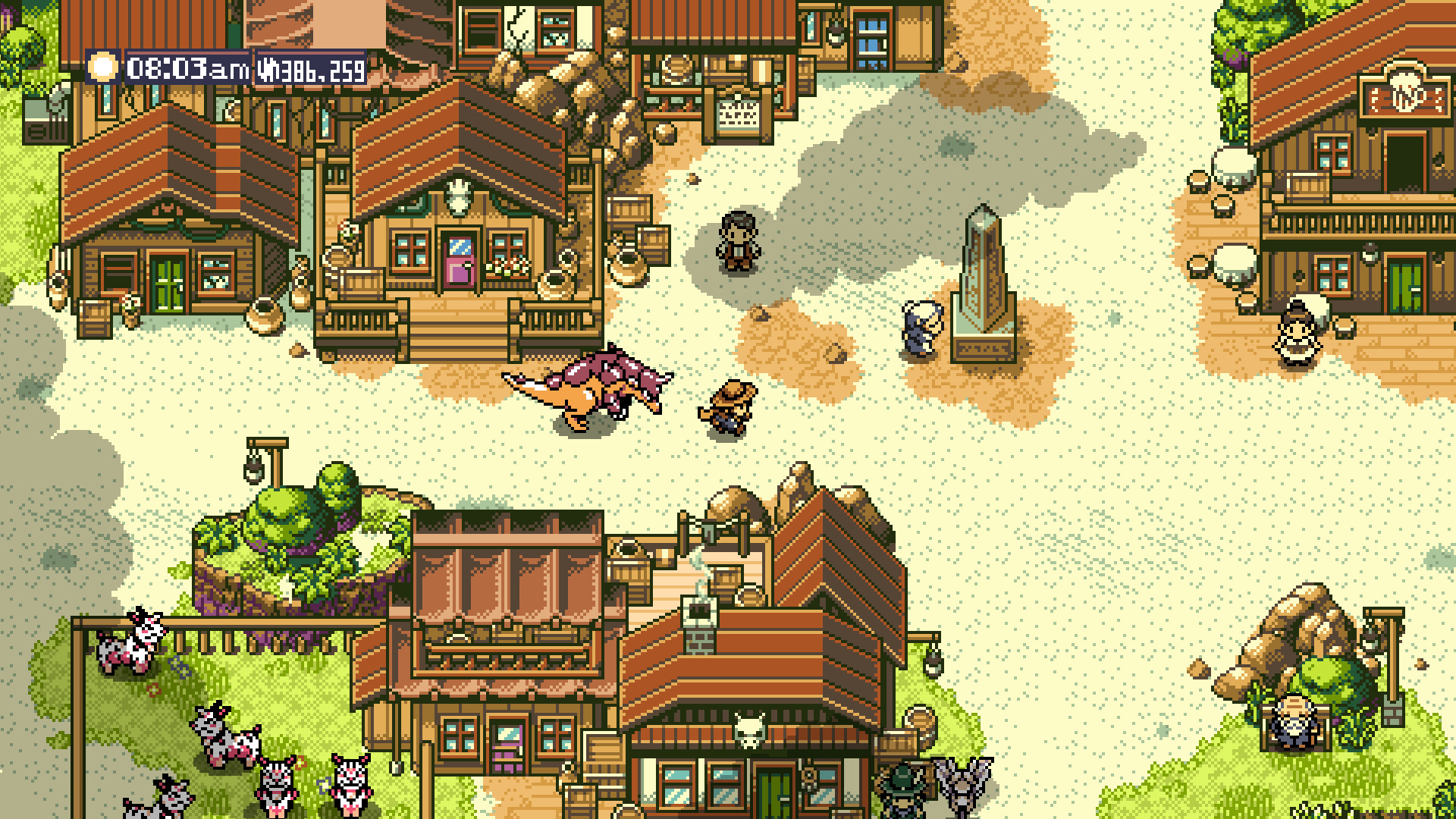
The fact that it can become so easy to grind your way to success and great movesets also can result in combat becoming bland after going through about two regions. The turn-based system is fine. So is the handling of typing. But you pretty much know what moves to pick to win every battle once you get characters to a point.
You can immediately see where Studio Aurum learned from past mistakes in Monster Crown: Sin Eater. This isn’t to say the experience is perfect now. But it is far stronger than the previous game in many ways. With the feedback the team will likely get from this entry and a little fine-tuning, I could see a third entry turning into something special.
Monster Crown: Sin Eater is available on the Switch, PS5, Xbox Series X, and PC.