


 By
By 
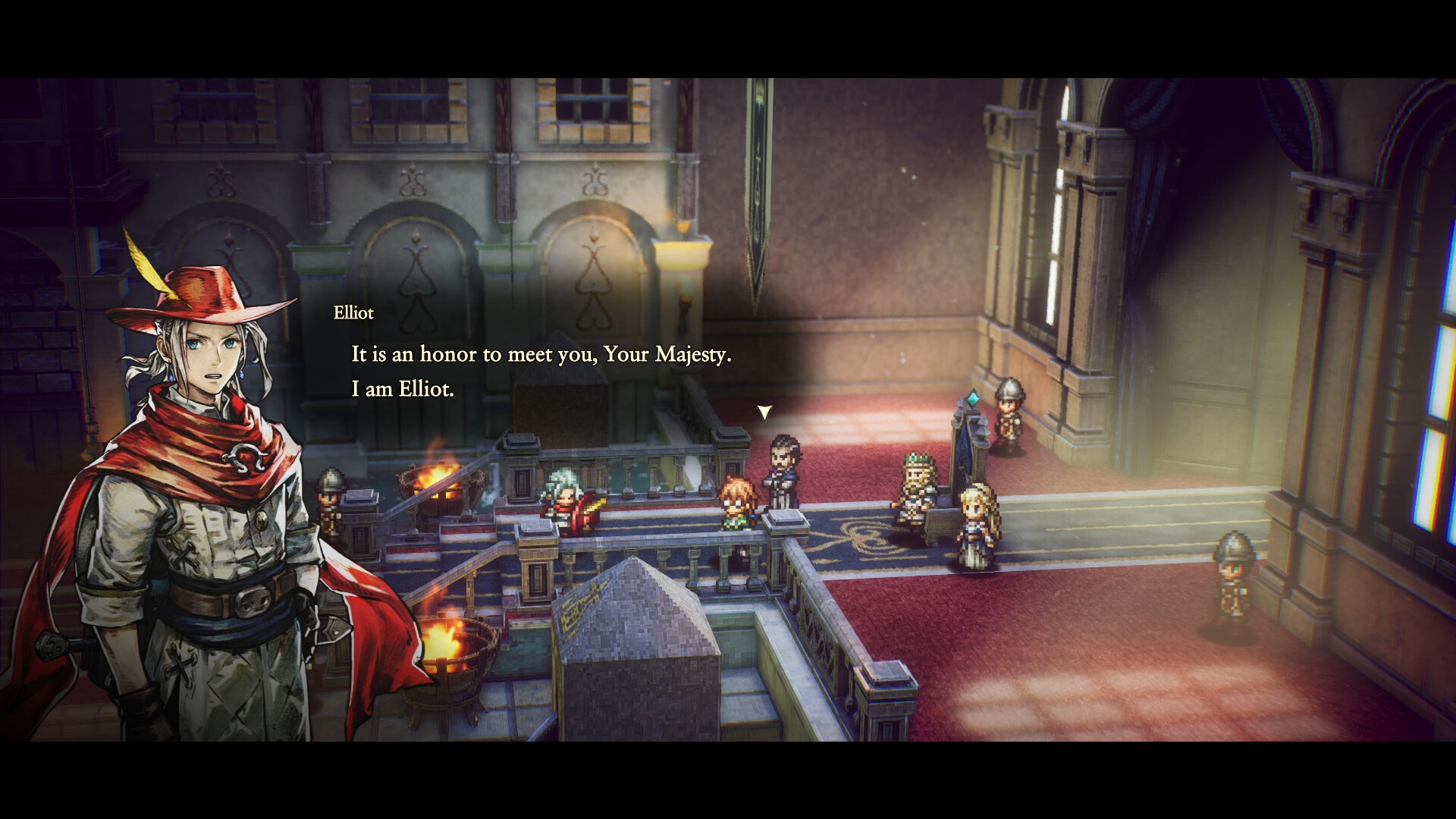
Given the focus on staples like Final Fantasy and Dragon Quest, we don’t often get to see Square Enix experiment with new IP. The Adventures of Elliot: The Millennium Tales is the most recent exception. It blends the HD-2D artistic direction with action-RPG elements similar to the Mana and The Legend of Zelda series for an experience different from what we’ve seen in other HD-2D games like Octopath Traveler or the Dragon Quest III remake. Siliconera spoke to Producer Naofumi Matsushita to learn more about its development and progress.
Jenni Lada: When developing The Adventures of Elliot: The Millennium Tales, how did you determine which weapons would be available and how did potential utility outside of battle influence choices?
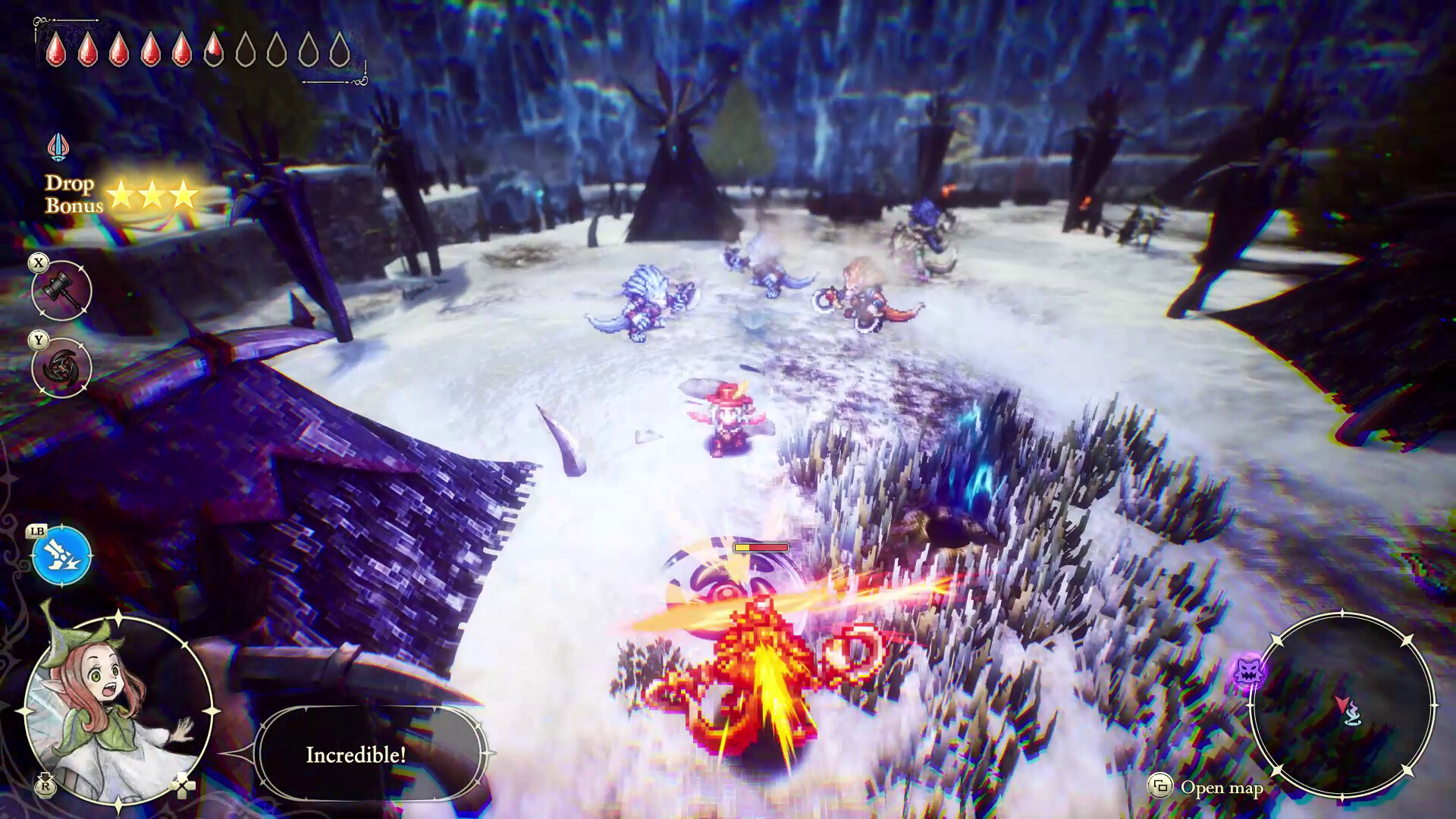
Naofumi Matsushita: From the early stages of development, we looked to Legend of Mana as a reference for the kind of gameplay feel we wanted players to experience. Because of that, the weapon lineup came together fairly naturally without requiring much discussion. You can especially see that influence in the chain and sickle, including the way it moves. Elliot’s attacks are intentionally simple and don’t require button mashing, but players do need to pay close attention to their distance from enemies and strike at the right moment. With that in mind, we focused on making each weapon feel as responsive and satisfying to use as possible.
During the early stages of selecting the weapons, we even considered including an axe. However, we felt an axe naturally gives the impression that it should be able to chop through trees, so we decided to consolidate the role of clearing paths around the hammer instead.
Were there any unexpected challenges that came from using the HD-2D design direction in an action-RPG?
Naofumi Matsushita: This is the latest HD-2D title and the first action-RPG in the series. Our initial concept was to introduce HD-2D to a wider audience, and we felt that a satisfying action game would be the best way to achieve that, so we decided on the genre first.
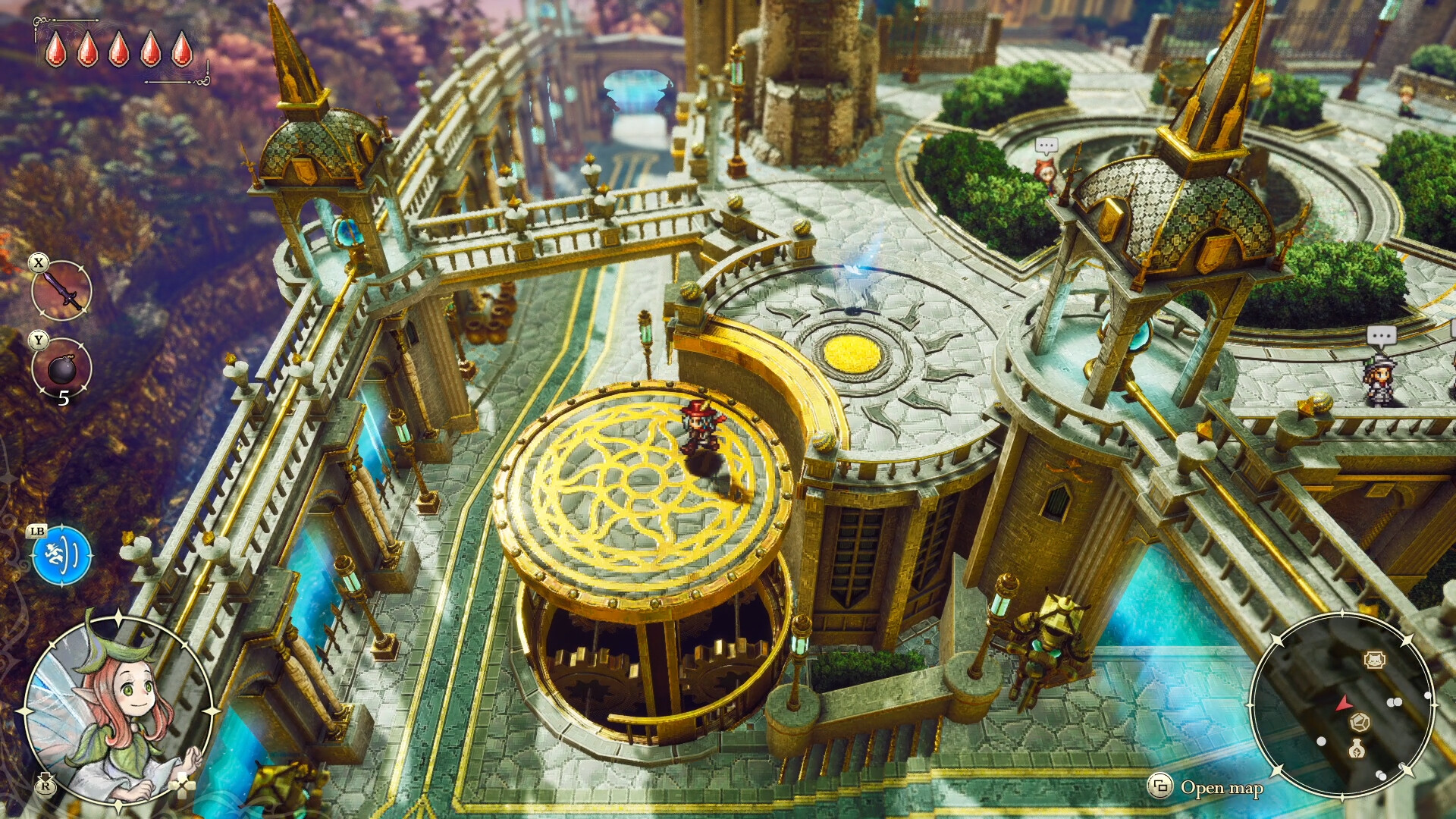
The appeal of the HD-2D visual style lies in its use of 3D backgrounds, which create a sense of depth in the maps and environments even though the characters themselves are 2D. One of the main challenges was finding a way to blend this strength with 2D action gameplay. In pixel-based 2D action games, the screen can easily become dominated by the ground plane of the map, making it difficult for players to feel any sense of three-dimensional depth and causing the visuals to feel somewhat flat. In this title, particularly in the overworld, we adopted a “drumroll” approach, curving the map into the background so that distant terrain becomes visible. By incorporating original techniques to further maximize the visible range, we were able to create an experience that conveys a strong sense of depth while still being a 2D action game. This was also an area where we spent a significant amount of time carefully fine-tuning the details in close collaboration with the development studio.
While all of the Faie abilities in The Adventures of Elliot feature supportive options, a few can have practical combat applications. How did you decide to go with this choice and keep it in-character with the fairy?
Naofumi Matsushita: For this game, our goal from the very beginning was to create an experience that players could enjoy comfortably from a fixed, bird’s-eye perspective, so we never intended to assign camera controls to the right stick. I also feel that, in action games, as players progress, they gradually find themselves engaging more directly with both the protagonist and their own gameplay skills, and that experience can sometimes feel quite solitary. We felt it would be nice if players had a companion during those moments, so we decided to include a fairy. Instead of using the right stick for camera control, we designed Faie’s abilities so that players would naturally become accustomed to using it over time, which ultimately led to the system we have today. So this was another aspect of the game that was decided fairly early in development.
During production, we established Faie’s fairy-like qualities, such as being invisible to everyone else and chatting with the player in a way that provides a sense of reassurance, as part of her character setting. We also paid close attention to preserving those qualities as we fine-tuned the game. We kept those points in mind both during voice recording and in the actor’s performance.
There are tons of hidden cats throughout The Adventures of Elliot: The Millennium Tales. How did you decide to make them a critical part of the adventure and keep finding different hiding spots?
Naofumi Matsushita: Because we finalized the world-building, the history of Philabieldia, and the story structure early on, it became a natural part of the narrative for cats to be involved. Later, when we were thinking about collection elements for exploration, the “Cat Collecting” feature was added. Action games tend to be pretty intense, so we also wanted to provide moments to ease the tension during key points throughout the game. Fun fact: I’m a dog person myself, but we assigned members of the development team who are cat lovers as the leads on the Cat Collecting feature. (laughs).
The time traveling mechanic and way in which Elliot’s actions affect the world play a big part of The Adventures of Elliot. Are there any mechanics or concepts you can talk about that you wanted to implement, but couldn’t find a way to make work in the final game?
Naofumi Matsushita: [Tomoya] Asano and I often talked about how, when telling an RPG story, the characters’ actions and the events that unfold are fundamentally rooted in things that happened in the past. We both felt that the past plays an important role in giving a story greater depth. Rather than simply explaining those events through text, we felt it would be far more compelling if players could actually experience what happened for themselves. That idea became the catalyst for making this a time-travel story, and from the outset, our primary focus was to let players journey further and further into the past and experience those events firsthand.
Building the story in this way meant that we first had to establish the history of Philabieldia, so it was certainly a challenging process. However, before moving forward with the scenario and event direction, we had already determined everything that would ultimately happen as a result of those experiences.
As such, there aren’t any game elements that we couldn’t make work in the final game. We proceeded step by step with the intention of making decisions that would leave no need to go back and revisit them. Furthermore, we were aligned in the same direction with Claytechworks, the development studio, and the entire team gave everything we could within our abilities. Because of that, I have no regrets.
There’s actually a lot of foreshadowing tucked into The Adventures of Elliot regarding things like the character’s appearance and certain interactions. What led to the team hiding these hints in plain sight and did you think people would pick up on possible connections?
Naofumi Matsushita: As I mentioned earlier, although the story is designed so that players experience the history firsthand, there are certain aspects of the world’s lore that we deliberately chose not to reveal in the game, even though they were established as part of the setting. We wanted to leave room for players’ imaginations, because I believe one of the joys of playing a game is being able to imagine those unseen parts for yourself.
That said, we’ve scattered details throughout the game, such as in manuscripts and NPC dialogue, to help fill in the historical background. Precisely because the course of history is already fixed, we felt that placing this kind of information early in the game would allow players to later have those moments of realization where they think, “So that’s what was happening.”
We also felt that the experience would naturally differ depending on the type of player. Some players enjoy imagining what lies ahead, while others don’t. Some like to investigate every corner of the world and talk to every NPC, while others prefer not to. But I believe it’s perfectly fine for everyone to come away with a different impression, and I see those differences in each player’s experience and interpretation as one of the game’s strengths. With that in mind, we adopted a policy of scattering hints and pieces of supplementary historical information throughout the game from a fairly early stage.
One of the main pieces of feedback from folks seems to be regarding the amount of commentary from Faie in The Adventures of Elliot: The Millennium Tales. How do you feel about that post-launch?
Naofumi Matsushita: We are aware of the feedback that Faie’s comments can feel too frequent. As I mentioned earlier, we took great care to ensure that Elliot’s companion would help players feel less alone during their journey. However, with such a wide variety of players, this may simply be one of the areas where we weren’t able to fully accommodate everyone’s preferences.
Although it was added just before the game was finalized, we included an option that allows players to reduce the frequency of the support character’s dialogue. For anyone interested, we’d encourage them to try that setting first.
In addition, a patch that allows players to turn the support character’s voice on or off has been released. Thank you for your patience. The update will be rolled out sequentially across each platform, so please wait just a little while longer.
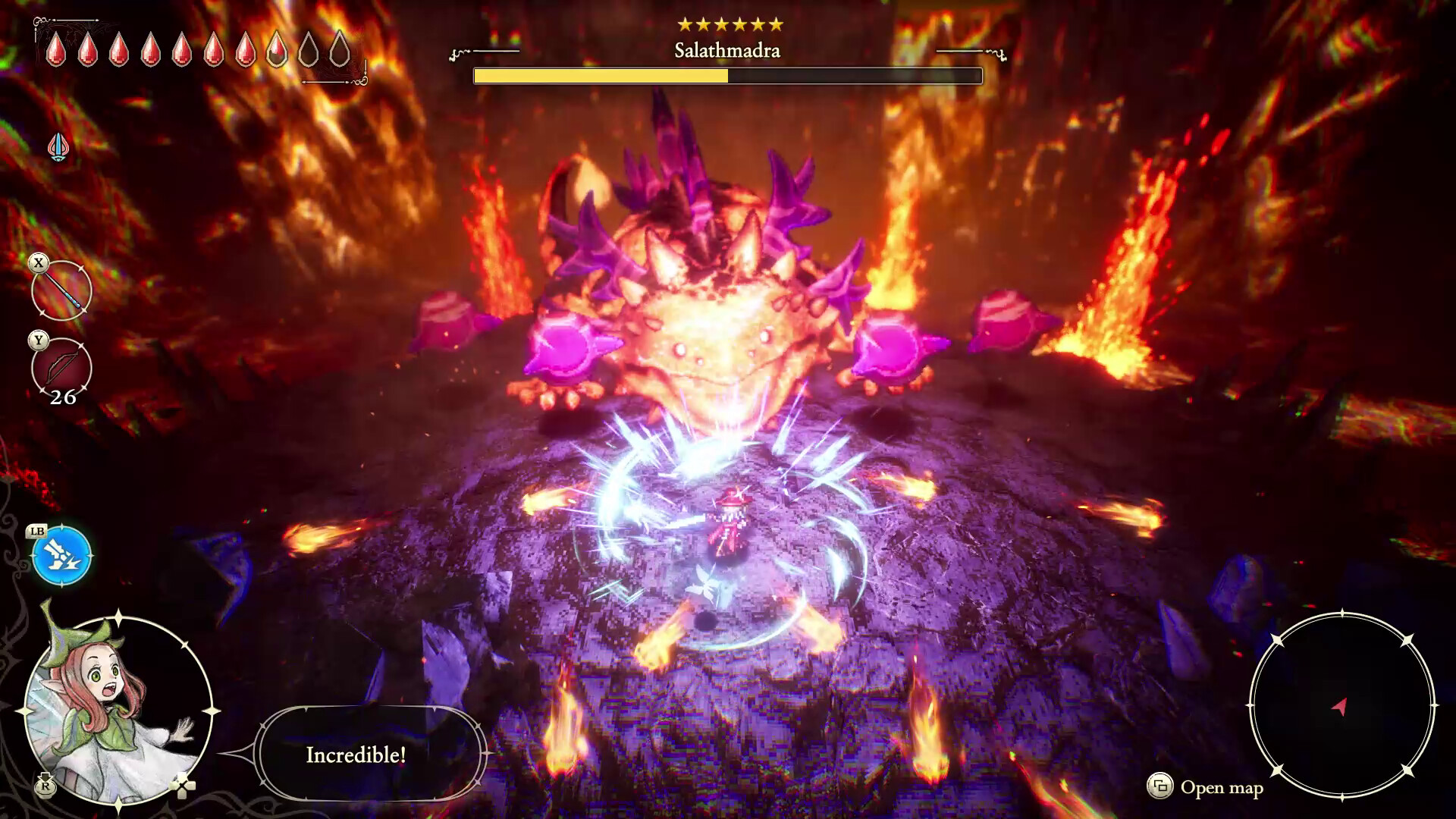
There’s a certain endgame encounter in The Adventures of Elliot that changes up the typical combat approach. How did that boss fight come together?
Naofumi Matsushita: I believe you’re referring to the aerial battle scene shown in the final trailer. I can’t go into too much detail, but when we reached the point where we wanted to include that kind of battle in the story, we felt that relying solely on our existing combat approach would make it feel no different than before. It would simply be the same gameplay taking place in the sky. Instead, we put a great deal of care into creating an experience that would make the final stages of the game feel even more dramatic and fun for players.
By that point, players have likely become quite familiar with the fairy abilities, so we wanted to introduce some variety while still allowing them to make full use of the combat techniques they’d developed throughout the game. That’s what led us to the approach we ultimately took.
How would you feel about a The Adventures of Elliot: The Millennium Tales sequel given the ending leaves the possibility of another game open?
Naofumi Matsushita: At this time, we haven’t begun any discussions regarding a sequel. However, the support and encouragement we receive from players who enjoy the game will always be the biggest motivation for us to move forward. If you’ve enjoyed the game, we’d be grateful if you could spread the word on social media or share your thoughts directly with Square Enix.
The Adventures of Elliot: The Millennium Tales is available for the Switch 2, PS5, Xbox Series X, and PC.