


 By
By 
It’s truly wild how a franchise known for being like nothing else out there has seen fit to manufacture its own competition. Culdcept, a long-running series that’s most easily summed up as Magic: The Gathering meets Fortune Street, is not one with many releases. The last one, the 3DS’ Revolt, is nearly a decade old. So now, why are we getting near-simultaneous releases of the first game’s remaster and the original new entry? You have to imagine some wires got crossed somewhere.
Regardless, for us, it means we have to compare the two. Not a lot of people have time for two Culdcept games at once! Unlike Culdcept Begins and its reimagined, re-booted world, Culdcept The First is very much Culdcept as you remember it, even though the West didn’t get this first Saturn entry until now. The world and art is shared through many of the games, including the PS2 sequel we did get as well as the PlayStation, Dreamcast, DS and 3DS entries we didn’t.
City Connection built Culdcept The First in its “Zebra Engine” setup, which it’s been using for Sega Saturn re-releases for some time now. The platform is notoriously tricky to emulate, and Zebra does a decent enough job for at least this game. We experienced some audio hiccups that were fairly frequent? That’s unfortunate. There’s some decent music in this game (including some Yuzo Koshiro work), but it’s already fairly repetitive during matches. Adding disruptions only makes it a bit more grating.
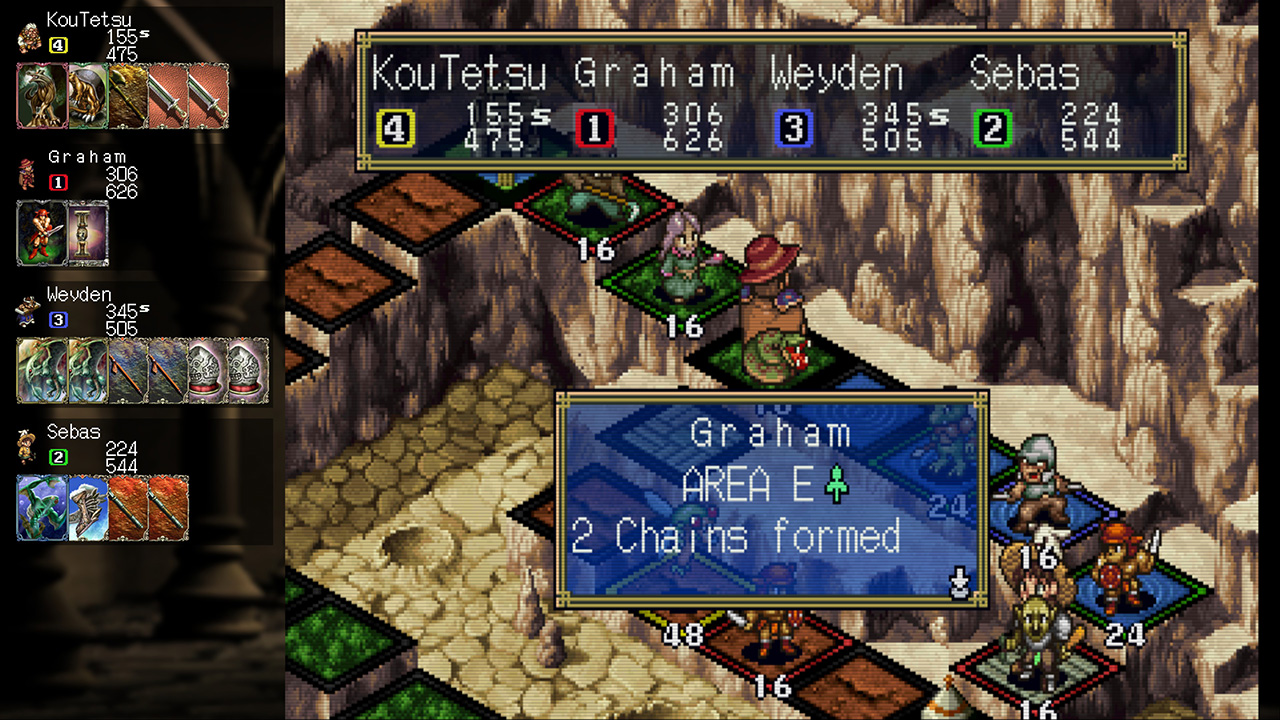
There are some interesting quality-of-life features in this release! The most important, and the one we always love to see when 4-by-3 games hit modern screens, is the use of the border area. You can display players’ totals and hands there, and you can even move the screen to one side and make this display larger and more helpful. There’s also the “Bonus Pack” feature, which gives you extra cards after every battle. This makes a lot of sense in the modern day, when people really don’t want to just grind CPU battles over and over just to build the decks they want.
Then again, if your decision is about which has the most modern features? It’s obviously not The First. Rather than multiplayer infrastructure, the game builds a local setup, and assumes (rightly) that you can use built-in “share play” features of your chosen platform to play online that way. We’ve used those in different scenarios, and all the things that make those tough to use are largely avoided in a turn-based pixel game like this. Lag? Some stream artifacts? Sure, whatever, it doesn’t bother Culdcept.
While we ended up liking Begins’ aesthetic more than we expected, there’s something about the original Culdcept look that still feels like a better fit. It’s colorful! The pixel art is expressive! And the card animations during battle feel like more of a technical flex in this release than they end up being later.
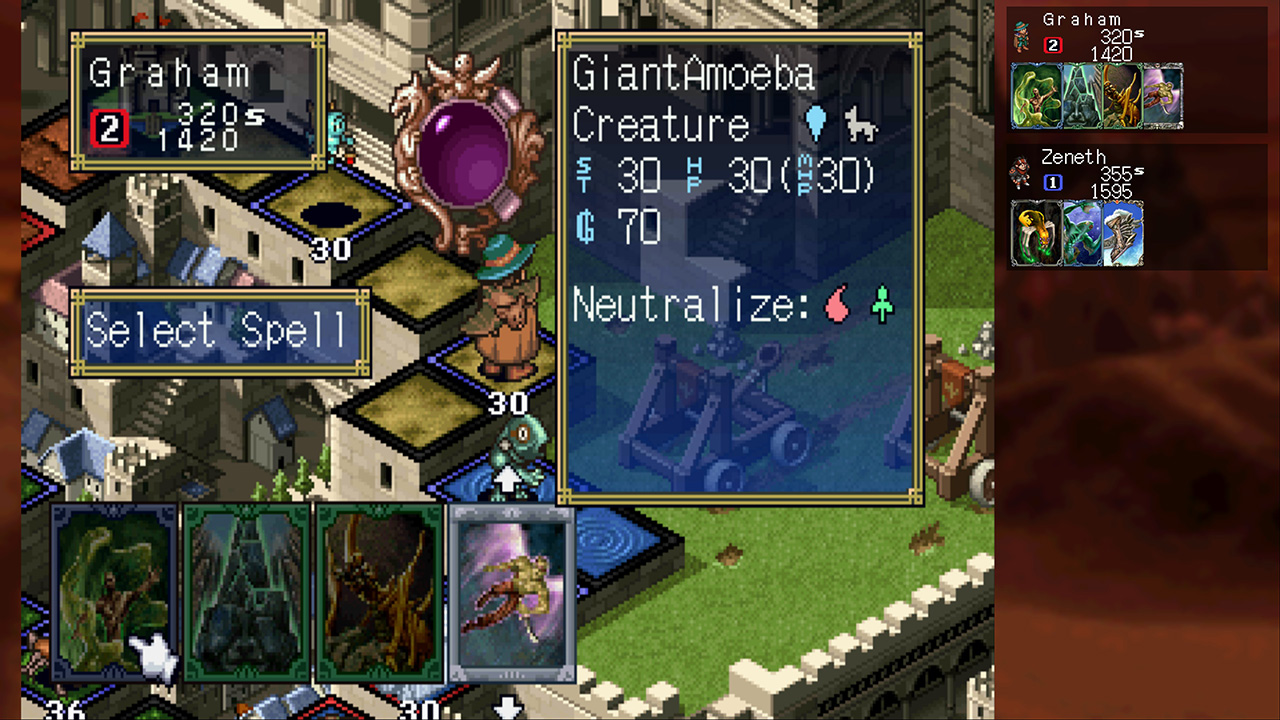
As a retro remaster, Culdcept The First is really what you want to see, augmenting the original but preserving its charms. As a newly-localized debut, it’s what a lot of fans want for their own pet Japan-only games! And it’d be a lot easier to shout from the rooftops about it if it weren’t for this bizarre scheduling.
Ultimately, if you want to play Culdcept, you can do it perfectly well in either of these games. The card bases are fairly similar! The board layouts have a close level of variety! And as fans of the series, we like both. But if you’re new, one will probably do ya. Follow your heart on which.
Culdcept The First is out now on PS5, Xbox, Switch and PC.