


 By
By Back in 2005, Nintendo released the Game Boy Micro, an even smaller version of the Game Boy Advance (smaller than the Game Boy Advance SP). While it was a short-lived line of products that marked the end of the Game Boy line of hardware—it didn’t help that it released after the Nintendo DS, which carried Game Boy Advance Game Pak compatibility—it introduced a new feature which would later return in a different Nintendo hardware revision. (Thanks, Famitsu!) 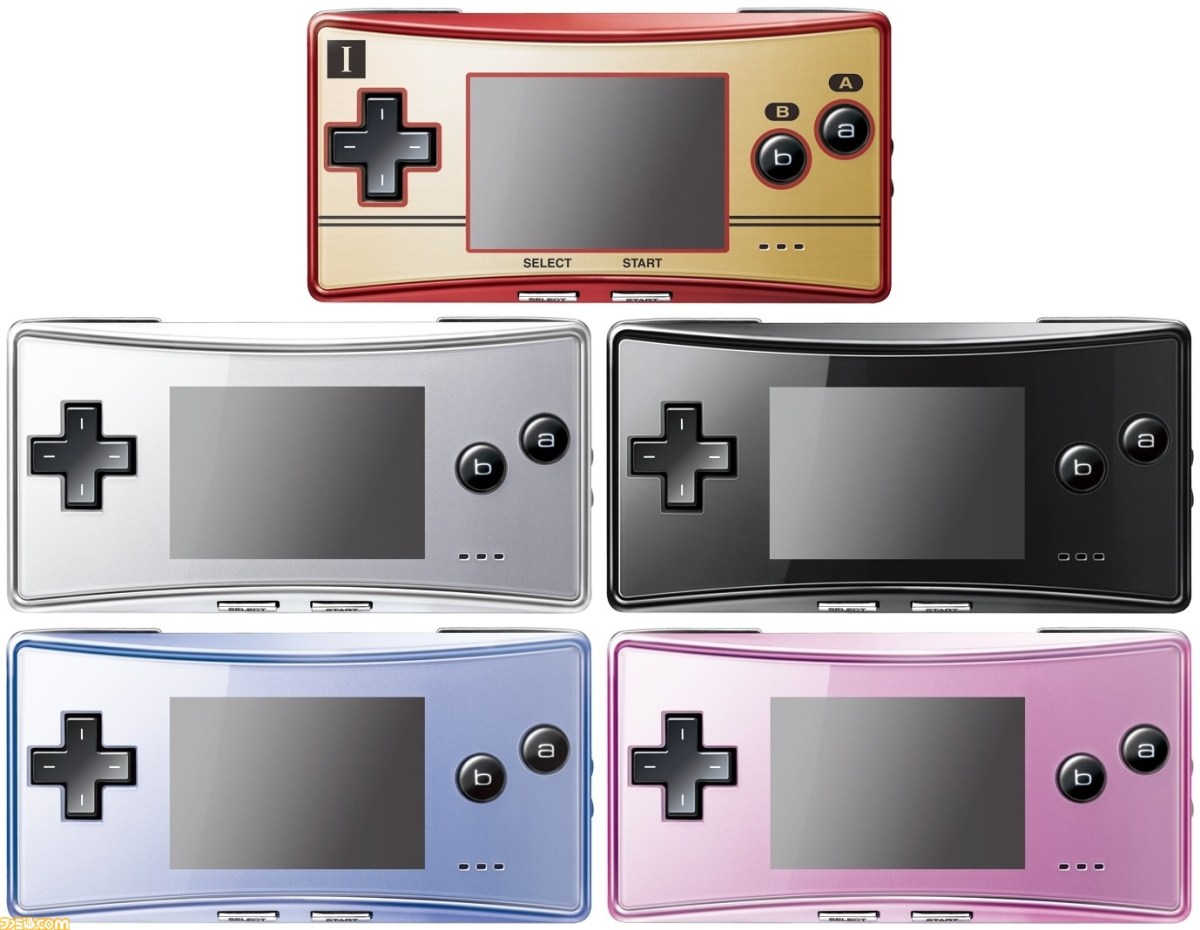 The system was first revealed at E3 2005, and released in the various regions from September to November 2005. Five original color variations were released, but the most popular by far was the Famicom-inspired design. The system truly lived up to its name of “micro,” coming in at only 50×101×17.2 mm large and 80 grams. Despite the smaller size and screen, it didn’t sacrifice any power compared to its older brother, although its smaller size also meant that the components necessary to play Game Boy and Game Boy Advance titles were also removed. One of the Game Boy Micro’s selling points was the concept of interchangeable face plates, which would let players customize their console to their own liking. While overall underutilized by Nintendo itself, it opened up options for people to create their own custom faceplates, such as ones which pay homage to the NES, original Game Boy, and more. While the Micro failed in terms of sales, Nintendo would remember its faceplate feature just in time for the New Nintendo 3DS in Japan, bringing the feature to a brand-new line of systems.
Game Boy Micro Celebrates 15th Anniversary Today