


 By
By 
Moi Rai Games made a name for itself with Monster Sanctuary, a creature-collecting RPG paired with Metroidvania elements. The monsters we would collect would enable our progress and enhance our abilities. Now it walks a similar path with Aethermancer, only this time creature-collecting is paired with roguelike deckbuilder style games. Only inside of decks of say, cards, picture monsters we acquire. It’s an interesting proposition, though things feel a bit early to tell if it will be as successful as the developer’s original mash-up.
In Aethermancer, we delve into the void with the assistance of the monsters we meet, hoping to go other farther while also rebuilding a nearby town. The roguelike element ends up making it feel a bit like a Nuzlocke run of a Pokemon entry. We pick a starter and tame other monsters as we fight them, with up to three in a party, but lose “them” and must retreat if they fall in battle. These creatures can level up as we explore by taking on battles, and we can even equip one item to each one. But we do get their souls and can get opportunities to add to our party by rebirthing them at designated points on runs.
In a way, actually going through a run in Aethermancer does feel a bit like Pokemon, though with some Monster Sanctuary influences. We explore certain biomes, with only a handful available at the moment. (They look pretty good!) We can even use an ability to leap to higher ground to access items or perform tactical strikes on opponents below. When a battle begins, our three characters appear and we need to make informed strikes to take out opponents while surviving as long as possible. There are elements, so we do need to keep in mind typing when attacking to take advantage of weaknesses and stun opponents. However, the other elements to each creature ensure the turn-based fights feel more strategic. Since using abilities also means generating specific elemental Aether, there’s another dynamic to consider when choosing every action.
Each character isn’t just a certain elemental type. They also tend to have designated roles on a team and sorts of attack that influence how they work alongside other characters. When I picked up Aethermancer, I used the starter Nixe. It is a healer that also poisons enemies with the least amount of poison each round after healing or being healed. Its starting skills dealt water damage while healing all allies (Leeching Strike), thus triggering that passive, and its other healed an ally while generating Aether (Restore). The first tutorial monster I got was Tatzelwurm, which worked well with Nixe since it is an attacker type that has a passive that increases its critical attack odds when the enemy has poison stacks on it. One of its initial attacks (Toxic Slash) also inflicts more poison. When Tatzelwurm leveled up, I was able to grant it Regenerating Water, which would apply the Regeneration effect to an ally with the lowest level of it whenever another character used a water attack or skill. So whenever Nixe used Leeching Strike, that triggered. Add in Wolpertinger, and its Bubble Trick water skill would also trigger Tatzelwurm’s Regenerating Water too for extra healing. It gets to be really fun to think about.
However, perhaps as another consequence of early access, Aethermancer throws a ton of these concepts at you, then doesn’t explain them. Wolpertinger is a type of character that really relies on the Sidekick mechanic! What’s Sidekick? Better make sure you have a couple monsters with it or encounter a group so you can find out! (It’s a follow-up attack mechanic.) How do you properly work out ways to Purge and Steal Aether for teams with Cherufe or Wolpertinger? Better experiment! Except since this is a roguelike, you really don’t get the luxury to do that beyond the initial area. So a little rebalancing and more opportunities to get acclimated could help at the outset. I also noticed that, by the third area or party member, you might not get the luxury of having the optimal team, but that’s something that could be adjusted with future rebalancing and larger arrays of creatures.
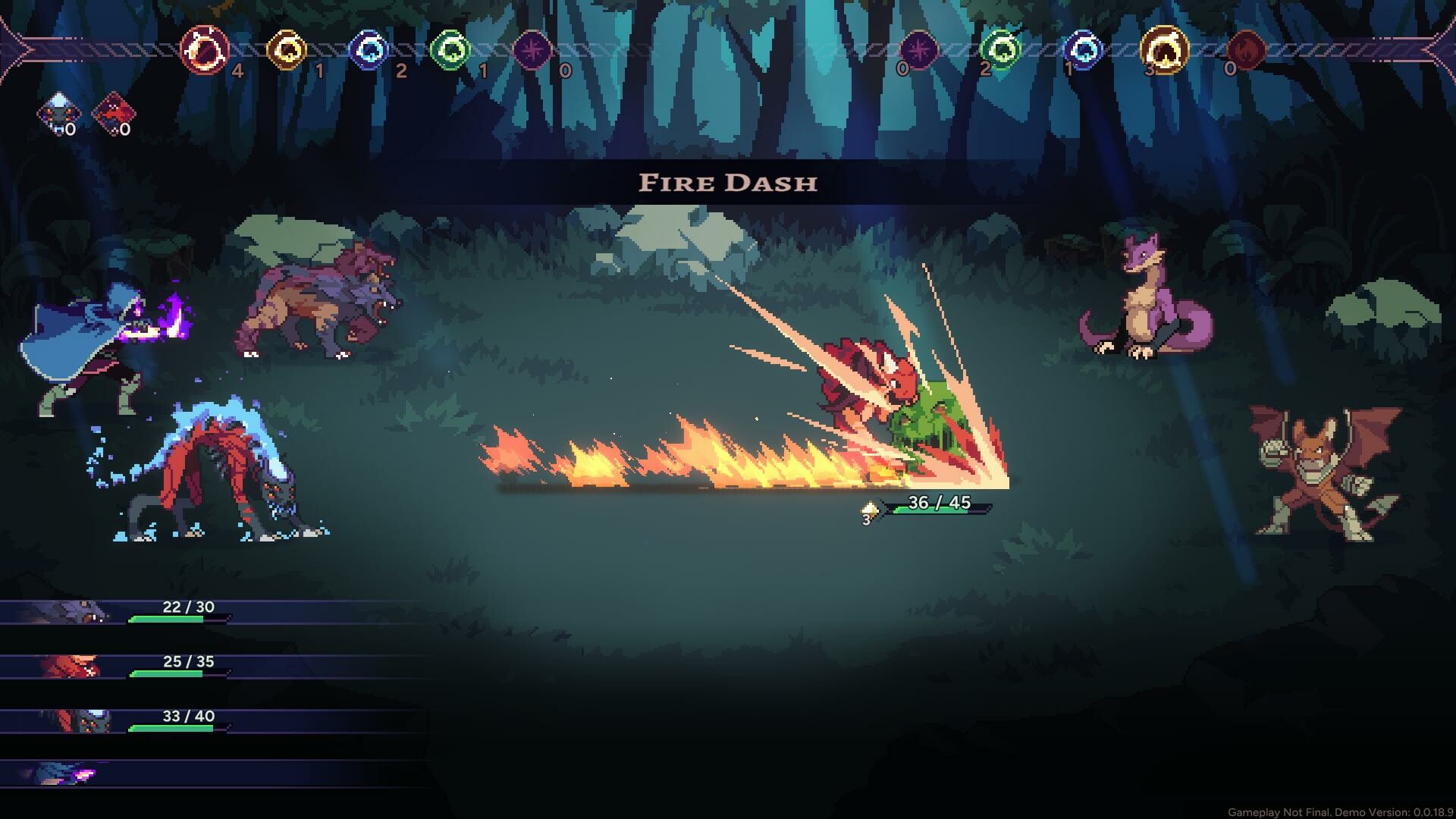
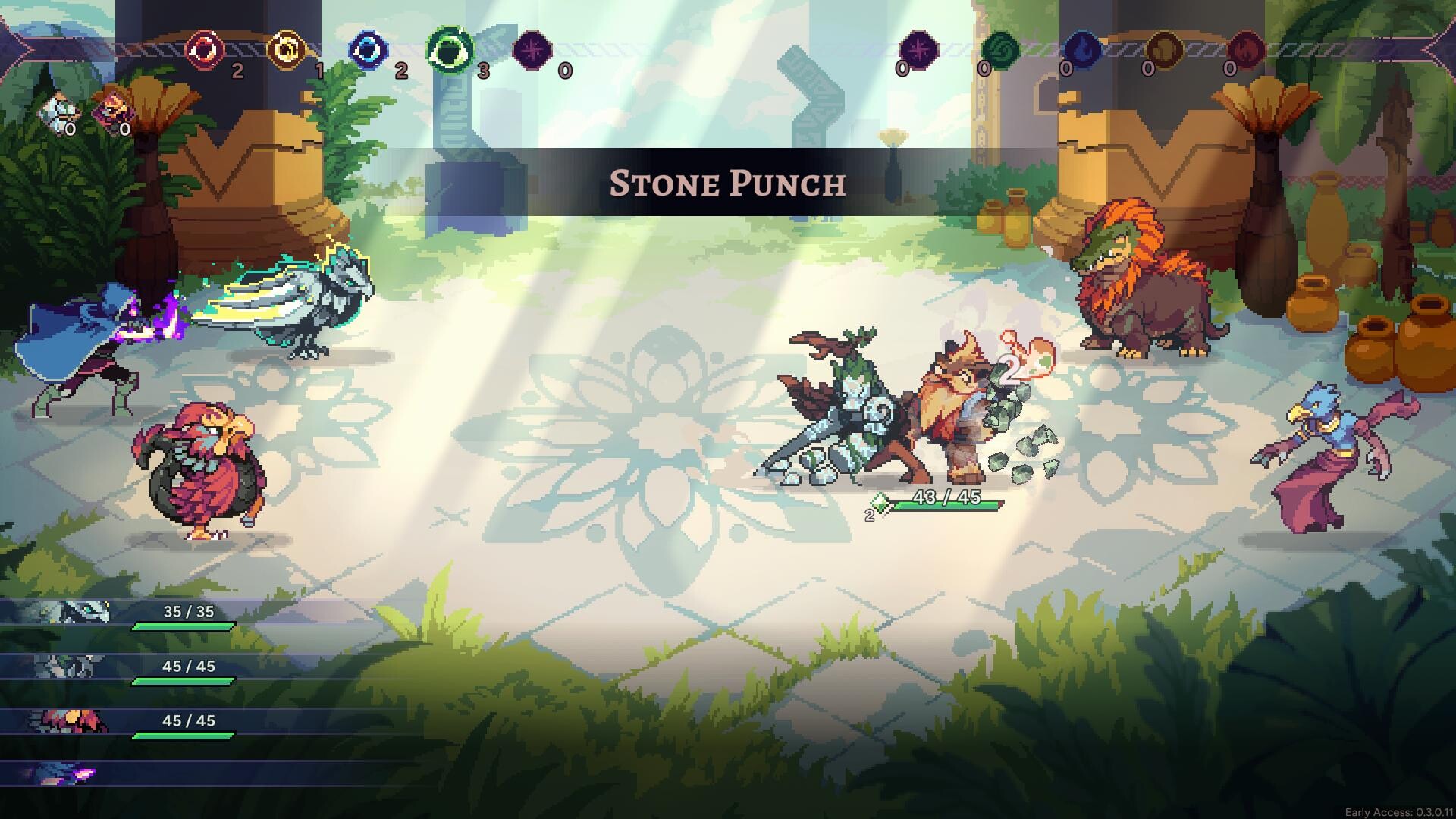
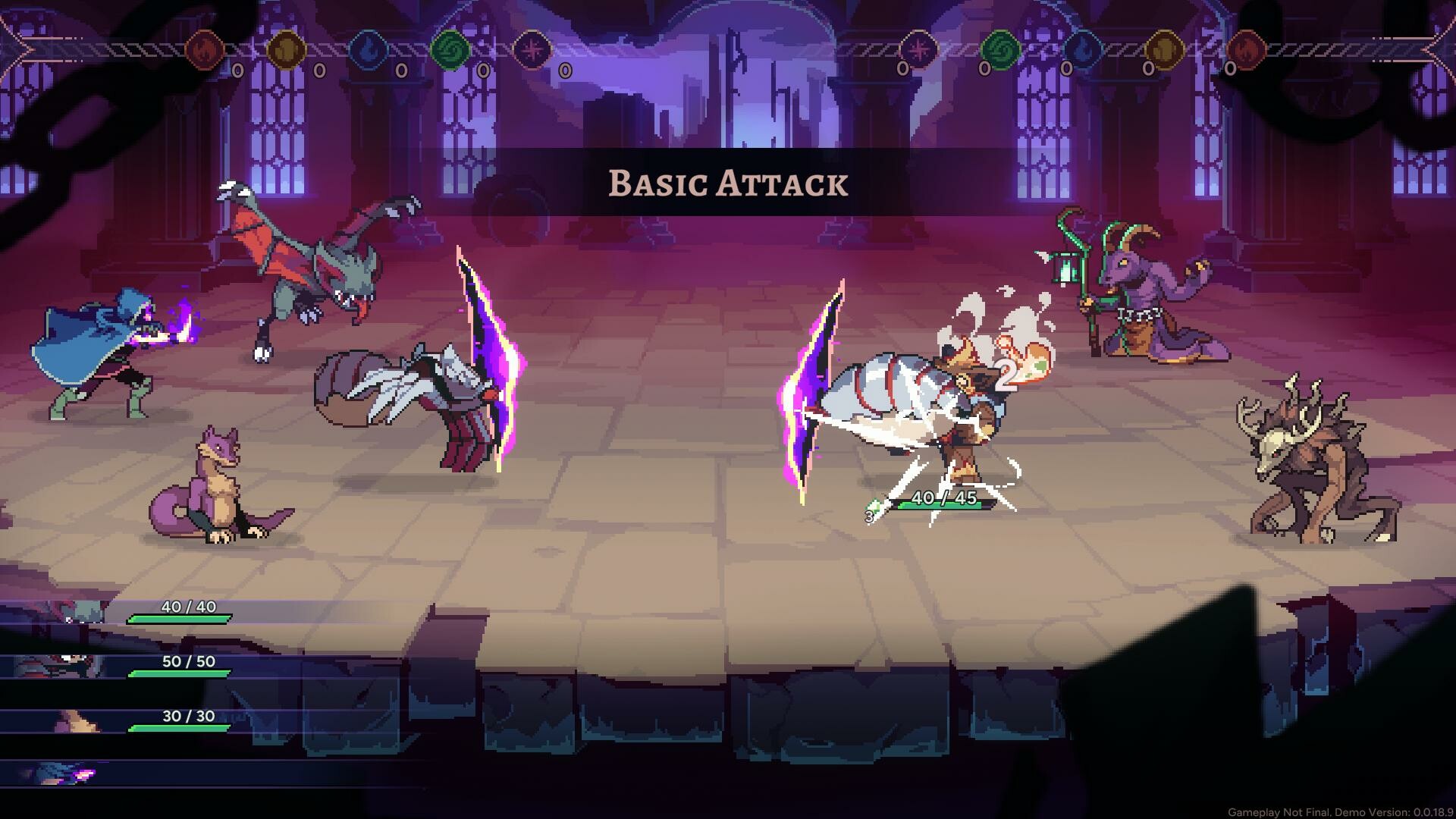
Now, as this is in early access, there’s quite a bit not quite there yet for Aethermancer. I think there’s some rebalancing needed for certain types of characters, and of course I’d love to see more bosses. I’ve only encountered three biomes and three major foes at the moment, and I think I’d need at least triple that to feel satisfied. I’d also like to see more equipment and growth opportunities for my monsters. While the build opportunities available at the moment invite creativity, you can see how early this is as you play.
I think Aethermancer could end up being a promising roguelike. It certainly shows the same attention to detail with characters and sprite work as Monster Sanctuary. And it explores the idea of pairing a monster collecting and raising game with another genre in the same way. What’s here right now is a little slim on content. However, with proper balancing and more additions, it could prove promising.
Aethermancer is in early access for PCs. A demo is available now via Steam.