


 By
By 
In the original Arcadia Fallen, Galdra Studiosexplored the consequences of an alchemist and spirit being joined together, dealing with political turmoil and demonic influences in a town that’s growing into a more threatening danger. One of the things it did best was tell a story while allowing the player to be themselves. Arcadia Fallen II continues that tradition with a new story in the world dealing with more magical elements and even more political strife. Thanks to a number of elements, including a cast of well-written characters and a narrative that might hit harder due to current real-world events, it feels like an even more poignant and successful sequel.
After deciding what our character looks like, via choosing body type, pronouns, magical specialization, and hair/skin/outfit colors, we watch as they head to Seven Winds Academy in a carriage with fellow students Nina and Soren to begin training to become mages. They make a promise to support each other as friends. Fast forward to their senior year, and that seems true! However, things seem extra strict at the academy this year. There’s pressure to make the tests harder than usual, and students are desperate to not fall behind. After falling asleep in a class and getting assigned to an Illusionists division storage closet cleanup with Nature Mage (and returning Arcadia Fallen character) Kim and Tinkerer Puk, all three find themselves in a pocket dimension that’s home to a small dragon named Ragnar. In exchange for helping him retrieve an important item, he’ll help them teleport to a professor’s office. However, it’s only the start of a trio that will grow to a group destined to potentially start a movement.
If this seems similar to other sorts of wizarding school settings, I will note there are some elements in common, but it feels unique. There’s a lot of world-building here, which comes together well. Arcadia Fallen II’s students are pulled away from their families at a young age and sent to study in the hopes of becoming an Illusionist, Mender, Nature mage, or Tinker. Their performance, in terms of grades, determines where they’ll be assigned to live and work upon graduation, with ever-changing marks on their wrists as a constant reminder of how they’re doing. The danger comes from getting a low-grade, thus being forced into assignments in areas that may be prejudiced against them or remote, or even worse billed a failed Dropout who is sent to a Productivity facility and never heard from again. It makes the stakes seem high, while also establishing the setting and providing plausible excuses for our avatar and their allies to get into an alliance with an unknown dragon.
It’s also handled well in that you can jump into Arcadia Fallen II without playing the original game. You will benefit from references to past characters, situations, and lore if you did experience the original. (For example, Kim is one of the familiar faces, and we see how some past choices shaped certain events.) However, this is a fully stand-alone experience. If you do want to influence certain elements of the story, when starting a new run you can toggle certain important choices and references to major events from that installment to affect certain backgrounds here. As someone who did play both, I appreciated the way in which you can shape this entry if you wish.
In terms of how the narrative is told, Arcadia Fallen II feels a lot like the first game. Since there are “no wrong answers” for many of the portions, it can almost feel like a kinetic novel in that you’re going to see the same plot beats and story elements regardless of what selection you make. It’s only certain major decisions and “romance” decisions that alter the course of certain elements and determine certain results. For example, you’re always going to end up assisting Ragnar with his task and get his assistance regarding a test one teacher will be giving. But there will be points where when, say, you get an opportunity to try and convince someone to help, there will be a dial in the center that lets you decisively set the course to one of two options. This does allow more freedom to play as a character who is more like yourself, but also means things will feel relatively similar regardless of your decisions until you hit a certain mark.
I do feel like the puzzle minigame tied to progression feels a lot stronger and more interesting here than Arcadia Fallen’s minigame. At certain points, you’ll need to use Ragnar’s chaotic magic ability to teleport to certain areas. This means going through a tile-turning puzzle to connect two points. As you get further into it, there may be “gossip” points you can optionally connect to for further insights into characters around you and future dialogue responses and opportunities to slot in “allies” in blank spots to ensure you can make a connection. It’s not terribly difficult, but does add an opportunity to think things through in a way I appreciate.
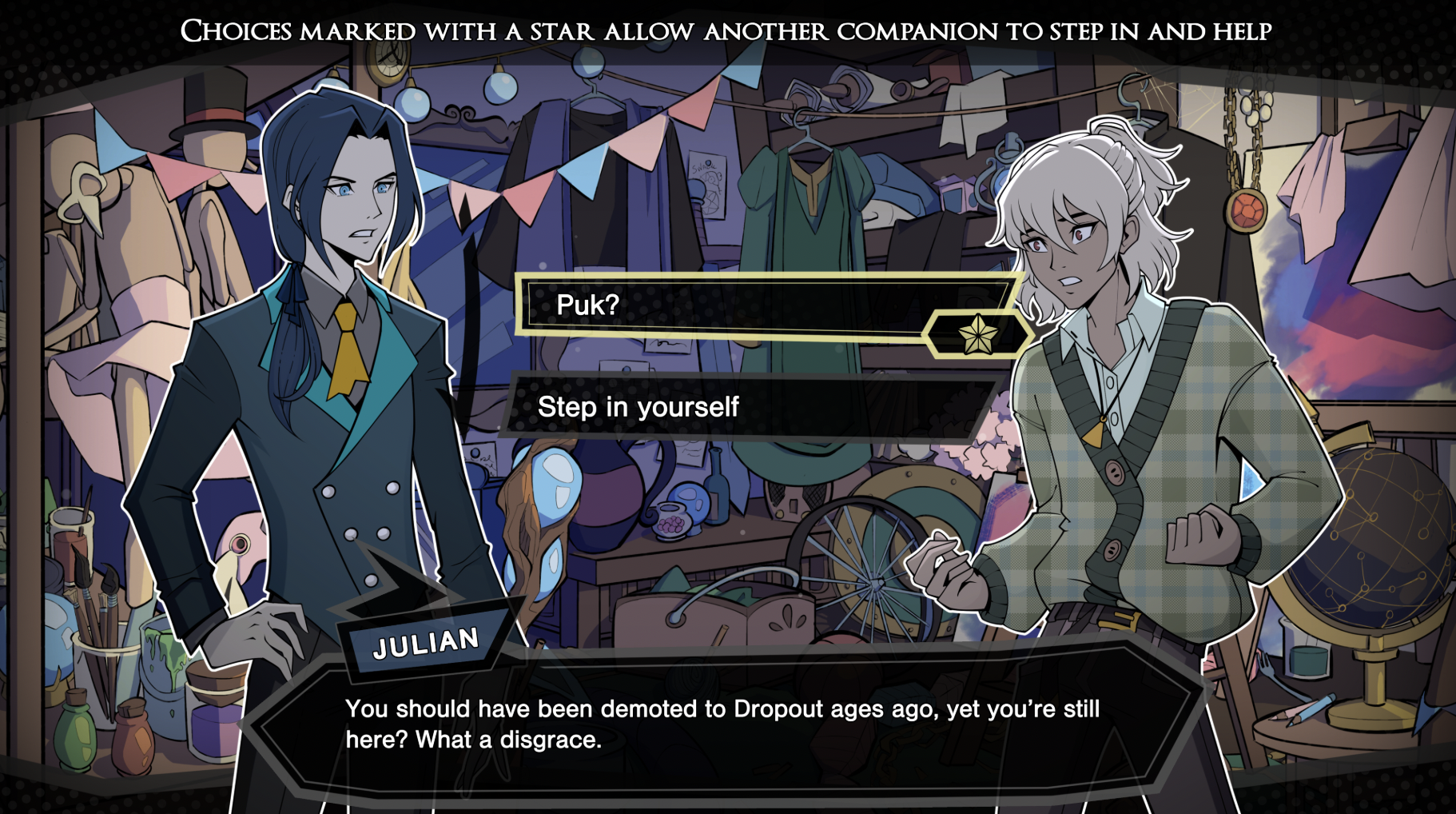
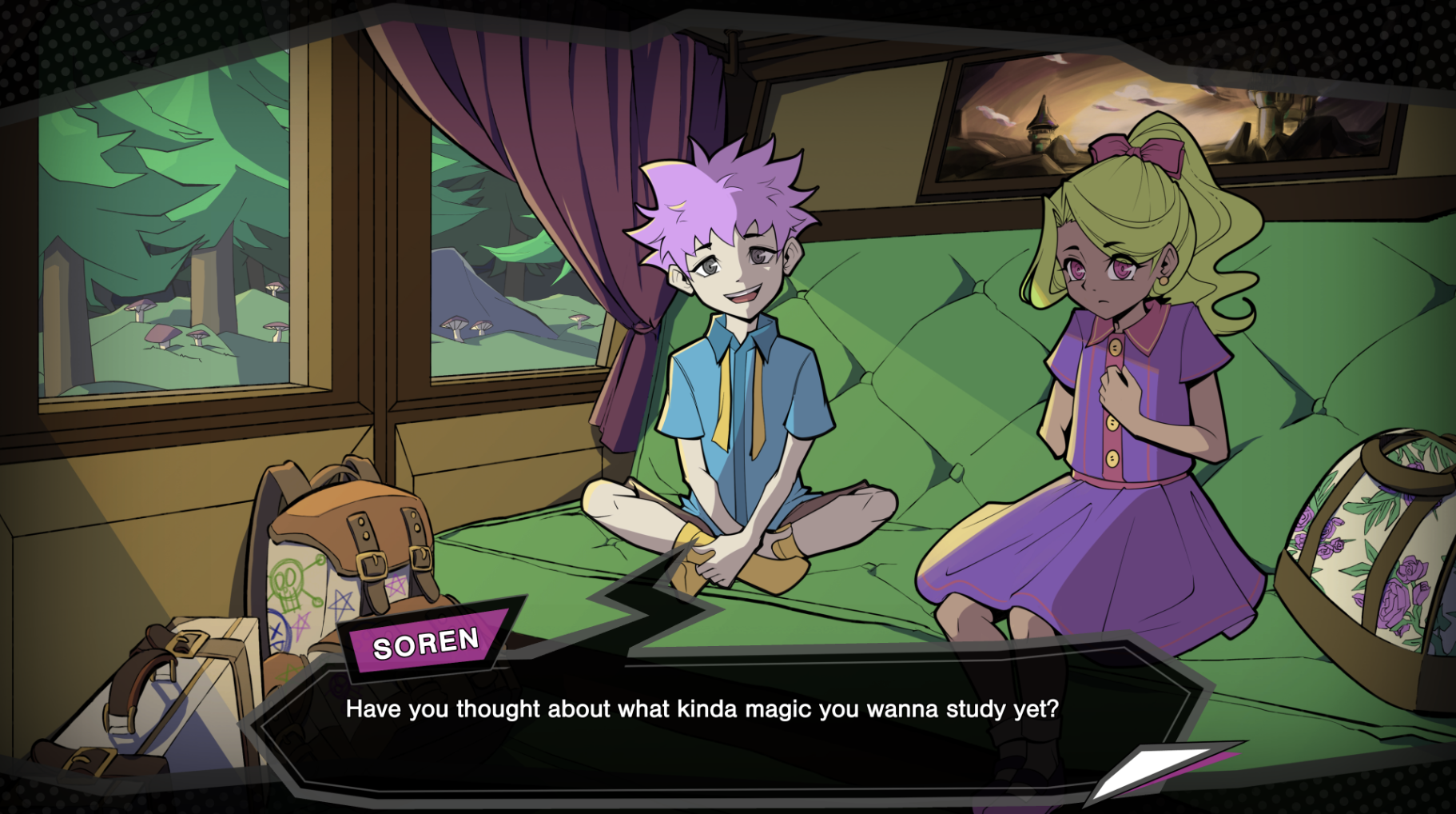
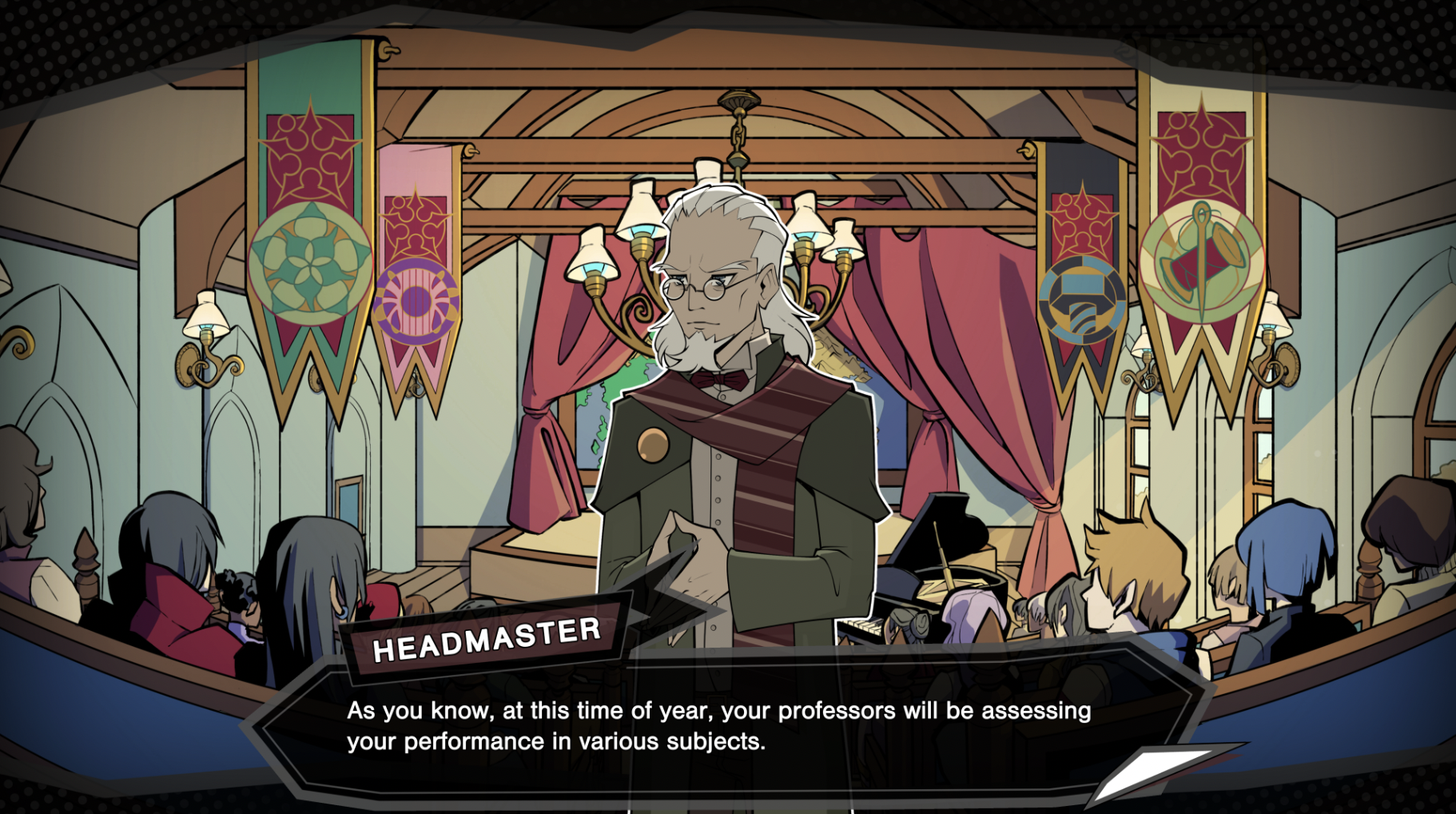
Likewise, that gossip system and the element of returning items Ragnar stole to add to his horde to build up knowledge of the academy and people in it is a positive. It helps flesh out the world and make it feel more real. The only downside to this is that in these downtime breaks between continuing the main story and exploring areas to speak with people in different spots, there can be optional conversations between characters. Since the highlights for icons in the map UI is a bit of a subtle spotlight and the text boxes with these optional conversations come up and block the lower part of the screen, there were a few times when I clicked hoping to advance the text, but instead found myself taken to an area.
Where I think Arcadia Fallen II really stands out is the way in which the narrative seems to call upon real-world political situations and elements that fit in with established lore from the first game to draw parallels and allow for commentary on situations. The discrimination against mages is a fantastic example. So is certain government officials who are prejudiced against them, and react to that in an even more toxic manner by bringing in police-like forces to enforce order and attempt to play with elements they don’t understand in the name of power. Playing through Arcadia Fallen II and being able to take tangible action felt empowering compared to comparable situations when it can almost feel like we can do nothing but speak out. Ragnar’s abilities also mean we get chances to eavesdrop and see different sides of conversations.
It also feels like the cast of Arcadia Fallen II is stronger both in terms of general character design and the overall narrative. While there are some clear villains here, Galdra Studios does an amazing job of sharing different perspectives and crafting a cast that feels like complex individuals. People who come across as antagonistic are dealing with their own issues and can be kind. Those who are good might be willing to use underhanded methods. Suspicious doesn’t necessarily mean nefarious. The fact that we get the option to spend time with people between story-based segments and hear brief asides when on the map means folks feel more fleshed out. And when certain “decisive” decisions come up, they’re framed in a way that we can sort of see how it might shape that person’s future. The voice acting is also quite strong as well.
That said, there are some elements to Arcadia Fallen II that feel a bit finicky. The UI for moving about the academy isn’t great at making the highlights really stand out so you can see what’s selected. There’s no way to advance text in the map conversations. We get the option to collect “cats” we see around the academy by highlighting them to save their information in the menu, but it’s never quite explained how and I only got one in a hallway by random clicking. The companions menu is a bit odd in who it suggests and shows as possible allies, as it will list certain people who really aren’t on your team there and not mention others who should be given their role in the story. (I’m talking about Soren and Nina, since we’ve known them since the beginning.) It’s also a bit of a short visual novel, though given the replay value I can imagine someone going through a second time to see how different major responses play out.
Arcadia Fallen II feels like it tells a stronger story than its predecessor, and it’s one that feels quite relevant. The character development is handled well. Choices feel like they matter, and we can see results of certain actions. However, since this is still a story where there’s no wrong answer, the storyline will mostly follow the same path until later in the tale when those big decisions play out. Given the range of choices you can make, I could see it being with at least playthroughs to get an idea of the different outcomes.
Arcadia Fallen II is available on the Switch, PS5, and PC on April 9, 2026.