


 By
By 
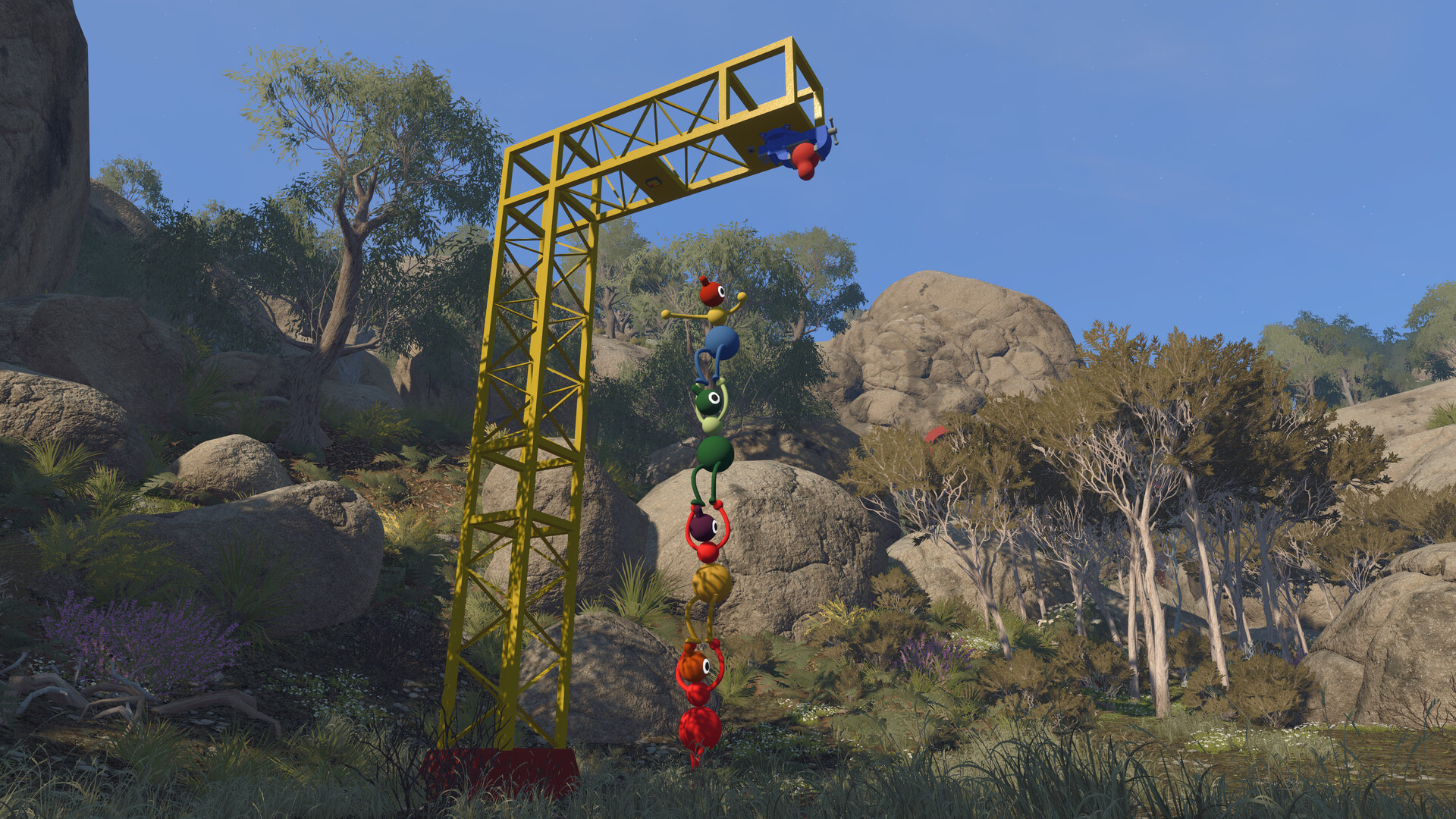
One of the first Big Walk puzzles Graham and I found involved the key item suspended on what sort of looked like metal scaffolding. We could see a button! We figured maybe we were supposed to grab the glowing lantern orbs, which could be thrown like balls, and toss them either at the button or into the grid work gaps like basketballs to press it. Surely, basketball was the answer!
It was not. The answer was for him to pick me up so I could then reach and press the button. I did so, we got the object, and ended up one step closer to forging a key that could drop a bridge to the next area. But in the moment, it was so much fun to figure out what the real solution was and work together to solve a simple, yet still clever and enlightening, puzzle.
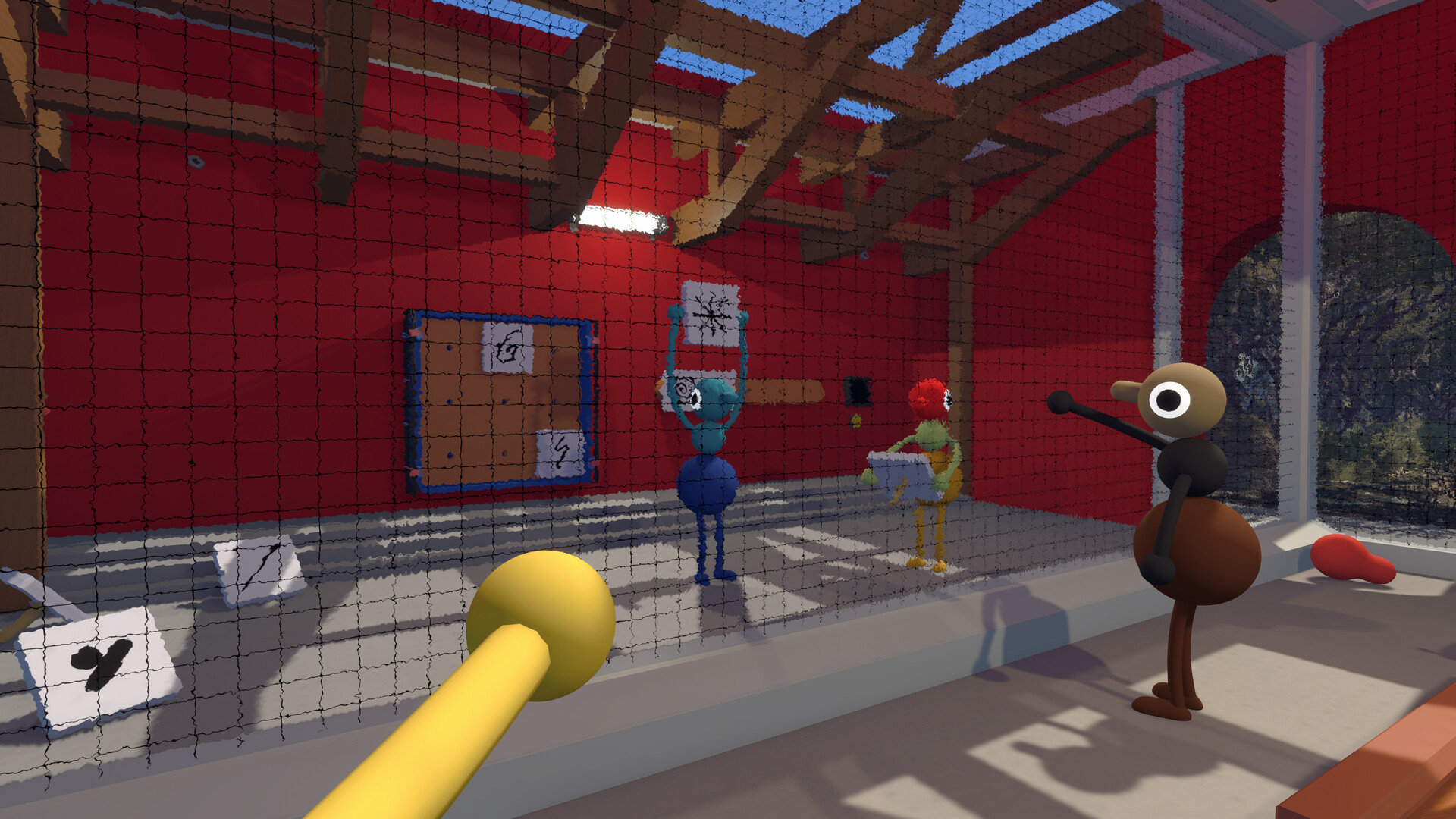
That’s what House House’s Big Walk is. It’s a series of different kinds of puzzles that gradually build on each other into more complex and challenging versions on it. An early one involved us entering a code using various glyphs, with him being able to see the solution and me then grabbing the right tiles to insert in place to get the item we needed. Later, the room he went into with his part of the solution had an intercom that let me hear what he said, but he could only see a light bulb that would illuminate when I pressed a button. Since we each had half the code, couldn’t hear each other in our respective rooms, and found the walkie talkies wouldn’t work then, we needed to work out our own method of selecting the right tiles.
It’s brilliant, really. Especially since all of the puzzles also scale. When you start a session, you establish how many people will be playing. Each scenario will adjust to accommodate that. In some situations, this can make the ensuing puzzle a little too easy. (There’s one with a maze, windows, and a ball on a timer that we figured would be much more complicated and strategic if it didn’t involve passing it through one hole.) But others still make sense and can be quite thought-provoking even when only a pair is solving the riddle.
House House also puts you in the mindset of questioning if everything in Big Walk could be a puzzle. A space with a whole bunch of speakers everywhere that sounds a little different no matter where you sit? Is this a puzzle? Is it a hint about a future task involving sound and perspective? (No, it’s just neat ambiance and aesthetically pleasing.) Does this puzzle’s piece go to this key area? Honestly, probably not, but it isn’t difficult to backtrack and there are a lot of these challenges scattered around the area, so eventually you could go back. The fact that the hub gradually opens up and connects to spots also makes this sort of traversal feel common-sense and simple.
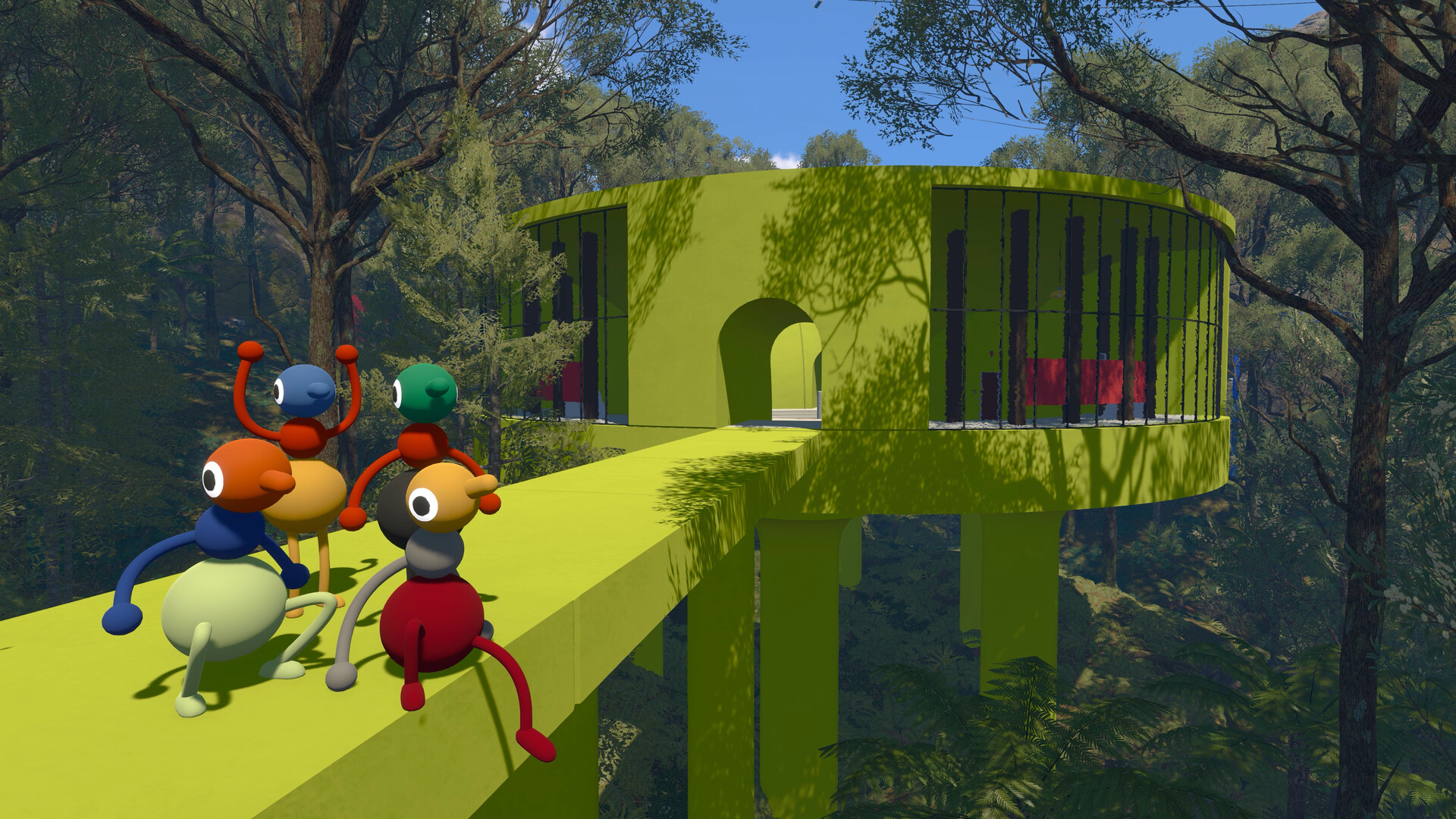
Even the tools we start to find make sense. You start out with the orbs that you can light up and the item finder. Eventually, you come across flash lights and walkie talkies. You can pick up backpack attachments at certain places, so each person can “carry” an extra item on their back. Though that actually acts as an inventory slot for the person who is with you, since you can’t access what is on your own back. Things are constantly building and we’re always getting more options and opportunities.
As enjoyable as Big Walk is, however, I absolutely hate when night falls. The idea of the day and night progression is fine and all. It also can make it easier to see certain towers, due to their lit transponders, or when players set off a flare for a certain area to show their immediate location. I also appreciated that it made it easier to see where we’d been, based on the lit globes in stands along the way. But this is also a game where sometimes you can’t jump up on certain rocks due to height, scale certain hills due to the angle, or might even get caught on environmental objects like branches or boulders even in the daylight, so it gets much worse and more frustrating when night falls. Especially since you can’t attach the glowing orb lanterns to a backpack, so someone in your group would need to hold it for everyone to see.
Big Walk gives us an excuse to gather together with friends, go on some walks, and solve some often great puzzles. It’s a great example of a developer gradually building on its ideas for more complex and challenging tasks that make you realize what you did before prepared you for this. (And sometimes, maybe it really does feel like basketball is the answer.) It’s a great excuse to sit back, work together, and talk things through in a pleasant world filled with colorful puzzles.
Big Walk is available on PCs.