


 By
By 
I admit I was slightly disappointed when Dragon’s Dogma 2 launched. While it was as faithful as it could be to the 2012 original and enjoyable, Capcom didn’t do enough to explore its ideas or push the metaphorical boat out. Now Dragon’s Dogma 2: Dark Arisen is here and, despite a few game attempts, it hasn’t succeeded in magically transforming the series into what I hoped. I still very much enjoyed my time back in the world of chattering pawns and emergent griffin attacks, but I don’t know if some of these changes go in the right direction.
There are two major additions in Dragon’s Dogma 2: Dark Arisen: a swathe of new challenge dungeons dotted around the main zone and the entirely new zone of Norgan. These dungeons seem intended to be completed alongside the base game’s story, while Norgan contains the meat of the update and is aimed at characters at level 40 or above. I’d suggest saving it for after you’ve completed the game, as the new loot system out-scales everything in the base game and starting New Game+ can now drop you right in Vernworth ready to tackle the new content.
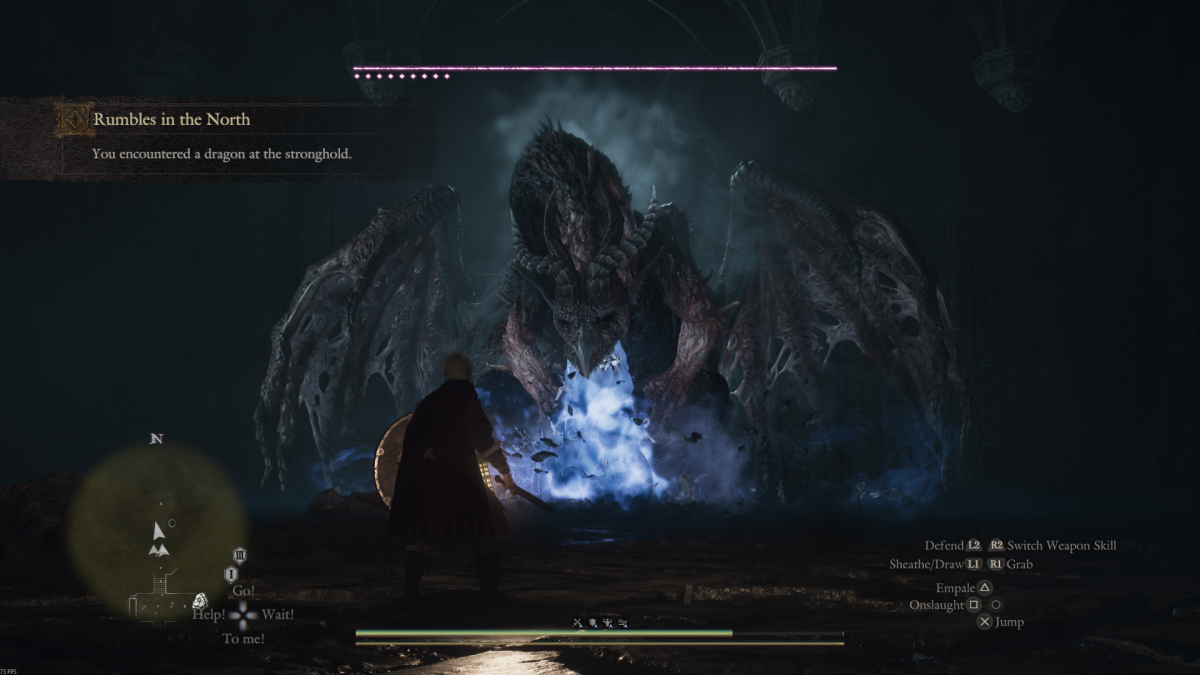
Take the trip north and you’ll soon be in the new zone and ready to start exploring, questing, and hoovering up loot. While I was initially unimpressed by the enemy variety, you start seeing new foes as you progress in the story. Though in the beginning, you’ll fight a lot of humans, reskinned giants, and so many wolves. Despite that, the new zone is gorgeous when you aren’t blinded by blizzards, and the exploring remains as fun as ever.
I’m not quite as sold on some of the new changes, however. You now get an unlimited ferrystone to teleport home, making a lot of the route planning and campfires basically obsolete. A new item marks significant enemies on the map for you to hunt down, instead of running into them organically. The convenience is nice, but the game loses some of that serendipitous charm that made it special.
The other big change in Dragon’s Dogma 2: Dark Arisen is the loot system. Gone are the bespoke equipment pieces of the main game, Norgandian gear instead drops as Spoils from enemies and certain gathering points. These come in different rarities and tiers, but can only be used after being appraised in the main village. Their stats are partially randomized, and they can also contain special skills that grant new passives (like increased damage against certain enemy types or boosted resistances) or upgrade some combat skills with new effects. You can also exchange them for either gold or rift crystals in case you find yourself short of either, though at this point I found both to be abundant.
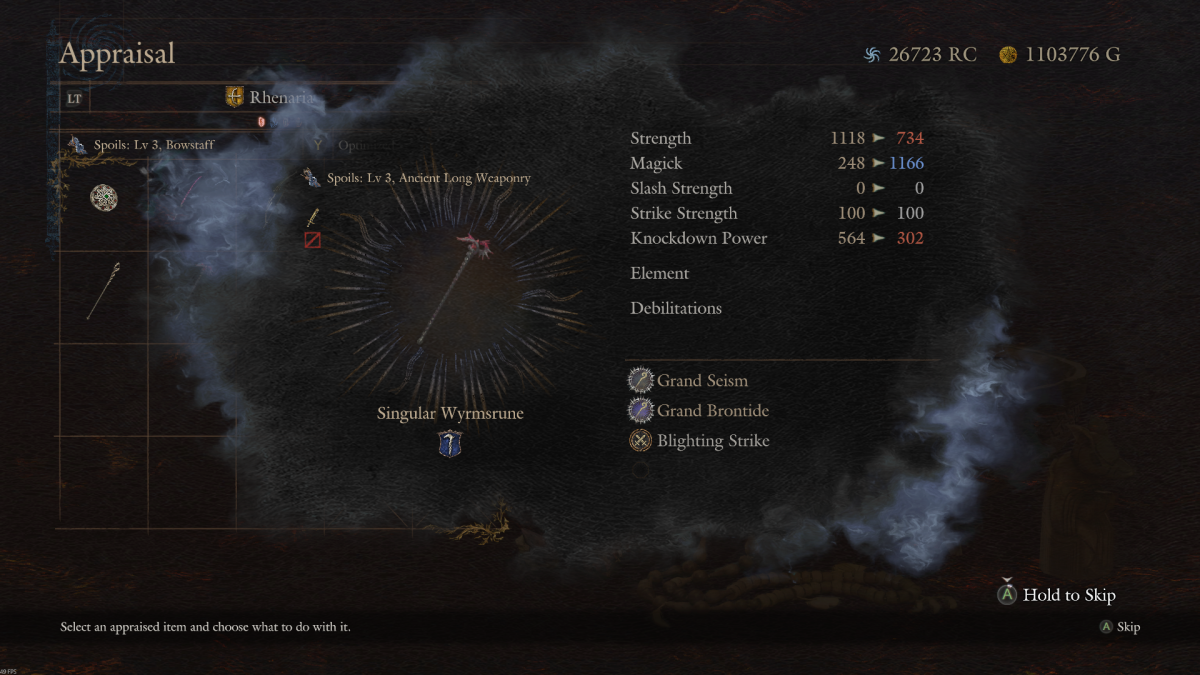
I’m of two minds about the new Spoils. On the one hand, it helps creates a fairly consistent gameplay flow when combined with the eternal ferrystone. Go out. Kill monsters. Find spoils. Teleport home and appraise them. Repeat. I found it takes the excitement out of each individual piece of loot, and once you have a few upgrades at your tier sorting through them becomes a chore. There’s also no breaking down the equipment to combine the skills or appearances you want, á la Nioh 3. What you get is up to the mercy of the random number generator. The system makes loot plentiful and consistent, but it’s not mechanically all that interesting. I feel like we’ve lost something along the way.
That’s ultimately my problem with Dragon’s Dogma 2: Dark Arisen. It feels afraid to really tread new ground and play into its eccentricities. Capcom instead sanded down some of the friction points that made it stand out in the first place. I don’t think these changes will be enough to entice back players who bounced off it previously. The magic is far from gone however, and there’s plenty to enjoy if you love the series like I do. I just can’t help feeling that Dragon’s Dogma still hasn’t really come into its own, and I hope we don’t have to wait another 12 years to see the next attempt.
Dragon’s Dogma 2: Dark Arisen is available now for PC, Xbox Series X/S, PS5, and Nintendo Switch 2. It requires the base game to play.
