


 By

FuRyu is one of those companies where you tend to know what their games might be like before they drop as a result of the track record. They can absolutely be fun and memorable, but we know they’re more likely to be average and a little flawed than some AAA, once-in-a-lifetime, must-play. But usually about once a year or so, we’ll see an absolute banger in the roster, and CRYMELIGHT is it. It isn’t a perfect roguelike, but its Hades and Cult of the Lamb approach to dungeon-crawling combat, Poker hand approach to ability upgrades, and troubled characters combine into something worth playing. It also fits well within the established CRY series alongside CRYSTAR and CRYMACHINA.
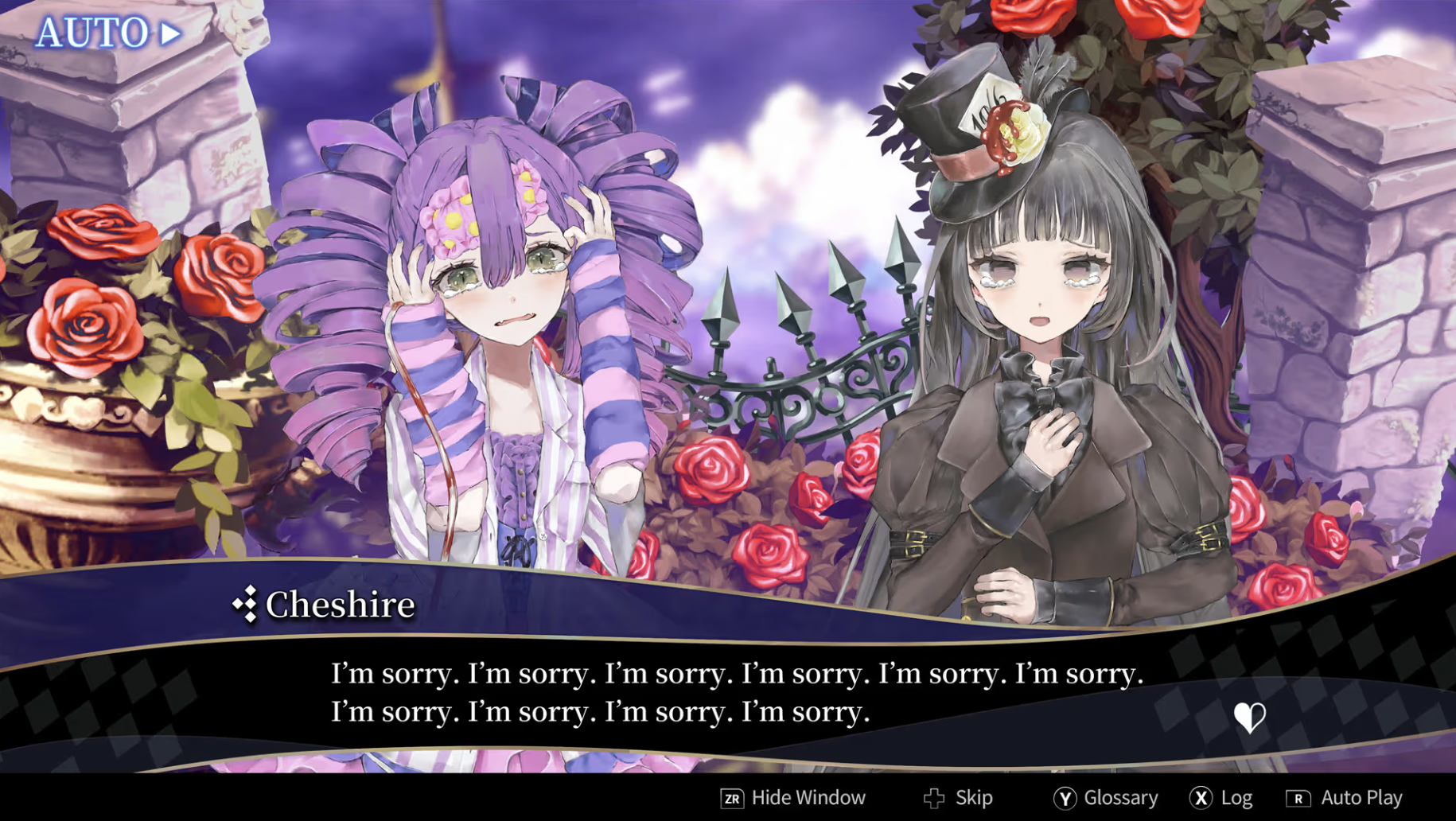
CRYMELIGHT is set in Wonderland, a purgatory where troubled sinners compete in a death game based on Lewis Carroll’s Alice’s Adventures in Wonderland for a chance at freedom if they defeat the Queen. Our adventure begins with a young woman in a blue and white dress facing that final boss. As she’s about to win, she’s defeated. Time then rewinds to a point at which we see a blue butterfly floating through the Queen’s gardens. A voice warns that if she loses her sense of self, she’ll be targeted b the Card Soldiers and eliminated. It seems she could falter until she sees another, colorless butterfly about to suffer the same fate. She defends them, then develops a body again and gains a CRYME weapon. White Rabbit then appears a a guide and declares the nameless girl, who is suffering from amnesia and now given the moniker Alice, a challenger in the death game. Though she suggests abandoning and destroying the other butterfly, Alice claims she owes her one and is her “plus one.” That girl too, who also can’t remember who she is, develops a sense of self and becomes Mary.
From there, we jump into solid gameplay loop. The Tea Party Hall hub in Wonderland features a table section with March where you can unlock story scenes of the four challengers Alice, Cheshire, March, and Mad, as well as Mary, that offer insights into who they were in the past and are now. The Tailor lets you upgrade Alice’s weapons and equip accessories. At the Confessional, you can use points earned from dungeon runs to unlock/upgrade abilities (like a revival) and upgrade stats. You can also check in with Cheshire at the library to see past story scenes and segments. It’s a way to relax and prepare for runs, while also perhaps gaining more insights into individuals.
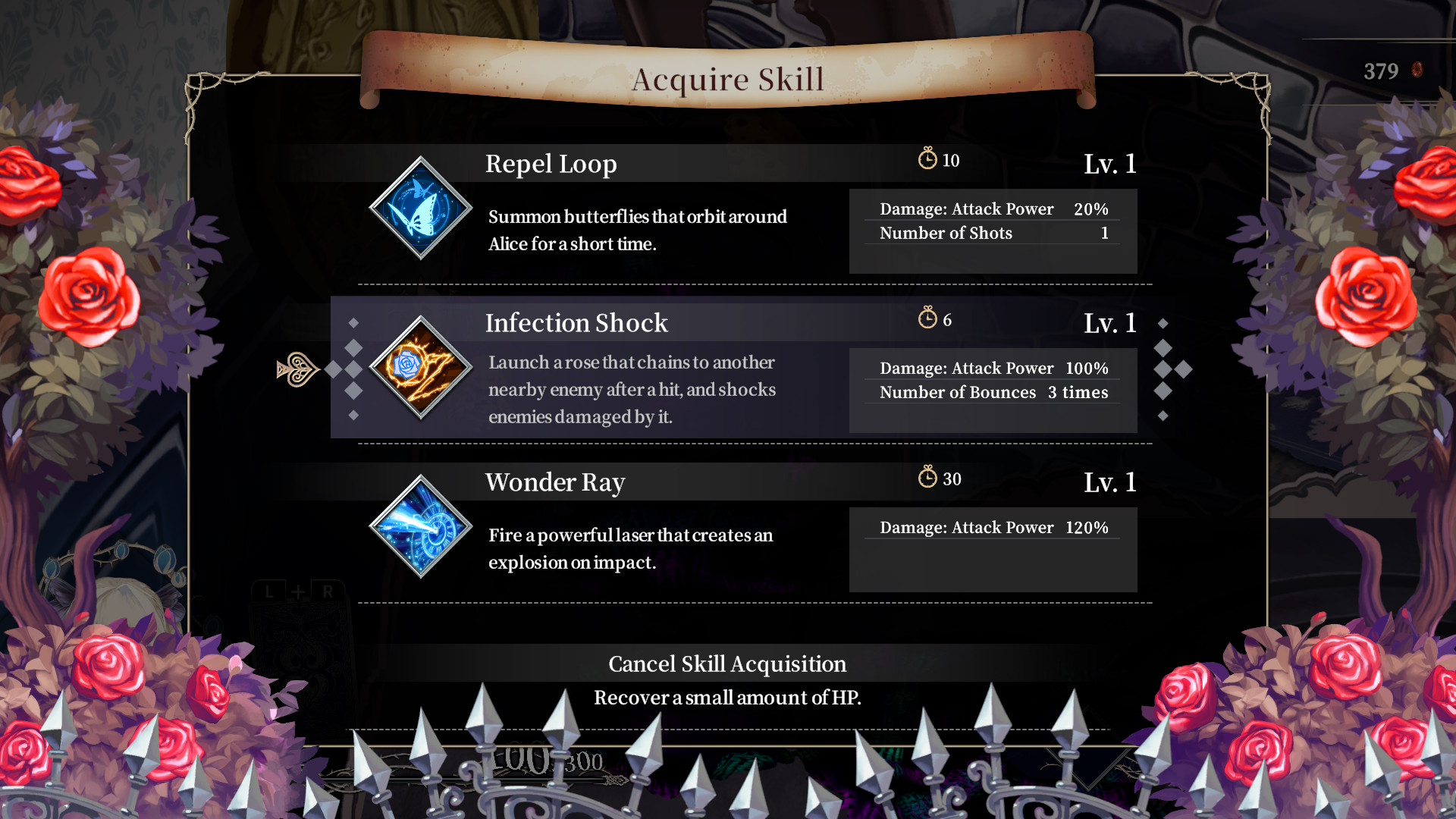
Heading out through the doors to Wonderland sends you through different realms toward the Queen’s castle. In typical roguelike fashion, we’re presented with a map with nodes and shown what the “reward” might be for selecting it. This could range from things like additional cards that bolster your attacks and moveset, Skill acquisition, and currency for areas like the Tailor or Wonderland shop. Selecting nodes will send you either into a small stage with a set number of enemies or a shop run by White Rabbit. Once you defeat all of the foes, you get your reward, are sent back to the map, and continue until you reach that region’s Alice’s Adventures in Wonderland-themed boss. Defeating them nets you another important item for progression and access to the next region. Also, all along the way, you’re also seeing story scenes that tie into the restoration of Alice’s memories and insights into the tragic backgrounds of her rivals.

While these stages aren’t expansive, I honestly love the structure. The focus is on getting through the current horde as efficiently as possible, via normal, charged, Crymeride, and special attacks and dodging foes. Enemy attacks are telegraphed via red zones ahead of them hitting, and many of the card rewards offer bonuses for using things like a dodge to avoid. As you do better in battle, you’ll build up a gauge and see the ground on the battlefield change to show your attacks will be stronger. The claustrophobic nature does mean sometimes taking hits you could have avoided due to the structure and the overhead Battle View perspective is the only screen mode to go with since Wonder View doesn’t offer a good perspective, but everything works.
The card system for upgrades and bonuses tied to going for Poker hands is also incredibly useful. You can get these cards as rewards after nodes that offer them as rewards. You’ll often know if one or three will be given, and in some cases you’ll even be told only options from one suit will appear. If you get five cards and a certain hand, ranging from a pair to royal flush, all of the cards from that hand level up and are “banked. So you keep the leveled up bonuses, buffs, and passives you acquired and reset your hand with a chance for a fresh start with another five. Those, in turn, are also banked and added to your total when you get five more, and it keeps going as you build up this background of bonuses affecting that run.
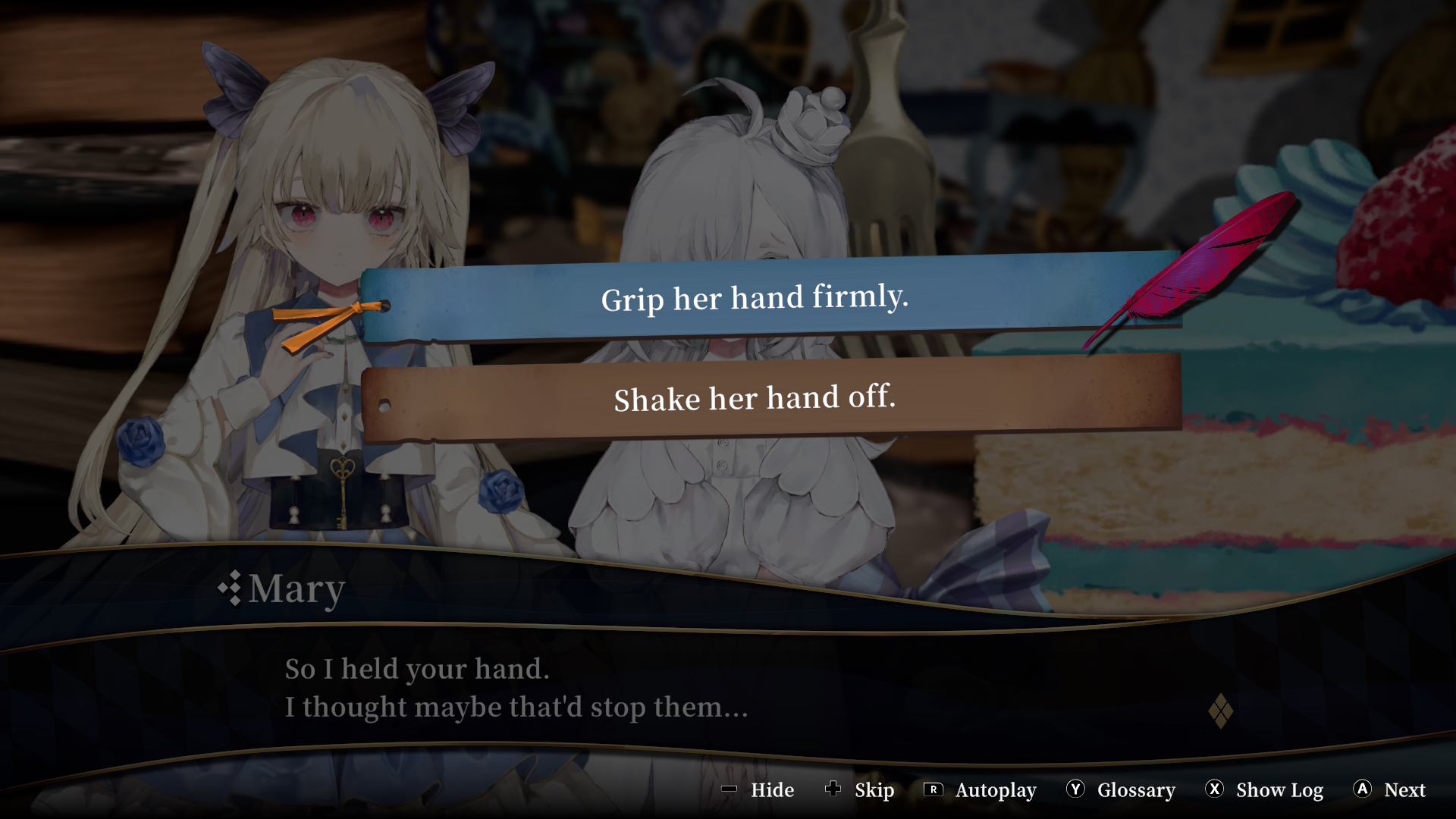
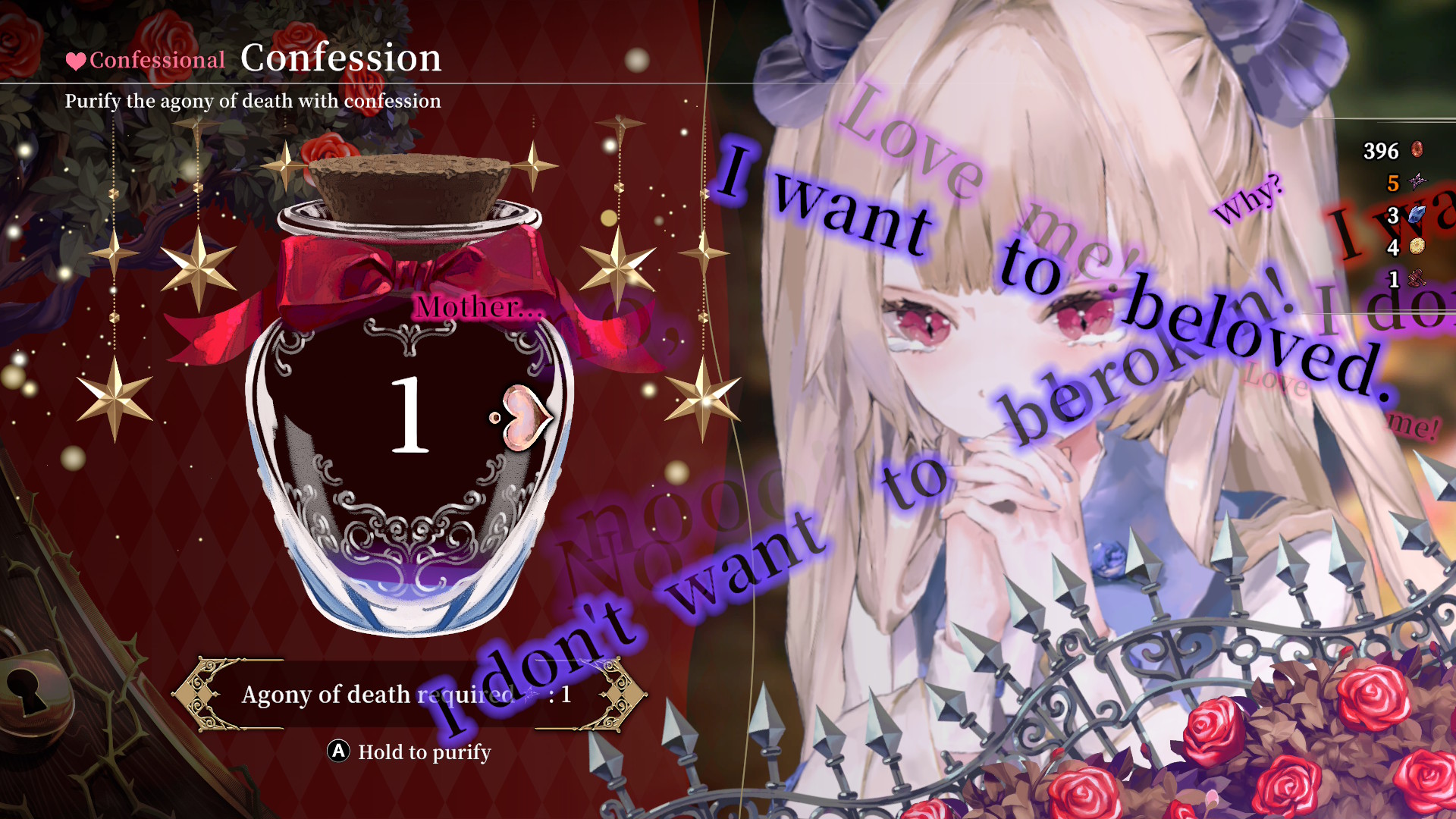
But like Hades, I found the narrative in CRYMELIGHT helped keep this roguelike compelling. It’s a little heavy-handed when it comes to the drama. Anyone familiar with the CRY game series would know this happens with characters and their sorrowful backstories, given crying is always appearing as part of the mechanics and story. (Here, it comes up during the Confessional upgrading process and when we see some of the characters begin to deal with their devastating pasts.) Seeing Alice develop as a character as she begins to remember who she is and what she went through is a highlight. (I was shocked when I saw her outright reject a response option I selected for one situation due to her PTSD.) But while it can feel a bit over-the-top, it’s in line with what we should expect from this series, fits the situation, and serves the purpose of the experience.
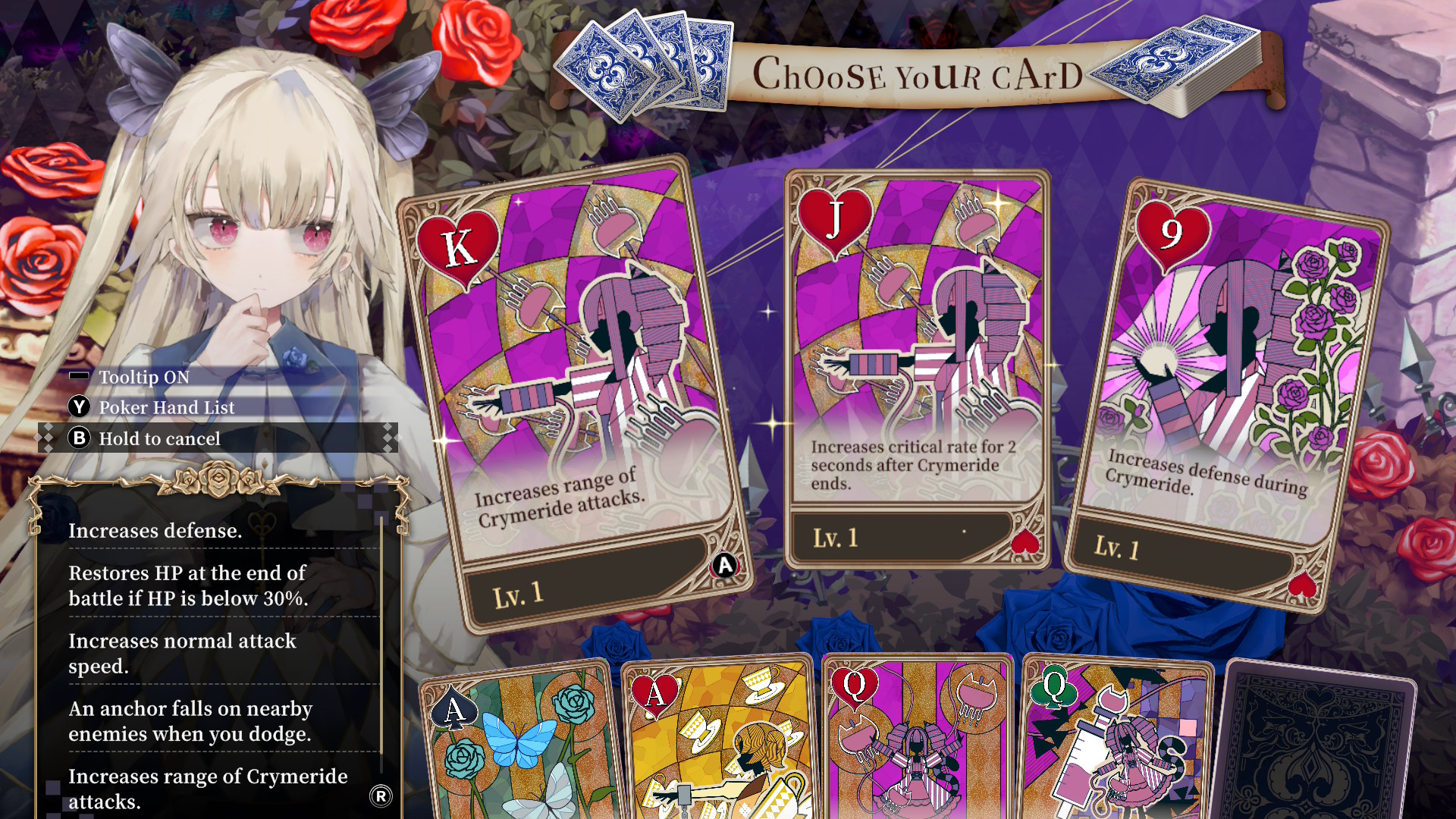

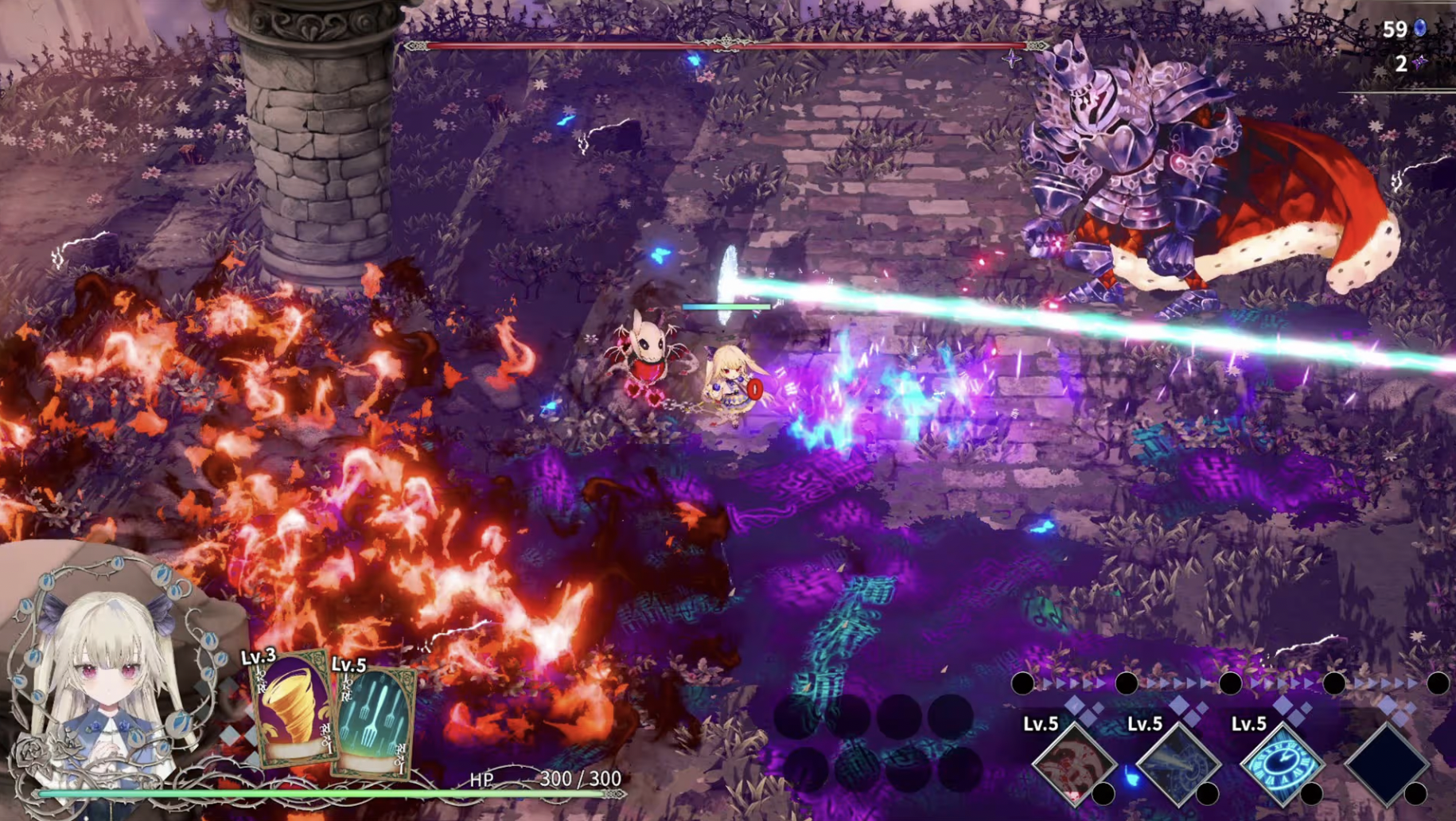
Speaking of the experience, CRYMELIGHT aesthetics are fantastic. The sudden burst of words tied to characters’ backgrounds and sins can be shocking and disorienting, as are the shifts in how the Wonderland dungeon’s ground looks as you turn the tide in fights. The character designs are fantastic, with the bosses being absolute stand-outs. Said bosses also feel fun to fight mechanically, with players really needing to learn to dodge and keep an eye on attack patterns to win. It’s an otherworldly sort of beauty with gothic overtones that can sometimes get quite detailed.
There is one quirk, albeit I wonder and hope if it is something that could be patched. When I first started CRYMELIGHT on the Switch 2, it took almost two minutes to hit the title screen. I saw the initial Switch 2 opening of white logos on a black screen. Then, it went to this blank screen. I almost thought the game was frozen, but I suppose it was just the world’s blandest loading screen. This happened multiple times as of time of writing, so it wasn’t some odd, one-time quirk.

CRYMELIGHT combines some interesting growth elements and heartstring-tugging situations for a solid roguelike and good entry in FuRyu’s CRY series of games. Is it possible to become OP incredibly quickly with the right card draws or upgrades? Sure, but that’s true of many games in the genre. Does it thrive on dramatics to tie in with the “crying” and “sin” themes these titles are known for? Definitely, but that’s what we expect from this line. Not to mention it’s gorgeous like other entries in the series. CRYMELIGHT may not be a perfect roguelike, but it’s satisfying and one of the best recent FuRyu releases.
CRYMELIGHT is available on the Switch 2, PS5, and PC.