


 By
By 
Outerloop’s done interesting things with its games. So much so that even if there are some quirks to it, like Falcon Age, it can feel satisfying due to the story the team is trying to tell or the concept behind its gameplay. Following Thirsty Suitors, we their next RPG also explores familial relationships, culture, and cooking. The thing is that this time, some narrative and battle system decisions mean Dosa Diva doesn’t feel as unique, touching, and exciting. I feel like it honestly might have been better served up as a graphic novel or short animated series.
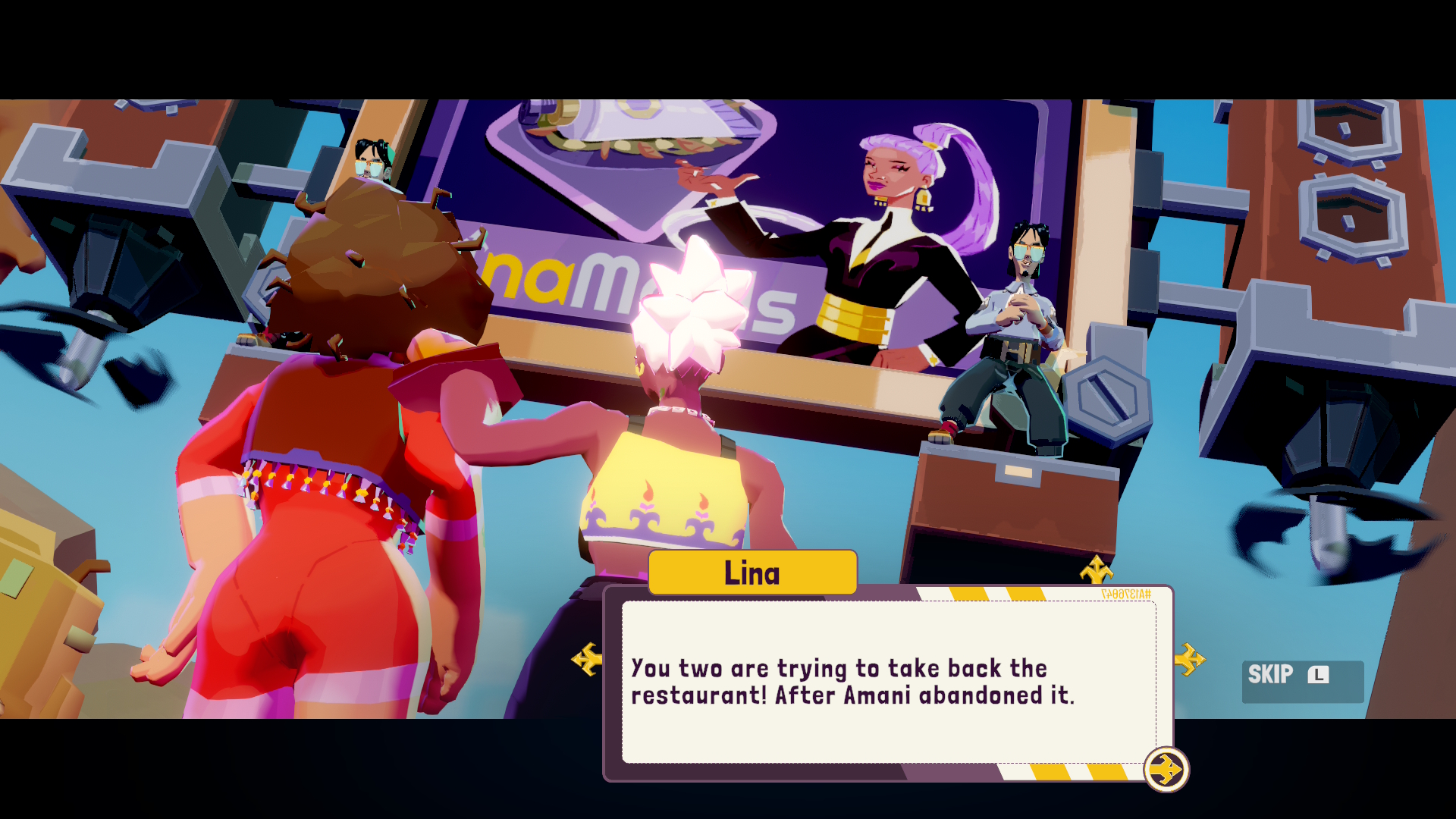
Dosa Divas feels like it begins in medias res, dropping us into a story that’s already started and expecting us to be okay without any context. Amani, Samara, and Lina’s family once owned a restaurant where Amani was head chef. Something happened that resulted in the eldest sister leaving the country, Sam feeling like maybe it’s her fault, and little sister founding the LinaMeals company that puts food into tubes and uses battle-ready lawyers to beat people out of cooking their own food. Amani is back in town for some reason, doesn’t seem to quite grasp how bad things are and fractured the family is. It’s up to the sisters to reconnect with people, bring home-cooked meals back, and beatdown corporate culture and capitalism.
While the sisters Amani and Samara are fascinating and Outerloop again nails the complex dynamic of familiar relationships, I didn’t connect as deeply to the Dosa Divas storyline as I did to Thirsty Suitors. Part of it is because the pacing is off. In the introduction and first village, I almost felt like I was already expected to understand Amani and Samara’s family and their issues, even though I’d only met them moments before. Meanwhile, I’d say somewhere around the last two hours felt like they were unnecessarily stretched out and bulked up for the sake of forcing us to backtrack and complete a bunch of dishes. Perhaps it’s a storyboarding issue? Maybe it would have felt stronger if we weren’t expected to pick up on so many contextual hints and assumptions ? It’s one of those situations where it’s doing a lot of “telling” what to expect and what happened, but not a lot of “showing” as evidence and proper explanation. And, once we do get to the endgame where we go through all these last-minute measures, it’s just tedious. While I appreciated what the family went through, felt for the situations people on the island were experiencing, and did find some conversations amusing, the tone and narrative jumps around in such a way that I never connected with characters the way I did in Thirsty Suitors.
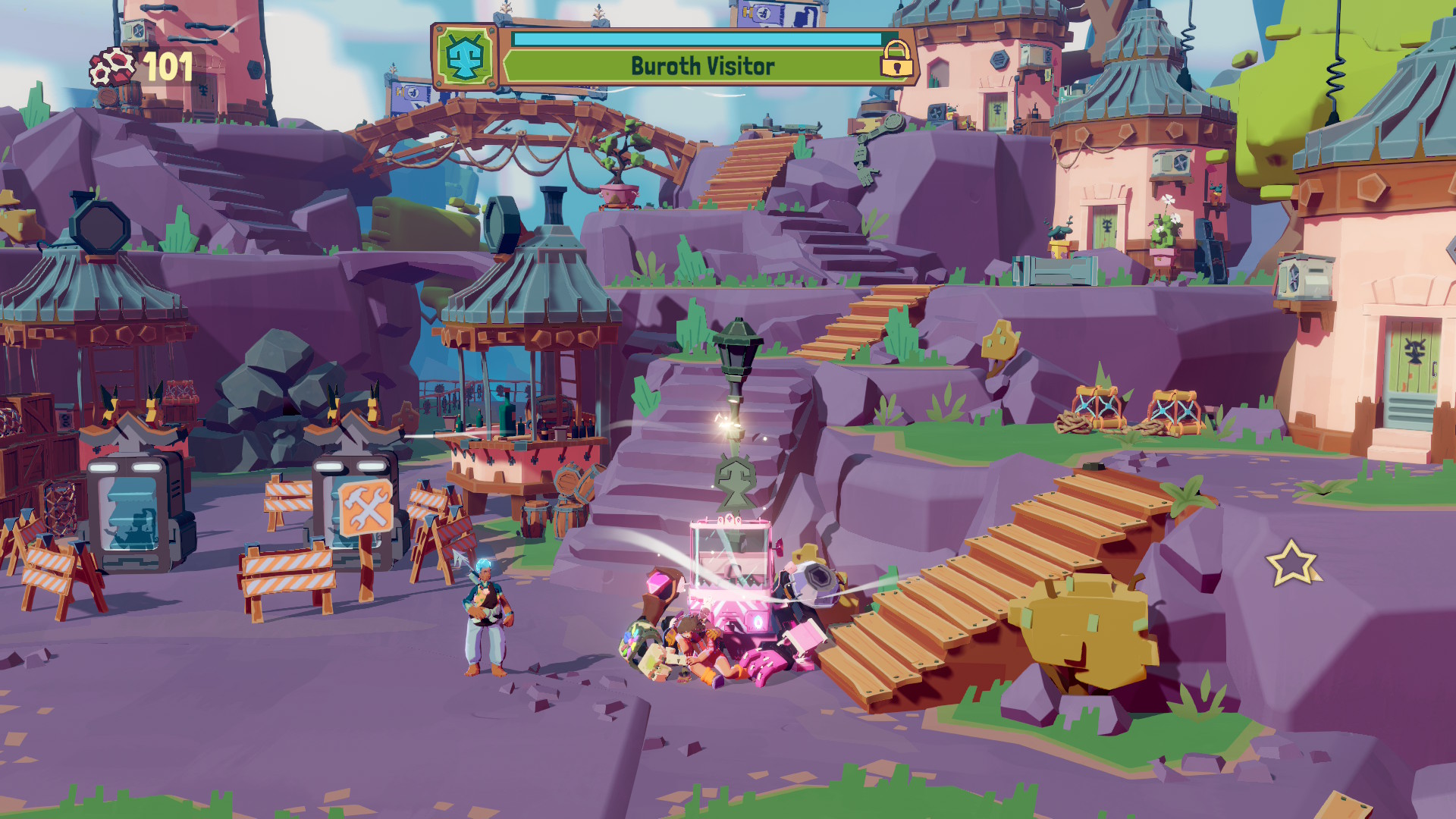
Since Lina’s basically destroyed the family’s reputation in addition to made everyone’s life miserable with LinaMeals and her corporation, it sometimes like Amani and Samara are on a reputation rehabilitation tour as well as undoing the corporate hold and getting closer to reuniting with Lina and potentially working all the family issues out. You’ll get to a village, where your reputation is shot. Tearing down LinaMeals ads, clearing quests, and cooking up food for folks will build up your reputation in an area. This also adds to characters’ range of skills, so it’s beneficial in every possible way.
While cooking is a major focus in Dosa Divas, it isn’t my favorite element of the game. As you wander around the island, you’ll collect ingredients via actions like finding them growing, shopping, and fishing. The sisters then enter a spiritual space with the mecha Goddess to preparing the dish with found ingredients. (Dosas are the first thing you’ll make, of course.) This launches into a series of one-after-another minigame interactions. After you’ve gone through the process a few times, it’s absolutely fine. But like the story, there’s no proper tutorial or introduction to this, so it’s easy to mess up the first few times you make a dish as you figure out what controls are, how to hit the right spots in gauges, and perform QTEs the right way to get things done. Once you’re aware of what to expect, some folks might find it entertaining. I kept running into an issue where it seemed like I’d just fall short of hitting the minimum for what would probably be an ideal meal, especially when it came to button mashing, so it didn’t always feel on point when I played.
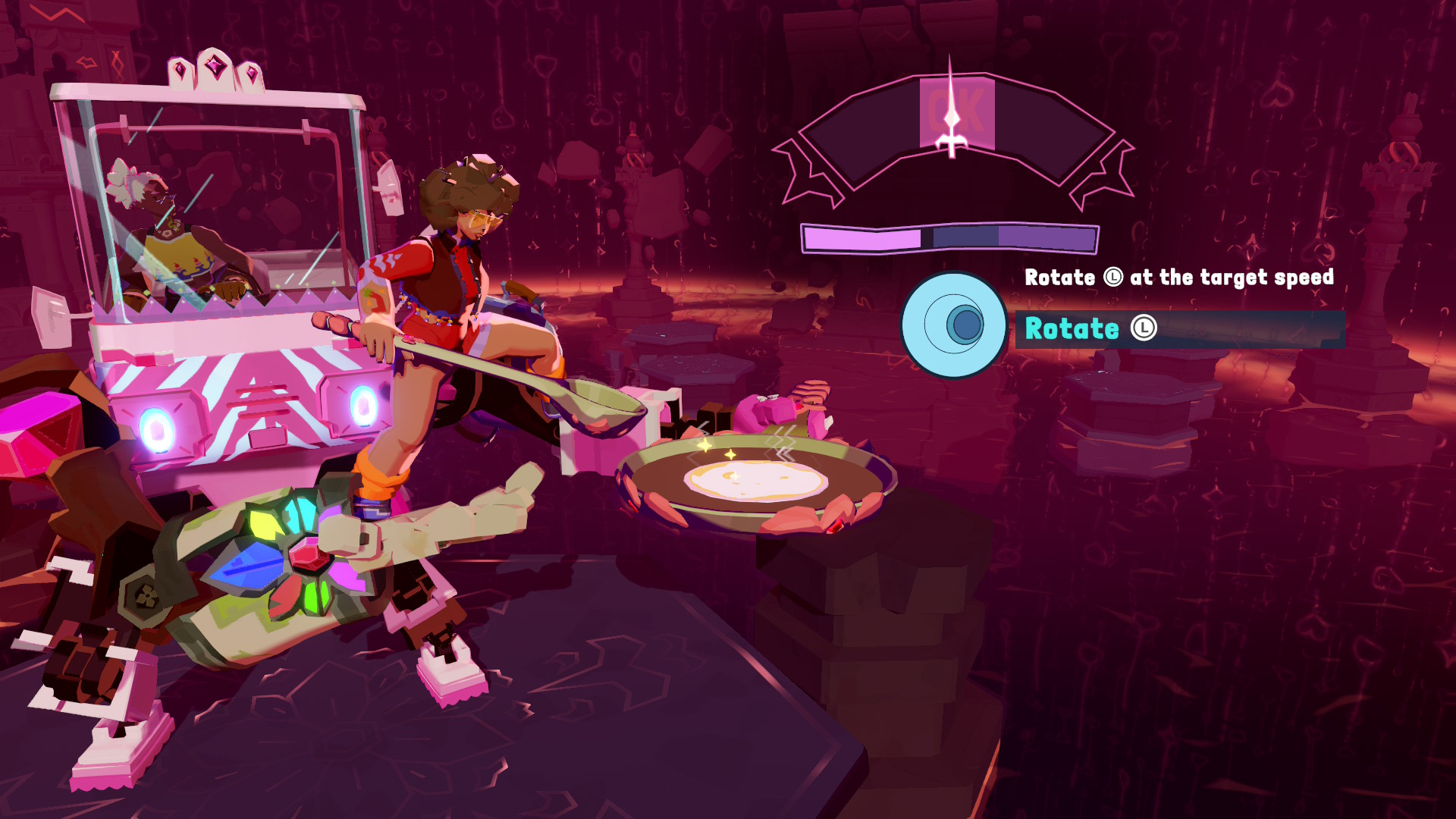
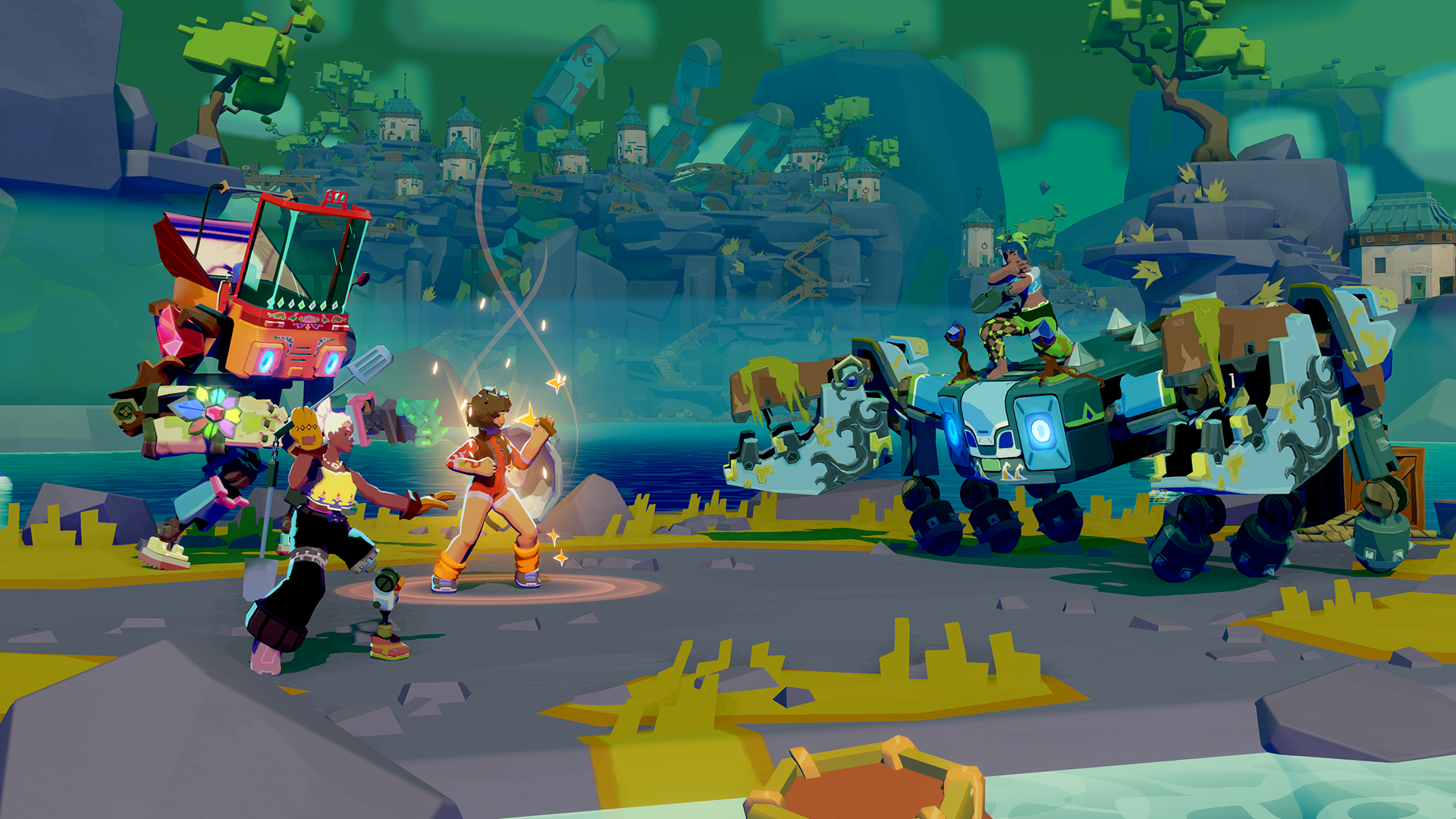
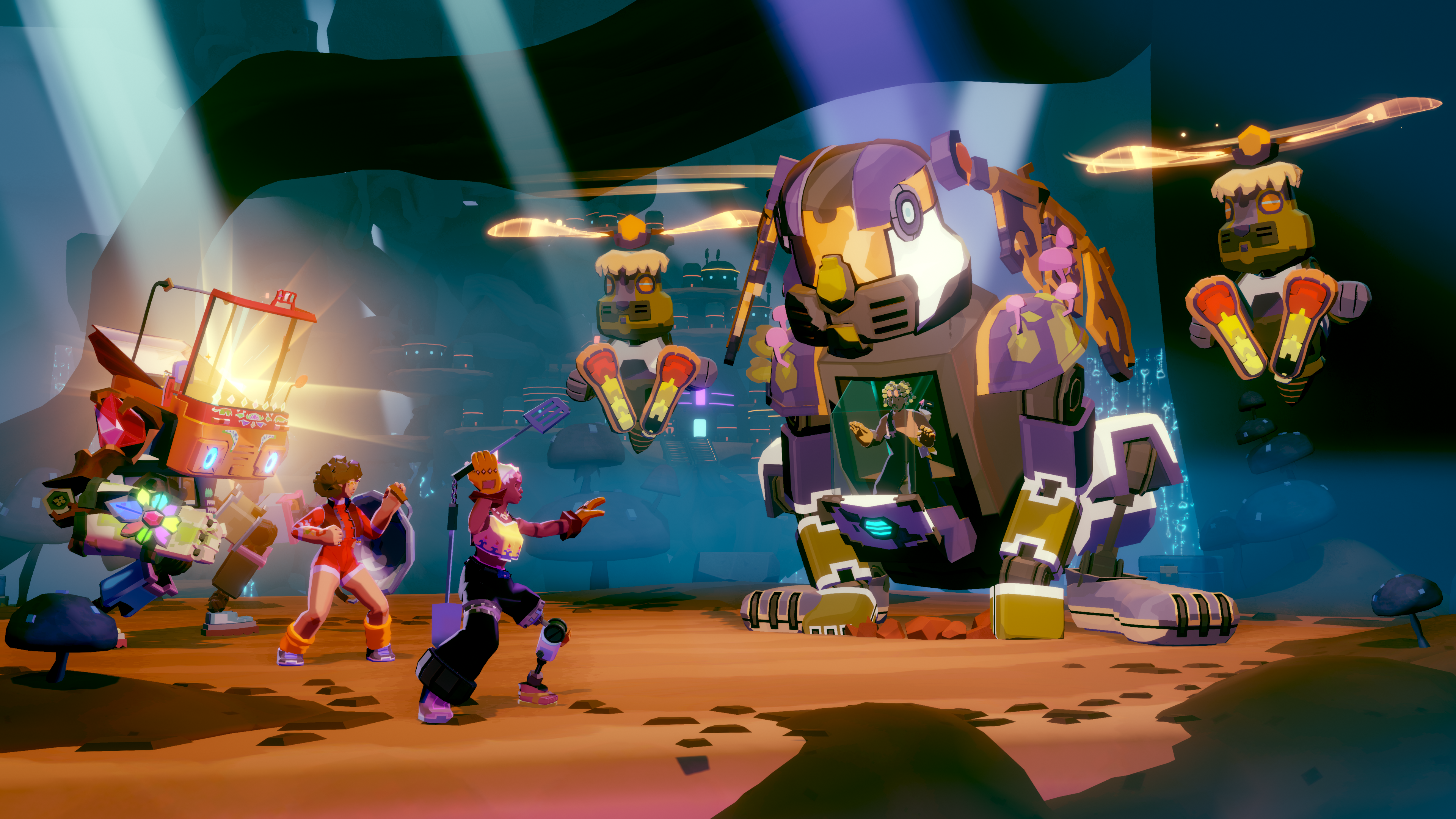
As for the combat system, Dosa Divas follows in the footsteps of Paper Mario and Mario & Luigi’s battles. That is, these are turn-based, but there are QTEs tied to attacks and blocks to maximize damage and minimize enemy assaults. There’s a visual indicator and enemy animation that hints at when you should tap a button to limit or completely negate the damage the sisters and their allies might take. It also can cause them to perform additional attacks when theirs land if pulled off properly. There’s something of a Bravely Default style buffing system that lets you power up an attack by tapping the trigger button. Also, it offers a twist on elemental weaknesses by making foes susceptible to certain flavors (that your party of course might possess), and hitting them with those kinds of attacks can leave them “stuffed.” They’ll be stunned and take more damage when that happens.
The battle system is fine, but there’s one issue that got to me. It really demands perfection when it comes to blocking. This is because the sisters’ never catch the enemies off guard or get the advantage. Every encounter starts with your party under attack. And these foes, even early on, hit hard. This means if your timing is off, you will find the members in the party in a frying pan and using a second chance to try and make it through. Once you get a few hours in, it isn’t as devastating an issue since the timing does become familiar. However, there is a certain situation that involves repeated blocking and, due to the fact that I did have to keep sort of precisely mashing, I found myself messing up because of the repeated demands of the situation.
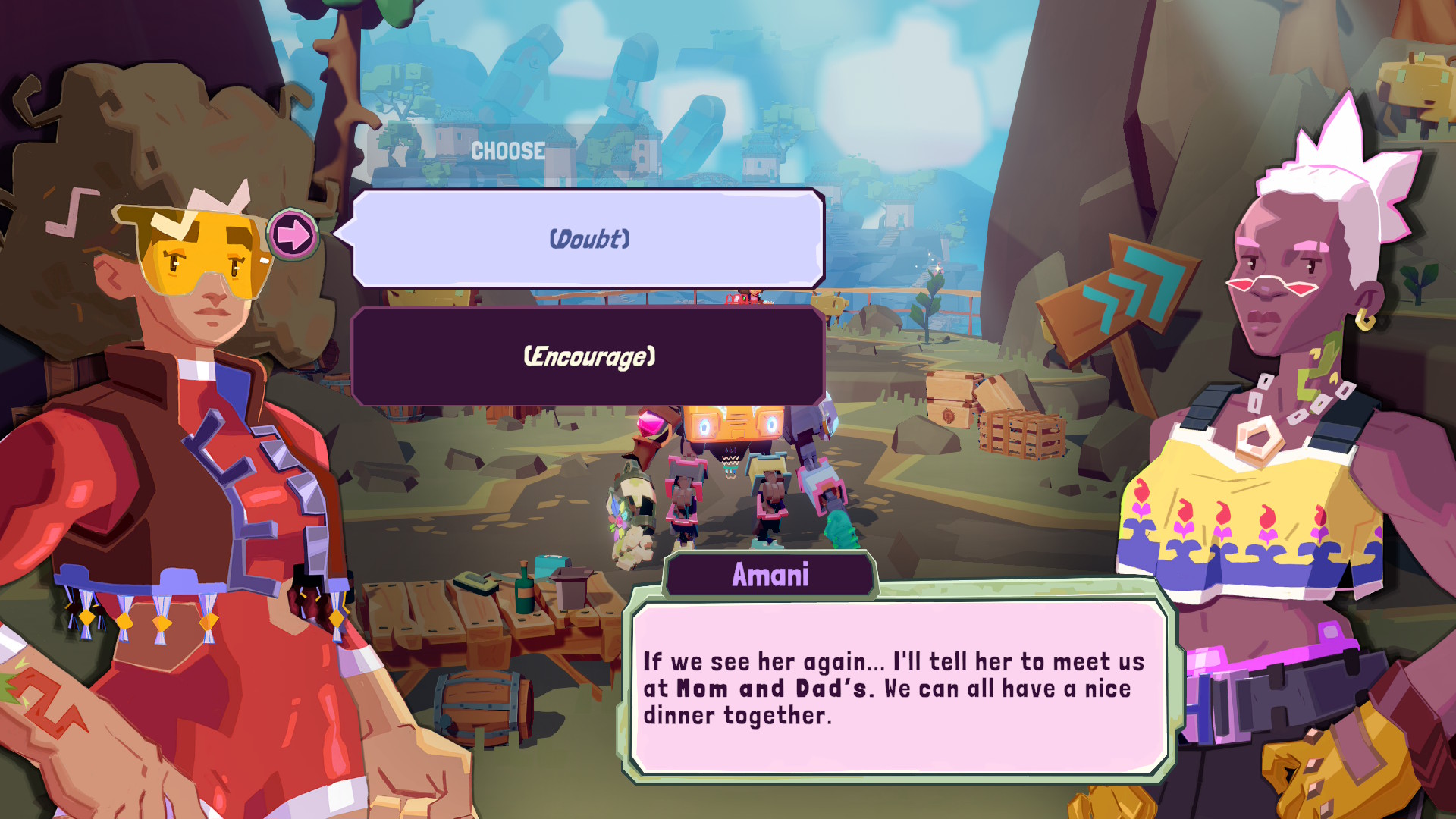
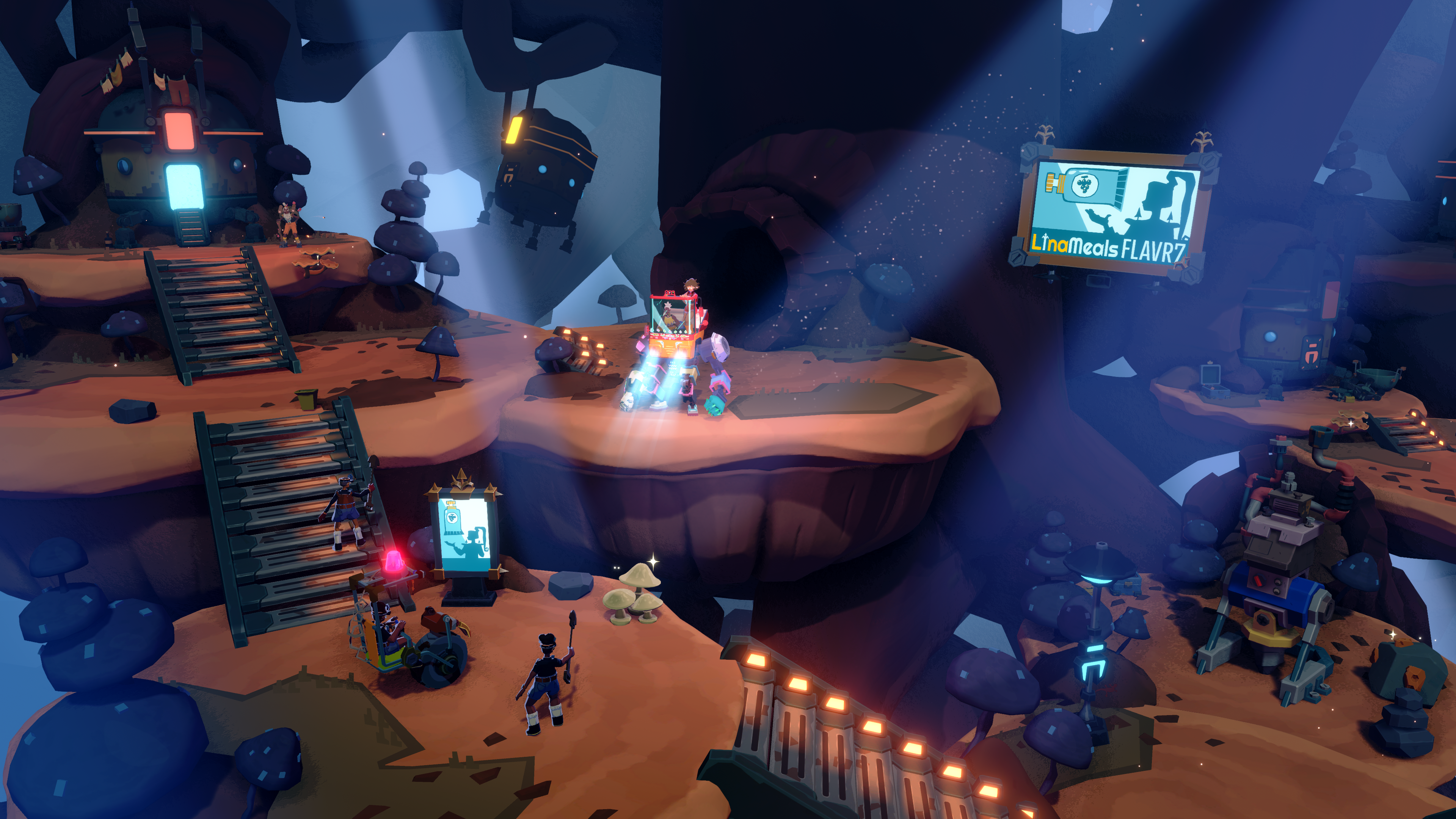
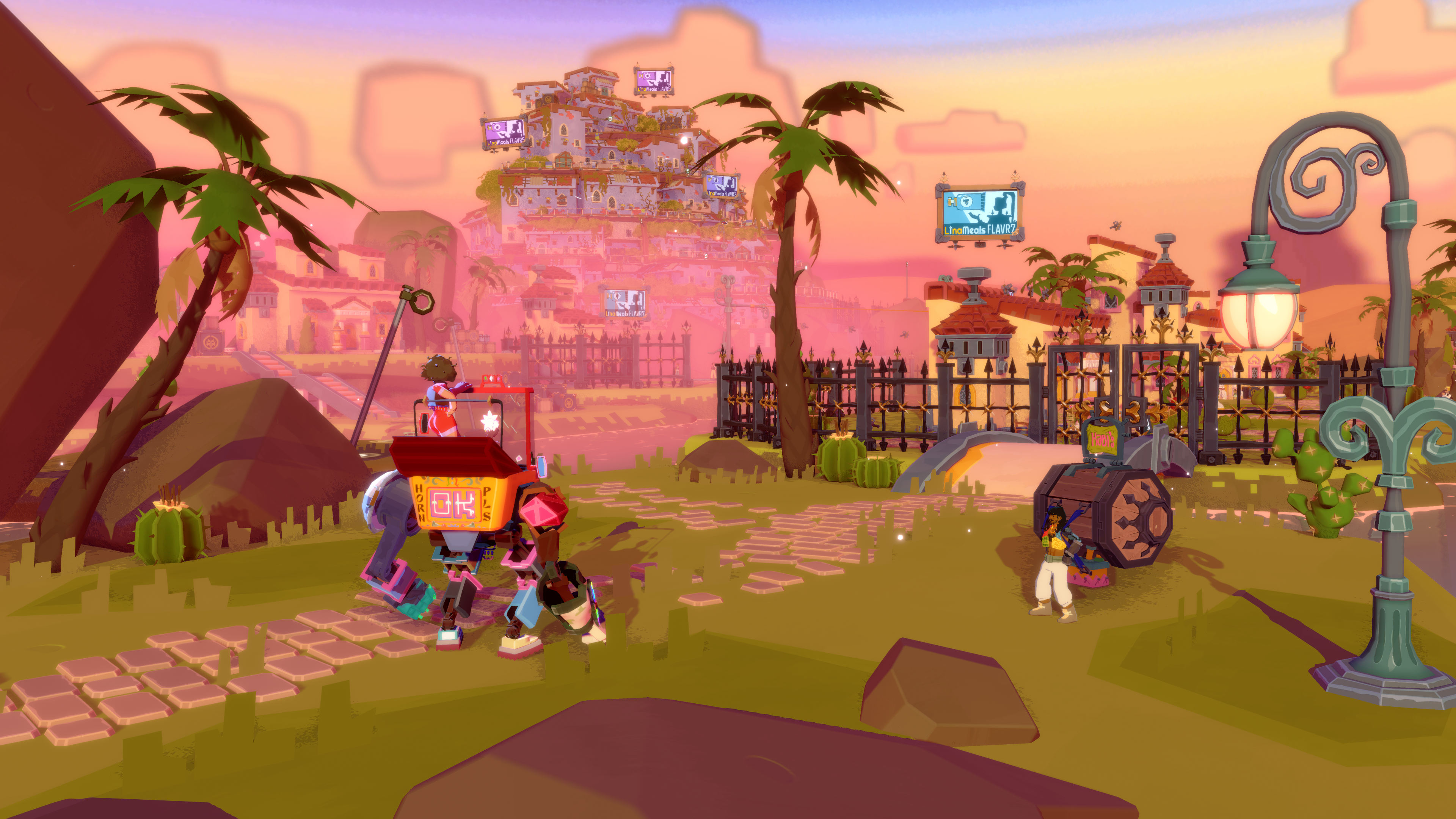
I also must admit that, after seeing how standout games like Falcon Age and Thirsty Suitors looked, Dosa Divas‘ direction didn’t catch my eye in the same way. During conversations, I loved how it looked. The character portraits for cast members look great and let them stand out as individuals. You can see who they are come through via the detailed accessories, hairstyles, and clothing. Goddess looks pretty cool in every scene. Bosses can look impressive, as their size allows a little more precision. But once you start looking through locations and entering enemy encounters, the lack of detail works against it. These setpieces and NPC character models look fine and can feature welcome pops of color, yet the personality doesn’t come through in every element in the way it did in the team’s previous two games.
The idea behind Dosa Divas is sound and I like Amani and Samara as individuals, but the overall experience is so uneven. The narrative structure feels off, with poor pacing and an odd way of trying to tell the story and foster connections. The QTEs for combat and cooking can get demanding in some situations, though in others they sort of exist and always feel the same. By the end of it, I found myself wondering if maybe it would have all worked better as a graphic novel that could have better told the tale instead.
Dosa Divas is available on the Switch, Switch 2, PS5, Xbox Series X, and PC.