


 By
By 
When it came to the first two Monster Hunter Stories games, I always felt like they seemed like the sorts of stories you’d see in shonen manga or anime with something of a Pokemon collectible creature element. Yes, characters stayed viable for longer. But it always seemed to be about a beginner journeying, finding new Monstie friends, and ending up the very best. With Monster Hunter Stories 3: Twisted Reflection the tone is far different and the execution makes early-game creatures feel even more viable, resulting in a spin-off that feels much more like a traditional JRPG. Especially since the scope can feel a bit larger in this installment and like our human allies matter more.
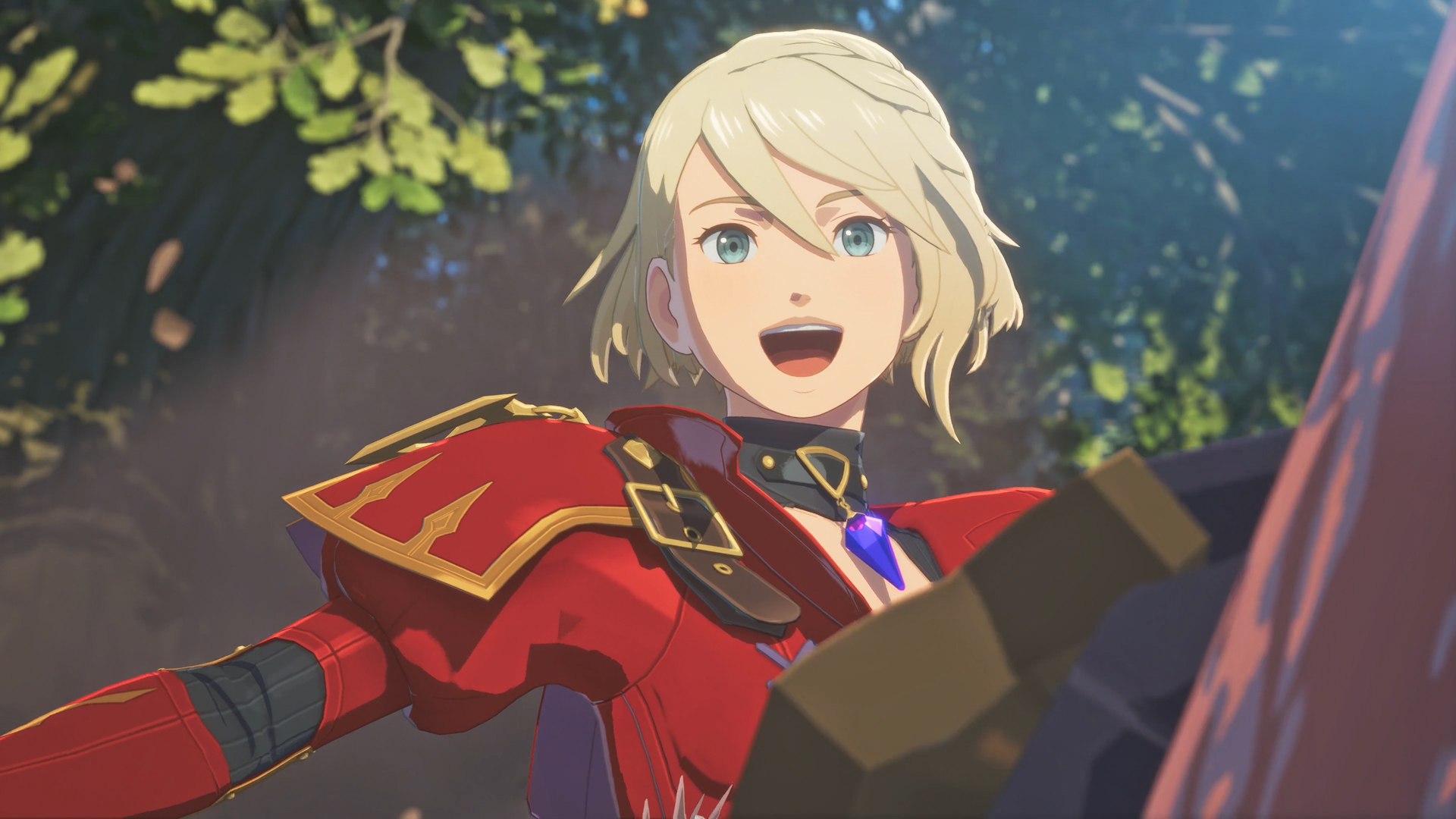
This starts with a more established avatar. As Monster Hunter Stories 3 begins, our protagonist is the prince or princess of the kingdom of Azuria, is an established Rider who is partnered with a Rathalos, and is the head of a preservation group known as the Rangers. Aside from some turmoil as a child, which resulted in their Ranger and rider mother the queen leaving with said Rathalos’ twin so it couldn’t be executed, our character’s had a pretty routine royal role. However, when an envoy from the neighboring kingdom of Vermeil, which their mother hailed from and isn’t on the best terms with Azuria arrives, that’s shaken up. A crystalline encroachment is killing people in that nation and headed toward Azuria. Princess Eleanor wants to head to the Northern Meridian, something that’s forbidden due to a covenant with the Wyverians, to search for answers and a solution.
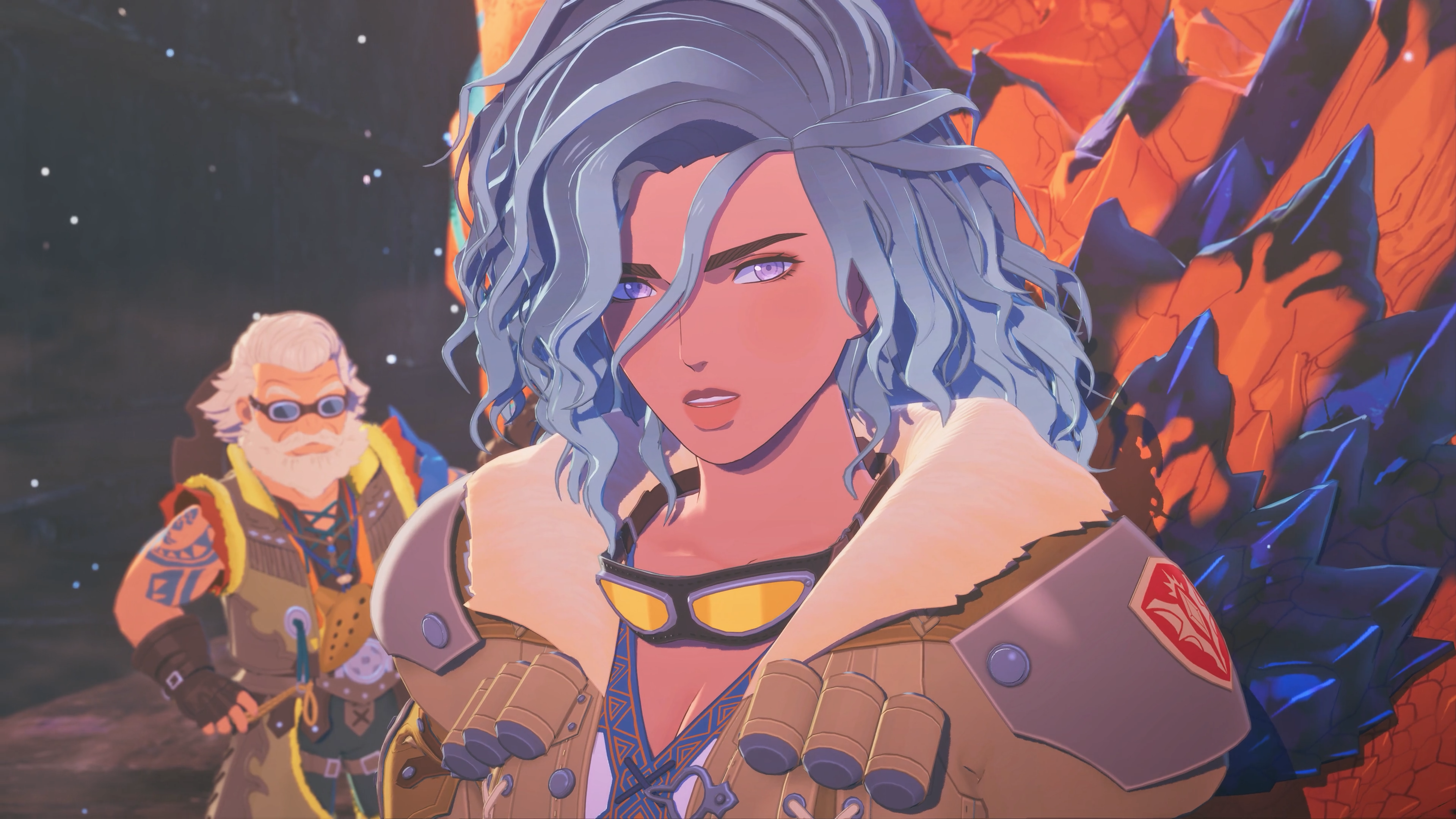
The result leads to our avatar, Eleanor, and the members of the Rangers heading on a journey across the country with their Monsties in search of answers. While past games did involve these sorts of extended quests to different regions and biomes, Monster Hunter Stories 3’s quest feels more poignant for a number of reasons. One is the greater importance lent to the human characters. There are side-stories for each of the Rangers that feel like loyalty missions due to the insights they offer into their backstories and the power-ups that result from spending that extra time running their quests. Another is the narrative in general. There are quite a few twists to things. One feels a little telegraphed. Others are a little deeper. What really happened? Why are those Rathalos considered cursed? The heavy focus on restoration is also a key part, since we aren’t trying to catch ‘em all just to have them all.
By the way, said Rangers? They’re great. Like there’s a fantastic selection of monsters in this entry, which is fun. But I loved spending time with Simon, Gaul, Kora, Ogden, Thea, and Eleanor. Each one feels very well-rounded and realized.
Anyways, it’s interesting since that restoration element is so tied in to helping boost our possible rosters and keep Monsties we already started raising in Monster Hunter Stories 3 viable. As an example, I used my starting Tobi-Kadachi all the way into the endgame, as well as an Palamute I got not long after. Rite of Channeling allows you to arrange abilities on a grid to get bonuses for matching elements or types of attack in a row. You can use that to switch around existing ones or take genes from other monsters you hatched to bolster existing characters. Releasing ones you raised back into the wild is a major gameplay mechanic as well, resulting in finding new variants of existing creatures that could be handier. Also tackling invasive species and bring back extinct ones feels satisfying.
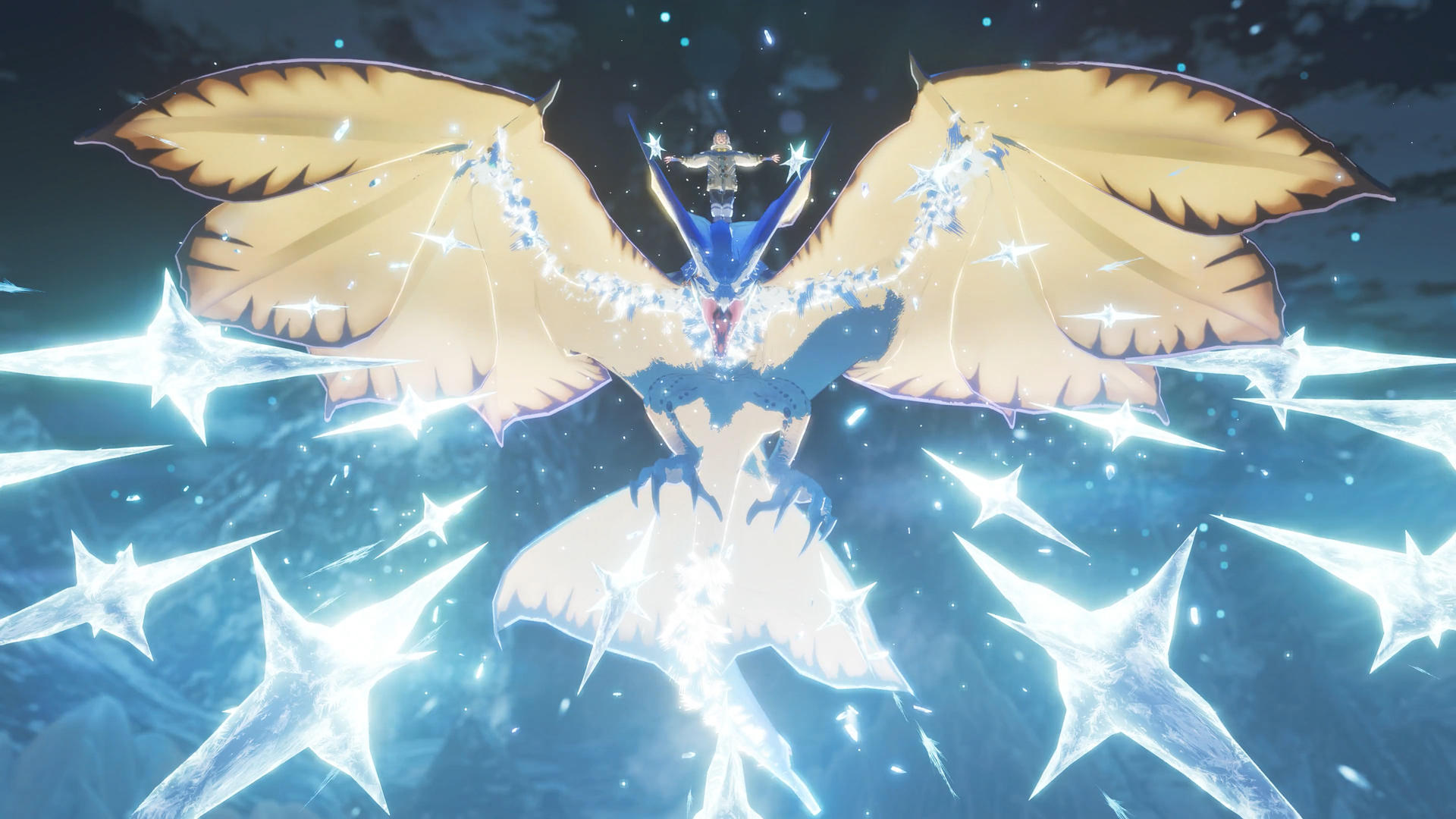
Said monsters also feel more useful in Monster Hunter Stories 3. As in past games, creatures possess abilities that allow you to better explore environments. In past games, I sometimes tended to ride because it was faster for getting around. Here, we’re constantly climbing up walls, burrowing to new areas, swimming on the backs of creatures, blasting other monsters or rocks, and even gliding to get around spaces. It’s a lot more dynamic, and I felt like I genuinely planned my team around exploration utility and combat prowess due to how often I’d switch who I’d be used to accomplish goals.
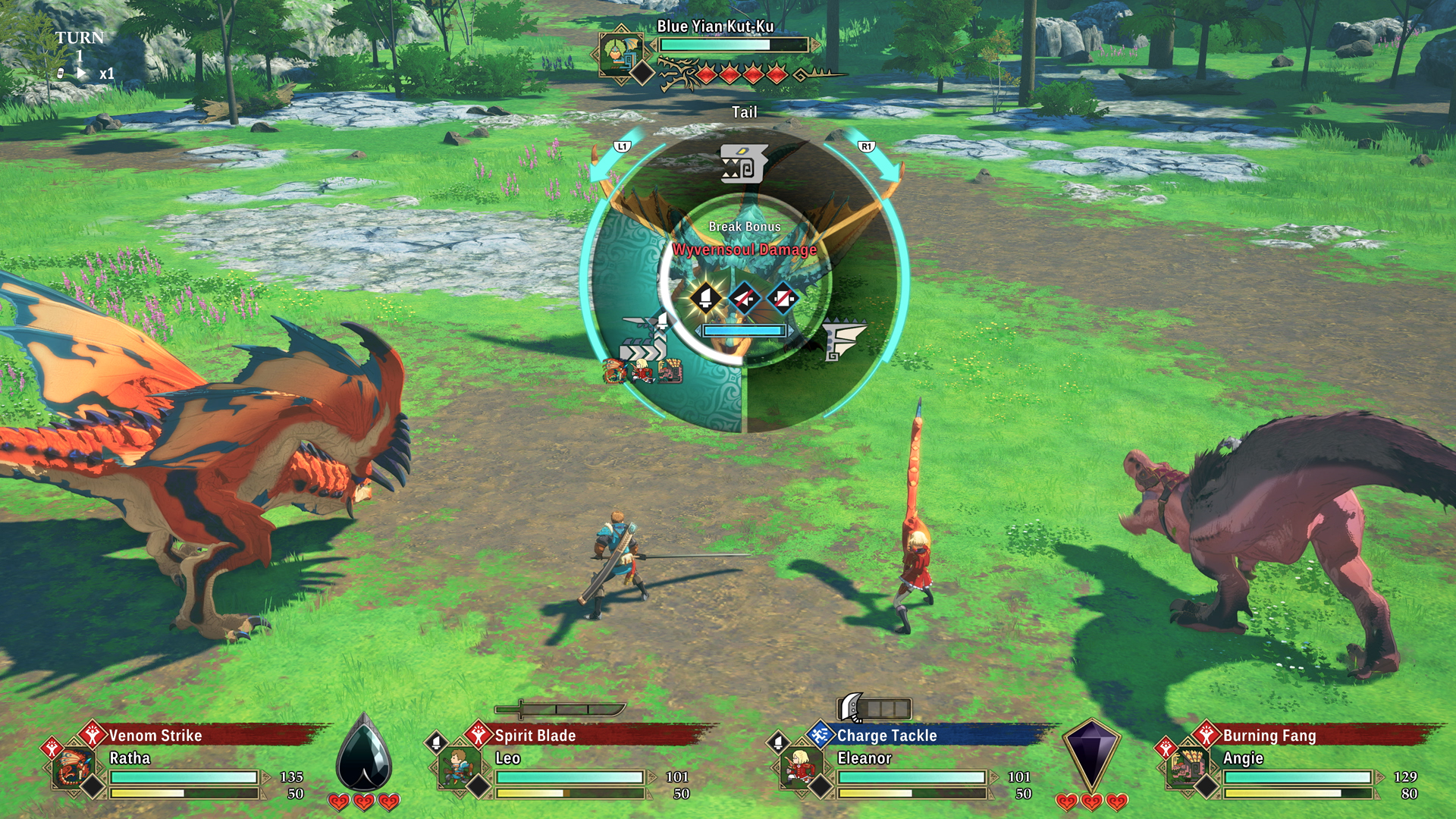
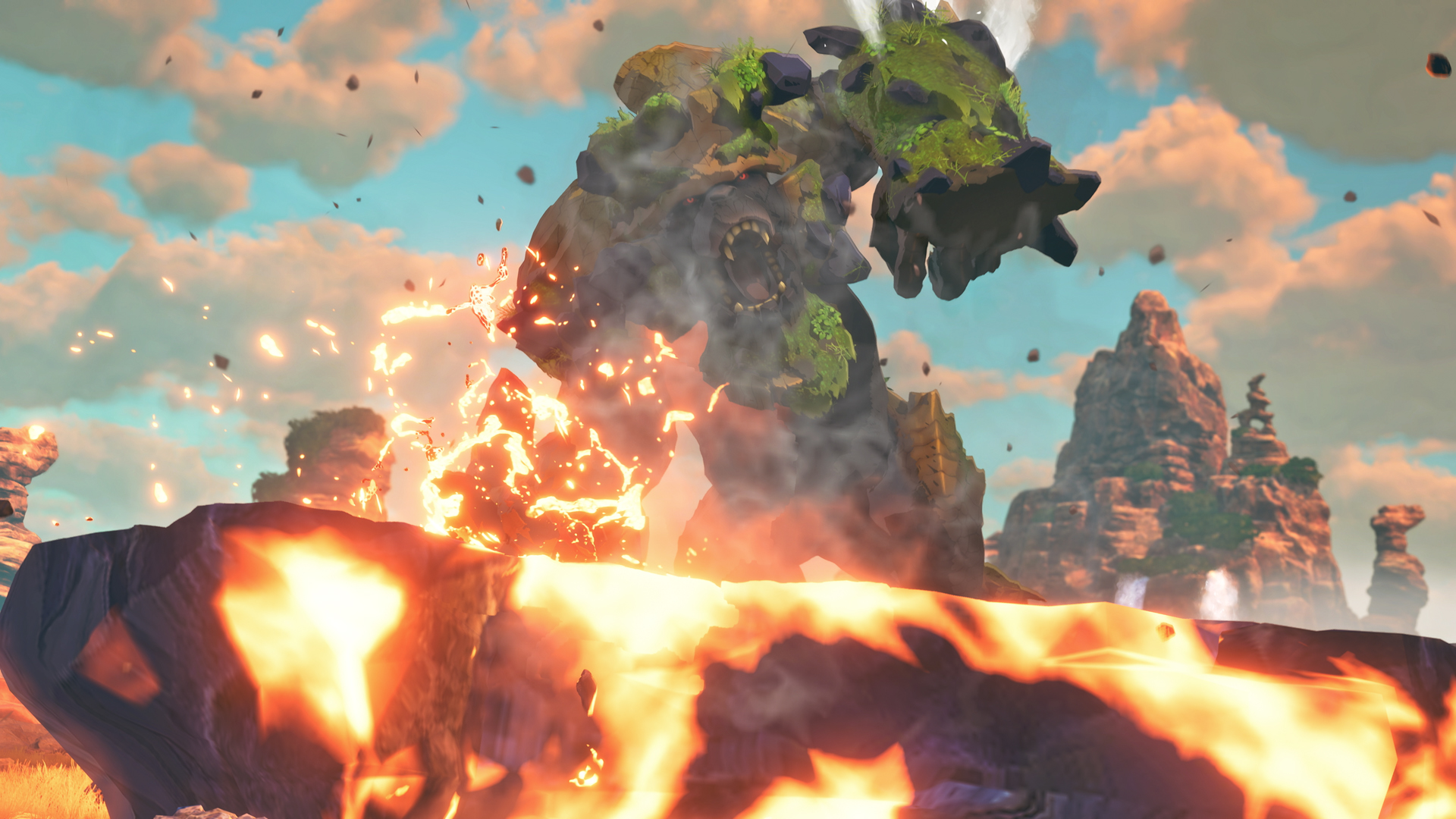
This of course lends itself to combat as well. Monster Hunter Stories 3 combat functions like past spin-offs, with the game possessing a “weapon-triangle” in which speed attacks beat power ones, power bests technical, and technical wins against speed. Likewise, enemy monster parts can be weak to three types of damage, such as arrow or gunlance pierce, sword or katana slash, and hunting horn or hammer slam. When you go into a fight, you have your avatar and one of their monsters and one of your Ranger partners and their monster. Each “team” gets three hearts signifying how many times they can be knocked out before a battle ends. You need to keep an eye on who is planning to attack your team to counter, and also be aware of what “type” of attacks that opponent likes to use so you have the right creature out. Not to mention that when pressured or under the influence of crystals, the opposing monsters’ attack patterns will change. As you fight alongside your monster, you might “team up” if you both attack the same part at the same time, and once a gauge fills you can “ride” on them and eventually unleash a stronger special attack at your leisure.
I genuinely love the combat system, but I will admit there’s one element of it that gets to me. I found it moved really slow. While Monster Hunter Stories 3 did feel more like a JRPG to me than past games, I didn’t really hit that point where fights became quick and easy. It’s always going to be a while. (Though at some point, when you return to certain areas or get strong enough, some smaller opponents can be immediately KO-ed if you slam into them outside of battle.) There is a speed up toggle, but that doesn’t do much. This leads to fights feeling a little repetitive and like they can drag on.
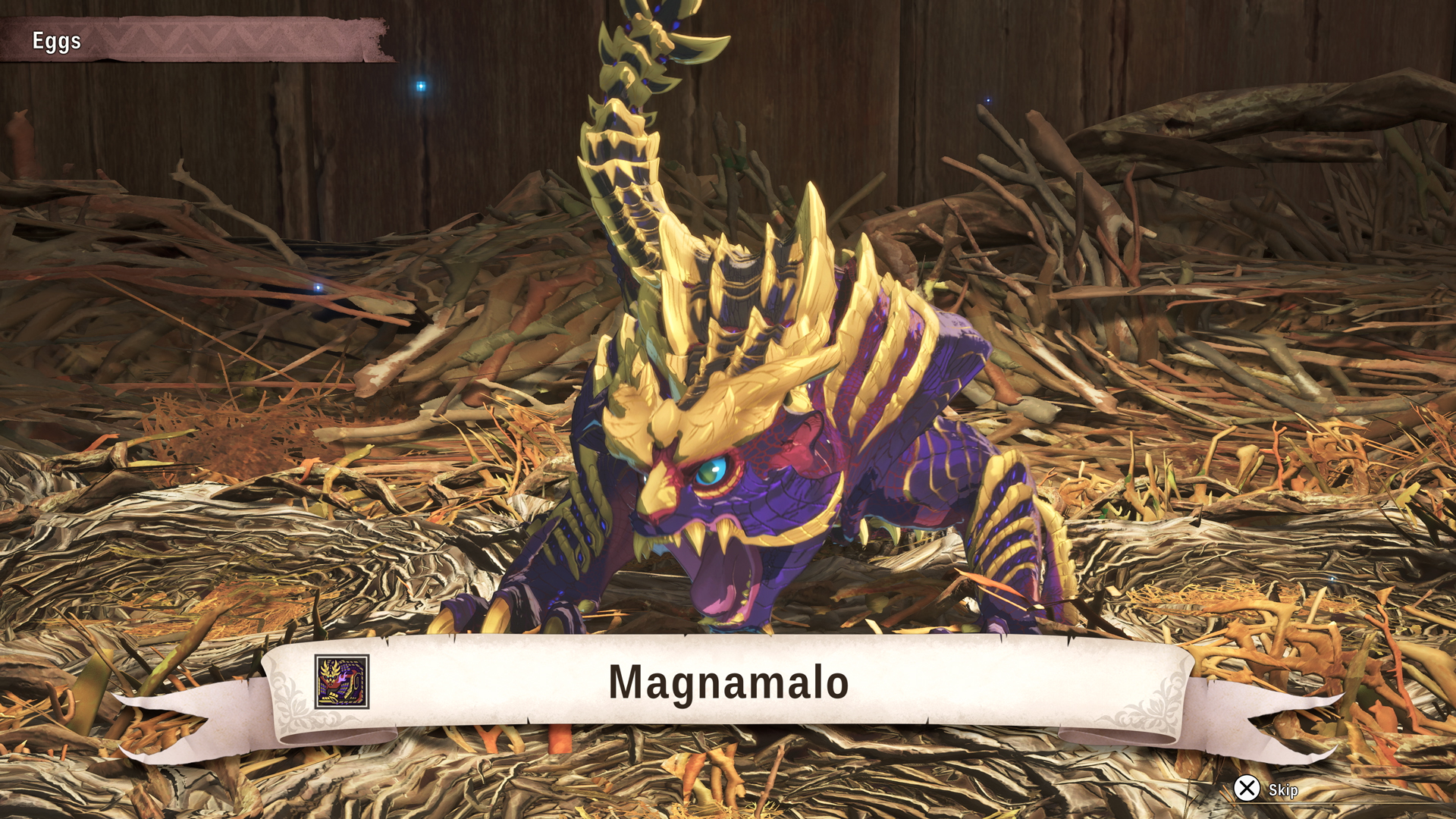
Speaking of repetitive, that’s also what the egg-acquiring experience can feel like in Monster Hunter Stories 3. Which isn’t all that dissimilar from past entries, but it seems a bit more pronounced here. When you find a den, either in the wild or via a monster retreating to it due to your actions during a fight, there are essentially a handful of set “arrangements.” The various gathering points are always going to be in the same spots. The nest will be in the same spot. If you spend too many chances choosing which egg you take, the monster will “return” from the same position. It’s also very a forgiving game when it comes to the creature realizing, “hey, there’s a human here stealing my eggs,” which meant I basically always stayed until I got one that was glowing.
I will say that makes it very easy to find what you need for side quests. The ones not tied to Rangers often involve retrieving certain eggs, getting certain materials, dealing with specific monsters, or seeing a notable creature in the environment. Since all of these elements are pretty easy to find in dens and areas once you’re familiar with a spot, it makes those extra errands pretty simple. Likewise, it helps when crafting new weapons or armor, since getting extra parts is a simple enough task.
Monster Hunter Stories 3: Twisted Reflection feels like it prioritizes story, characters, and combat in a way that makes the game feel even more like a JRPG. It’s another strong entry in a series of great Monster Hunter spin-offs for certain. I do wish there was a bit more diversity when it came to den design. And while combat is fun, it can drag on a bit. Still, it’s quite enjoyable and well worth your time.
Monster Hunter Stories 3: Twisted Reflection comes to the Switch 2, PS5, Xbox Series X, and PC on March 13, 2026, and a demo is available.
Monster Hunter Stories 3: Twisted Reflection
Monster Hunter Stories 3: Twisted Reflection feels like it prioritizes story, characters, and combat in a way that makes the game feel even more like a JRPG. Switch 2 version reviewed. Review copy provided by company for testing purposes.