


 By
By 
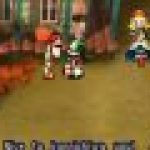
Companies are more willing to take chances on games that would normally fall outside people’s comfort zones. We’re now living in a world where Taiko no Tatsujin games are getting localized and we can look at an otome visual novel and figure, “Okay, there’s a good chance Aksys will eventually pick that up.” This isn’t to say some unusual PlayStation-era games didn’t make it over—we have Incredible Crisis and Thousand Arms—just Love-de-Lic’s Moon: Remix RPG Adventure wasn’t one of them. Which is a shame, because it’s this novel, completely out there experience that requires you to get invested. While it can be frustrating, I think it’s the sort of game people should at the very least know exists. The first time I played Moon, I managed the first day just fine. I met Gramby, took a nap and got some clothing, got her picture, bought bread for her, talked with the King and got his card, chatted with Yoshida the bird about destiny, grabbed a treat for Tao, and delivered the bread. Then I keeled over and died, triggering a game over. 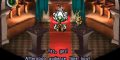 Clearly, Moon is not a handholding adventure. It is from an age where you read the manual. (Really, go read the manual.) Your avatar is a child pulled into an RPG. Except, once inside, the goal isn’t to fight monsters and save the day. It’s to spend time with the supporting cast members, learn about their lives, make peace with the monsters’ souls you find, and collect love. You have to take care of yourself and watch your action limits. You should probably take care of others. You absolutely need to save. There’s a charm to all of this. The cast is varied and unique, with a wide array of dispositions. (While the child was playing an RPG, there are even more mature stories going on.) The localization is superb and an utter delight. Things aren’t entirely obvious, with some experimentation and patience needed to understand your limits and complete the different challenges. But it feels very much alive.
 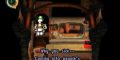 Everyone is doing something. They have their lives, and honestly, what the “hero” is doing seems boring, reckless, and violent in comparison. Getting to explore and enjoy the unusual spaces is more engaging, though again it will take time before you might really find yourself capable of accomplishing things. (An additional save system would have been a godsend.) This means Moon can be frustrating. Nothing is spelled out for you in-game. You’re in the same position as the child. I appreciated it, in a way, though admit it wore on me a bit as I engaged in some hours of trial and error working things out. (If you like having things spelled out for you and tidy quest lists, this might be too much.)
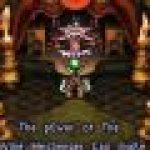
 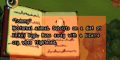 Though, even when I would sometimes flail, I at least enjoyed the sounds and the view. As much as I love the PlayStation, there are a lot of games from that era that didn’t age well. Moon looks weird, and that works for it. Its stylized characters transitioned well to the Switch port. Because it’s unconventional, it’s okay that it isn’t HD and pristine. It suits the dreamlike nature of the world everyone inhabits. It is otherworldly in the most appropriate way. It’s like there’s a sense of enthusiasm that’s infectious. The script, which again is absolutely a joy to read, the premise, and the design all encourage you to explore. You have all of these people who (probably) want to talk to you. You have all these responses and opportunities to find new things. You can even help make everything feel more inviting and cater to your tastes by collecting the MoonDiscs to change how it sounds.
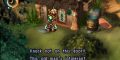 There are times I loved Moon. I really enjoyed training Tao and adore my Gramby. I liked talking to and reviving flowers. There were also times when I felt completely lost and flummoxed, wondering what it is I was supposed to do. I admire what Moon does and think Onion Games should be commended for bringing it to a wider audience. It’s an important piece of history. Though, while time spent with it won’t be a waste and I think even people who don’t “get” it could find things to appreciate and love about it, it is admittedly not for everyone. Still, those curious should absolutely investigate it, spend a lot of time learning about it from its manual, and maybe give it a chance. Moon: Remix RPG Adventure is available for the Nintendo Switch worldwide. It originally appeared on the PlayStation in Japan.