


 By
By 
Good news for folks hoping that Orbitals would be another A Way Out, It Takes Two and Split Fiction type of co-op multiplayer game for the Switch 2. It is exactly that. And yes, it also is a prime example of a love for the 1980s anime aesthetic. However, while there are some challenging segments and situations that can make a pair feel really smart or competent for completing them, some narrative and design choices keep it from perhaps feeling as mechanically tight or fascinating as some others in the genre.
We begin our adventure with Orbitals with a disaster. Something is happening on a ship, and two more senior officials grab the children Maki and Omura and shove them into strange, futuristic pods. We see the attack hit. Years later, both those individuals and the now-grown duo are alive and tasked with collecting relics to power a shield to protect the space station and its remaining inhabitants from another storm. However, in heading out with their own ship into rifts to areas far beyond ones they know, it seems new secrets are being discovered.
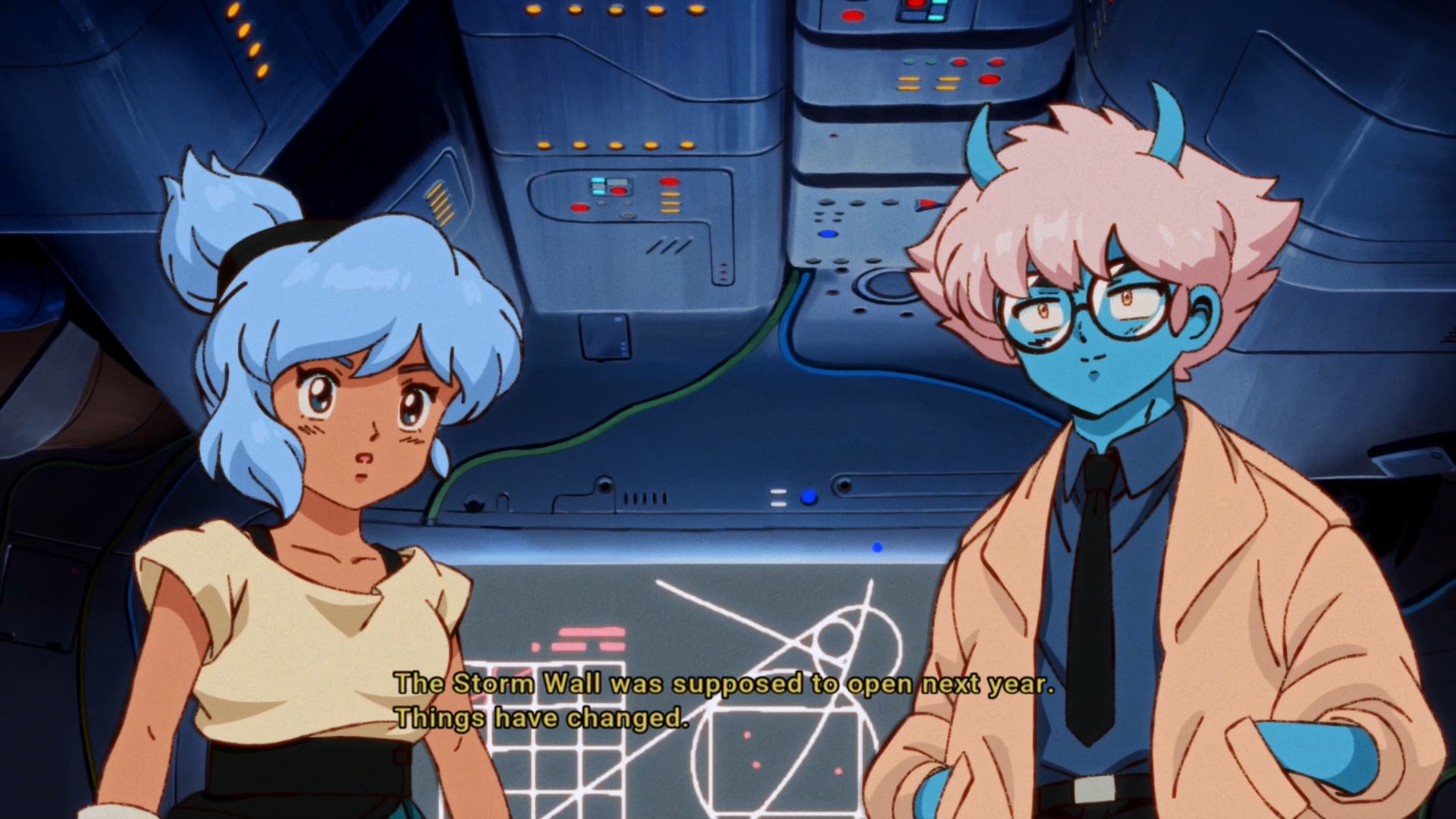
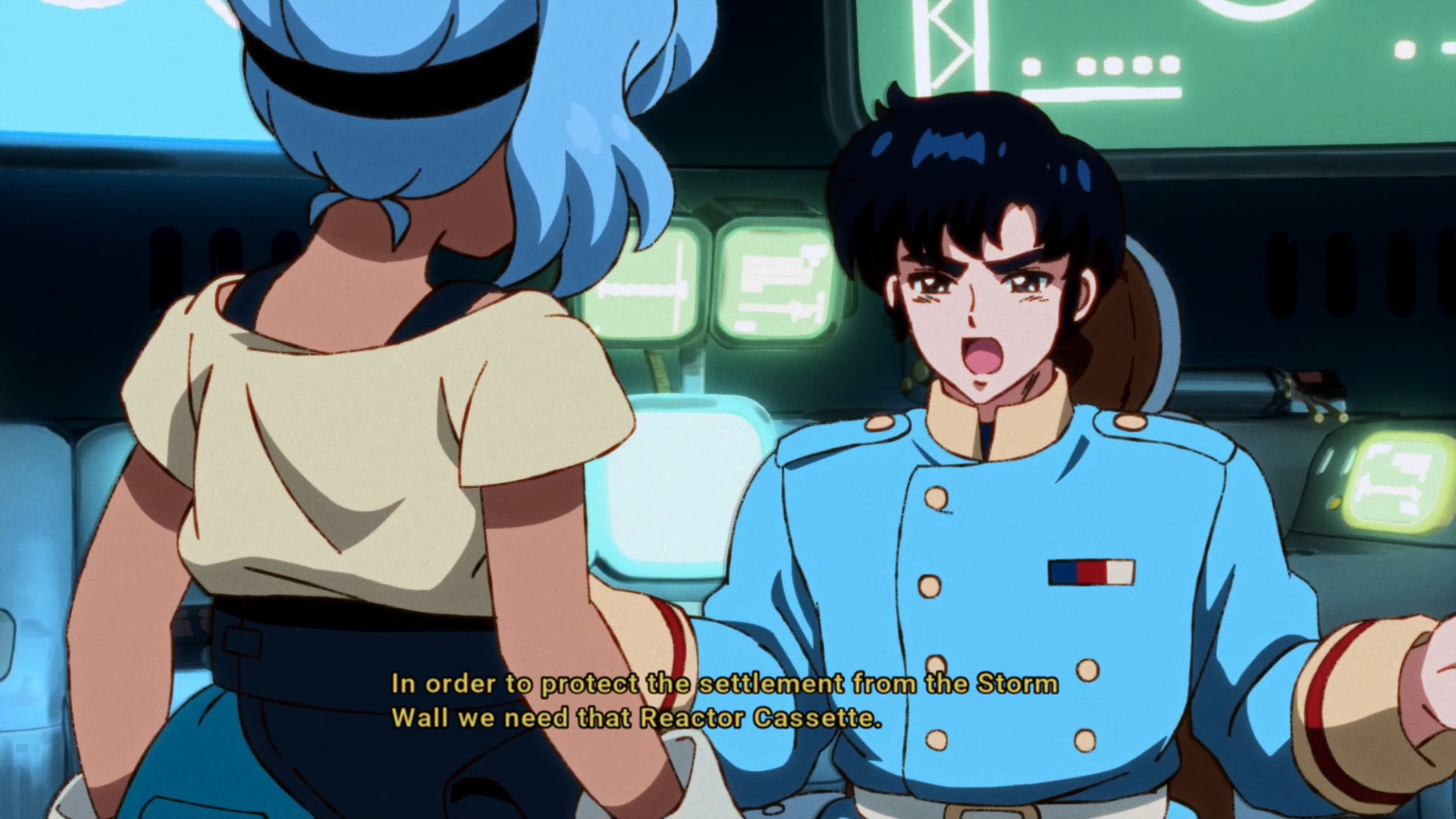
Orbitals evokes 1980s anime series in every possible way. The character design. The color choices. The inclusion of Studio Ghibli-style space spirits and short, elderly, wrinkled individuals. The Gundam-esque ships and individual who may be keeping secrets. The theme song. The way breaks between areas and story beats feel like the “end” of episodes and “start” of new ones. The art direction feels fitting and captures the moment for sure. The choices also mean that despite this being a 3D game, serious efforts are made to experiment and still make it feel like a 2D anime romp.
Unfortunately, the narrative itself is executed in a way that doesn’t really offer a great explanation or introduction to anything. It’s disappointing, since there are moments when it feels like Shapefarm is trying to tell a story or highlight moments intended to feel poignant, but because there’s little character development or time spent getting to know folks it falls flat! Some of the character quips on missions are quite clever though, especially from Omura. But given it takes a substantial amount of time to even explain that those pods in the introduction are IMs machines or offer any sort of backstory, it can be difficult to connect. Which seems odd, since you’d expect something trying to mimic the anime feel to attempt some solid storytelling. Even in the hub area, between missions, you can’t enjoy any “flavor” interactions. You’ll see folks who we know “know” Maki and Omura from cutscenes, and they won’t talk to us at all.
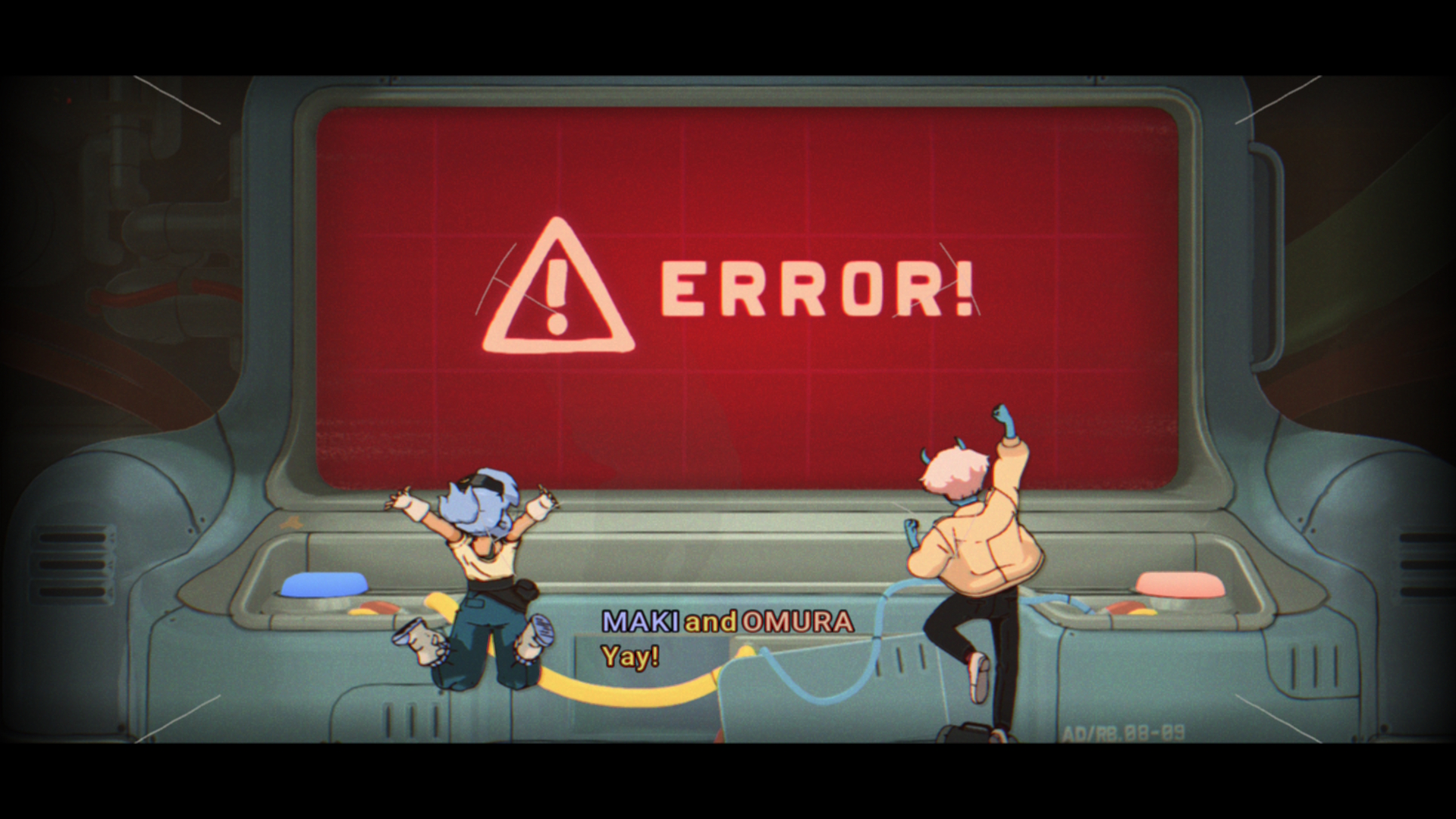
As for gameplay, from the jump it feels like Shapefarm expects anyone kicking off an Orbitals adventure to be very familiar with Director Jakob Lundgren’s work as a level designer on games like A Way Out, It Takes Two and Split Fiction. There’s no real tutorial to speak of, with leads Maki and Omura quickly jumping into fixing their ship’s engine issues and heading out into the galaxy. If you are familiar with any of those three games, great! You’ll probably be fine and do okay. If not, there’s an adjustment period to be sure, but unfortunately the second you get the ship running, there’s really no leeway and you’re expected to be on-top of things. However, as a result of the two being shoved into those aforementioned pods as kids, they’ll be revived if they fail, with a counter in their rooms serving as a reminder of how many times you had to be respawned.
Much like A Way Out, It Takes Two and Split Fiction, Shapefarm is constantly splitting up Maki and Omura or sending the players off on tasks that force precise cooperation on the same screen. For Siliconera’s review, we played over the internet with one player as host and the other using a friend pass. It worked quite well with no delays or lag, even as we also used GameChat.
Challenges tend to split into types as you go through areas, and they also often are tied to the equipment Maki and Omura use. Before leaving the ship to head into an area, you’ll be told if it will require the use of a beam, water sprayer, or grappling device. Two will always be brought along, tasking each person with certain switches or assignments in the level within. For example, in one stage a person with a beam might need to hit targets or use it as a laser to cut through things, while the person with the grappling device would need to pull away blockades or use it to help with navigating or swinging. On an ice stage, the beam would melt ice and the water sprayer would create it.
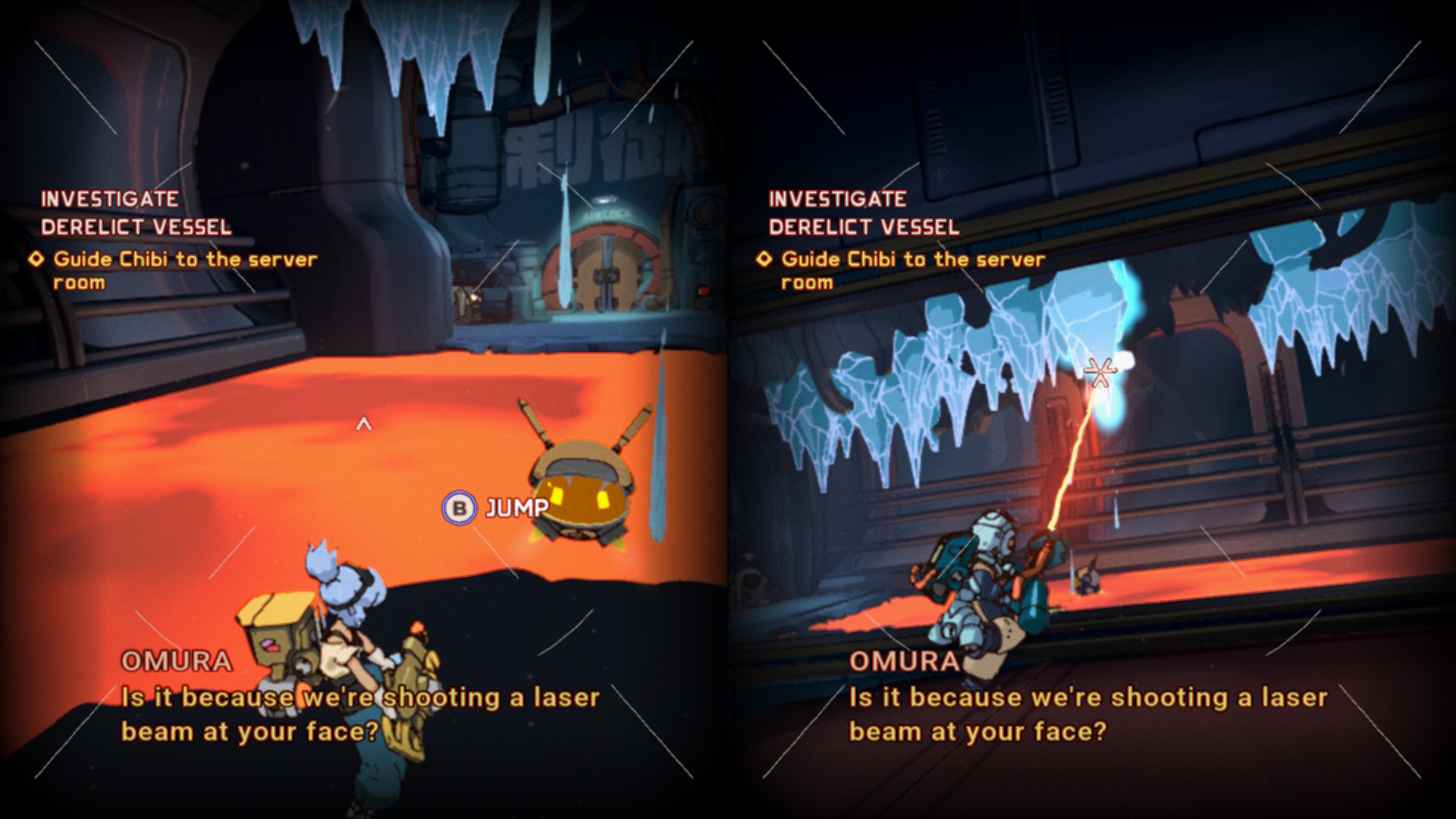
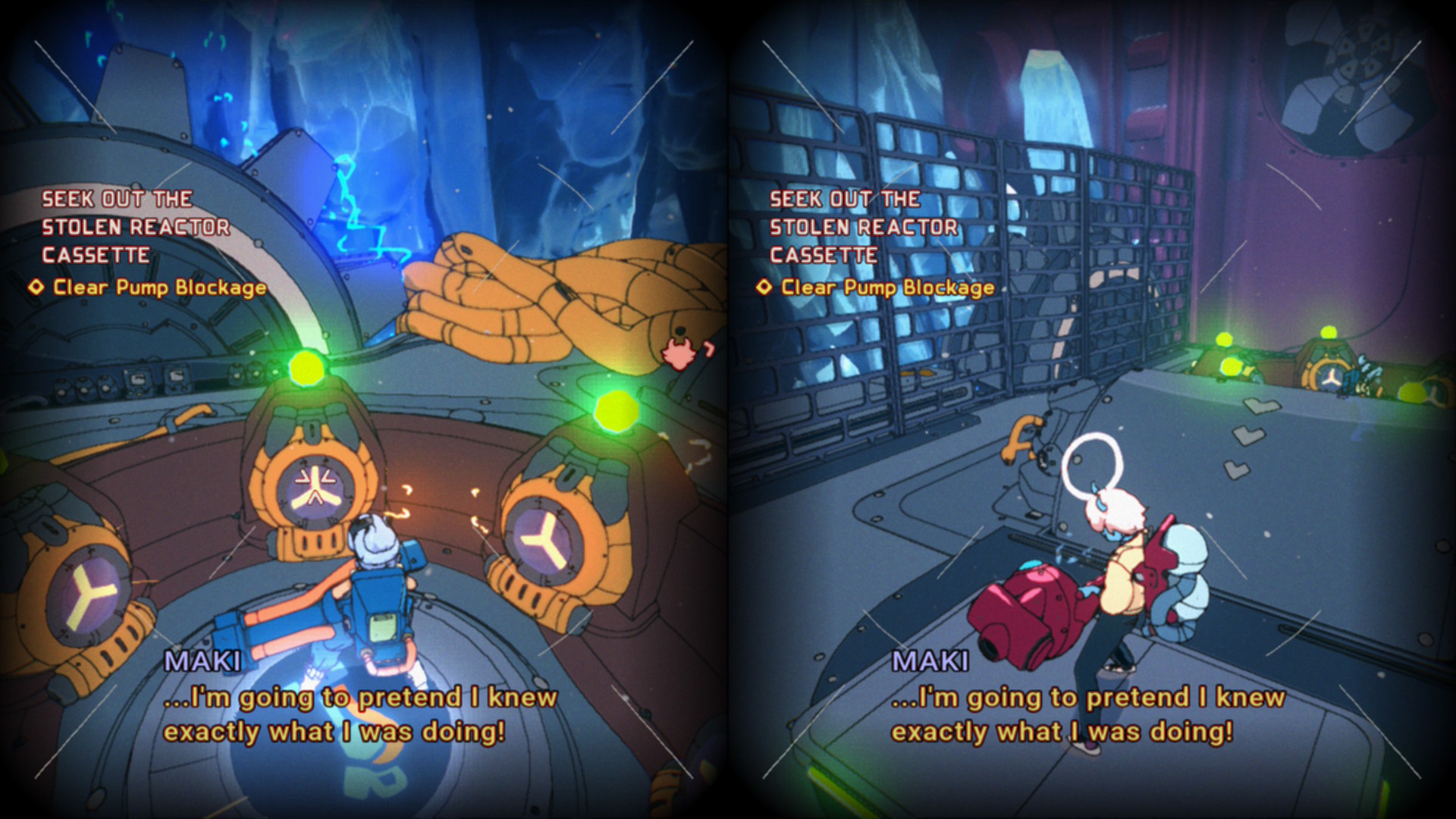
In instances where the duo are separated, this usually means one person will need to use their equipment to help the other progress and vice versa. Once early instance with a small robot means the person with the beam will need to constantly shoot the lil’ drone from the other side of a path with windows along the whole route to power it so it doesn’t explode while it is moving along with the other. Meanwhile, that other person would use their grappling unit to help move forward. In an instance with the beam and water gun, the person with a beam might need to clear so-cold-it’s-deadly-ice to make a path to hit switches, while later the person with water would need to spray to temporarily cool lava so the other player can walk.
When both characters are on the same screen in Orbitals, the objective shifts. Two might need to move in tandem to make a small floating platform move through perilous pathways. They might need to use the water sprayer and beam to ensure the amount of water in a water heater is at a certain level. It might be about hitting the right “notes” in time in a musical challenge. If the duo are in the ship flying or taking part in a boss battle, it means the pilot has to dodge and maneuver while the gunner repels larger objects into a foe or blockade or shoots smaller hazards.
There are a few reasons why this doesn’t always work out and equal a good time in Orbitals. The first is that the camera is extremely frustrating. I’m not sure if it’s partially tied to the attempt at anime art direction or a consequence of the split-screen co-op, but I found it extremely difficult to get the angle right for many challenges. Especially ones that required quick shifts in perspective for platforming or driving-related challenges. Another is that the platforming can feel a bit floaty, especially if your character happens to be running. With some sections, there are some really hazardous jumps due to lava, ice, or pretty substantial gaps, and that gets to be a problem since there’s no double-jump unless you get a temporary item in certain locations.
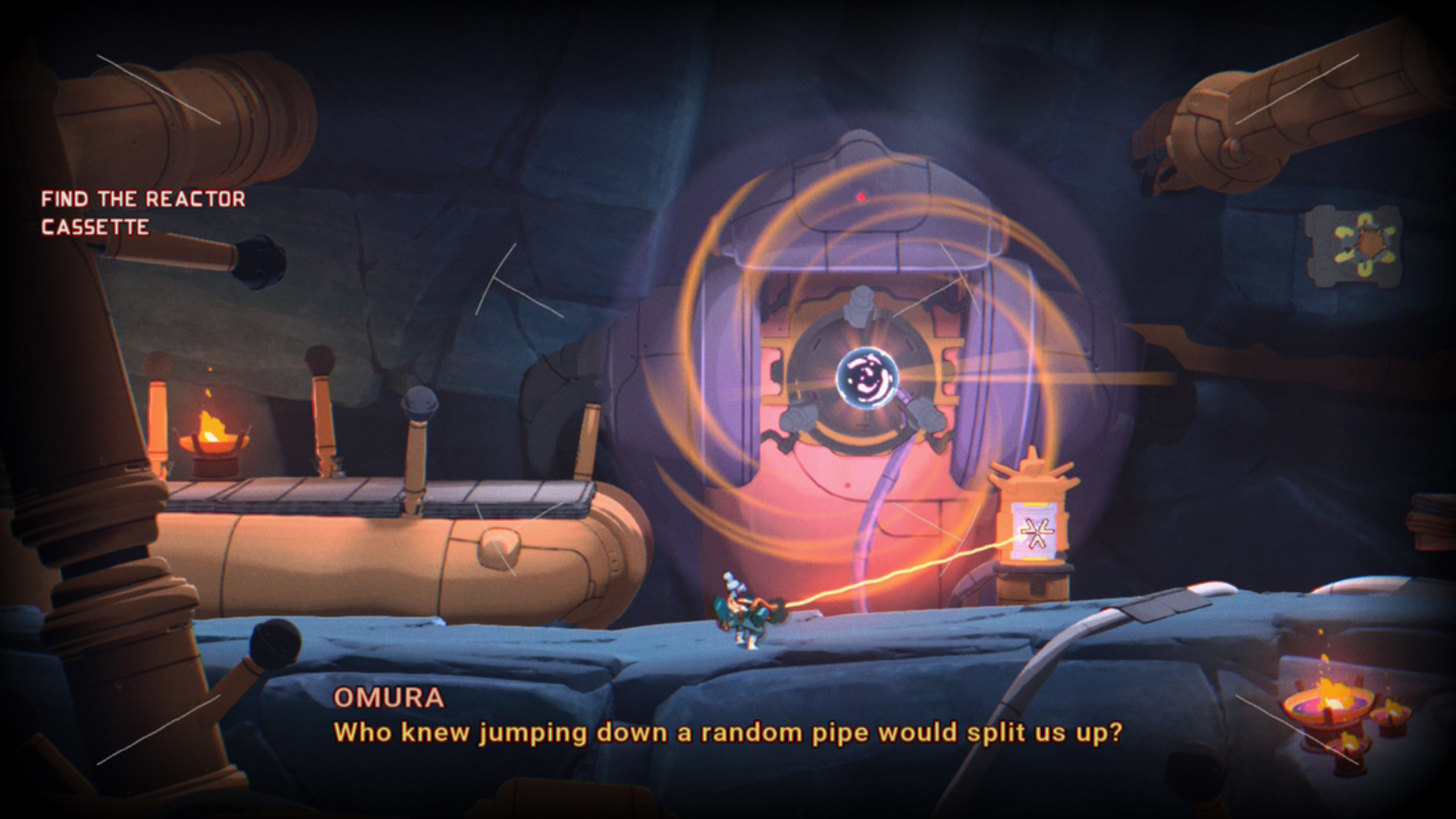
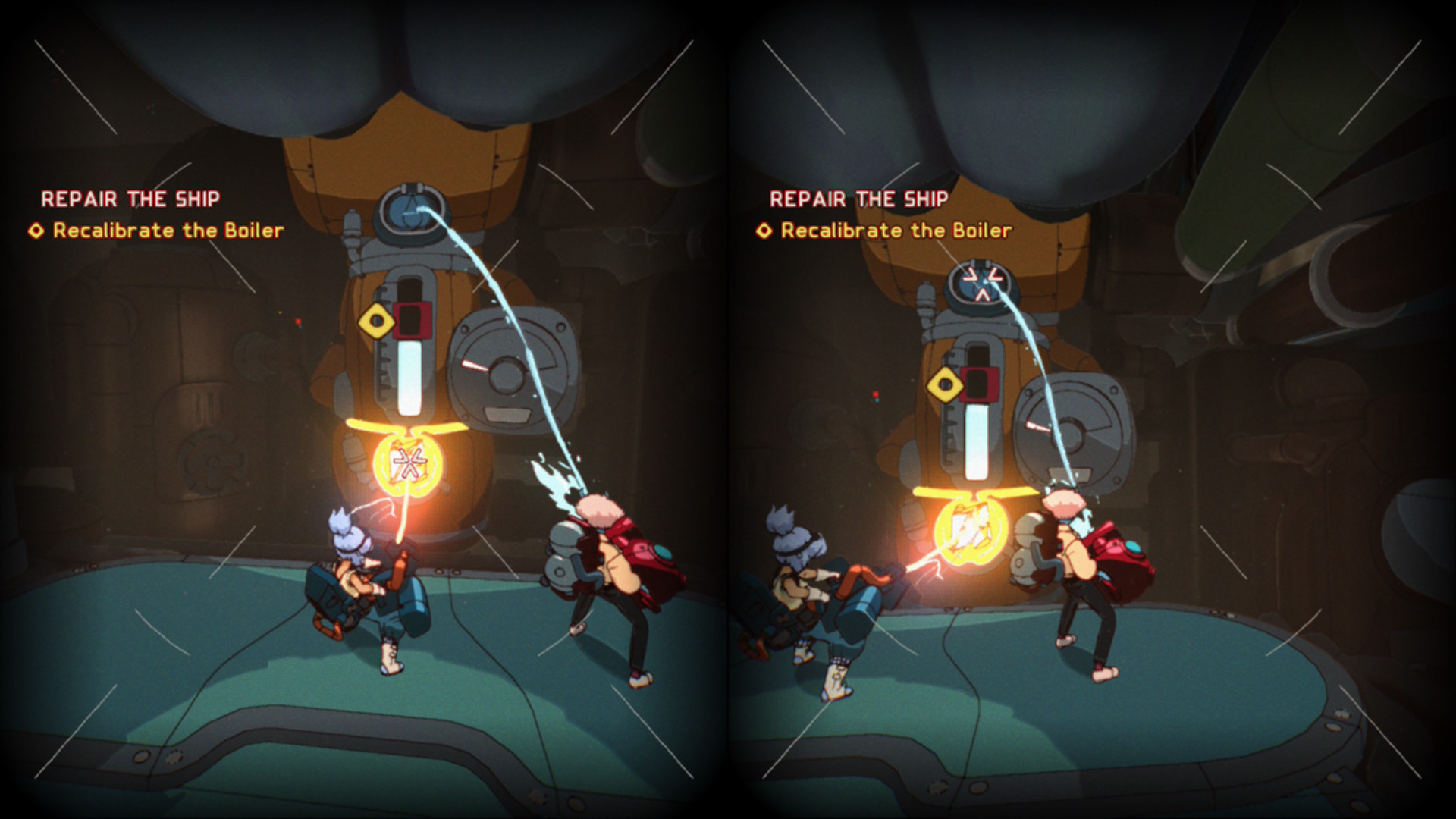
But I think what bothered me most of all is that Shapefarm sometimes isn’t great at telegraphing exactly what players are supposed to do next in Orbitals. The two of us playing each have extensive gaming experience, and I’d say we found ourselves completely flummoxed at least once in each location going back and forth trying to figure out what we needed to do to advance. So much so that it felt like we’d regularly need to stop and both look at the other person’s screen while they explored to see what it is we were supposed to actually be doing or where we should be going. Now, I’m not suggesting we needed flashing lights and arrows, but there are a few instances where it could have been a little more obvious what needed to happen next. I didn’t encounter this sort of issue in games like Split Fiction, which also had segments, so it stood out a bit when the issue did come up.
Orbitals gives Switch 2 owners a new It Takes Two and Split Fiction style co-op game that also experiments with bringing the 2D 1980s anime aesthetic into a 3D world. There are some satisfying challenges here and a few occasions where there’s clever level design. It also features a camera that often doesn’t feel quite right in certain situations, moments that will leave you spending 5-15 minutes wondering what exactly it is you’re supposed to do, and storytelling that expects you to care about characters without showing you why them and their situations should matter. Orbitals is interesting and could prove a fun follow-up for folks who have been playing Hazelight Studios multiplayer games since A Way Out, but there are some times when this experiment doesn’t always work out.
Orbitals will come to the Switch 2 on September 3, 2026.