


 By
By 
Tales of Berseria Remastered is a very interesting game in that it feels less like a remaster and more like a straight port—less an indictment of D.A.G. Inc. and more a testament to the stylistic anime art direction of the original game. While this remaster makes the game more available to a wider audience, it’s unfortunate that it does not give the option to see the story as it was originally intended, regardless of the version you play.
Before we begin, I would like to state a disclaimer. I like Tales of Berseria a lot. If I had to list my favorite five Tales games, it would be one of them. For reference, so you can have a better idea of my taste, the other four are, in no particular order, Rebirth, Legendia, Abyss, Destiny 2 (NOT Eternia), and Destiny (the remake). This review and score are specifically about the remaster’s quality, and not the game itself.
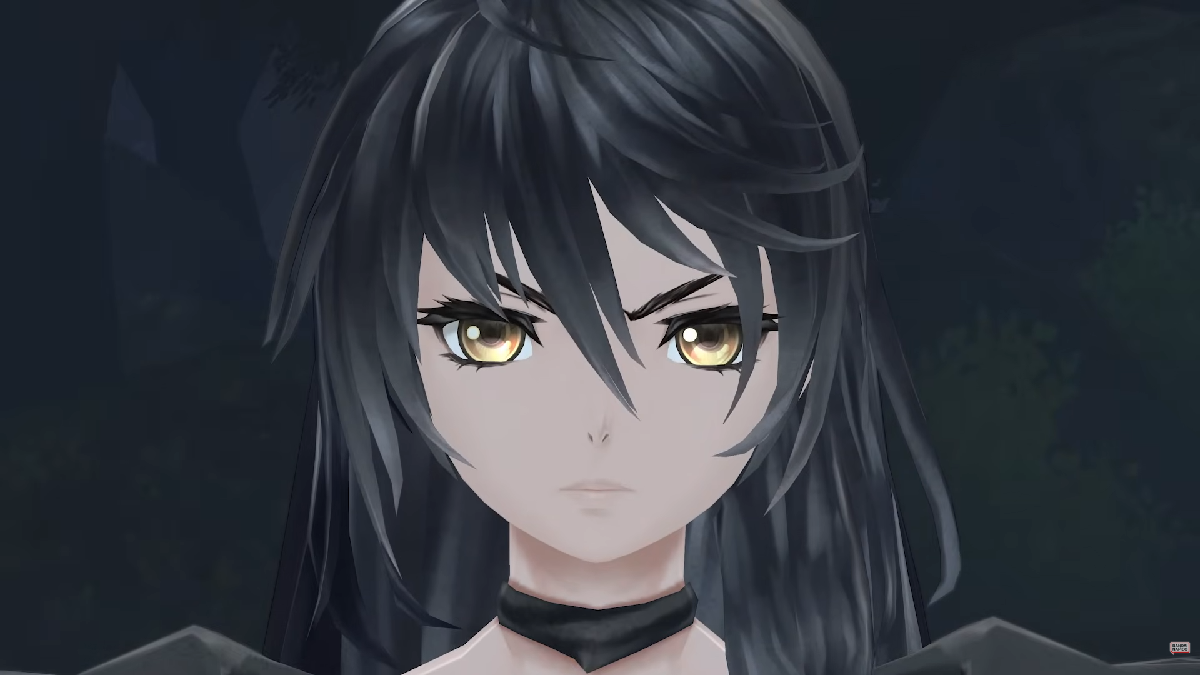
To start with: What is Tales of Berseria? Berseria is a prequel to Zestiria; it takes place in the same world, uses the same concepts (albeit with different terminology), and lays the foundation for what will eventually become Zestiria’s world-building. Berseria follows Velvet Crowe, who starts the game as a normal village girl living with her sickly younger brother, Laphicet, and her brother-in-law, Artorius “Arthur” Collbrande. Despite past hardships and her current circumstances, she makes the best of the cards life has dealt her, only for everything to go south in the worst way possible: Arthur kills Laphicet before her eyes and cuts her arm off.
Transformed into a daemon that can consume other daemons, Velvet spends three years in prison with only the daemons the guards toss in as her prey to keep her company. This all changes when Seres, Arthur’s malak—a familiar from a race of spiritual beings that the exorcists use as expendable tools and weapons—shows up and sets her free. Thus begins Velvet’s journey to kill Arthur. Along the way, she gathers a ragtag group of “villains,” of both the misunderstood and genuine menace flavors, who can’t live within the defined borders of respectability in the world.
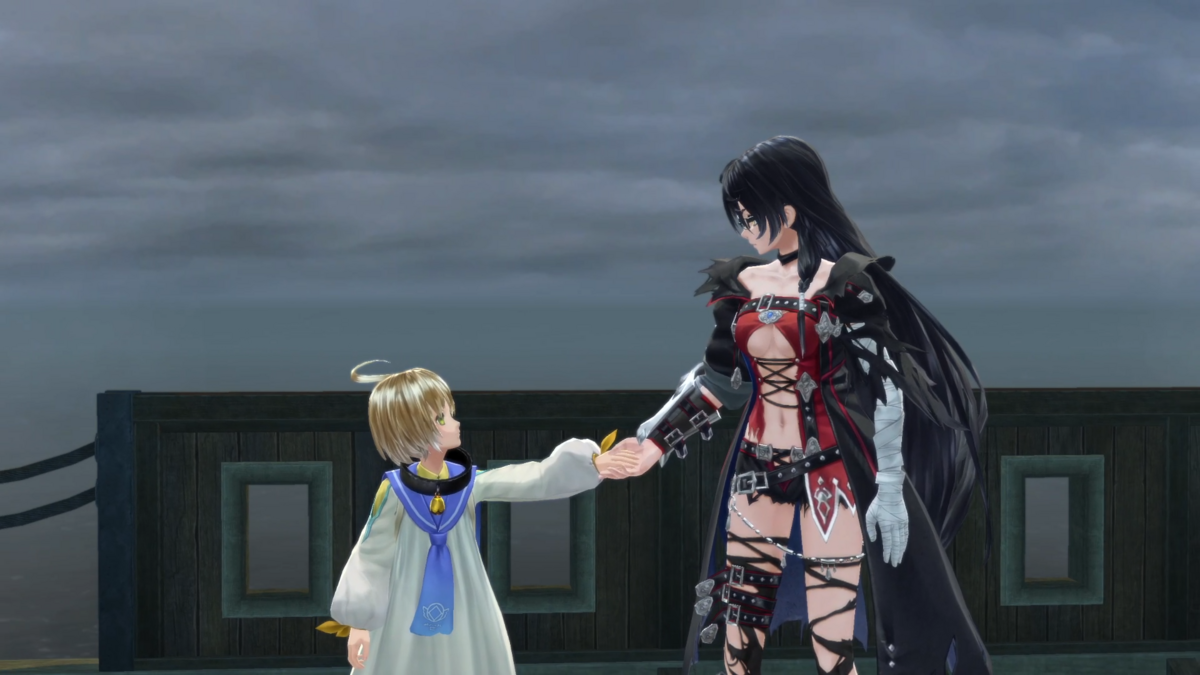
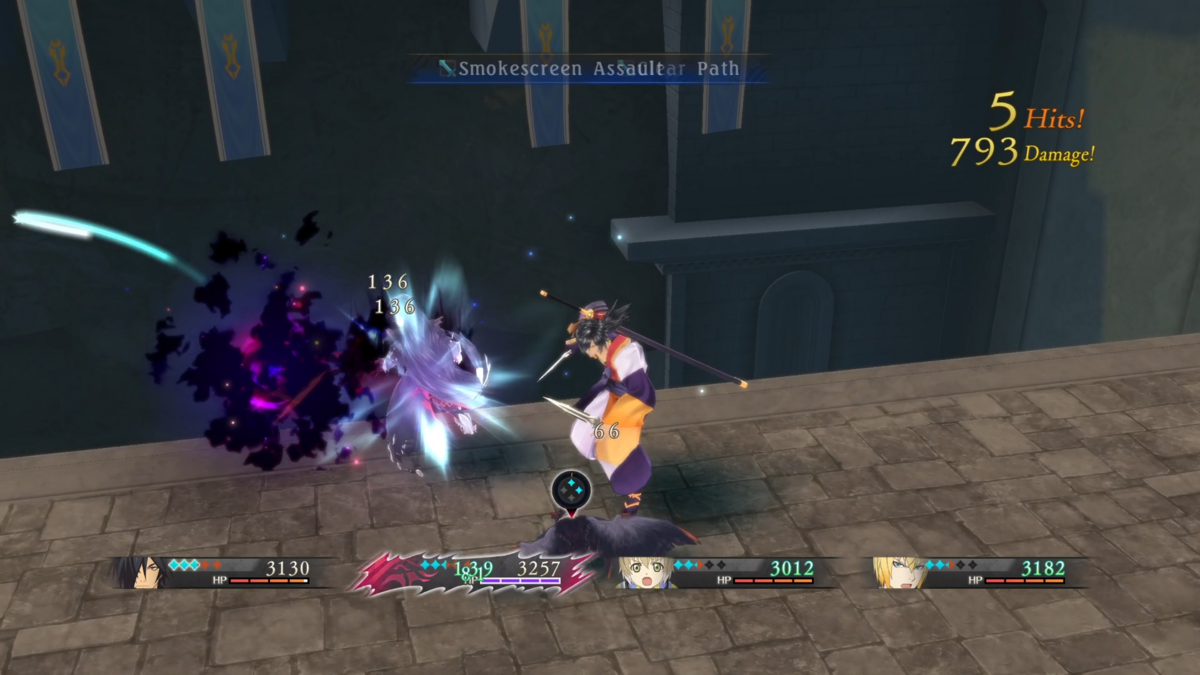
Now, I personally think Berseria is a very good Tales game, even if you’ve never played one before. It’s a Zestiria prequel, so there are some recurring characters and plot points that might feel random if you’re not familiar with that one, but I don’t think it’s detrimental to the overall experience. It’s easy to pick up the battle system, and it still has a good amount of depth if you want to master it. Battles can become Overstimulation Central, much like Graces, so it can be a lot. However, I personally think that the darker color palette helps a lot to keep it from becoming a literal eyesore.
Though I love Berseria, my feelings on this remaster are a lot more conflicted. I don’t like that everyone, even those playing the Japanese version, is subjected to the global version’s censorship. Originally, Arthur stabbed Laphicet with his sword. In the global version, Arthur magically impaled him. The effect looks kind of silly, and it’s not always edited properly in other scenes. One of Seres’s flashbacks keeps the sword, for example. Plus, the Arthur-stabs-Laphicet-with-his-sword thing is actually important to the story. Berseria doesn’t shy away at all from showing blood, so I must conclude this censorship is because Laphicet is a child. Now, that’s funny for Tales and its history of family-unfriendly violence to children. The boy begging for help and then dying in front of the party in Akzeriuth in Tales of the Abyss easily comes to mind.
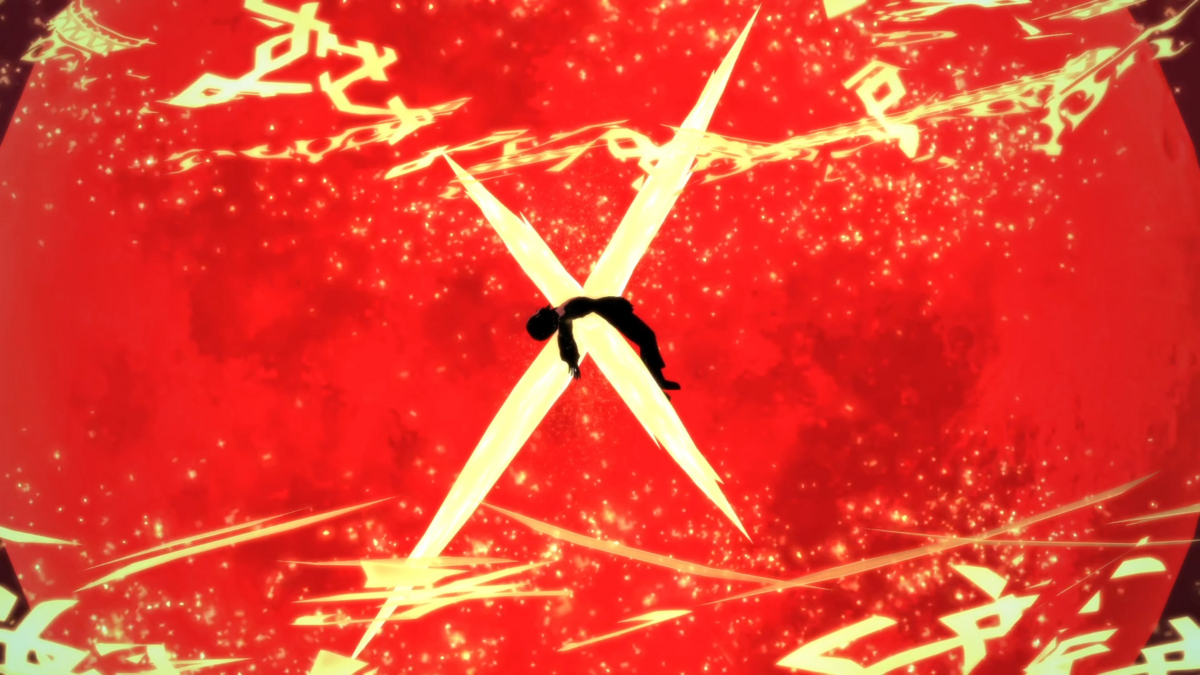
If my only issue with the remaster was the censorship, I probably wouldn’t have been too bothered about it. I already know what the scene was supposed to be, and it’s not as if the game constantly bombards us with Laphicet’s death scene. But there are some bizarre and straight-up distracting audio issues in this game. This is odd because Xillia and Graces didn’t have them at all. Sometimes, it feels like the space between a character’s lines was shortened, making the dialogue sound unnaturally fast. It’s hard to describe this, but sometimes, after a character finishes a voiced line when talking to them on the field, there’s this almost bzzt sound, like someone turning off a mic.
Maybe I’m misremembering the PS4 version, and it had those issues. However, there’s one thing I could confirm, and it’s that the remaster does indeed have very bizarre mixing with the menu sound effects. When you’re using items in battle or checking a character’s equipment in the main menu, the blips sound weirdly isolated, like they’re simultaneously muffled yet enhanced. They’re very annoying with a headset, since they actually sound like they’re coming from in front of me, in contrast to every other sound being beamed into my ears. Funnily enough, the main menu blips are louder than the other sound effects in the original, so maybe they over-corrected for the remaster.
Speaking of the PS4 version, it may not come as a surprise that the remaster and the original look pretty much exactly the same, as mentioned at the beginning. The jump in graphics quality is not as obvious or amazing as Graces or Xillia, which both can look a little busted on the PS3. The soft watercolor art direction of Berseria has a sort of timeless stylistic aesthetic that holds up even a decade later, and Bandai Namco not tweaking it too much was a fantastic choice. On the flip side, it’s also another question marked lobbed in the remaster’s direction. When I said that Graces held up, I meant that the models and assets don’t look dated when the game’s in HD thanks to the watercolor-like aesthetic making it look stylistic instead. In Berseria‘s case, it’s actually so close to what the original is like that it feels less like a remaster and more like a port.
It’s hard for me to say this, because I like Tales of Berseria a lot, but as a remaster, it’s not bringing a lot to the table. In fact, between the censorship and the audio mixing issues, I’d go as far as to say that it’s taking away from the table. The saving grace here is that it’s ten dollars cheaper than the original (at least on Steam), despite it coming with DLC. While I do still recommend playing it if you haven’t tried it before and you like JRPGs, people who have already played Berseria might as well just boot up the copy they already own.
Tales of Berseria Remastered is readily available on the PS5, Xbox Series X, Nintendo Switch, and Windows PC. Windows PC version reviewed.
Tales of Berseria Remastered
Tales of Berseria returns with enhanced playability and quality-of-life enhancements! Join Velvet on her journey for vengeance, along with her cast of eccentric companions, as they sail through the archipelago which comprises the kingdom of Midgand.
Pros
- I was a Rokurou girl ten years ago, and surprise! I'm still a Rokurou girl.
- "A" for confirm when the "A" on my controller is where the "X" on a PS4 controller is constantly messes me up.
- The Berseria battle themes are honestly pretty forgettable, so I really enjoy the legacy BGM pack.
A copy of this game was provided by the publisher for review. Reviewed on PC.