


 By
By 
Sticky Business, Spellgarden’s first game, focused more on the creative element of a storefront responsible for selling stickers. It allowed us a low-pressure environment to create cute designs, without really worrying about profits and overheads. Thrifty Business is both entirely different and more of the same as we’re now running a thrift store with an actual retail location, but still never need to deal with any of the stresses associated with it. The result is something once again bright, colorful, and cozy.
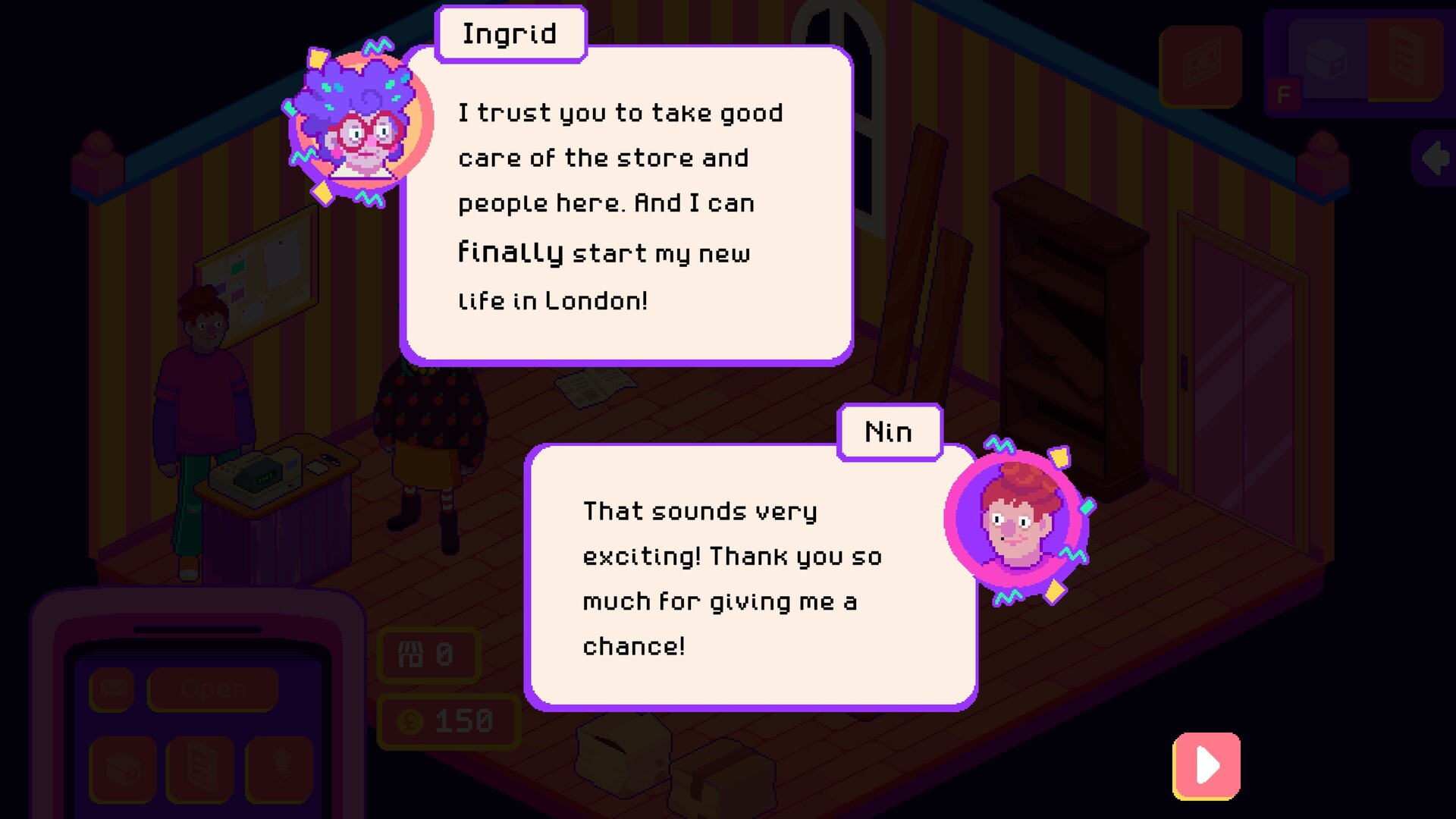
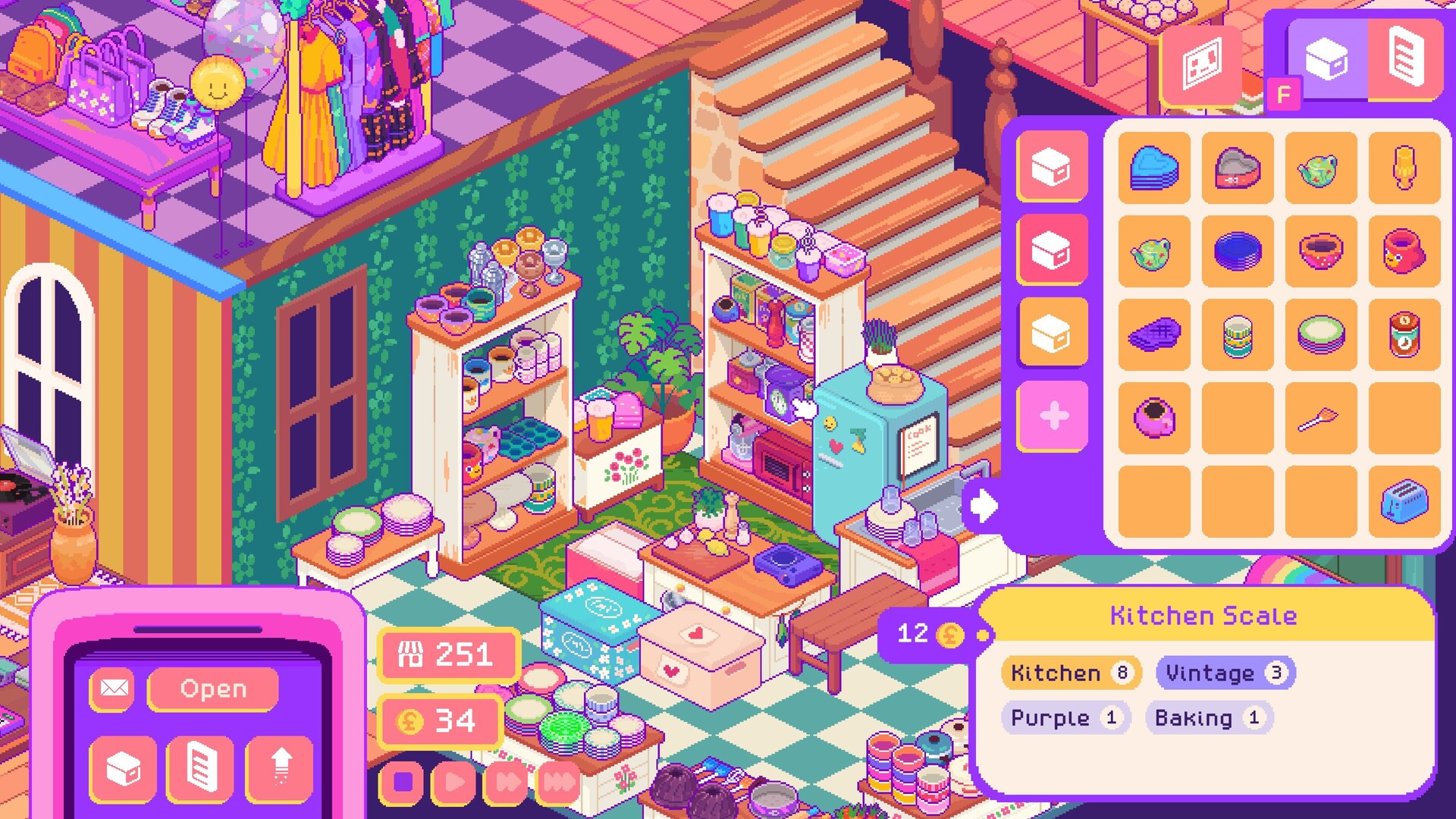
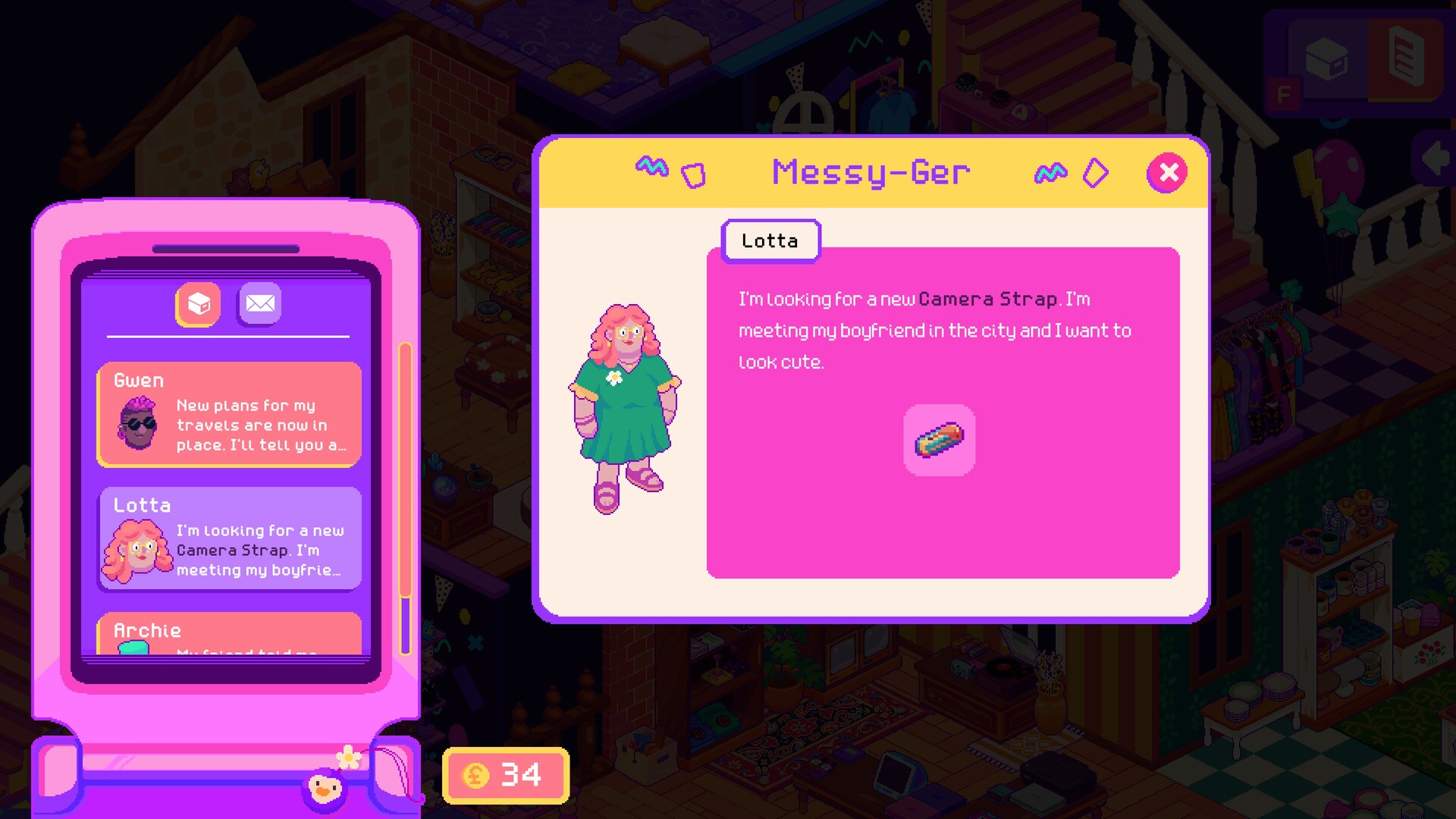
There’s a little more of a narrative to Thrifty Business compared to Sticky Business, but it’s still a very low key simulation focused more on the management and organizational elements than the nitty gritty. After customizing an avatar, we set up shop in a new store we acquired. The previous owner is moving on to relax, and running the thrift shop is now in our hands. After a quick explanation going over how to get new merchandise (buy boxes of stuff) and display it (on shelves we pick out with money, ideally by the tags associated with items to help browsing customers), we go for it. Folks who come in may buy from us! They may not! We might learn a little but about them and their lives as we do. But as long as we’re happy and enjoying ourselves, we can consider our shop a success.
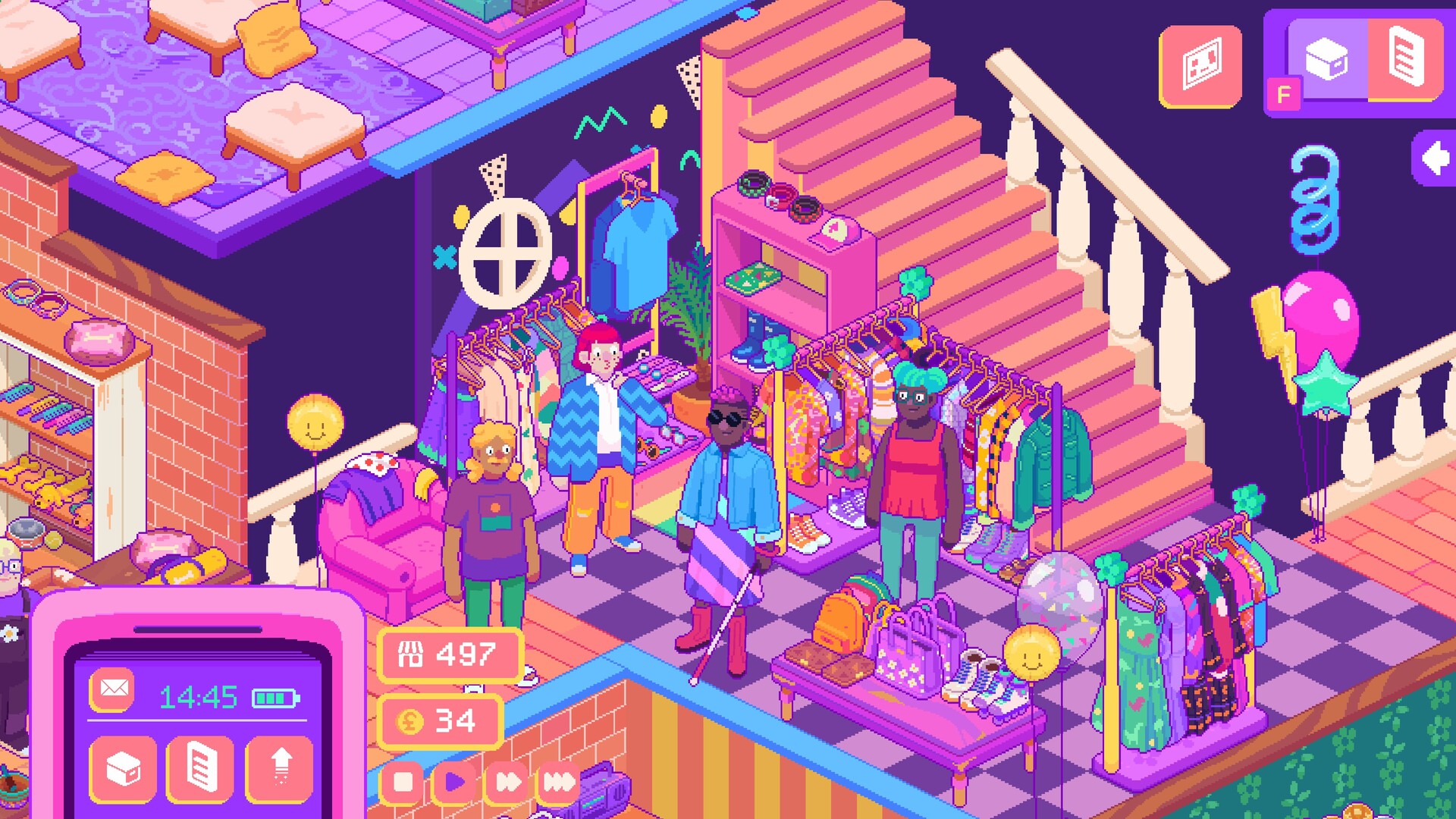
Now, all this isn’t to say there are no milestones and this is a pointless game. To keep expanding our shop, getting new decorations and items to place, and collecting stock, we do need to earn money from selling things, points for proper organization, and build up notoriety. However, the traditional benchmarks aren’t associated with it. When we get a new box of inventory, the first order of business is to sort it. This means placing them on shelves. Initially, we start with a one-room establishment. This means you may want to put all kitchen items on one shelf, all clothing in another area, and all accessories on a third shelf. Once you get to a point where your shop spans multiple rooms, you may have all clothing in one room, with all dresses on one rack, all purses on one shelf, and all footwear in its own space. Those kitchen items I mentioned earlier? Maybe you’ll have an area where all items related to baking get their own space aside from other cookware. Part of our points and success stems from successful organization. Ironically, though that is true, actual sorting in our inventory isn’t really possible in a meaningful and helpful way. (I’m hoping that could come in a patch.)
It could also mean preparing for certain events. After we get to a certain point and are settled, we can set up activities to draw in customers on specific days. For example, if you have a Clothes Swap Party coming up, you may want to make sure any clothing in your inventory is out there and on shelves to ensure they move and the people coming there for that get what they need. Fortunately, the summary at the end of the day will let you know what tags you should prioritize for items on sale if you do have an event coming up.
Getting to unlock elements that change how the shop looks is also a big draw. There are stamp cards with different themes that you unlock for getting certain amounts of points for ensuring the products regulars are asking for as part of their brief storylines and doing a good job of maintaining your store. Some goth-y and fantastical items would be found in Witches Attic, for example, while Grandma’s Kitchen would be more cottage core and cozy. It all looks great, of course, and the spritework for all the objects, shelves, and decorations are fantastic. Which makes sense, given the level of quality we saw with Sticky Business.
The downside is, I didn’t feel the same drive to keep playing Thrifty Business as I did Sticky Business. With the previous management title, new customization items for stickers would roll out as we’d increase sales, place orders, and progress. It meant there was always some new customization element. Like there was a bit of control we held. With Thrifty Business, it feels more hands-off. If you aren’t big into decorating and customizing the appearance of your shop, there’s not much fulfillment stemming from that gameplay loop. After about four hours, I started feeling like I’d done it all even though I hadn’t unlocked everything, and once that figure doubled I didn’t really find myself enjoying it as much. It can get very repetitive.
Thrifty Business is a business management simulation that feels as relaxed as Sticky Business, though a bit less creative. You can customize your space and make it your own. Organizing it all can be soothing. Just know that it can be more repetitive than Spellgarden’s previous title, as it really does prioritize combing through inventories, getting things set up nicely, and enjoying the satisfaction of pleased customers and successful events as a result.
Thrifty Business is available on PCs.