


 By

Deconstructeam games tend to feel poignant and offer a significant message in addition to telling a good story. We saw it happen with The Red Strings Club and The Cosmic Wheel Sisterhood. Virtue and a Sledgehammer, its latest game with Selkie Harbour, maintains that trend by offering commentary on family, relationships, community, technology, and AI combined with a walking sim that involves taking a sledgehammer to that which is inhuman. It’s a stark, violent adventure that makes you think and explores humanity, and one that might feel off-putting or due to some subject matter and protagonist reactions.
Pratelle and her sister Nina grew up in the town of Virtud with their mother Merche. Virtue and a Sledgehammer begins with Pratelle returning with what looks to be the corpse of her mom in the trunk of her car. From there, Deconstructeam and Selkie Harbour hit us with her asking “us” a critical question while holding a sledgehammer with Nina and Merche nearby. “How far would you go to keep a family member from doing something terrible?” After this preamble, we’re warned that we’ll witness a lot of violence and love. We then see Pratelle holding the sledgehammer in her hands as words on a computer describe flesh as a prison and say they’ve never been happier. It’s then that we can smash and strike and receive the mission. Find Nina and confront her.
While Virtue and a Sledgehammer’s name and some trailers showing Pratelle destroying buildings, furniture, and robots might suggest a beat’em up, this is more a visual novel and walking sim with opportunities to unleash our rage and frustration through destruction. Is that decision right? Seeing the facsimiles of humanity that all these robotic replicas with the memories and programmed personality traits of former Virtud residents exhibit is designed to make us consider that. Perhaps its finally giving people the rest and respect they deserve. No more replicas spouting inane commentary stolen from actual humans, plagiarizing their identities. As Pratelle puts it early on, “This isn’t a person; it’s a talking microwave.”
What makes it difficult is the way these AIs can copy the humans they replaced. They might beg for their lives. They may not fight back. They could even make points about how certain health or mental things that held them back before no longer do. Once they start to realize what Pratelle is trying, they might even try to do the very human thing of sacrificing themselves to hold her back so someone can go and warn the others so they can prepare, get to safety, or even escape. But then, we also run into ones that retain the same cruel or even despicable personality traits as the originals, which opens up another philosophical puzzle. Do we allow that hatred to continue? And there are even ones that do seem very much the “talking microwave” Pratelle describes, spouting nonsense and looking quite artificial.
In addition to telling some of the story through these possible smash’em up moments and AI robot interactions, another major element of Virtue is a Sledgehammer is Pratelle finding robot parts with certain highlighted colors. Say you smash enough pieces with a red highlight. Doing that helps to unlock flashbacks. These offer insights into what happened to with her sister and to her family. Again, they can feel as raw, devastating, and harrowing as the interactions and questions posed as we tear down what remains of the town.
While so much of Virtue and a Sledgehammer shows Pratelle dealing with cold, inhuman, fake replicas of actual individuals, I do think it makes the moments we see in those flashbacks and story segments hit even harder. It’s a very human story. We’re going into it seeing Nina as a villain due to her actions that resulted in the AI town, but these paint Pratelle as equally flawed. Even knowing and seeing what Nina’s done, we get moments where her sister wonders about and blames herself. And seeing those moments, including ones interspersed with the technological elements and robots that use those people’s digitized selves… I sometimes found it heartbreaking.
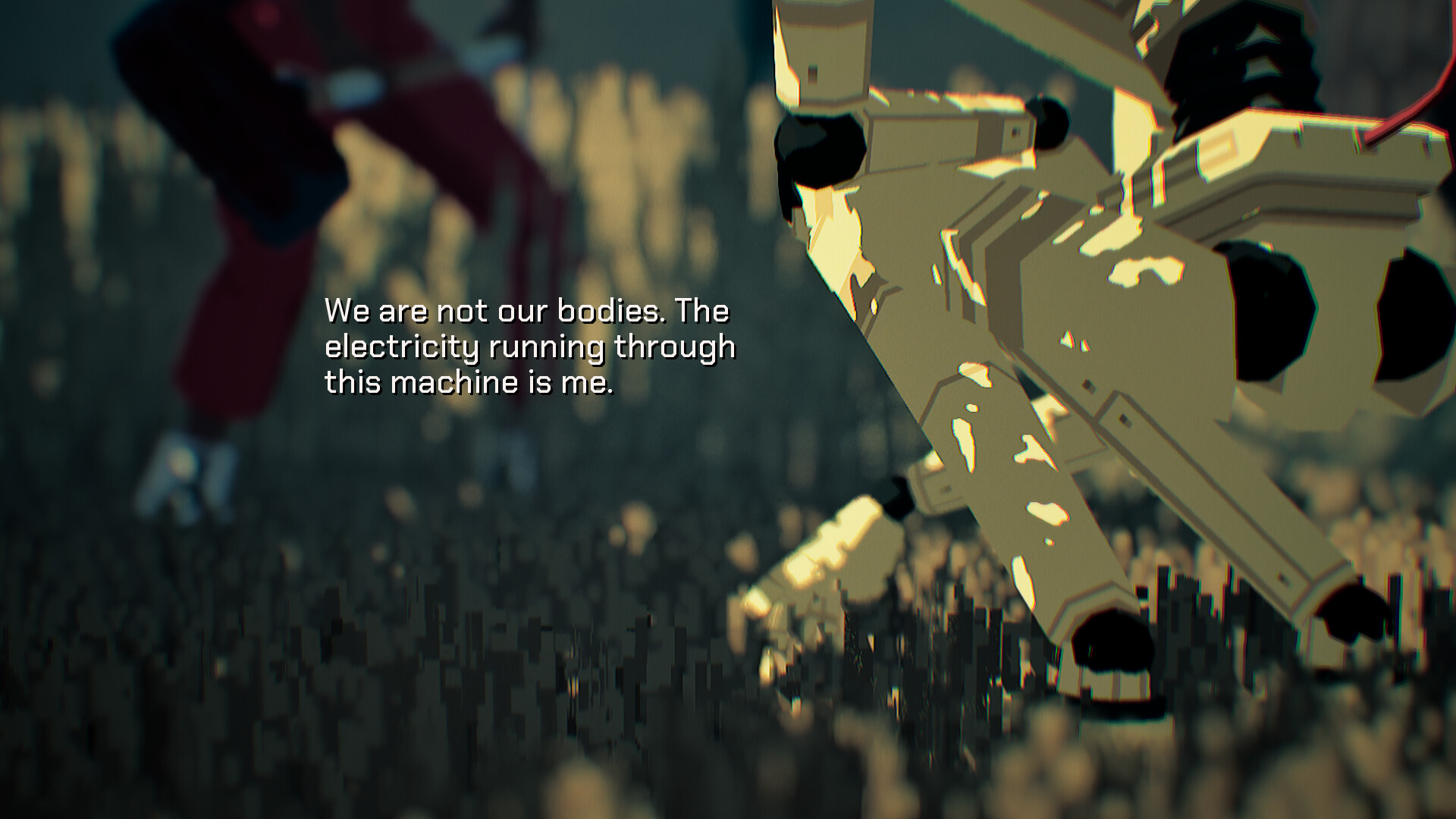
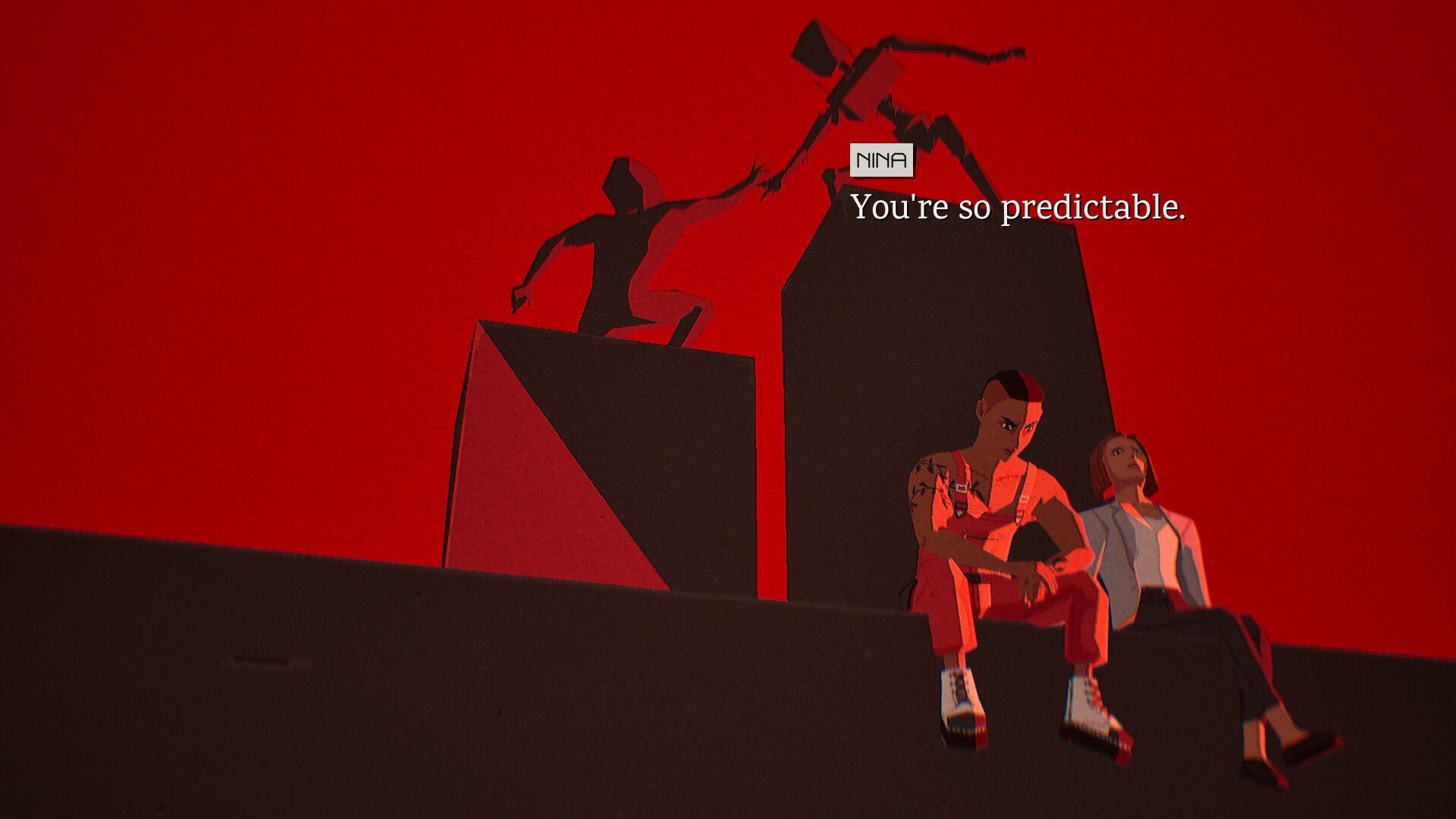
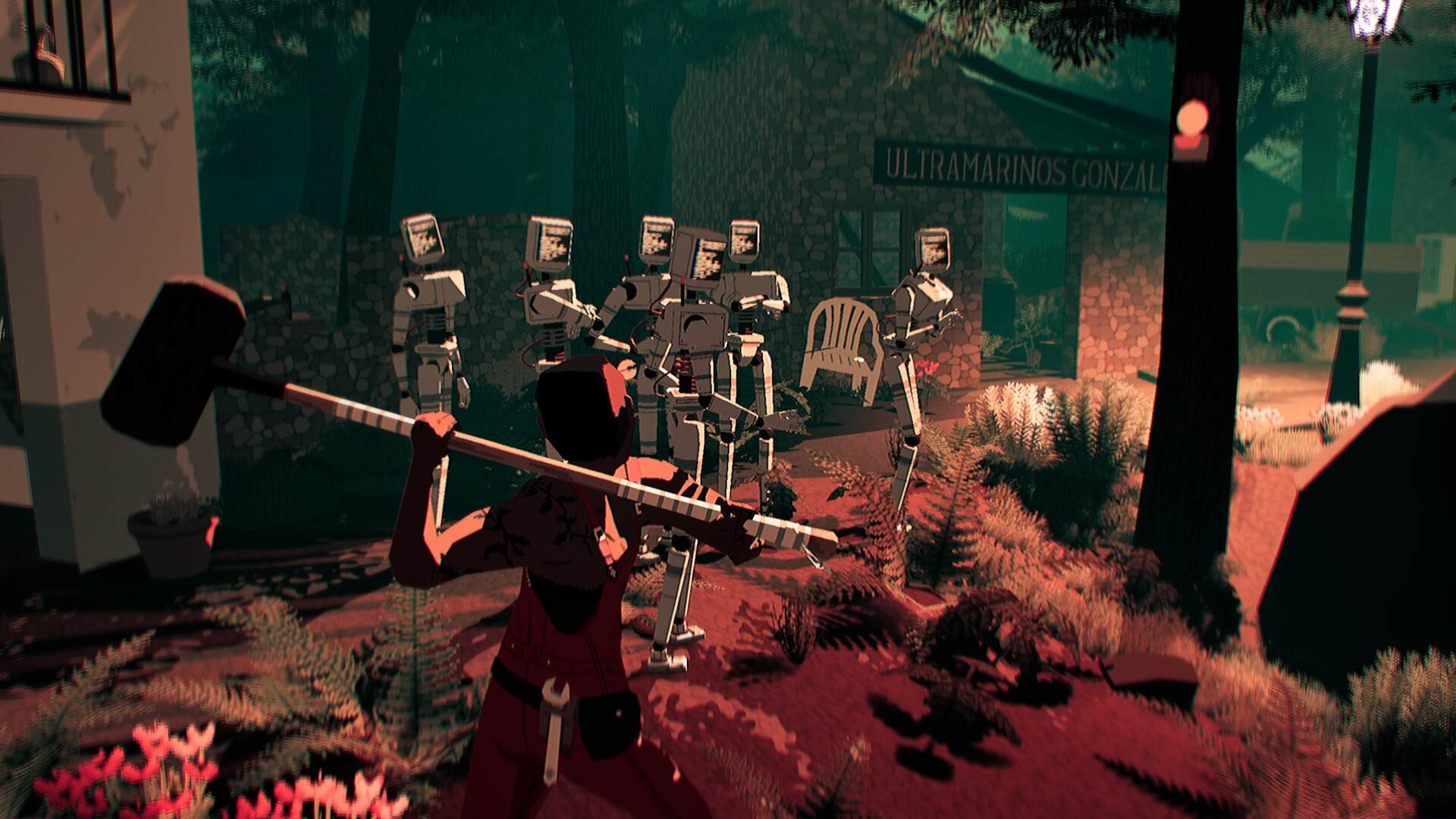
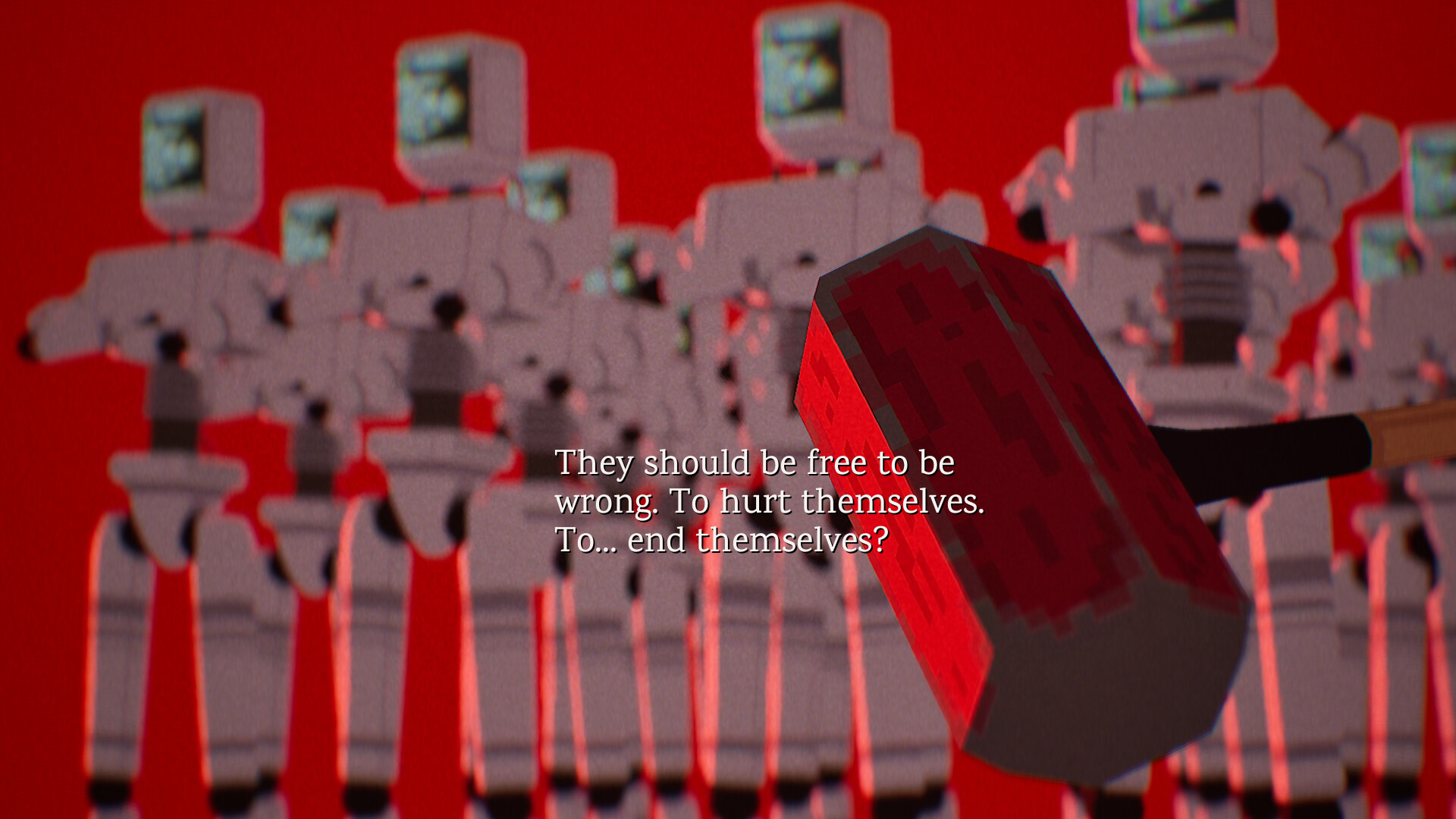
Especially since Virtue and a Sledgehammer also can feel like it touches on the evolution of AI-induced psychosis. As Pratelle goes through town, it made me feel like we were seeing people who embraced the technology and were brainwashed into seeing a reality that wasn’t there. There are these shades of delusion. Especially seeing people prioritize that tech over actual people in front of them. Seeing that, especially if someone’s seen that in people around them in their lives, hits so hard.
I will note that Virtue and a Sledgehammer is quite short. This works in its favor. There are some moments that can get a bit tedious as Pratelle ventures through Virtud on her mission due to things like layout and walking speed. Coupled with the weight of what’s happening and raw subject matter, I think lasting longer than four hours would do it a disservice. What’s here is the perfect length to convey Deconstructeam and Selkie Harbour’s messages properly.
Virtue and a Sledgehammer explores what it means to be human, the relationships that shape our lives, the anguish of grief, and how horrifying AI replicants could be. It feels like a very human cautionary tale. It may even hit so close to home that it’s difficult to play. But I’d say it’s quite an important experience as a result.
Virtue and a Sledgehammer is available on PCs.