


 By
By 
It’s difficult to talk about Zero Parades without bringing up its predecessor Disco Elysium and the complicated history of the ZA/UM, the studio behind both. Because of that, I wanted to be fair to the developers on this new title and approach it as the product of a new team. 60 hours in and nearly two complete playthroughs later, I am very impressed and eager to see what’s next for this iteration of ZA/UM.
Zero Parades follows Operant Bureau agent Hershel Will aka CASCADE, a highly trained spy for the communist republics of the Superbloc. She returns from “the freezer” five years after her last assignment, which ended in tragedy and left her alienated from her friends and allies. Upon arriving in the city-state of Portofiro, she finds her assignment is over before it even started and the Opera orders her return. Going against her superiors, Hershel sets her sights on figuring out the truth, reuniting with her squad, doing right by them, and finishing the assignment.
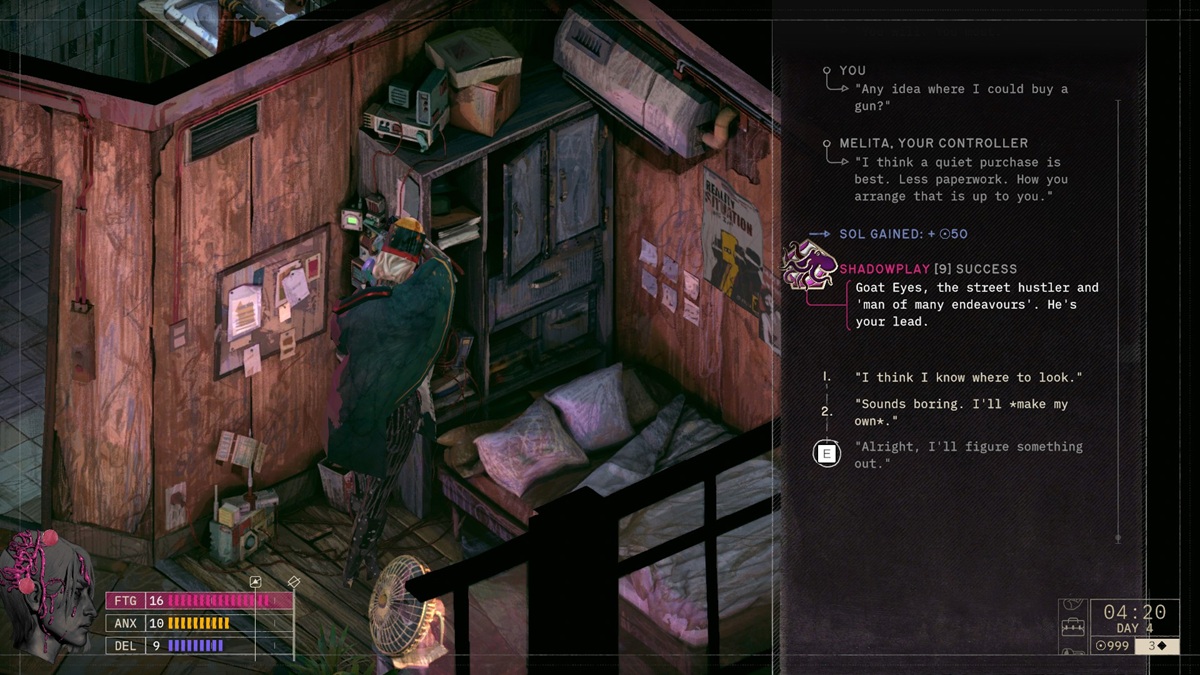
Despite existing “at the end of history” — an era of seeming peace and prosperity — the world of Zero Parades is one of surreptitious and ongoing world-changing events. It’s more suited for spies and secret agencies than politicians and armies. One theme is that of soft power, the way in which imperial powers shape the face of foreign cultures through the proliferation of cultural exports. I vastly prefer the way that Zero Parades engages with politics to Disco Elysium, particularly that of the role of fascism in the modern world.
I also found the writing in Zero Parades to be a lot more sensible and sensitive with regards to this topic. It avoids the casual misogyny, copaganda, and racism that permeated its predecessor. The same can be said for its characters and world. Everything you learn is related to CASCADE’s mission. Sometimes, the vast supporting text inspired by tabletop RPG settings can bloat and obscure more interesting aspects of a game. Fortunately, this is not the case here. The world of Zero Parades was built with surgical precision.
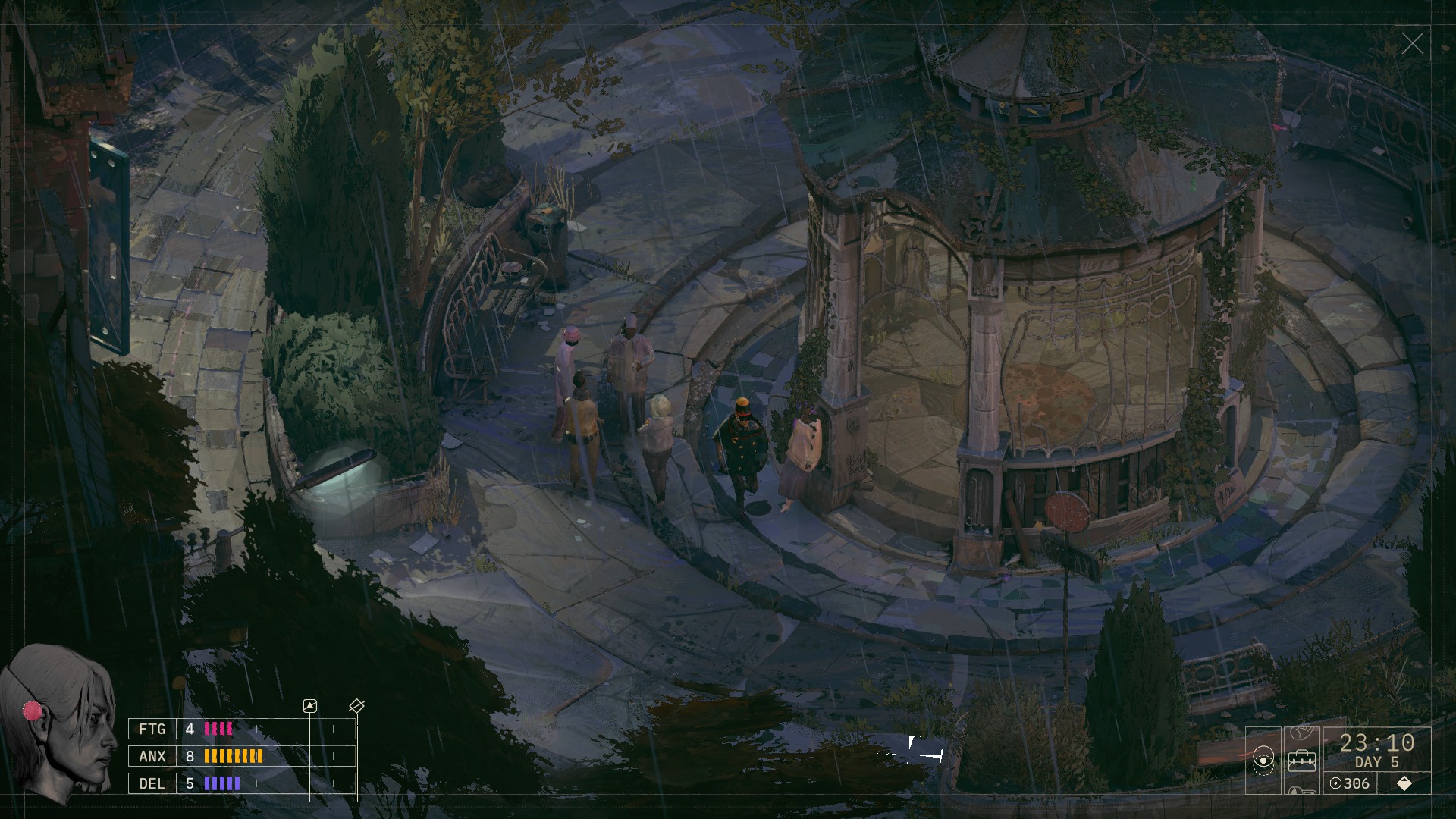
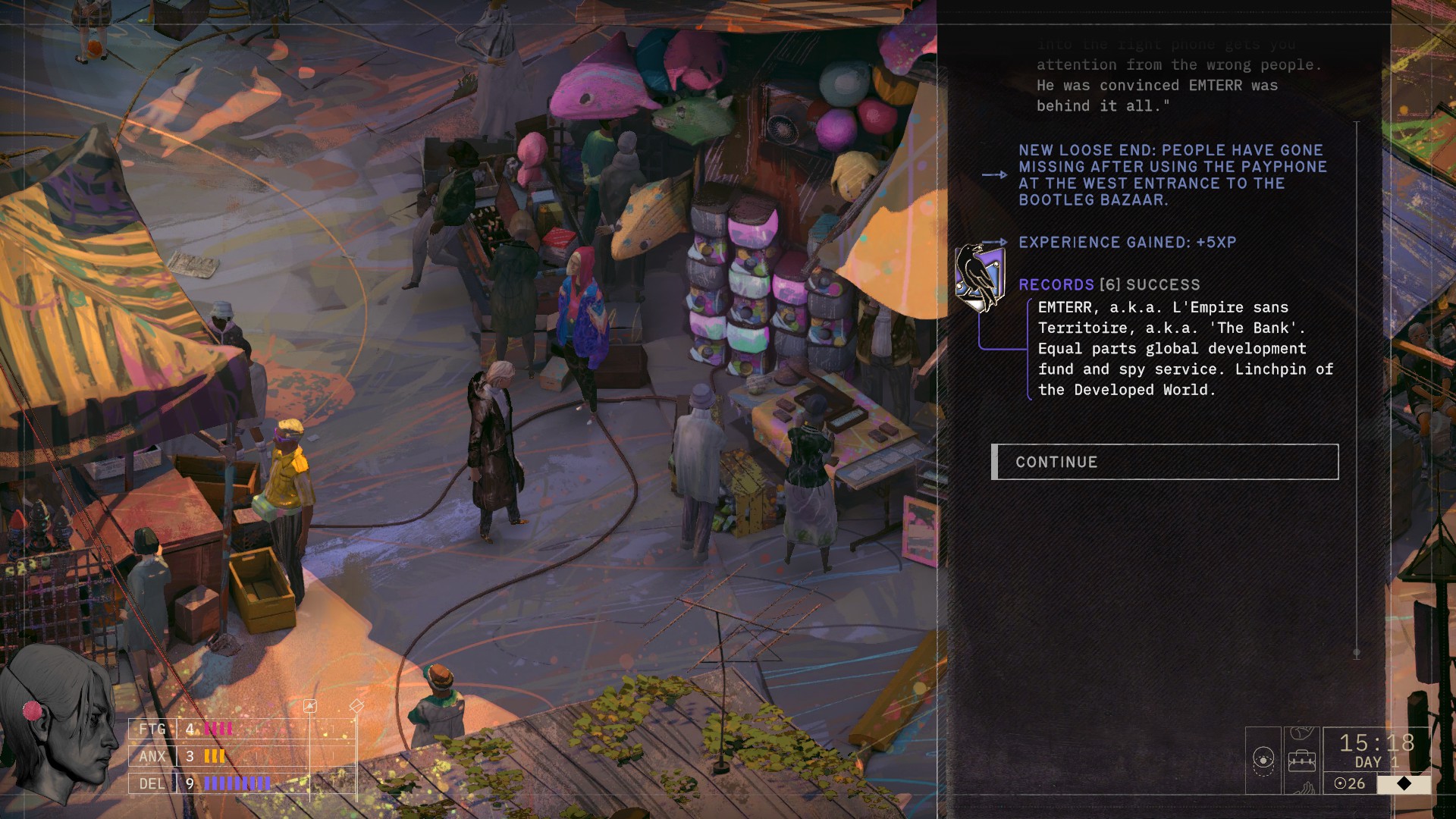
Instead of being a linear, widely branching narrative, the story is structured like a web. Hershel starts in the center, and the various quests and characters strewn in different directions serve as keys to complete the final assignment. As I approached the final hours and reckoned with my choices, I realized that I wouldn’t be able to help everyone. I was forced to make sacrifices and leave people behind. Worse, I had to decide who to bring with me for the final assignment, knowing I would selfishly risk their lives in the process.
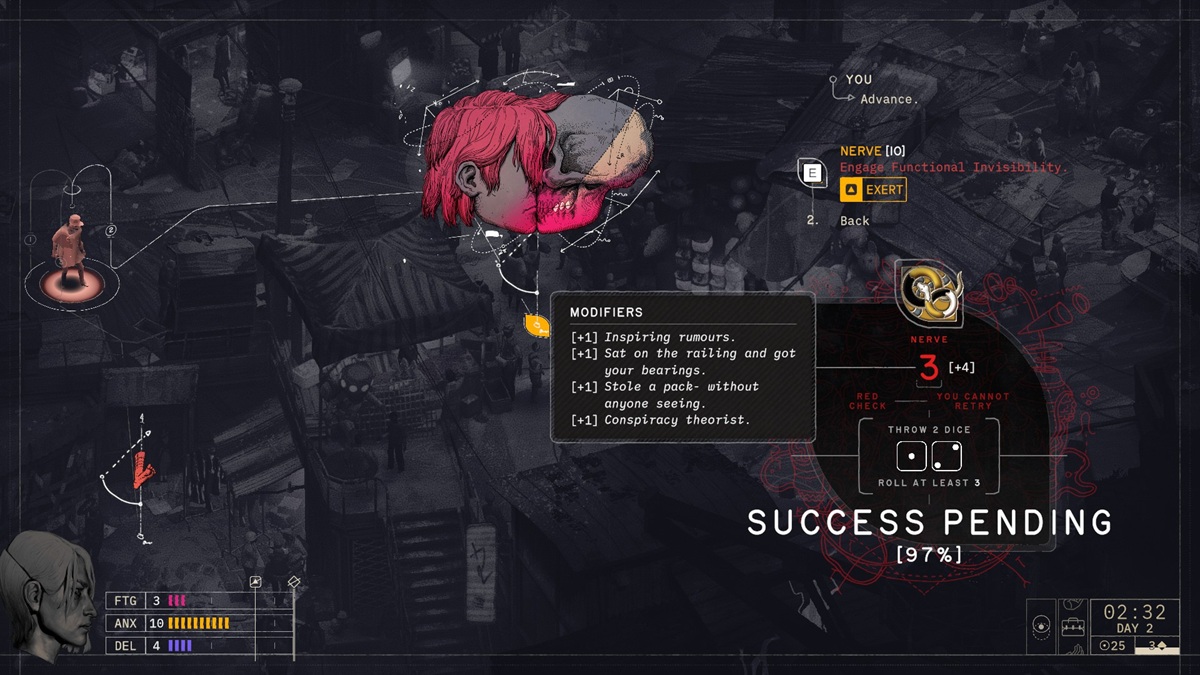
CASCADE is a highly accomplished, but volatile, operant. She inhabits a weird world where the grounded and the impossible coexist, and her skills as a spy are tested during Dramatic Encounters, tense moments with rippling consequences. During one of these events, I managed to use a “spell” on an attackers, rendering them stunned with a single word. It’s during these encounters when more psychedelic and perilous elements shine through, while in others I achieved “practical invisibility” by blending in with the crowd.
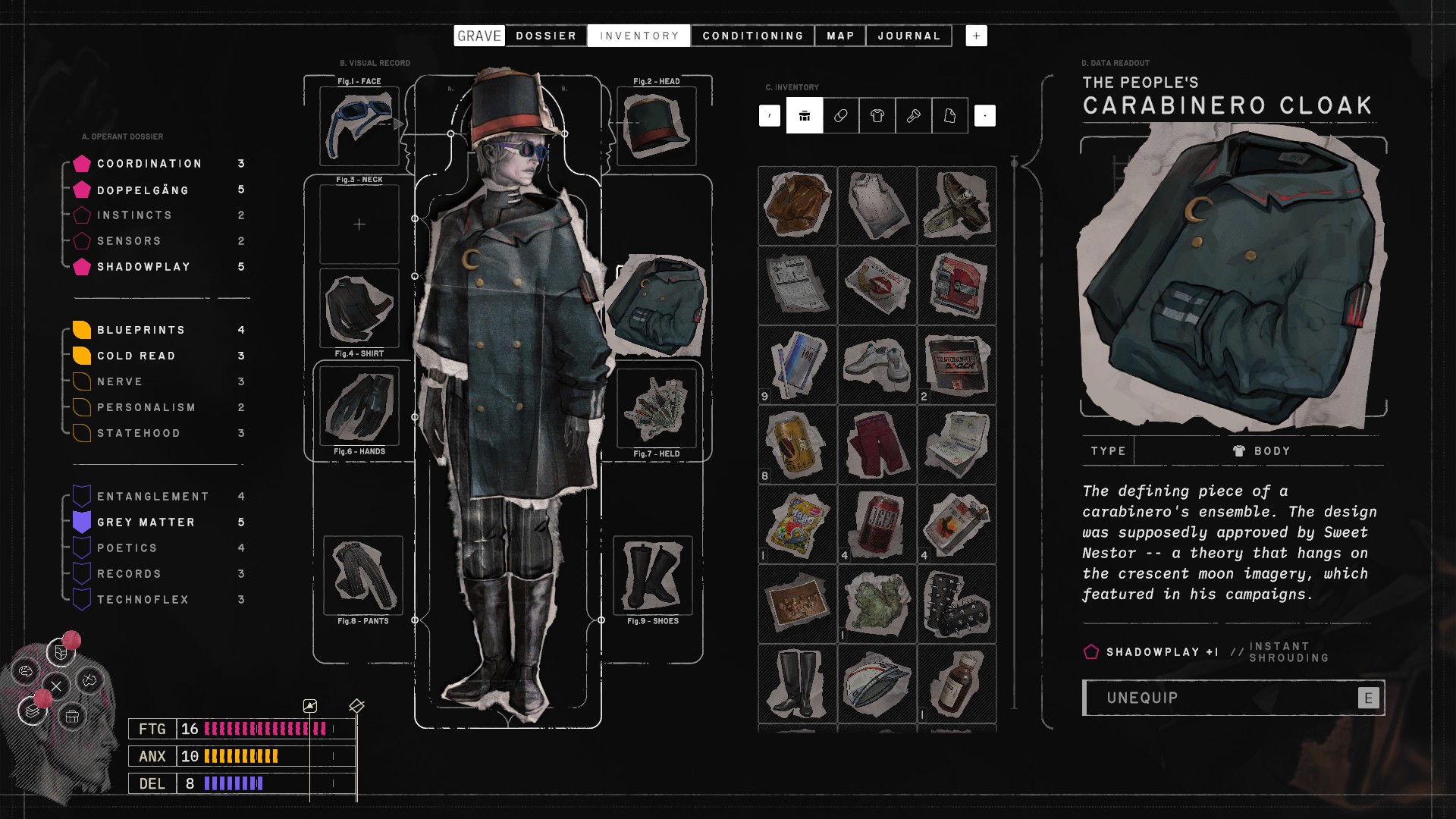
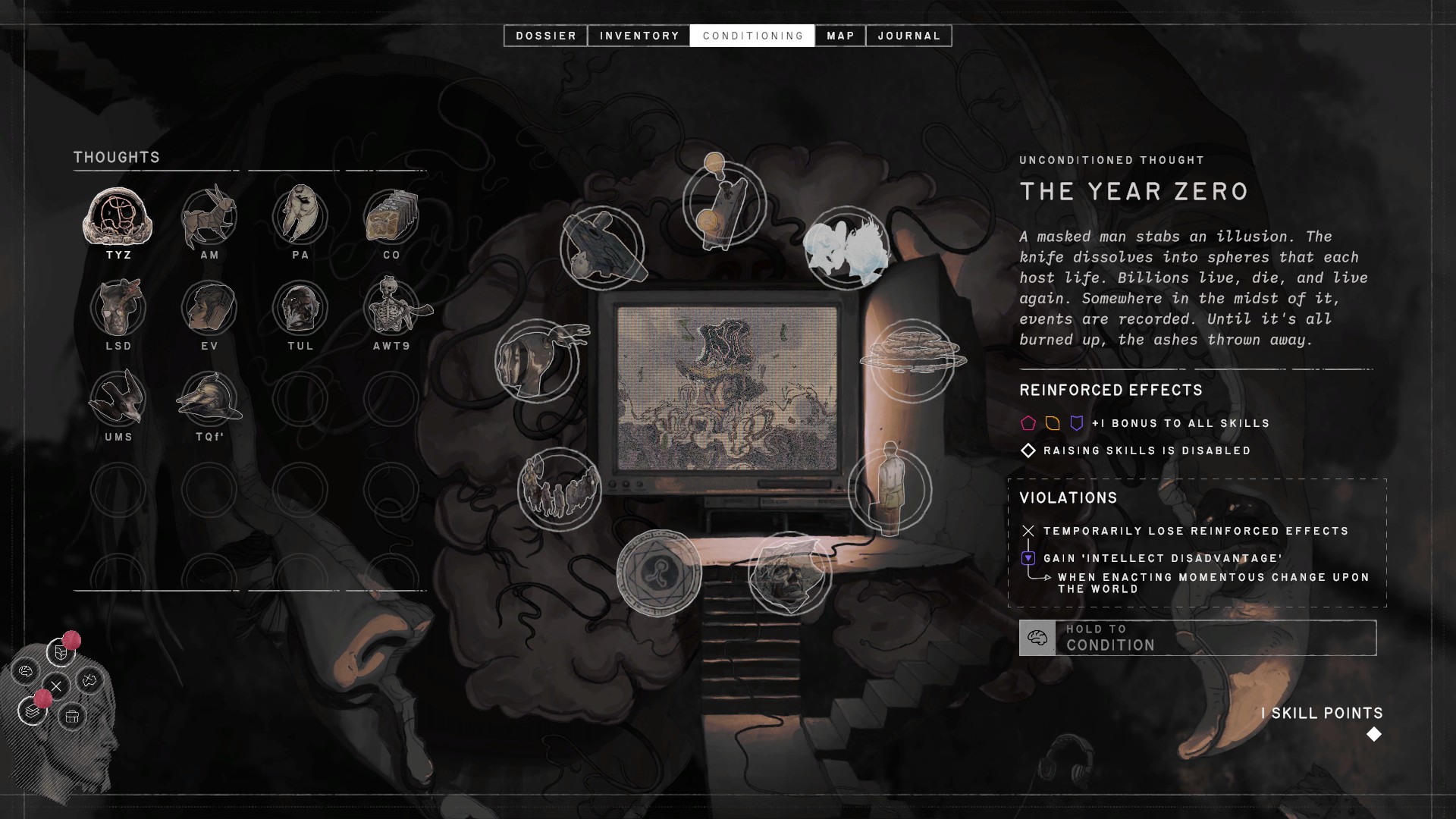
Another system I enjoyed tremendously was Conditioning. Reinforcing thoughts acquired during play increases the level cap for certain skills and alters Hershel’s behavior to open new dialogue opportunities. However, every thought comes with a rule that can be violated. That will incur as a disadvantage on certain dice rolls. For instance, I reinforced the thought “The Wang Way.” I gained Coordination and Technoflex level up potential and made the word “wang” (a synonym for “kill” or “die”) part of Hershel’s vocabulary. However, I temporarily lost this thought’s bonuses if I showed any remorse. This shaped the way I roleplayed, leading to conflicting scenarios where I debated whether I should keep up my persona or be sincere and risk compromising my cover.
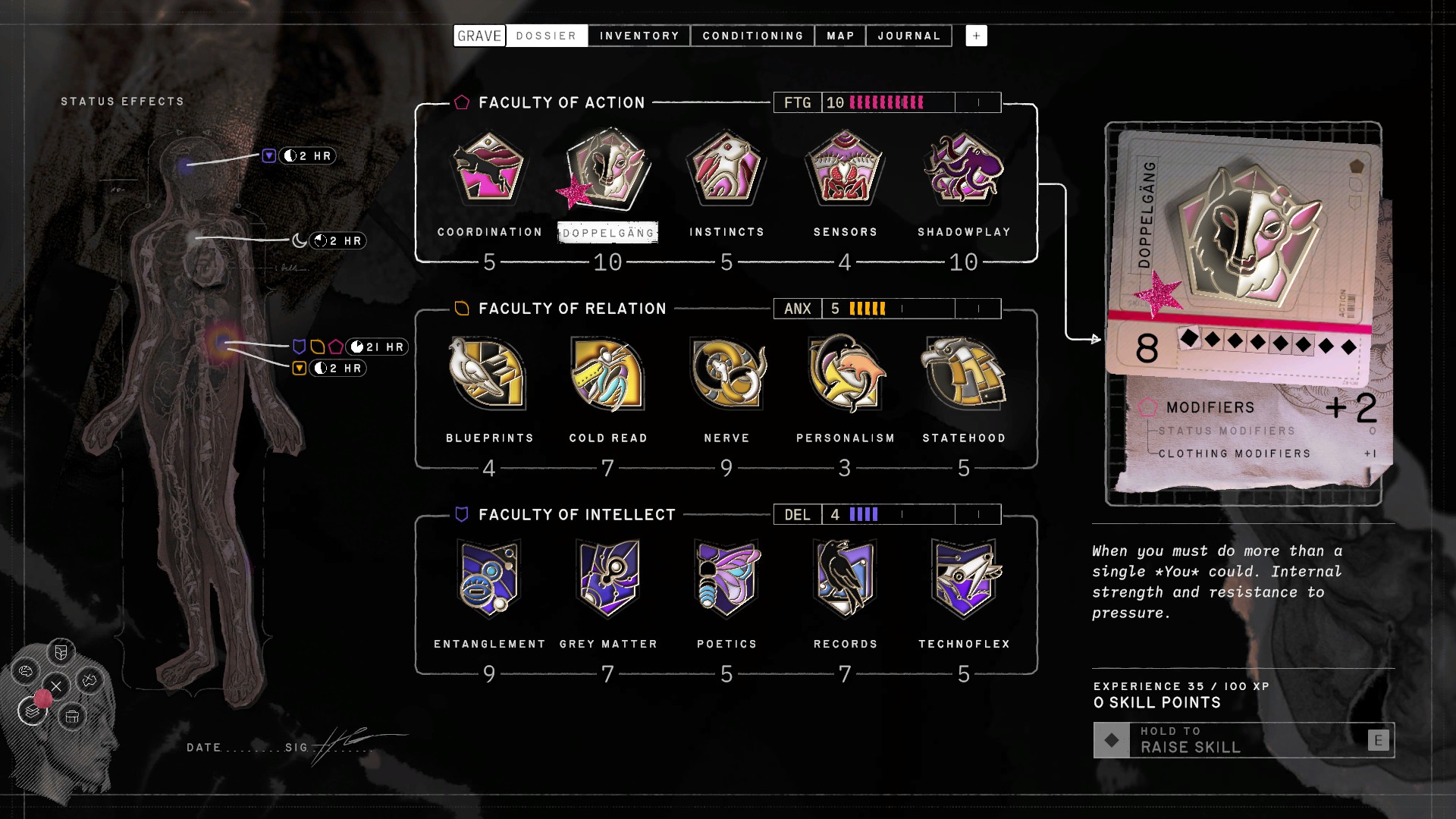
I didn’t find the Fatigue, Anxiety, and Delirium systems as compelling. In lieu of health, Hershel has those meters tied to her Action, Relation, and Intellect. Whenever a roll seemed challenging, I would exert myself to gain advantage at the cost of filling one of the meters considerably. If one of these meters is almost full, Hershel can’t exert that until it goes down again. What I’m not so keen on is the result for filling a bar. Once that happens, a random skill from the corresponding faculty must be leveled down. This only happened to me once, but it’s not fun and felt restrictive and counter to the philosophy of “fail forward.”
Zero Parades understands its position within gaming culture. Like the protagonist, Hershel Wilk, it’s weighted down by a complicated past, but willing to move forward. The game is at best when ZA/UM’s trying to do new things, both with its mechanics and its writing. With the latter, it triumphs. However, while I still deeply enjoy its mechanics, both new and familiar, a part of me wishes that the game was bolder and willing to differentiate itself even more from its predecessor.
Zero Parades: For Dead Spies is available for the PC via Steam, the Epic Games Store, and GOG. The game will come out on PlayStation 5 sometime in 2026.
