


 By
By 
Each adaptation of a story can bring different elements to it. A light novel might feature the most detail and intimate insights from the perspective of lead characters. Anime series might provide more dynamic approaches and new takes on characters. With manga, we can often get a better idea of storyboarding elements and how mangaka choose to prioritize and approach certain scenes. With the Playing Death Games to Put Food on the Table manga from BanzaiKotobukiDaienkai, the first volume showcases how this approach can call more attention to character emotions, tense moment, drama, and horror through expressions, poses, positions, camera angles, and other storytelling elements.
Editor’s Note: There are no spoilers for the first volume of the Playing Death Games to Put Food on the Table manga below.
Yuki is a young woman who’s a veteran when it comes to death games. These are events set up by the rich and famous. They prey on the desperate, putting them in deadly and near impossible situations. The survivor gets money. As the first volume of the manga adaptation begins, her and five other young women awake dressed in maid uniforms in a mansion filled with deadly traps. Only the winners get to survive and claim the reward, which leads to ruthless situations where even if the characters do occasionally help each other, this is very much a survival-of-the-fittest situation.
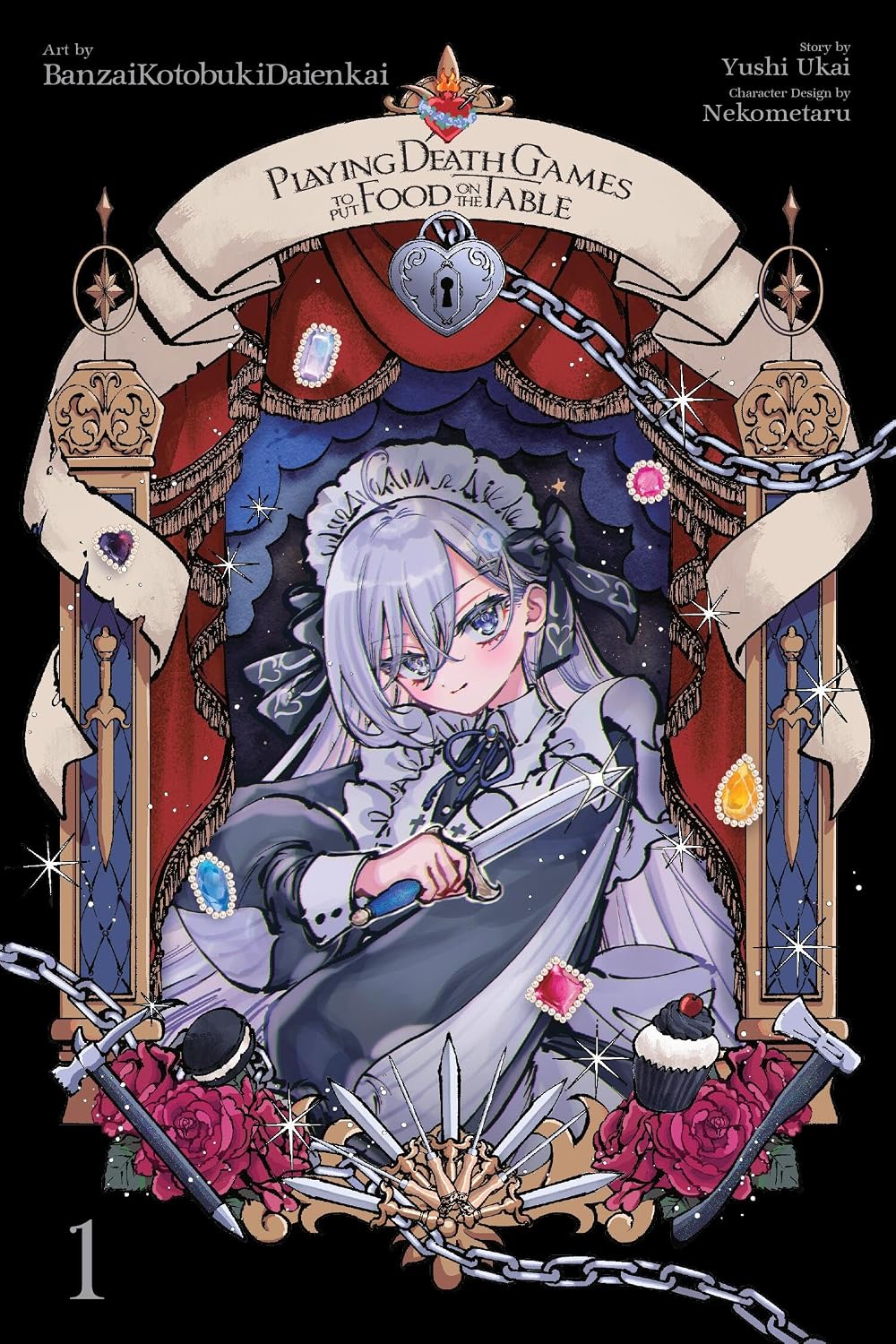
The first thing I really appreciate is the focus paid to characters’ faces in the Playing Death Games to Put Food on the Table manga. BanzaiKotobukiDaienkai’s art really focuses on their expressions. Given the horrors they’re experiencing and drama they deal with, it means we get all these immediate tells showing what they’re going through even before we read what they have to say. It’s all very well executed and, in some cases, gets quite dark and gruesome given the subject matter.
The positioning and storyboarding also features that same degree of attention. The camera angles at tense moments, use of lettering and sound effects to convey intensity, costume design, and even character poses all feel designed to further the story. When there’s a dash for a key or a moment where someone could die, we see the focus shift. Frantic moments are accompanied by dynamic fonts and chaotic lettering. The costume design highlights the disconnect from the terrors and the idea that this is amusement and perhaps even fanservice for some twisted individuals. They all add to the expressiveness of the story.
I also feel like Playing Death Games to Put Food on the Table suits a more visual method of storytelling like an anime and manga more than the light novel. Yes, it all started with Yushi Ukai’s book series (which Yen Press also localizes and publishes). But while we’re allowed to imagine layouts and critical scenes, prioritizing what we feel Ukai wanted us to know, BanzaiKotobukiDaienkai is far more in-our-faces with forcing us to acknowledge and face certain elements, choosing what’s important and lingering on that imagery in a way the anime might not be able to.
Each adaptation of Playing Death Games to Put Food on the Table does something that makes the story and characters feel unique and stand out, and the manga’s art and direction set it apart. The way it manages to convey emotion, tension, terror, and urgency with static art makes everything feel incredibly dynamic and alive. The design choices by BanzaiKotobukiDaienkai also force certain elements to be prioritized, constantly calling our attention to things about characters and situations that are important.
Volume 1 of the Playing Death Games to Put Food on the Table manga is out now, and Yen Press will release volume 2 on December 15, 2026. The company also handles the light novel. The anime is streaming on Crunchyroll.
We may earn a commission if you purchase from certain links. Learn more here.