


 By
By 
AP Thomson’s Titanium Court describes itself as “a surreal strategy game for clowns and criminals.” What it doesn’t say is that it very much may not be a game for those with bad anxiety issues. Match-3 is traditionally a basis for many anxiety-mitigating titles like Puzzle Quest and Might & Magic: Clash of Heroes, allowing players to lose themselves in the flow. And that part’s still sort of true here?
The “war” plays out in two phases. In the first, you’ll match land tiles to gather resources and shape the map. In the second, you deploy units to fight on that map. Working in this initial phase, unless there’s a specific objective you need to engineer, can scratch the traditional itch. The second being an auto-battler has a bit of “hold your breath” element to it as you hope your plan works, but it’s not intolerable. Rather, the complicating elements come outside of battles entirely.
The first thing you’ll notice about the game is its strong pixel art aesthetic. It commits hard to its limited color palette to great success, and its illustrations are often charmingly wonky and weird. There’s enough detail in battle to clearly see what you’re doing, and anything beyond that is a luxury Titanium Court simply will not abide. The audio doesn’t exactly match from a technological perspective, but it does its job well enough. I’d usually play puzzle games on mute while doing other things, but this game made me stop and turn up the volume from time to time.
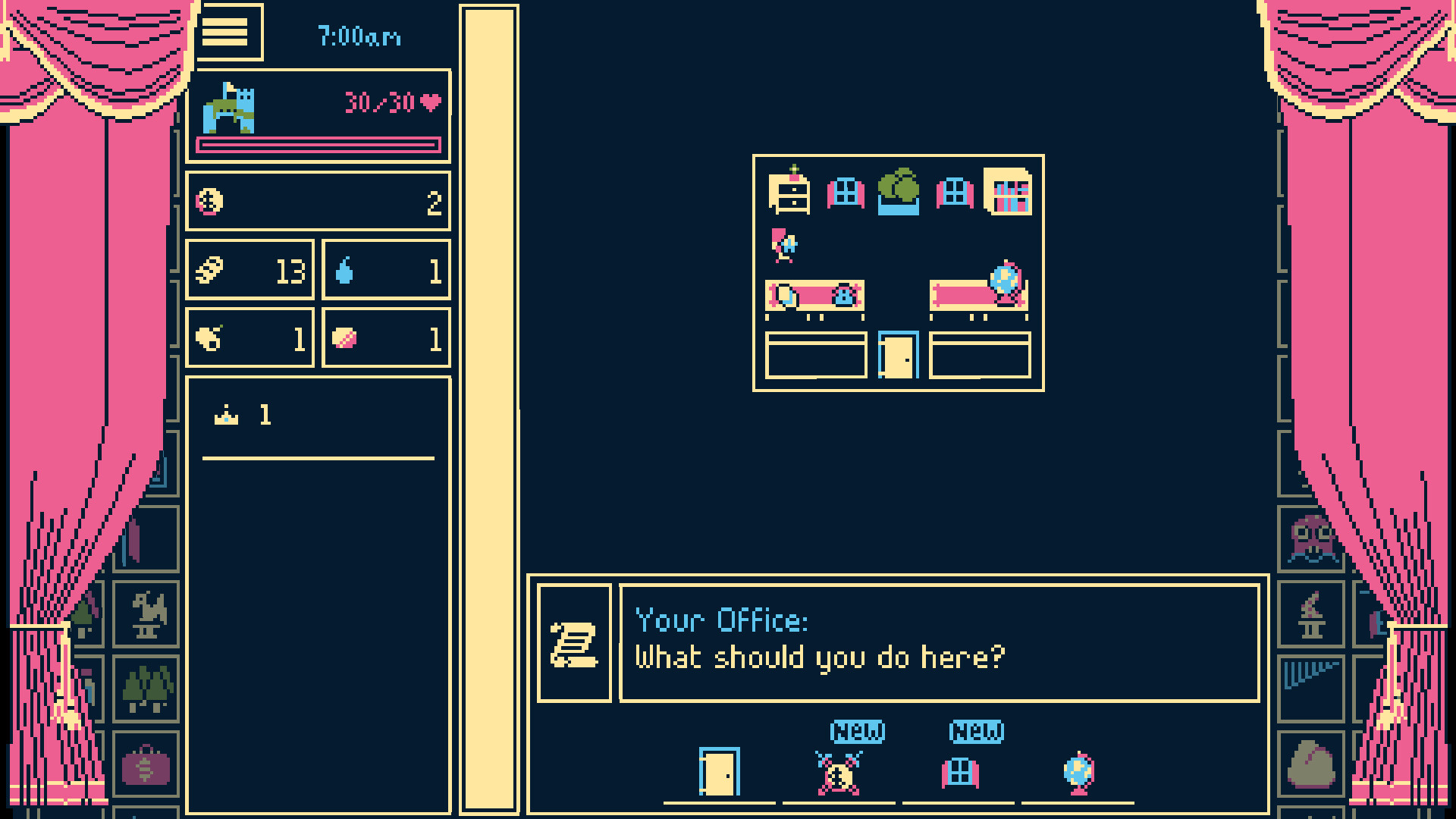
Many games to which Titanium Court has drawn comparison feature compelling, strategic gameplay stitched together with a narrative framework. Like Blue Prince? Or Inscryption? This game, though, is narrative first and foremost, with the gameplay thoroughly secondary and built to support the text. You’re going to need to like reading! You can absolutely skip most of it and just play the puzzles, but the problem with this is that you’ve essentially just skipped the game. It’s hard to explain? The whole game’s hard to explain.
It’s truly the first time in a long time I’ve seen “surreal” used so accurately. Usually, the word has been used to mean “a little quirky.” In Titanium Court, you’ll legitimately mess yourself up if you try to apply too much logic to the game’s threads and conversations. Any time it feels like the game is making a salient argument about something, it instead bounces off and never returns. That’s definitely its intentional ethos, but boy, it’s frustrating sometimes. Dreamlike interactions will resolve in dreamlike ways, with linguistic gymnastics and double meanings and illogical but definitive conclusions.
That said, not everything gets those clear ends. You technically can stop at any point due to frequent autosave, but it’d be nice if it were just a bit more transparent in engineering and communicating stopping points. There are always threads to tie up in the next segment, and continuing to do that before you forget often makes your to-do list longer.
There’s also a sort of mechanical implementation of “play until you are satisfied,” an ending accessible well before finishing storylines. Mechanically? I wanted to continue. Titanium Court has a ton of gameplay twists and doesn’t force you to master much of any of them. (The constant availability of tooltips is helpful to get you up to speed, and weirdly integrated into the story too.)
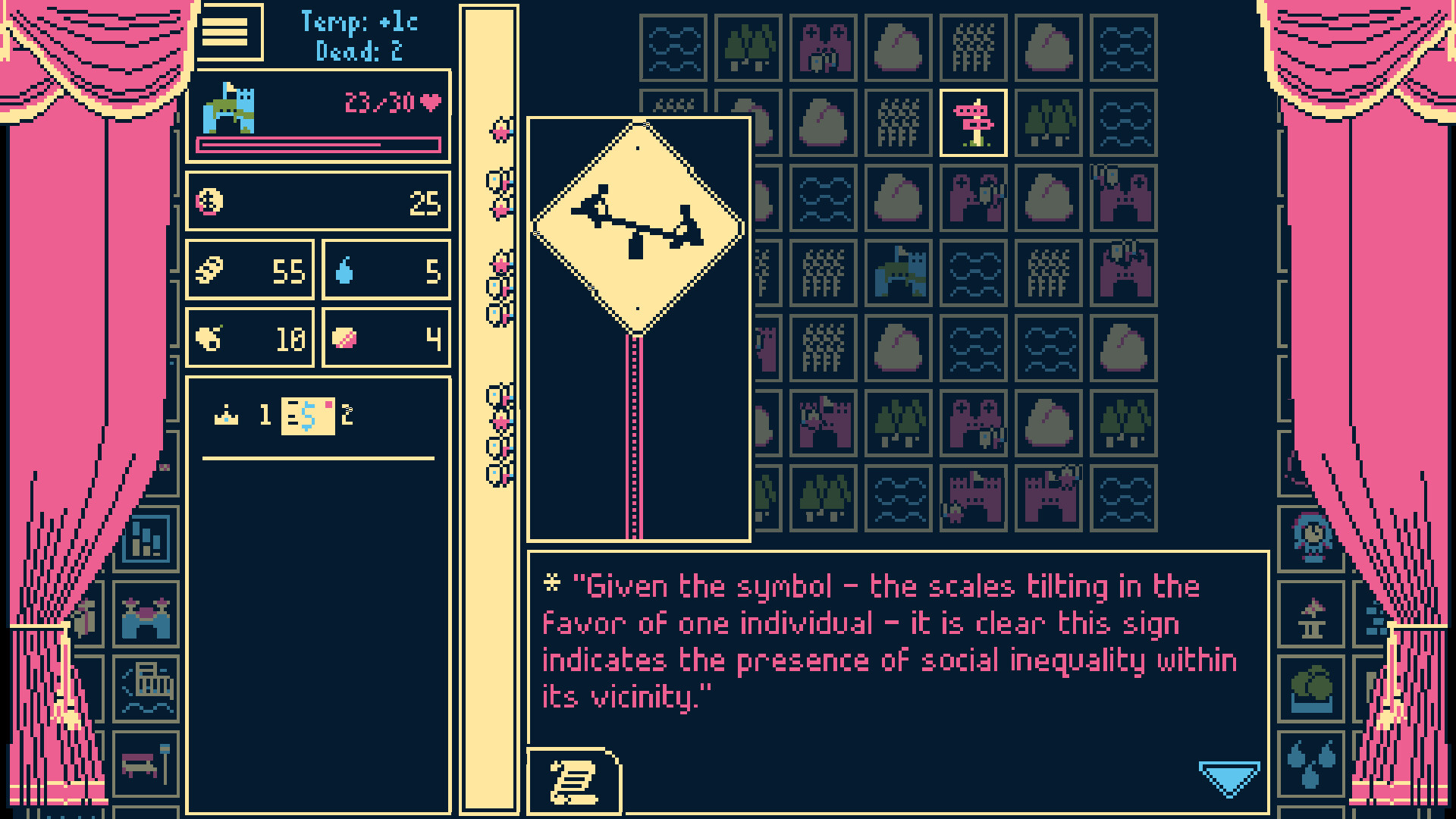
It feels like there are many endings I didn’t get, but I also feel like I shouldn’t get them. Not because I didn’t enjoy playing! It feels like the narrative of the game itself wants you to stop, sometimes in extremely explicit ways but other times more subtly, and that stayed with me. Most games in this sort of mold want you to play all the game you can find, and mechanically there’s absolutely reason to do so here. But it also fights against itself in this regard.
I’m being intentional about avoiding spoilers — it’s one of those games best experienced fresh — but I’ll say that one of the recurring topics was particularly relevant. The truly off-the-wall way it treats this and other mundane elements of human experience? It’s one of one. The level of creativity is wild.
And yet, here we are, with our anxiety disorders and our overarching need to make sense of chaos, still enjoying our time with Titanium Court. You know, perhaps a bit less? Its tendency to bounce around and away from its topics any time it feels like they’re going somewhere is… a lot to handle. But its quality shines through even given how it has targeted its appeal elsewhere.
Titanium Court, developed by AP Thomson and published by Fellow Traveller, is out now on Steam.