
Quantcast

Nintendo To Help Japanese Publishers Create Hit 3DS Titles Outside Japan

By Ishaan . October 31, 2011 . 4:39pm

Nintendo To Help Japanese Publishers Create Hit 3DS Titles Outside Japan

In Japan, portable games tend to be more popular than console games. Some of Japan’s most successful game franchises such as Pokémon and Monster Hunter have made a name for themselves primarily on portable systems.


Additionally, the lower costs of development and convenience of play associated with portable consoles have encouraged a large number of Japanese publishers to treat portable game development with the same — or in many cases — more importance than they would console game development.


In the U.S., the opposite is true. With the exception of a select few portable franchises or titles, console games have enjoyed a greater level of popularity, which is one of the many challenges that many Japanese games face outside their home market. This is a challenge that Nintendo intend to address, says the company’s president, Satoru Iwata.


Iwata believes that the Nintendo 3DS presents a “great opportunity” for Japanese publishers to expand their market outside Japan. While Nintendo products sell well worldwide, regardless of whether they’re on a portable  or console, the same doesn’t hold true for other Japanese developers. To address this issue, Iwata says that Nintendo will identify third-party 3DS games with strong overseas potential, and will collaborate with their publishers to turn these games into hits.

 

Nintendo To Help Japanese Publishers Create Hit 3DS Titles Outside Japan

If one were to think back to the Nintendo DS, they would spot existing examples of this initiative. Dragon Quest IX (pictured), published by Square Enix in Japan, was heavily promoted by Nintendo in the U.S. and Europe. The Professor Layton series, developed by Level 5, is published by Nintendo in the U.S. and Europe as well.


Conversely, you can also find third-party console games (on the Wii) that are popular in the U.S. self-published by Nintendo for Japanese players. Activision’s GoldenEye 007, Disney’s Epic Mickey and Ubisoft’s Just Dance are examples of this scenario.


Food for thought:

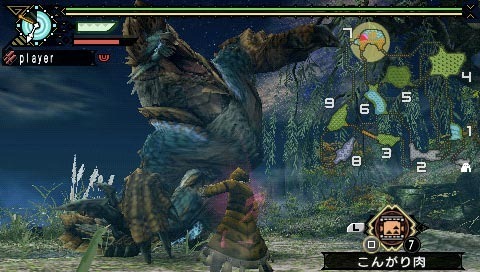
Nintendo collaborated heavily with Capcom to promote Monster Hunter Tri in the U.S., and they published the game themselves in Europe.

Read more stories about & & on Siliconera.

  • http://www.youtube.com/user/jodecideion?feature=mhum TheWon and Only

    Food for thought:
    Nintendo collaborated heavily with Capcom to promote Monster Hunter Tri in the U.S., and they published the game themselves in Europe.

    Just what I was thinking. Nintendo plans to help bring this game over, and treat it as their own. Similar to the way the helped with Dragon Quest. Still what’s odd why help with other games when you have your own. Japanese type games that seem too difficult to bring to the west aka Operation Rainfall games.

    • Joanna

      Well, with Dragon Quest, Nintendo got X on Wii (and Wii U) for their effort. I wouldn’t be surprised if 3G and 4 are on 3DS thanks to Nintendo promising Capcom to help sell the games in the west. These are big in Japan and are system sellers so it isn’t weird to see Nintendo agreeing to such an arrangement. It is sad that we haven’t gotten the Operation Rainfall games though. :( Actually, I was wondering why Capcom would place their golden eggs (RE and MonHun) in one basket (3DS). But now it makes sense. Nintendo probably made a deal with them.

  • Solomon_Kano

    This is a very good and very necessary step on Nintendo’s part, I’d say. I’m very happy to hear this.

  • Syltique

    Sounds like a good plan to me.

  • Yesshua

    On one hand, I’m sure Nintendo just HATES spending money on making other company’s games profitable.  Yes, it’s good for Nintendo when there’s a 3rd party hit on their hardware, but it’s better for Nintendo when THEY have a hit on their hardware.

    On the other hand, Nintendo cannot carry a console alone.  They’ve done their damndest, but they can’t.  And they know that now.  Third parties have struggled to release international hits on Nintendo hardware.  The logical fix is for Nintendo to help the other companies.  It makes sense.

    …but I’m sure back in Tokyo (or wherever Nintendo is based) they feels so incredibly smug about this.  “Yeah, that’s right.  We’re so good other people bring their games to US to make them hits.”

    • Exkaiser

      Nintendo’s based in Kyoto, IIRC.

      But, you know, I’m sure the guys in Kyoto don’t feel like that at all.

      • Yesshua

        Really?  I would be TOTALLY smug about it.  Maybe I’m just a jerk though  :)

        It just seems kinda condescending to me.  “Here, obviously you don’t know how to market your games to overseas markets.  We’ll take a break from marketing our products to help you out with yours.  No, it’s no problem – don’t worry about it!  I mean, I don’t see why it’s so HARD for you guys, but it’s not my place to judge you know?”

        • Joanna

          Eh, sort of odd for them to be smug about something that they need to do because they are inadequate by themselves, but what do I know. Also, remember it’s not Kyoto doing the marketing but the marketing departments at NoA and NoE, so if anyone is to be smug, it’s them. Plus, I’ve always felt it was a case of money. So more like, “look you put those bucks to work on more games for our systems and we’ll take care of advertising.”

    • Corvax

      You do realize that it’s good for Nintendo when 3rd party games sell on its platform because they get publishing dues and it increases customer base for the console, right?  If they hated 3rd party games doing well on their system, there was and is absolutely nothing from stopping them from blocking 3rd party games.

      • Yesshua

        Re-read my comment dude.  I never suggested it’s bad for Nintendo to have a 3rd party hit on their console.  Indeed, I said “it’s good for Nintendo when there’s a 3rd party hit on their hardware”.  And Nintendo reaps profits from the publishing dues like you said.  But when a 1st party game is a huge hit they get a BIGGER slice of the pie.  A much bigger slice.  They also get the developer and publisher percentages in those cases.

        To rephrase my point for you, it must annoy Nintendo’s Corporate Board greatly that they are needing to invest in software that will be less profitable for them than games they could be making in-house with that money.  But probably a little bit smug too.

  • Lexaus_the_Alchemist

    … I hate that they’ve now thought of this after passing on tons and tons of other DS games. Where was this great plan when 7th Dragon was released. Or when ASH: Archaic Sealed Heat was released. 

    • http://www.siliconera.com Ishaan

      …I think you missed the part where they said they see overseas potential.

      • Lexaus_the_Alchemist

        Oh, I saw that part, but what would they define as “potential”? Only games that will sell thousands? Tens of thousands? Hundreds of thousands? Millions? Not giving the games a chance isn’t exactly helpful. Let the customer decide if the game has potential for purchase.

        • http://www.siliconera.com Ishaan

          That’s a surefire way to lose a lot of money, though… 

          I think their general rule is, “If it sells decently in one part of the world, there must be some aspect of it that can be universally applied.” DQ’s pace and ease of play. Monster Hunter’s loot-whoring. Just Dance’s dancing. Epic Mickey’s popular Disney license. GoldenEye 007′s popular license. 

          It seems like they want to take games that do well in at least one part of the world, and let them expand to other markets as well. As for what future games they mean…who knows. Guess we’ll have to wait and see.

  • neo_firenze

    Talk about the blind leading the blind.

    This is the same Nintendo that passes on North American localizations of several of games that they published and which were ALREADY TRANSLATED in English in Europe – Xenoblade, Disaster, Another Code R, Last Window, and presumably to add to that list in 2012 with The Last Story and Pandora’s Tower.  They also leave some games that had solid potential in Japan without localizing them, despite demand for quality software – Fatal Frame Zero, Zangeki no Reginleiv, ASH, etc.

    And most of those I mentioned were console games, not portables. Not very consistent with the idea that the west supports console titles well but maybe not so much with portables. If that was the case, why hold back these console games with good to great grassroots support (cmon, Xenoblade was an Amazon #1 seller just by fans trying to show they wanted to vote with their money)?

    Yes, Nintendo partnered with Capcom for Monster Hunter 3, and Square-Enix for the recent Dragon Quest releases.  But Nintendo has been WORSE than most* of the third parties when it comes to localizing Japanese titles with potential (*not all, hi there Namco-Bandai and your Tales games). So now Nintendo is going to “help” to show these third parties how to reach a greater audience with localizations?

    Ridiculous.

    • http://www.siliconera.com Ishaan

      I knew this would happen… You’re misinterpreting this as: “localizing games that would make us lose loads of money due to the currency exchange issue”. That’s not what they mean at all.

      First, before you ask, Europe gets a lot of those games because the Euro is worth more to Japanese companies than the dollar right now. That’s why Namco Bandai are publishing so many anime games in Europe all of a sudden.

      Second, a translation doesn’t mean it wouldn’t need to be reworked. English, Spanish and French translations from the EU script would all have to be reworked for America, Mexico and Canada respectively. 

      Now, on the subject of these third-party 3DS games, what I suspect we’re seeing here is that Nintendo have rightly understood that third-parties in the west aren’t interested in creating good games for portable systems that don’t start with “i” and end with “e”. This means 3DS will have to rely on Japanese support for all of its third-party games.

      This is likely a way of trying to keep Japanese third-parties happy developing for the 3DS. The happier they are, the more 3DS games they’ll develop. The more they do that, the more money is made in yen (the only currency that REALLY matters to Japanese developers right now). 

      What they want is stability in terms of support and finances, not to try and please the vocal minority. That’s never the intention unless you’re talking about smaller companies like Xseed or Aksys.

      • http://www.youtube.com/user/Kamek20xxExtra?feature=mhee Michael Stevens

        lol People, stop making kitty Ishaan tired!

      • neo_firenze

        Going to respectfully disagree.

        If you can spend $100 to make $200, it’s still profit regardless of whether 1 Euro or 1 Yen is worth more than 1 dollar.  Xenoblade would require relatively minor localization changes from the British English translation.  And why would they need to use Spanish and French scripts for NA for Mexico and Quebec?  Most
        NA releases are English only in-game, with only the manuals in multiple
        languages (just like “Asia” region releases are predominantly in Japanese regardless of where the game is sold).

        If the fans care enough to get an unannounced, un-marketed game to the top of the Amazon sales charts, I’d say that whether you call that a “vocal minority” or not (I wouldn’t), there must be SOME profit to be had there.  I call that missing an opportunity.

        I also disagree that 3rd parties in the west are uninterested in creating software for dedicated portables as opposed to iOS.  What 3rd parties are we talking about – tiny developers without the resources to make a more substantial game in the first place (and whose counterparts in Japan are doing the same thing)?  The significant western publishers, companies like EA, Ubi, Activision, THQ (not to mention the major Japanese publishers like Capcom, Sega, Namco-Bandai, Konami)… sure, they have gotten into iOS development and they’d be foolish to ignore it.  But they have also put their higher quality games on the dedicated portables.  Ubi in particular is one of the strongest supporters of the 3DS so far in any region.  Simply because these publishers are addressing other segments of the market doesn’t mean they are refusing to also support the 3DS.  McDonald’s isn’t “uninterested” in hamburgers just because they add some chicken sandwiches to their menu. 

        Maybe Nintendo knows what they’re doing, but with their performance of late I think it’s fair to be skeptical.  If they knew what they were doing, they might not be absorbing massive losses while floundering for direction on both the portable front and with their badly received unveiling of the Wii successor. 

      • landlock

        Well Namco is a bit different it’s only been a couple of years where they’ve had there own means to publish there games. Before that they had to go to others like Sony or mainly Atari (LOL).

        That only happened because Atari decided to pull out of Europe altogether and Namco brought there previous publishing partnership for themselves. Now we get everything America gets and more.

      • Guest

        Nothing more depressing than gamers talking like they`re corporate financial analysts (or something).

        I`m really not interested in yen-to-euro exchange rates and suchlike. For a simple reason – these big companies are minted.  And inb4 “in these tough economic times, where austerity blah blah blah”. Yes, even now – or especially now, because escapism sells when there`s a depression.

        Setting up few translation teams would cost them next to nothing in a grand scheme of things. If a bunch of random geeks can translate a game with no support and reverse-engineering the code, how much easier would it be for professionals WITH support? (and some sense –  finished Magical Starsign yesterday and in credits there were 4 translators- and 4 “translation managers”. Grand :/) 

        No need for voiceovers, text will do thank you (even better).

        The narrow-mindedness of not caring for the “vocal minority” – which is not at all that minor, btw – is just bad, shortsighted business decision. Sometimes it is worth supporting something without visible hard-cash profit – like selling hardware before it breaks even for example.

        • Ladius

          I think you’re underestimating the differences between fantranslators and a professional localization team (not that fantranslators can’t be successfuly employed in actual localizations, as XSeed, Mangagamer and JAST showed us), but I mostly agree with you. There are extremely risky games that no one expects to be localized but show a company’s passion for diversity (for example Hakuoki by Aksys, Corpse Party from XSeed or the Global A games from old Atlus USA), and then we have a large numbers of games that have a small but dedicated audience and could be profitable if localized with a smart budget allocation and limited fan-based marketing.

          The problem here apparently isn’t that niche games are making companies lose money, it’s that many publishers simply aren’t interested in localizing games that are able to generate small profits or simply break even. There seems to be a sad “if it isn’t a big hit it isn’t worthy of our time” kind of reasoning at play here, rather than a concrete “those games are gonna bankrupt us, there isn’t a viable market for them anyway” one.

          As you said, though, this kind of reasoning is really short-sighted, since keeping this niche alive and fed implies having an hardcore, loyal following to support you if your bigger hits aren’t able to sell as well as you hoped. Japanese niche games fans are great at viral marketing games, too, and are one of the most active “vocal minorities” on the web concerning videogame discussions, something that a smart publisher could easily use as a marketing tactic (and some of them already do that).

          • http://www.siliconera.com Ishaan

            You’ll excuse me if I don’t buy the “hardcore following that always supports you through thick and thin” theory. That audience is the absolute hardest to please and the one that loves to complain the most. We’ve seen it firsthand ourselves, and it’s one of the many reasons that several publishers want less and less to do with them.

          • Ladius

            Actually, I think that audience is extremely loyal to the publishers that support them. If you read my comments in the Tales threads you already know what I think about that fanbase’s schizophrenic “I spammed for years to have some Tales games translated but I won’t buy the ones you announced… oh, but I will ABSOLUTELY buy the other ones if you localize them!” attitude, but that’s far from normal in the jrpg fanbase.

            We all know Tales’ situation, and the fanbase’s lovehate relationship with Namco is pretty much an unicum: aside from minor occurrences I see only love for XSeed, Aksys, Nintendo of Europe, NISA, Atlus USA, Rising Star Games and Ghostlight, and even those who criticize them often are still their customers (for example, I am sad about Atlus USA’s new policies, but that surely didn’t stop me from buying every game they recently localized, as I did in the past).

            Also, in this scene fans are often willing to overlook some mistakes, to support games they’re only mildly interested in, to double-dip and to viral market on behalf of those publishers, something they know very well and cater on a lot. We are far from perfect as consumers, and surely there are some internal debates (the dub one, for example), but I still think we can be a good market for publishers that are able to do cost-efficient localizations.

          • neo_firenze

            “The problem here apparently isn’t that niche games are making
            companies lose money, it’s that many publishers simply aren’t interested
            in localizing games that are able to generate small profits”

            This pretty much sums it up.  It feels downright arrogant for publishers to ignore these relatively low risk games that seem destined to be a modest profitable success at worst.  And even MORE arrogant for Nintendo to assume it knows better than the sophisticated 3rd parties what they should focus on to help business outside of their native Japan.

            But Nintendo is fine pumping big money into marketing and partnering with 3rd parties for their selected big hits (a la Monster Hunter 3 and DQIX).  The scary part to me is that it only takes one mistake or incorrect estimation that a certain game will be a worldwide hit, and Nintendo pumping tons of cash into a game that underperforms may be seen as conclusive evidence (by N or by 3rd parties) that this effort isn’t worth it.  You’re putting a magnifying glass on decisions made by a company which frankly hasn’t been making the greatest decisions with their own portfolio as of late.  If they had, they wouldn’t be showing astounding financial losses.

            There’s also an element of Japanese corporate xenophobia in this discussion, which unfortunately isn’t a new thing but seems to be fairly strong these days.  But that’s really a full topic on its own…

        • Exkaiser

          You do know it costs more to localize a game than just “setting up a few translation teams,” right? There’s way more to the localization staff of Magical Starsign than the eight people who actually translated the text, and there’s more costs involved than just their salaries. You complain about gamers talking about things they don’t understand in your first sentence, but you do it yourself.

          No voiceovers [in a console game] means fewer sales. It’s just something the majority of gamers expect. While you and quite a few other people would be okay with it, not a whole lot of people would. Not even the majority of the “vocal minority.” Just look at Kara no Shoujo to see how few people really don’t mind a lack of voices (actually, that’s not fair at all. KnS wouldn’t have sold much more at all if the voices had been included; most of the people complaining about the lack of voices were going to find some other excuse to not buy it from MangaGamer anyways).

          You can sell hardware at a loss because you can make up for it in software sales and third-parties licensing from you to publish on the system. What more do you get out of software sold at a loss? You get a couple thousand consumers who are slightly less irate than they normally are. That’s not money. That’s not even close to money. That’s people out of a job.

          To be frank, the only way you could say that such a thing is reasonable and -profitable- is to honestly not consider things from the perspective of the publisher – or even from the perspective of the game industry as a whole – but only from your own perspective, which is the very definition of narrow-mindedness. It’s all fine and dandy to be selfish when it comes to things you want localized, but not if you’re going to talk business. Hang your personal feelings at the door.

          • Ladius

            I don’t think he was saying “screw publishers, I wanna play more niche games and I don’t care if you go bankrupt in the process!”, he was simply stating that there are cost-efficient options to localize a niche game considering its potential sales and that many unlocalized games could actually make a profit in the hands of publishers like XSeed, Aksys and the likes that are used to work in such a way.

            Of course there are games that are unlikely to sell particularly well because of licensing issues, extremely niche contents that make it difficult to gauge how many consumers are actually interested (think about Hakuoki, for example) or other problems, from technical hurdles to the excessive length of the script (so far only the Trails series has seen that kind of situation though, at least in the jrpg scene), but usually no one seriously ask anyone to localize such games, and when they are announced publishers gain respect points exactly for that reason.

            Also, while you’re right to point out the differences between a fantranslator team and a professional localization team (as I did below), we should also consider that some niche publishers are already employing them with great results (Kara no Shoujo being a good example, but there are many others, from Ys OiF and numerous visual novels published by Mangagamer and JAST to Deuce’s work on Trails in the Sky), and the fantranslator scene is actually a great resource for niche publishers, provided they’re able to choose well (there are some fantranslators I would never want to see on an official project, for instance). As Wyrdwad pointed out in an interview, fantranslators are often freelancer translators with similiar curricula than people already employed in the industry, the “fan” part doesn’t mean they’re inferior to professional teams (for example, I would take any fantranslation over Lux Pain’s Ignition localization, as extreme as that case was).

          • Exkaiser

            “…he was simply stating that there are cost-efficient options to localize a
            niche game considering its potential sales and that many unlocalized
            games could actually make a profit in the hands of publishers like
            XSeed, Aksys and the likes that are used to work in such a way.”

            Yes, but remember also that these are also much smaller publishers with lower overhead, and can thus survive on smaller profits. Larger publishers have larger overheads and operate on a different profit scale. And, well, while it would be nice to always have a small team working with lower budgets on niche products, it’s more efficient for them to be working on things that might bring in more profit. Man-hours are resources, too.

            While I don’t think localizing niche games and slowing profits would put a large publisher out of business, it isn’t the most attractive business proposition, and publishers have a duty to their employees and their shareholders to keep the profits high.

            Basically what I’m saying is that whatever cost-efficient localization method works for Aksys won’t necessarily work for Capcom or Nintendo or whoever. You can’t apply these techniques unilaterally across the industry. It would be pretty dandy if we could, but capitalism will be capitalism.

            But employing fan translations in official localizations -is- a good idea, I feel. You still need to go over the script and the programming, but it’s overall an effective way to save on translation costs while delivering a niche product in demand by the community. I think Oath in Felghana and KnS are pretty great examples of that. At least, last I checked, both of them sold enough to turn a profit.

            And you’re right, fan-translators are often very qualified. For example, Tomato, of Mother 3 fame, has quite the lengthy resume and his work is excellent.

          • Ladius

            @Exkaiser:disqus The fact that videogame publishers aren’t able to use different localization models for different kind of games is a problem in itself, though, and personally I think it’s really wrong to assume that the “big games for big publishers, niche games for niche publishers” mentality is dogmatically correct simply because there have been few attempts to try other approaches.

            Before I mentioned the book industry, and how many great publishing houses (and I’m thinking about non-English countries, where “localization” is a factor) have different series to accomodate books ranging from extremely mainstream novels to “niche” historical treatises, university texts, poetry collections and so on, all within the same house, but with different labels linked to different categories.
            Those labels (or subsections, or whichever way they are handled in the publishing house) often have different editors and editorial staff and are addressed to different demographics, but those publishing houses feel that reducing their offer to a single genre would be harmful for their reputation, the diversity of their offer and the quality of their catalog.

            What I envision is nothing more than that versatile publishing model applied to the videogame industry, where publishers like Sega, Namco, Atlus USA and the likes would be able to differentiate the budgets of their localizations and marketing efforts according to the foreseeable sales of every game (of course many would be discarded even in this context, that’ a given), using different teams (a “niche localization team” would be mostly composed by freelancers, too, so fixed costs would be kept to a minimum) for different classes of games.

            I’m a bit sad to see how some people dismiss niche localizations almost as if they were a bother, and I feel that not only they can be profitable in the hands of someone able to manage resources in the right manner, but that the “only extremely successful games deserve to be localized” reasoning could actually be preventing many small-to-mid success stories from happening. Again, I’m completely aware that even in the best scenario localizations would still cover only a small percentage of the total Japanese offer, since it’s obvious that countless games are really too niche to be profitable even with an extremely thin budget and smart resources allocation.

          • Guest

            Ok, enlighten me then mate what are these horrible other costs of translating a game? Or, better yet, read my reply to Ishaan or what Ladius says.

            Voiceovers affecting sales? I wonder how come undubs are so poular? And I thought we were talking about “niche” games to start with. Have you got plenty voiceovers on DS rpgs btw? Wonder how these sold, eh. (+100 released in the West, poor Nintendo must be sinking now)

            Software at a loss? ZOMG, of course before this gen every single game made a profit…
            How many big publishers went out of business that you can name? Somehow all the big boys are still in play, the last I`ve checked. Plenty of devs sank sure – quite likely because some of the games sucked, but the small factor of vampire deals with pubs , lack of promotion etc helped too I think.

            Arguing on the internet is about as productive like petitioning NOA – it just saddens me that so many people have been brainwashed by the PR talk. It`s the same when it comes to Western games…poor publishers, trying to survive, lol.

          • Exkaiser

            Let me try to break some of this down.

            I wonder how come undubs are so popular?
            They actually aren’t. And, well, even if they were, undubs don’t remove voiceovers, they [typically] change the voices from one language to another (virtually always to Japanese), which is a clear indication that these people care about voice overs. That directly contradicts your point.

            Regardless, only a minority of people who play a game use undub patches. The percentage is likely higher in niche games (because the people who prefer undubs tend to do so universally, while the total number of people who play niche games is lower), but I would say that a number as high as 5% of players would be extremely generous.

            Have you got plenty voiceovers on DS rpgs btw?
            You’ll notice that I made a particular exception in that paragraph for handheld games, since voice-overs are not typically expected of handheld games and so aren’t nearly as much of a factor in sales as they would be for console games.

            (+100 released in the West, poor Nintendo must be sinking now)
            Nintendo didn’t publish half of them. Not even a third of them. Smaller companies with smaller overheads did, or they’re attached to big-name publishers in a way that would draw in sales (for example, Square-Enix’s The World Ends With You, or the Final Fantasy games. Dragon Quest IX, which sold with tons of promotion by Nintendo). The RPGs that Nintendo did publish on the DS (ex: both Mario & Luigi games, Golden Sun:DD) were much more “mainstream” than the majority of these 100+ RPGs you mention. SMT: Strange Journey and Devil Survivor both had under 100,000 sales, which is hardly the kind of money that would keep Nintendo afloat. Oh, sure, they could survive two low-profiting games, but there’s no way they could publish niche RPGs with the focus or the frequency that smaller companies do. Not without serious downsizing, which is, again, people out of a job.

            Software at a loss? ZOMG, of course before this gen every single game made a profit…
            Of course not every single game made a profit, but I assure you they were -intended- to make a profit. Business do not make products expecting to not make money from them in some manner.

            When a product is not profiting, you do not keep making it. That’s the way a business works. And, hey, those games that sold poorly? People don’t make them anymore (the flip side of this is that if a game sells well but consumers don’t like it, consumers will avoid buying sequels in the future). Or, at least, people that like to make money don’t make ‘em anymore.

            it just saddens me that so many people have been brainwashed by the PR talk.
            You’ll excuse me if I roll my eyes at this, won’t you? It’s so tired.

        • http://www.siliconera.com Ishaan

          There’s nothing “analytical” about this at all. It’s common sense. Once you’re a company of a certain size, it’s a waste of your time and resources to try and cater to a small number of ignorant people that will always find reason to complain about your products regardless. 

          Case in point:

          Nintendo: “We’ll help good, popular Japanese games sell in the west.”

          Hardcore comments: “STUPID NINTENDO JUST GO TO HELL ALREADY!”

          It costs a whole lot more to localize games than a translation team. You need money to print manuals. You need money to make the boxes. You need money for marketing. You need money to reserve shelf space at game stores. You need money to print discs. 

          In fact, what you just did here is say, “I don’t care how hard it is; I want it anyway.” I think you proved my point a little there.

          • neo_firenze

            Ishaan said: “There’s nothing “analytical” about this at all. It’s common sense. Once
            you’re a company of a certain size, it’s a waste of your time and
            resources to try and cater to a small number of ignorant people that
            will always find reason to complain about your products regardless.”

            I disagree.  It’s only a “waste of your time” if you don’t make money.  If the “ignorant” hardcores complain, it doesn’t particularly matter to Nintendo as long as they are making profits.  Especially since profits are not something Nintendo is making much of lately.  I really have a hard time believing that Xenoblade (the best example) was destined to lose money by making the relatively minimal translation changes from British to US English and releasing the game. 

            But if you want to fiercely defend a massive corporation by trying to play armchair financial strategist and tossing out poorly explained arguments about the strength of the yen that miss the point that relative strength of currency has no relation on whether you can make a profit in a region with weaker currency, go right ahead. 

          • malek86

            If Nintendo thought Xenoblade would make money, they would have released it. As is always said, they are not a charity… and therefore, they aren’t not localizing games just to spite us. These companies pretty much only work with “money” in mind, after all. I can’t see any other reason why they wouldn’t localize a game other than “it wouldn’t make enough money”. Or “this other game would make a lot more money”, but right now they don’t really have any other games.

            Maybe “it wouldn’t fit with our family image” could be an excuse. But they could have said that for Fatal Frame or Zangeki, not Xenoblade.

            So yeah, you are saying that they would make money by releasing those games, but the problem is, they don’t think so. Whether their calculations are right or wrong, I’m afraid it doesn’t change much at this point. They aren’t releasing them. And we all know Nintendo fans are very bad at boycotting, so they won’t ever release them.

          • http://www.siliconera.com Ishaan

            You may be under the impression that every company that is doing niche game localization is profitable. That is not the case, unfortunately. 

            For a publisher based in Japan, there’s even more of a risk. Nintendo are losing money, yes, but it’s due to a transitional phase (transitioning from two older systems to two newer ones) coupled with the currency exchange issue. It has absolutely nothing to do with the subject at hand.

            These figures are off the top of my head, but when 50 billion yen of your 70 billion yen loss is due to the currency exchange rate, it’s kind of ridiculous to suggest that it wouldn’t play a part in their decision-making process. 

            You’re most welcome to theorize that Nintendo hate anyone that doesn’t play Mario and Zelda, but the reality is that they, like any other Japanese company, are doing what they must to offset losses as much as they can.

          • Guest

            >>Nintendo: “We’ll help good, popular Japanese games sell in the west.”
            Hardcore comments: “STUPID NINTENDO JUST GO TO HELL ALREADY!”
            …what you just did here is say, “I don’t care how hard it is; I want it anyway.”<<

            If this is how you view this discussion sir, then there`s little point replying to you.

            Alas: complaining about certain stupid policies is in my opinion better than slavishly following whatever BS your idols choose to pronounce.

            Your list of localization costs is ridiculous for two reasons: 1) it has been done for decades (+130 PS2 Rpgs, I wonder how Sony`s still in business, eh?)
            2) These games are not given away for free – they have a price that covers the translation cost. (Lol at "shelves" in digi distribution era)

            And the third one – Atlus and the like. I`m pretty sure they`re sponsored by aliens or something – according to your business model they have no right to exist.

            Anyway, I blame such attitudes like yours, alongside daft Western journos as one of the main reasons "niche" games are slowly dying here (PC ones have been dead for some time). I wonder how it was possible before CODs and ME2s, surely a fluke? Some kinda radiation that caused gamers between ~1985-2005 to be perfectly fine with thousands of these games?

            Anyway. Enjoy 1000 different clones of Mario Party and such. Myself, I have a reason to learn Japanese, so at least there`s a positive here.

          • http://www.siliconera.com Ishaan

            None of your arguments make a lick of sense.

            1. “Done for decades” – This isn’t the late 90s or early 2000s anymore. The market is different, costs are different, priorities are different.

            2. “Digital distribution era” – Where does Nintendo have a digital distribution service set up for the release of full games? Oh, and no– getting that infrastructure in place just so a few thousand people can play Xenoblade wouldn’t be worth it, before you suggest that.

            3. As I seem to recall, Atlus are also constantly brought under fire for not localizing as many niche games as they used to. The same with Capcom. The same with Namco Bandai. The same with Konami. Your point?

            4. Yes, I’m sure us spending 12+ hours a day to write about Japanese games at Siliconera is slowly killing niche games. That makes complete sense.

          • Guest

            >>None of your arguments make a lick of sense.<<

            Guess my reply to that ;)

            1) You`re right with one (and only) thing here "priorities are different". True – the priority now is to make billions like COD/ME2. This is deluded, because there can only be a few franchises like this – the rest should be normal games. Including the "niche" ones.

            2)"Few thousand people"? "Citation needed", I suppose… Guess there were stock shortages in Europe because they shipped 2000 copies eh?

            3)Not by me, perhaps by chronic naysayers. I don`t hope for every obscure Japanese game to be released here, it is not the "point". Abandoning franchises already proven successful or releasing Xenoblade only in Europe is.

            4)Writing about Japanese games (and most of the posts here regards exactly Japanese as in released-in-Japan) is one thing, attitude you express in these posts is another.

            Anyway, these games are hardly "niche" and proven to be able to make profit. But – back to these "priorities".

  • sandra10

    “Nintendo will identify third-party 3DS games with strong overseas potential”

    I.E. Games that are extremely popular in Japan and nowhere else. They’re only doing this to get franchises like DQ and MH on the 3DS/Wii/WiiU to sell their systems. They don’t care about expanding series like SMT or Extreme Escape Adventure regardless of how critically acclaimed the games are because they don’t have huge selling power in Japan.

    • SetzerGabbiani

      That’s the nature of business, unfortunately.

      • Guest

        No. You can do “business” on many fronts – clever player covers all the bases. Catering to core/niche/whatever gamers wouldn`t cost them much – few translation teams.

        Even if there wouldn`t be any huge profits they would expand the base and have the vocal audience that originally built their success on their side.

        • Ladius

          Yeah, discussing niche localizations people keep forgetting how the meatiest efforts are often from extremely niche publishers with horribly low sales expectations. The whole issue seems to be a matter of handling your budget in a reasonable way and calibrate your releases to make a profit even with niche sales more than a “niche games will make us lose money regardless!” situation.

          The whole western visual novel scene could be considered the best example of this situation (many games have an hard time selling more than 1k copies), with great publishers like XSeed, Aksys and NISA as close second (jrpgs like Trails in the Sky, Fate/Extra and the Ar Tonelico series are some of the biggest ever localized, script-wise).

          Then again, some publishers seem to be not interested anymore in games that are able to generate low profits (and let’s avoid talking about those that are actually risky), concentrating all their efforts on a smaller number of titles that are likely to be more profitable, even if it means forsaking part of their old audience.
          This seems to be Sega, Capcom, Atlus USA and NoA’s situation, at least, while NoE and the niche publishers mentioned above are still trying to bring us a wider catalogue. Namco is in a strange position right now, I imagine Tales of the Abyss and Tales of Graces F will have a deep impact on their further localizations (or lack thereof).

    • Ladius

      I mostly agree with this point of view, as sad as it is. Then again, Nintendo of Europe helped with Solatorobo’s localization, and that game saw niche sales in Japan. Let’s hope they continue to push this kind of products, I would love to see them helping mid-small developers.

  • malek86

    I see he’s not trusting western third-parties very much. Can’t blame him. Those didn’t seem all that interested in the DS’s and PSP’s later years either, preferring iOS. But unlike with the DS, they probably noticed they’ll need some kind of support this time. And the problem is, even japanese third-parties are starting to warm up to the idea of smartphones.

    But I also see some worrying about the general state of portable console gaming here. The use of the word “opportunity” strikes me as particularly jarring.

    I know we’re in the midst of a shift, something that Nintendo has probably seen and is trying to prevent, despite Iwata’s old claims that Apple was not a threat. But changing a market is nigh impossible, so all these efforts may bring little results. Instead, perhaps they should be trying an entirely different approach.

    Which that should be, I can’t really say. But I don’t think they can just brave this storm as they’ve always done. Most probably, different actions will be needed. Now then, building new popular japanese series is probably not the overall solution, but it will still be needed in this transitional stage.

    • http://www.facebook.com/people/Steven-Pierre-Louis/667684607 Steven Pierre-Louis

      True.  I think Iwata will find that iOS has pretty much started a race to the bottom as far as portable gaming goes for the masses.  The crowd that bought trivia and board games on the DS can now get them for 99 cents.  The value has gone down past the point that Ninty can sell their games at.  Not to mention the gaming habits of people in this country–most play games at home.

      Nintendo (in japan at least) seems to be fighting this image that they aren’t a company for “core gamers” for this reason.  They’re going to need the support of audiences that felt burned recently for one reason or another.

      • malek86

        Yep. The reason why they are trying to cater to core gamers now, is probably because they noticed (but if you remember, they seemed to have notice since E3 2009) that those same casual gamers who made the DS successful have found greener pastures and might not necessarily go back to Nintendo.

        On the other hand, core gamers are much more reliable. Especially because they seem to loathe the idea of playing with smartphones, so if they could have their support, it’s a win for them. Problem is, they almost alienated the core gamers with their previous behavior. Now they are scrambling to get them back, and I assume the same will happen with the Wii U.

        I’m not sure whether that’s a good thing or not. They are effectively reverting to their old N64/GC days, where everything was made for gamers, with just a sprinkle of Netflix on the side. I wouldn’t really blame the Wii and DS though, because this change was unavoidable. And I don’t think anyone could have seen the rise of smartphones take place so quickly.

        So it’s just a matter of seeing what happens now. Sony and Microsoft are into the smartphone business too, so they are probably not too worried if the market soars and the console market dwindles. But Nintendo? Maybe they’ll have to think bigger.

  • Draparde

    I wonder which games will have “strong overseas potential” to Nintendo. it’s a good idea and my future 3DS is sure to agree with me. 

  • http://profiles.yahoo.com/u/HAEBCODVH3BGFIHE47BKNDXD2I Jonathan

    if we get another DQIX, I’d be happy~

  • banballow

    Hey Nintendo, if you’re reading this, get on Sega about Hatsune Miku!!

    • theworldofnoboundries

      Well Sega hate us and Nintendo so they won’t sell it here lol.

    • Corvax

      Hatsune Miku?  That’s a pretty damn niche-y title :X  I can’t see that selling well.

  • http://www.facebook.com/santd Daniel Sant

    Nintendo scores a lot of points for me with this.

    Hopefully they see the potential where I see it though, :D hurr hurr.

  • kylehyde

    Interesting words, however is not the first time that we had heard them, so I don’t have my hopes too high, but considering the times and circunstances I wish that this time they make them happen and help to bring to the west some interesting third paties games.

  • http://www.facebook.com/people/Roberto-Armando-Iraheta/775564143 Roberto Armando Iraheta

     To be honest, besides Level 5, they’ve been pretty atrocious when it comes to helping out Japanese publishers. I’ll believe them when they finally bring at least Xenoblade over here for a change.

  • http://www.facebook.com/people/Steven-Pierre-Louis/667684607 Steven Pierre-Louis

    Nintendo of America has zero credibility in this regard.  This is great news for Europe, though.  Nothing to get excited about for those of us living in North America.

    • http://pulse.yahoo.com/_2UQZFOZSMYND4QQWBXHZPPXNKA Vampiric

      dude stay quiet

      nintendo of america has been amazing this gen

      • Ladius

        There are many reasons to disagree, regardless of the fact that some really unpopular decisions regarding the American market have probably been made in Japan.

        Nintendo of Europe has been fantastic, though (of course exchange rates played a big part in this situation), even if I’m still sad we won’t see an official release for Fire Emblem 12. Then again they have single-handedly resurrected Wii’s lineup, and I love them for helping CC2 with Solatorobo’s localization.

        • malek86

          I don’t particularly like NOA either, but I don’t think we can judge them on their behavior toward what is essentially a very vocal minority.

          Of course it’s easy for us to judge them on that, just like how we can say that Atlus has been disappointing (again, for us) because they don’t deal with as many japanese games as before.

          But considering that we aren’t the only customers in the market, our judgement would be a little clouded. Maybe the half million people who bought Demons Souls now think that Atlus is amazing.

          And I don’t understand why people treat NOE as the panacea of gaming. Fantastic? Until 2011, they were almost as bad as NOA.

          • Ladius

            Oh, as sad as I am for our American friends I’m not “judging” NoA, as I said I fear their decisions are made more in Japan than in the US.
             
            Then again, the fault in that kind of reasoning is that publisher could actually keep servicing different types of customers using different business models: in the book industry you have many publishing houses with extremely varied catalogues, from best-selling novels to extremely niche treatises, while in the gaming industry the “I don’t care if this game can be profitable, if it isn’t as profitable as our best titles then I’m not interested” attitude seems to be fairly common. Your Demon’s Souls example is spot-on, as Atlus USA practically abandoned niche third party localizations after its smashing success (we will never know the actual reasons, though, or if Index had a role in this change).
             
            Also, NoE has been rather good this gen even before the “Rainfall trio” thing (Disaster, Another Code R, Tingle, Last Window, Inazuma and even NPC’s Pikmin 2 edition if I remember correctly, for example, even if Europe missed out on games like Glory of Herakles). Of course they were rather bad till this gen compared to NoA (well, we had Terranigma in the SNES era :P), but as a consumer I’m more interested in the future than in the past, and I am willing to support a publisher that is localizing good games putting aside old issues.

  • raikage

    Nintendo, just begin with Senran Kagura and Unachain Blades ReXX.
    And don’t forget Monster Hunter. :)

  • http://www.facebook.com/wahyudilestadi Wahyudi Lestadi

    and then … begin with Xenoblade, Last Story, and Pandora Tower

  • http://www.facebook.com/JaeWhy SasuleUchiha

    So , will Senran Kagura go West ? If no , I’m not impressed ~

    • Monkey_T

      The game is too racy and niche, which means it really doesn’t have much potential overseas, and Nintendo would look really bad advertising it.

  • theworldofnoboundries

    ………So many hate for Nintendo lol.

    This is just normal in business method especially Japanese or Asian company.

    They won’t take risk as most of the Asian company is more to “playing safe” policy.
    If they see that the game only have small percentage of fans for some games and also counting that the game has low fanbase, they won’t localized it here.

    Not to count on the mass piracy problem on the console before which they must also consider as problem that could bring them more deficit.

  • Bruce

    I don’t understand all the hate for nintendo … maybe people are focusing too much on the few games we didn’t get , instead of focusing on the dozens of games we got already .

  • http://www.facebook.com/profile.php?id=20704987 Heath Bunch

    Sounds good, but we’ll see what this actually implies sooner or later I guess.

Video game stories from other sites on the web. These links leave Siliconera.

Popular