


 By
By 
Though I only offered the highest of praise for the first Paranormasight, I began to look at it with more critically since then. I still like it a lot and recommend it to anyone looking for a nice J-horror-inspired visual novel. But there’s certainly room for improvement. And boy, did Square Enix deliver. Paranormasight: The Mermaid’s Curse takes everything that made the first game unique and amps it up to eleven, fixes issues I didn’t even know it had, and delivers a truly touching story that had me crying in bed at 5 AM. It is, without exaggeration, a game everyone should experience.
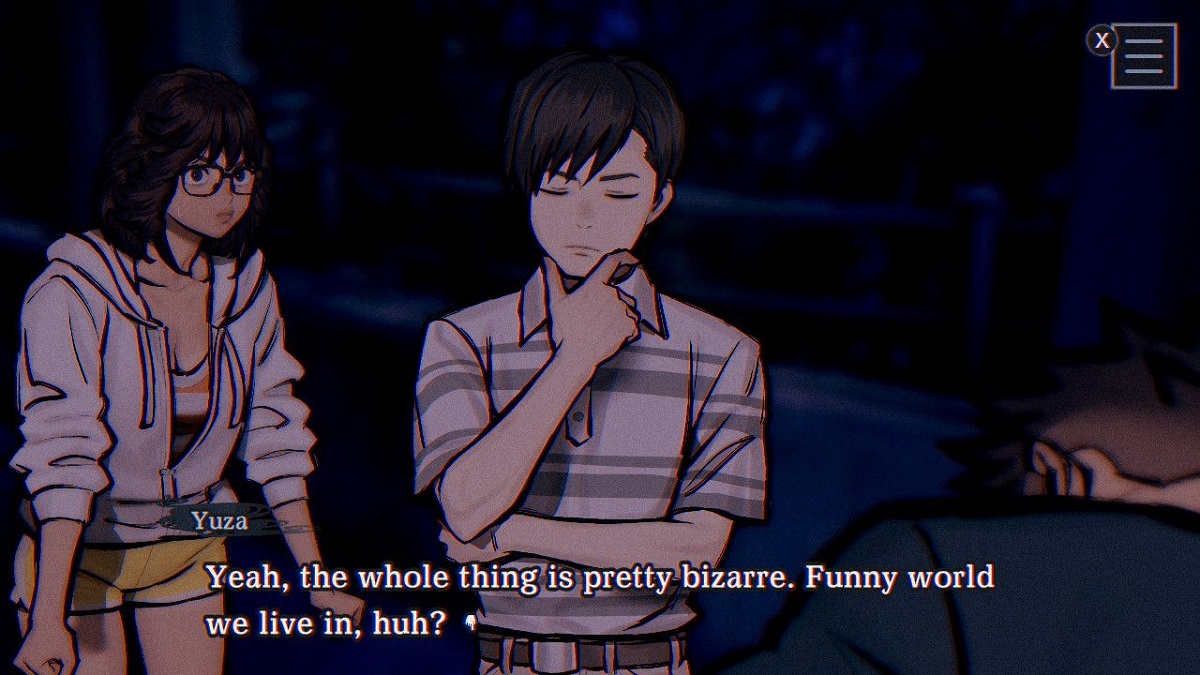
The story is told through the perspectives of four characters. Yuza Minakuchi is an apprentice AMA diver who faces ostracization from the villagers of Kameshima (based on real-life Kamishima). Sato Shiranami is an amnesiac girl who loves to watch TV and is a houseguest of the influential Wakamura family. Yumeko Shiki is a housewife who also works for the police’s Paranormal Affairs Bureau. Arnav “Avi” Barnum is a fantasy writer in his 40s and a self-described “free-spirited lad.” These characters find themselves entangled in a complicated web of curses and murders, all of which stem from past grudges stewing in the Ise-Shima area. Sometimes it can get tricky keeping track of all the incidents the game brings up in rapid succession, even with the in-game encyclopedia, so keeping notes is handy and recommended.
As we saw in the February 2026 Nintendo Direct, there are underwater exploration segments when playing as Yuza. The controls are a lot better than I expected from a mini-game in a visual novel, and you can level him up the more items you collect. Yuza’s not the only character with this kind of involved segment, too. These mini-games all help to break up the usual routine of investigating and chatting, keeping interest fresh. Though the game only ever really brings out these breaks from the norm once or twice per character route, I don’t think that’s a bad idea. It takes a minimum of ten hours to reach the normal ending, so too many would’ve distracted from the main plot.
That pacing is something that the development team greatly improved on between the first and second games. I personally prefer how the cast felt smaller and more intertwined in Paranormasight: The Mermaid’s Curse, though that makes sense since they’re in a more rural area than the first game’s Tokyo. The sequel also has a better plot, in my opinion, making for a less jarring mood shifts. I’m going to spoil a bit of the first game, so if you haven’t played it (and you don’t have to to play the second one, by the way), skip the next paragraph.
The first game starts at a breakneck pace, with decoy protagonist Shogo going all in on murdering fellow curse bearers to perform the Rite of Resurrection. At the end of his route, the game takes you to the story chart, where you’re prompted to go back to the beginning. You see Shogo dead, and the rest of the game proceeds in this new timeline. Most of the game focuses on the characters solving the mystery of the curses and preventing non-allied curse bearers from going around killing people. The pacing slows down so badly in the middle that even though I still enjoyed the cast and story, it was odd to me why writer Takanari Ishiyama did that.
In The Mermaid’s Curse, you start with an introduction of the four main characters, as well as the main setting. The game sets up the main mysteries in investigation segments, and then the “Surprise” equivalent moment happens about a third of the way into the game. I much prefer this more traditional story structure. Ishiyama still loves his non-linear storytelling, though, because The Mermaid’s Curse introduces the Recollection system. Some conversations may trigger a Recollection and, if you’ve met the conditions for them, you can go back to them on the Story Chart to see what the characters were doing earlier in the narrative. This Recollection system works well in a mystery game. You can naturally include scenes about a reveal before the player’s made aware of it, for example.
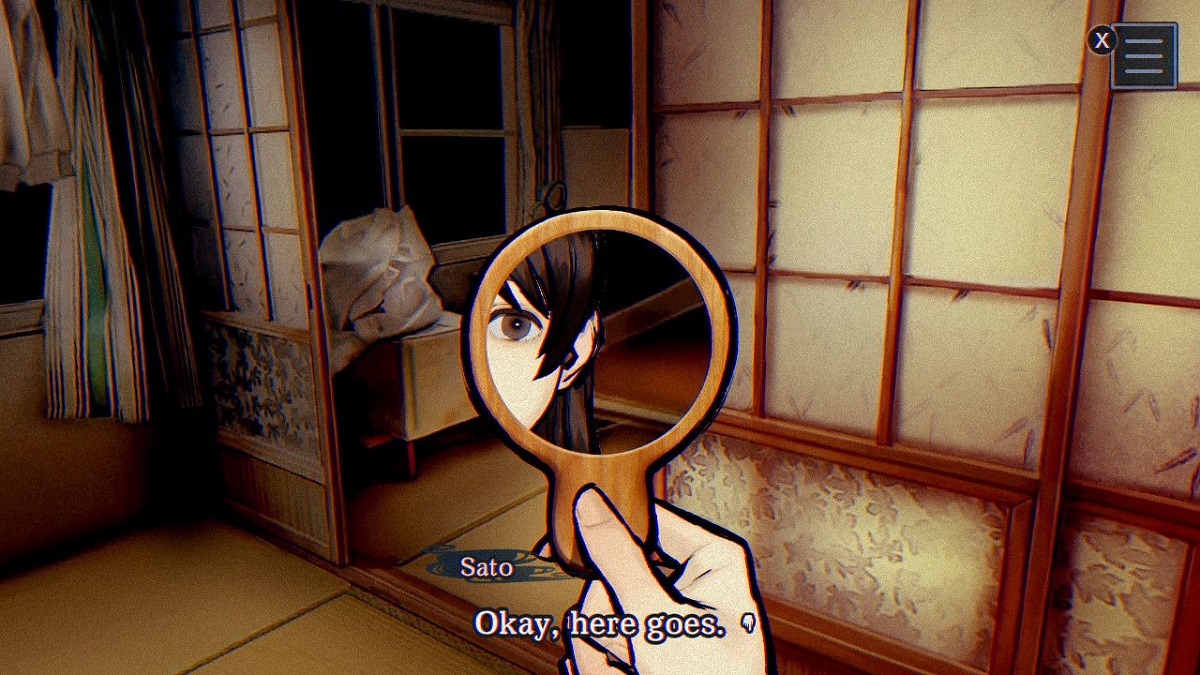
The one thing that I find frustrating is the number of hanging plot threads. I’m guessing the true ending will tidy them up. Unfortunately, like the first game, there isn’t a visual hint for which chapter you need to enter for it. I’ve scoured the entire ocean as Yuza. I went into every single chapter to exhaust all the dialogue options, as well as clicked on anything and everything I could see. Nothing. Twice, the game gives hints to it. It’s the same hint both times. As someone who got the true ending in the first game without help, I’m truly lost this time. Fair warning that a satisfying conclusion likely hinges on you getting that golden ending.
As a whole, the writing for Paranormasight: The Mermaid’s Curse feels more polished and cohesive than the first game without compromising on the established world or signature quirks. It balances the darker moments out with fun quips and colorful eccentrics, and the deep dives into Japanese history and folklore that serve as the backbone of the plot are really interesting. For me, it’s on par with media like Fullmetal Alchemist and Steins;Gate—it’s a story I’d like to forget all about and experience again for the first time. It’s a sequel that can proudly stand on its own, and a strong way to kick off what looks like a new franchise or series for Square Enix.
Paranormasight: The Mermaid’s Curse will come out on February 19, 2026 for the PC, Switch, Switch 2, and mobile devices.
Paranormasight: The Mermaid's Curse
A gem of a game with quirky characters and an intriguing plot that's hard to put down, Paranormasight: The Mermaid's Curse is a game that I believe everyone should experience. A copy of this game was provided by the publisher for review. Reviewed on Switch 2.
Pros
- Yumeko is a diva. Every single one of her sprites just exudes aura. If a character gets their own spinoff like Mio did, I hope the honour goes to her.
- I liked him a lot, but I feel like Avi is one of those characters where you either like him or dislike him with very little in-between. For better or for worse, he has a pretty loud personality, and he feels a bit random in the narrative compared to the other three POV characters.
- The weird pouty kissy-face that the characters made in the first game are back. Somehow, it's not as jarring here, though. I'm not an artist, but I think it's because the rest of the expression changes too, and the context usually fits a lot better.