


 By
By 

Vesperia opens up with a nice cinematic showing the capital of Zaphias and all its inhabitants and ends with a blastia core thief stealing the aque blastia from the Lower Quarter, causing the Lower Quarter’s water fountain to spiral out of control and spout endless amounts of water into the district. Yuri Lowell sees the action from his window and is quick to leave his room to see what’s happened; and after learning what’s happened, Yuri seeks out the blastia core thief in the rich district of Zaphias and ends up in prison, only to be saved by someone who the party later refers to as old man. When escaping from prison and heading into the castle, Yuri meets young princess Estellise; and its after this fateful meeting that turns the game from recover the aque blastia into something bigger and bigger and bigger and bigger.
Typical plot transition in a Tales game? Maybe, but what makes this transition enjoyable is the personality each of the characters bring to the game; and with a lead like Yuri Lowell, a man who doesn’t care about what’s good or bad and leads his life and makes his decisions by conviction, who can deny such a thing? Character VA in Tales of Vesperia is surprisingly good, but there are points in the game where the VA can get annoying and feels unusual given the context of a scene.

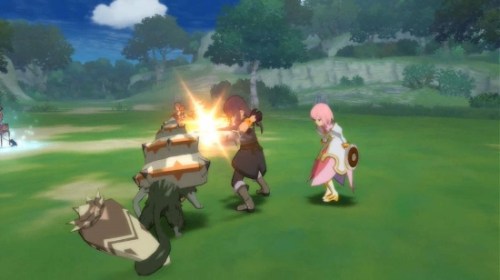
The real highlight of Vesperia is its refined and deep battle system. Taken from Tales of the Abyss and rightfully so, Vesperia uses what it calls the EFR-LMBS (evolved flex range linear motion battle system), allowing you to move freely around the field by holding LT without needing to learn a skill. With the ability to learn skills from weapons and synthesize newer weapons to learn newer skills, battles in Vesperia open themselves up to a broader realm of possibilities that really allow for unique combo setups and tactics such as adding an extra 3 hits to a 3 hit combo, using an Arcane Arte after an Altered Arte and followed up by a Base Arte or another Arcane Arte then going into Over Limit and using a Burste Arte and ending the combo with a devastating Mystic Arte, increasing physical and magical parameters, adding nice incentives, so on and so forth.
Part of the fun in exploiting the depth of the battle system lies in the willingness to synthesize new weapons to add more to a character’s repertoire, which ends up making Judith an alternative melee fighter choice to Yuri and making battles a whole lot easier by spamming Rita’s magic spells. The other uniqueness of synthesizing comes in the form of some special accessories and equipment that can only be earned from synthesis, causing the player to develop a sort of OCD complex by fighting enemies over and over again to earn materials necessary to synthesize. Even being able to change the onscreen character and walk a bit faster on the field requires synthesized items!

Cooking and skits–now voiced for your pleasure–remain in Tales of Vesperia, but the real surprise lies in how the game opens itself up to complete exploration later in the game, giving the player some time to tackle on sidequests with some that do a good job of keeping themselves secret unlike previous Tales games where sidequests made themselves a bit obvious. Tackling sidequests greatly adds to getting the full experience out of any Tales game, and Tales of Vesperia is no exception.
That aside, Tales games have always been known for the ability to provide the player with amazing battle systems that offer varying ways to create colorful combos, wacky and hilariously insane character interaction with some moments of sexual innuendo, and large amounts of sidequests. In that respect, Tales of Vesperia and delivers completely and makes use of great items in the Grade shop to enrich your subsequent playthroughs. The game’s achievements are sure to keep you busy, and the game itself is worth the price of admission.
What’s next, Team Symphonia?