


 By
By 
Sometimes I wonder if Before Crisis: Final Fantasy VII is cursed. I mean, think about it. The former mobile phone game only appeared in Japan. For years, it ended up lost and limbo as a result. Producer Hajime Tabata briefly considered a 3DS port. That never happened. When FFVII Ever Crisis first launched and Square Enix started adapting games and spin-offs from this entry into it, it seemed always just a story or event away. Now it is finally here! Except it’s showing up right as this mobile game ends. And what was basically a 26 episode story is now a three-part one. Frankly, it sucks, and Before Crisis: Final Fantasy VII deserves better than this disappointing FFVII Ever Crisis adaptation.
First, the number of Turks in this version of Before Crisis seems greatly reduced. In the original mobile game, 11 appeared. The only one of them to get a name and properly debut elsewhere was Cissnei, due to her showing up in Crisis Core: FFVII and FFVII Rebirth. Do you know how many of these other individuals we’ve seen in this new retelling? Two. Yes, just two. They’re ones you could maybe consider the “main” ones of that line, as one is Elena’s older sister Aphromia and the other is Rodd. But everyone else? They’re missing in action as of Chapter 2 of the FFVII Ever Crisis take on the tale. It’s incredibly disappointing, especially since Last Order: FFVII didn’t offer names for any of these individuals.
Speaking of Before Crisis: Final Fantasy VII characters, we don’t actually get to play as any of them in FFVII Ever Crisis. For The First Soldier storyline, we could play as Glenn, Lucia, Matt, and the younger versions of both Sephiroth and Angeal. Actual effort went into it! Square Enix didn’t bother to implement any of the Turks into the game for this storyline. So yes, we get to follow primarily Aphromia as we see the events of the story. But we don’t get to control Reno, Rude, Aphromia, or Rodd, even though in the mobile game people were playing as all those other individuals from the organization. Truly, it’s disheartening.
Then there’s the story itself. Before Crisis: FFVII covered a lot of ground. It offered backstory for the Turks as individuals and showed them in a heroic light. It explained why Avalanche, as a whole, didn’t have the best reputation going into FFVII, given the actions of Fuhito and his use (and abuse) of Elfe for that division of the organization. It offered insight into Rufus Shinra and his own push for power in the organization and against his own father. So much went on, and we absolutely aren’t catching the nuances in these first two chapters. It’s a barebones, CliffsNotes abridged take on things.
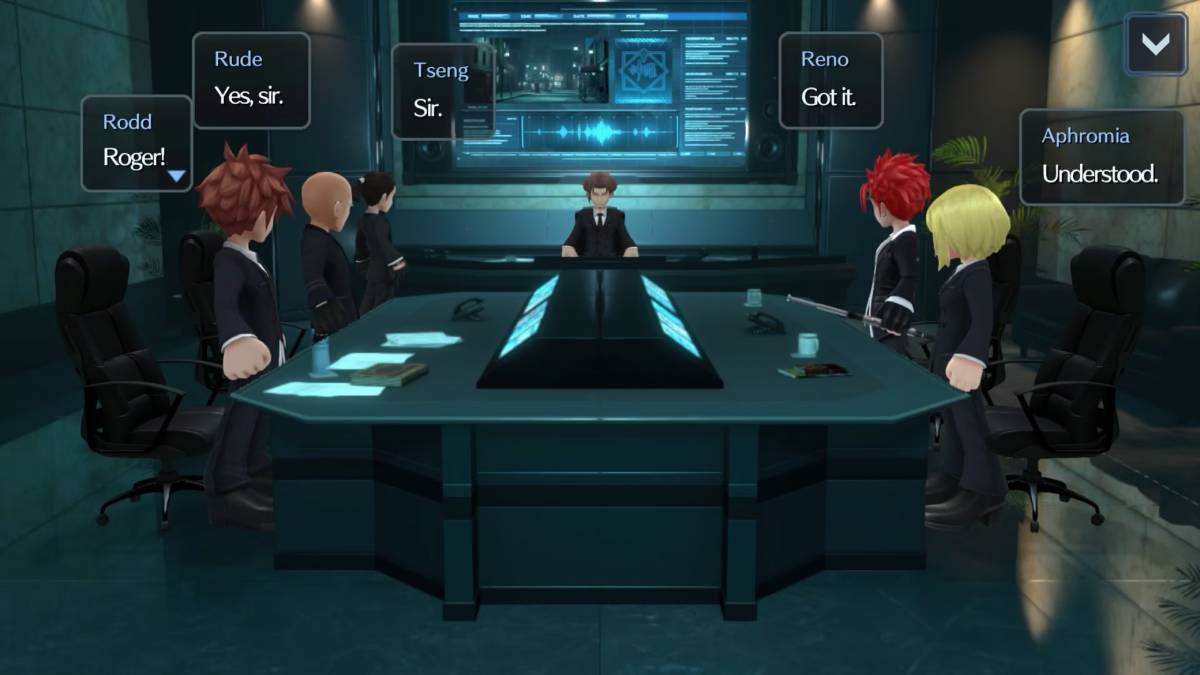
Which brings up something else I find a bit awkward and annoying about this adaptation of Before Crisis: FFVII. Instead of prioritizing important details and finally doing things like, I don’t know… establishing canon names for characters, I felt like the goal of this second part was to shoehorn in as many character cameos as possible. This even is highlighted in the trailer for the second chapter. Here’s Aphromia meeting Aerith! There’s Aphromia working alongside Tifa! Next up, Aphromia and Tseng see Yuffie! Admittedly, shades of this came up in the first part, with a Cloud encounter being a good example. And I get why they’d do this. Especially since there were these moments in the original mobile game. But when so much else is cut, it makes me feel like priorities are skewed.
Final Fantasy VII Ever Crisis made me hopeful we’d finally get the proper Before Crisis: FFVII retelling we deserved. But no. Once again, we’re left out. The full story isn’t being told. Characters seem to be omitted and not given the proper attention. Gameplay is sacrificed, such that we didn’t even get actual playable units from the entry. It’s an extremely scaled back representation of what this story should have been, and that sucks.
Final Fantasy VII Ever Crisis is available on the PC and mobile devices and now has two chapters of the Before Crisis: FFVII storyline available. The game will end and be delisted on October 6, 2026.