


 By
By 
The original Coffee Talk visual novel ended up being so influential that it spawned a whole subgenre for that kind of games and led to titles such as Disney Villains Cursed Cafe and Tavern Talk. The sequel offered a continuation of character arcs and an ability to hand out items. Coffee Talk Tokyo is yet another serving of the same sort of lofi experience, filled with engaging customers to gradually befriend and both hot and cold drinks to dispense.
Coffee Talk Tokyo is set in, you guessed it, Japan in 2026. The latest barista runs a cafe with the help of Vin, an individual who is recovering after a major accident and dealing with prosthetics as a result of it that are beginning to be outdated and fail. As with the original game, we work as the owner of the shop listening to visitors and preparing the cold or hot drinks either they request or we think best meet their criteria. As we connect with them, we’ll befriend them on the Tomodachill social network and learn more about their identity from their profile and feeds. Our influence can in turn change the outcomes of storylines for people we meet.
The recipe for Coffee Talk Tokyo remains unchanged from previous games. Each day offers a brief window into life as the barista and owner of the cafe in Japan. A handful of visitors will come in, and you’ll be asked to craft about three beverages each night. Sometimes, if you pay attention to the loading screens or recipes hashtag on Tomodachill, you’ll get hints as to how to make specific drinks like a Viennese coffee or Indonesian tubruk. You get a certain number of opportunities to “toss out” failed drinks each night, though I also recommend keeping handwritten notes in case you come up with the “wrong” recipe, but make something that could prove handy later since the incorrect recipe won’t be saved. If you serve exactly what the customer wants or needs, then you can unlock more of their profile on social media and get closer to a positive outcome for them. Keeping track of their feeds might also offer additional clues as to what might be going on, to add additional context.
As for the mixology, each drink consists of a base, then two additional flavors. Hot and cold options are available. The order in which items are added matters. Daily specials might mean one day mango is offered as an ingredient, but another it’s replaced by lychee. Indicators will mention how strong the sweet, sour, spice, and bitter flavors are in the drink. There is a brewpad in-game recipe book, but you will need to unlock almost every drink to see it come up as a reference complete with hints as to when it might be best enjoyed or needed. (If you enjoy this part of the experience, know that challenge and endless modes are available that let you focus on the barista experience and requests with no story attached.)
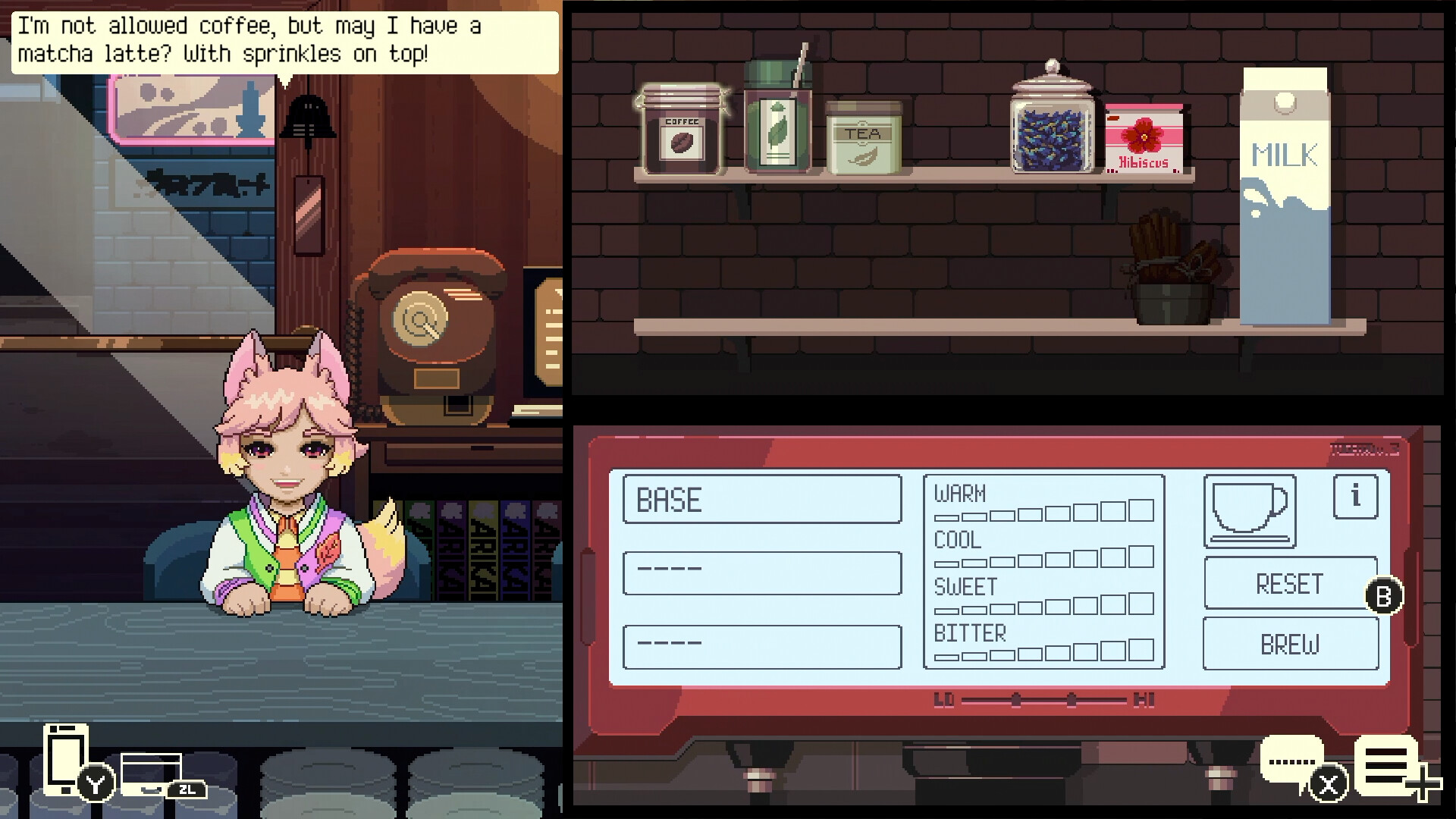
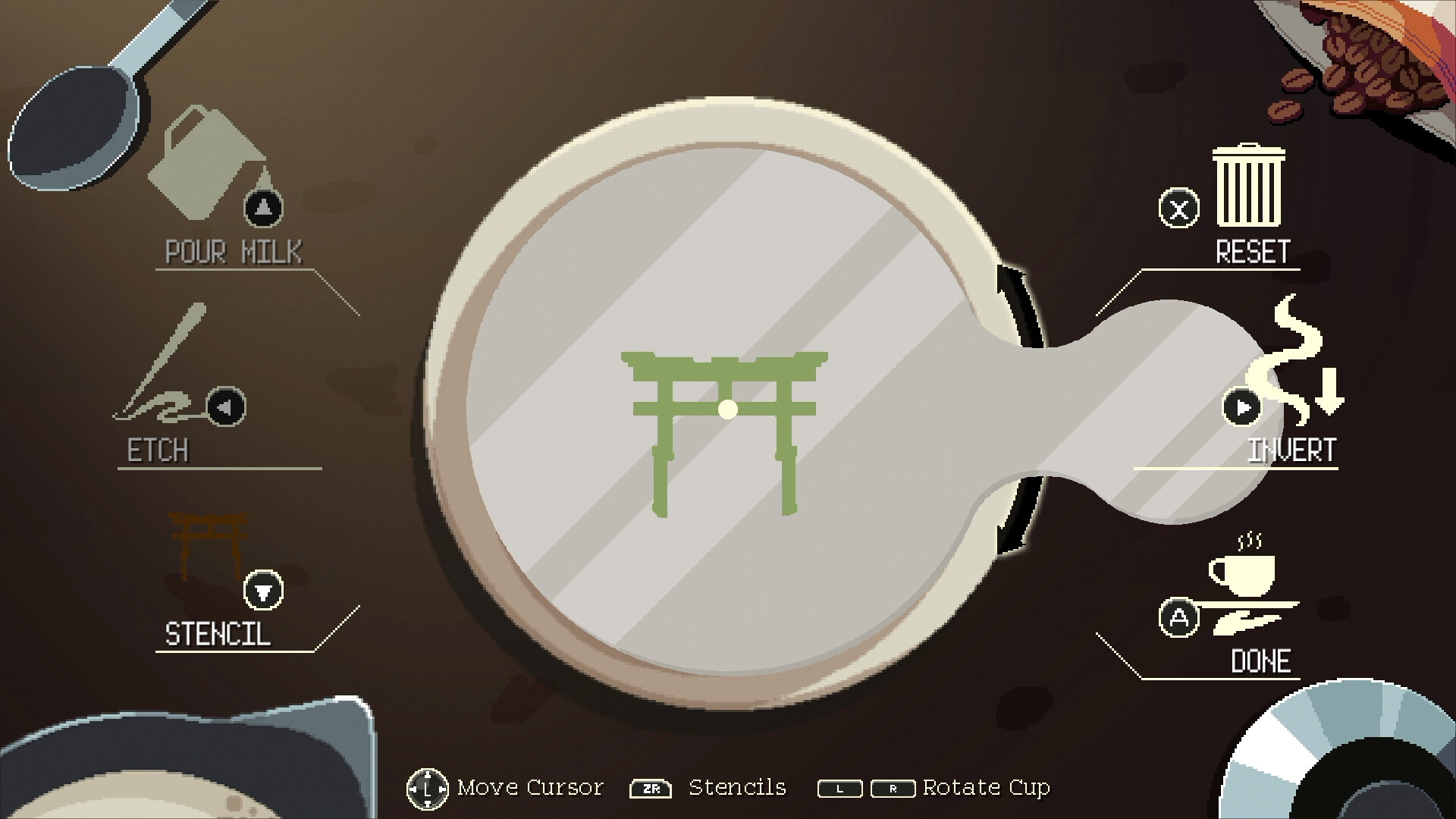
This leads to a more unconventional visual novel experience, as well as one where it’s very possible you won’t get the correct answers and best outcomes unless you replay or wait until a full recipe compendium is online. You go through about two weeks in the life of a barista, and remains unconventional in its interactions. While individual storylines for the nine “regulars” will change (for the better) if you provide excellent service, you’ll still end up in something of the same place at the end.
Said folks are quite interesting individuals, and the artistic direction for them is incredible. The evolution from the original Coffee Talk is tangible, and the guests we meet here feature even better pixel art, more fantastical backgrounds rooted in Japanese folklore, and I think more compelling backgrounds. We see generational differences, complexities of family lives, what it’s like dealing with chronic pain, the result of burnout, grief, and other very human and identifiable situations. Watching these stories play out, with our barista’s caring ear and others’ insights, is engrossing. I found myself rooting for people to do their best, connect with others, and find a way to be happy.
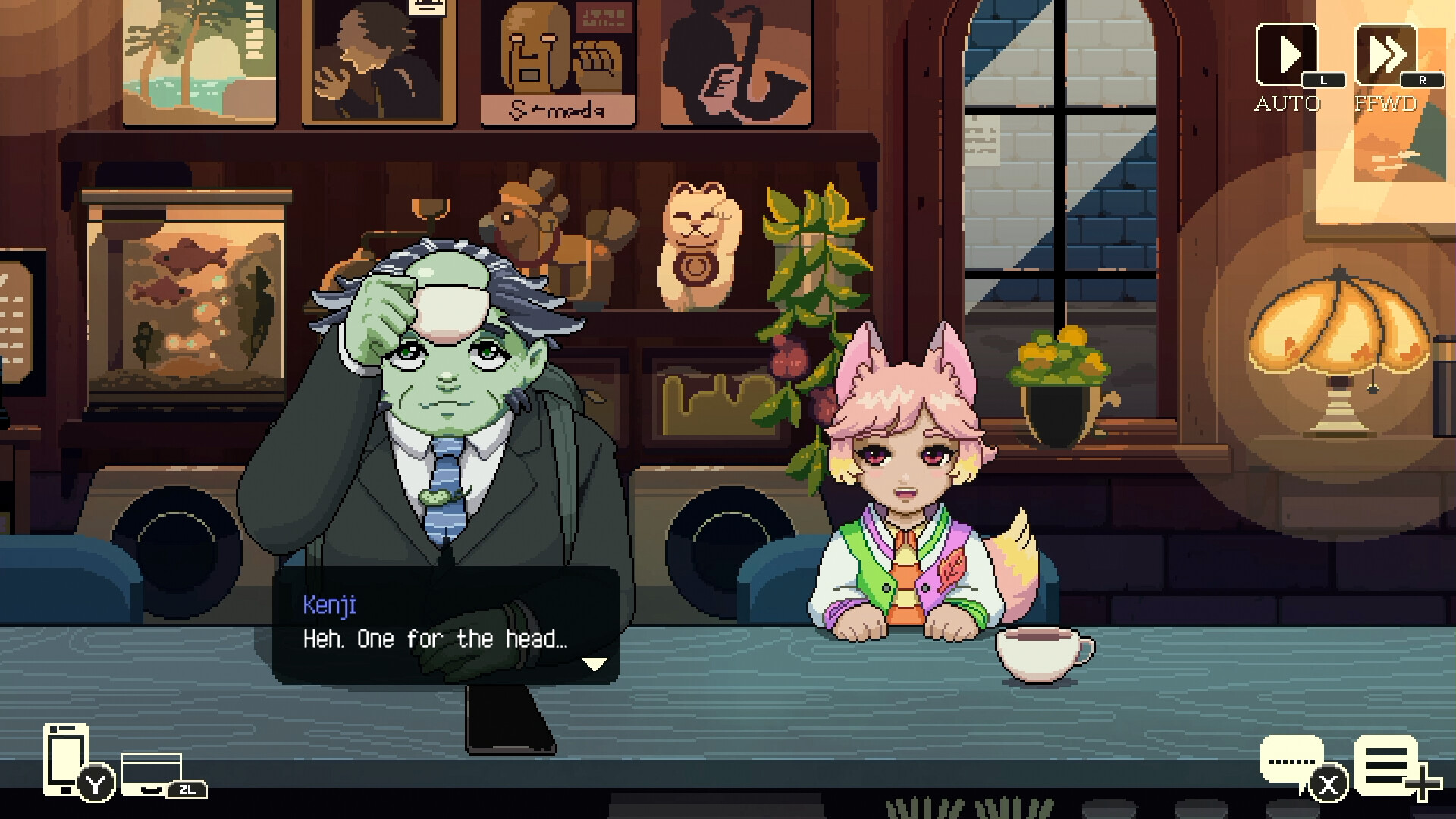
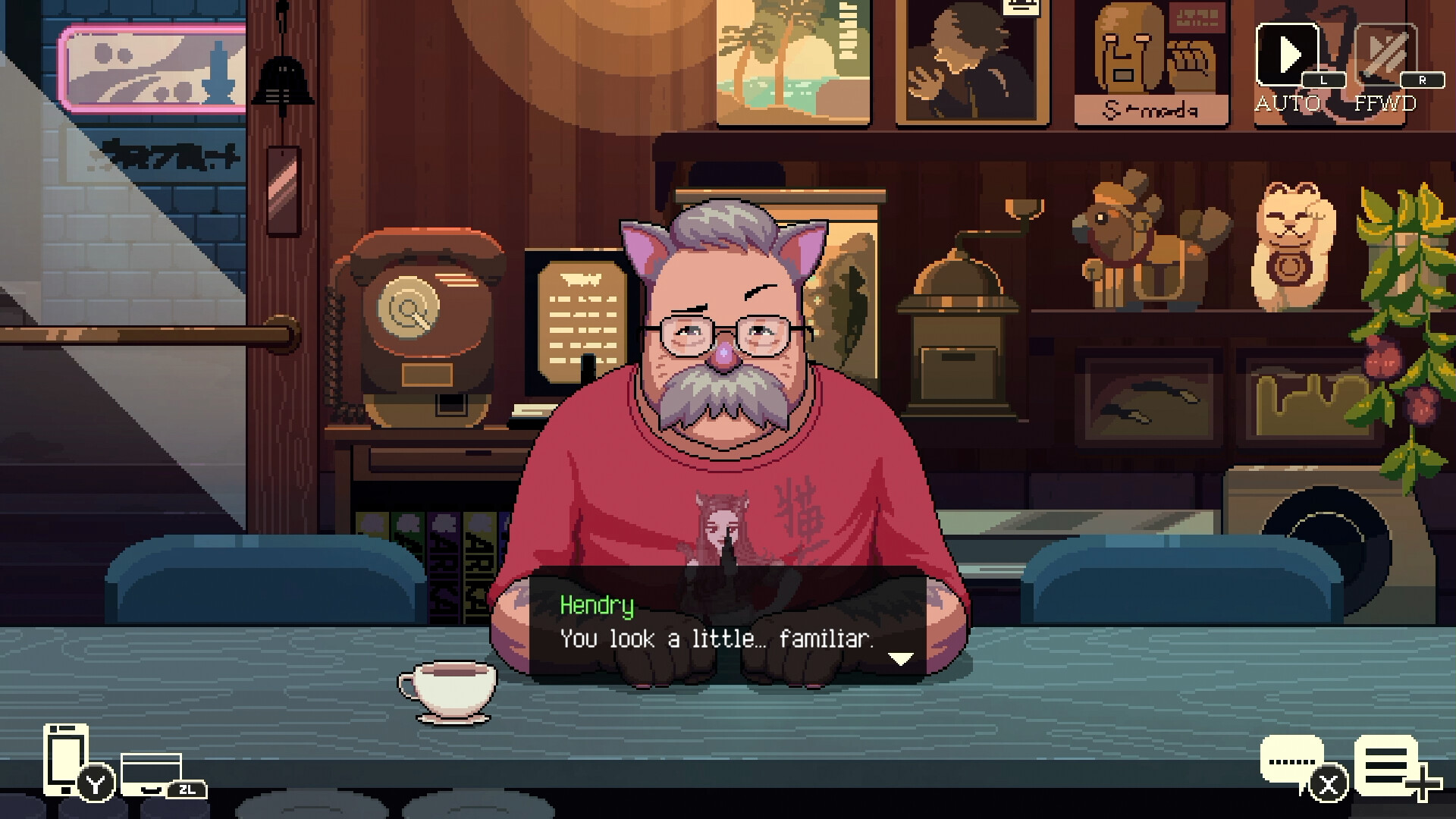
Since this is a specialized sort of visual novel and experience, the same issue with the original Coffee Talk might pose an issue for folks. It is interactive, but not in a way that involves us being extremely involved in choices and selecting dialogue options. We aren’t fully stepping into the shoes of an avatar whose voice sort of becomes our own based on what we choose. If you tried the original game and found it wasn’t your thing, this is very much the same sort of experience with the only difference being the customers we meet and befriend.
Coffee Talk Tokyo is another serving of the same experience Toge Productions served up before, and it’s still quite delicious. It is an acquired taste, as those who aren’t fond of visual novels might not vibe with it. But those who appreciated the storytelling and low-pressure approach of the original will enjoy this pretty follow-up.
Coffee Talk Tokyo is available on the Switch, Switch 2, PS5, Xbox Series X, and PC.