


 By

When Final Fantasy Resonance was announced, I realized how long it had been since I had played a classic turn-based Final Fantasy game. I decided to revisit some of my favorite entries. I didn’t realize then that revisiting games like FFVI and FFX would really open my eyes to what Square Enix tried to do, both mechanically and with the stories in the world of Lapis. In many ways, this feels like an anniversary title.
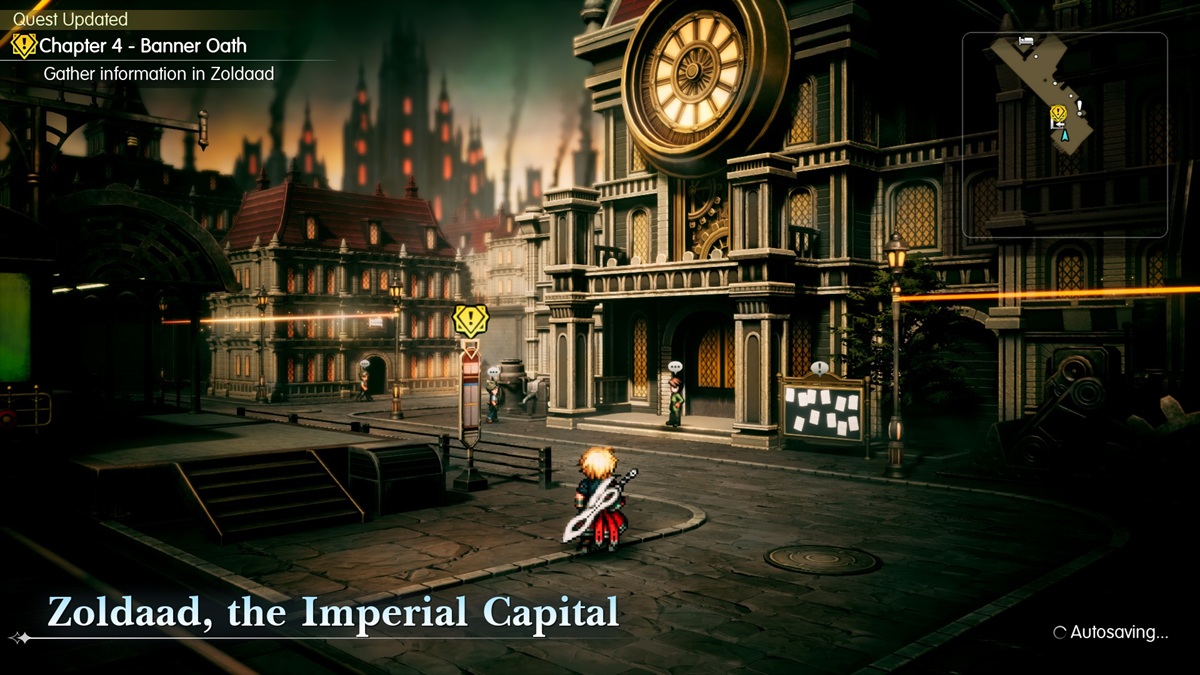
Final Fantasy Resonance follows the first season of the now-defunct gacha game Final Fantasy Brave Exvius, originally released in 2015. Rain, Lasswell, and the amnesiac Fina go on a globetrotting adventure to stop the Sworn Six of Paladia from destroying all the crystals in the world of Lapis. It’s pretty familiar stuff. Each chapter explores a region, with conflicts and locales drawing inspiration from all the various mainline Final Fantasy titles. As someone who’s played most of them, I quickly recognized it. For example, protagonist and Knight of Grandshelt Rain reminded me of FFIV’s Cecil with his Red Wings squadron, while Zoldaad and its rebellion echo FFVI’s Gestahl Empire and the Reclaimers.
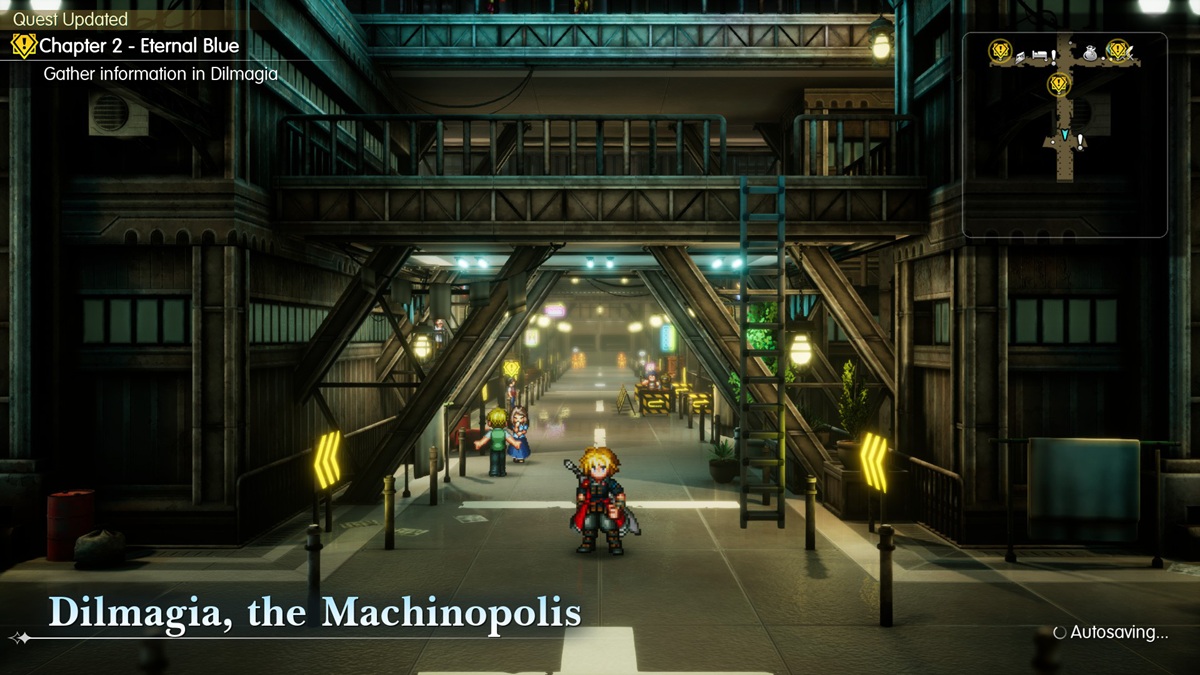
While Square Enix borrows and evokes from plot elements in the larger mythology of the series, it doesn’t mean the game is derivative. Where the story somewhat falters is in having to adapt a 10-year-old gacha game and lacking some bite when tackling themes of imperialism and rebellion. However, the plot is still satisfying in the way shonen manga and anime can be, as well as through the strength of the game’s party.
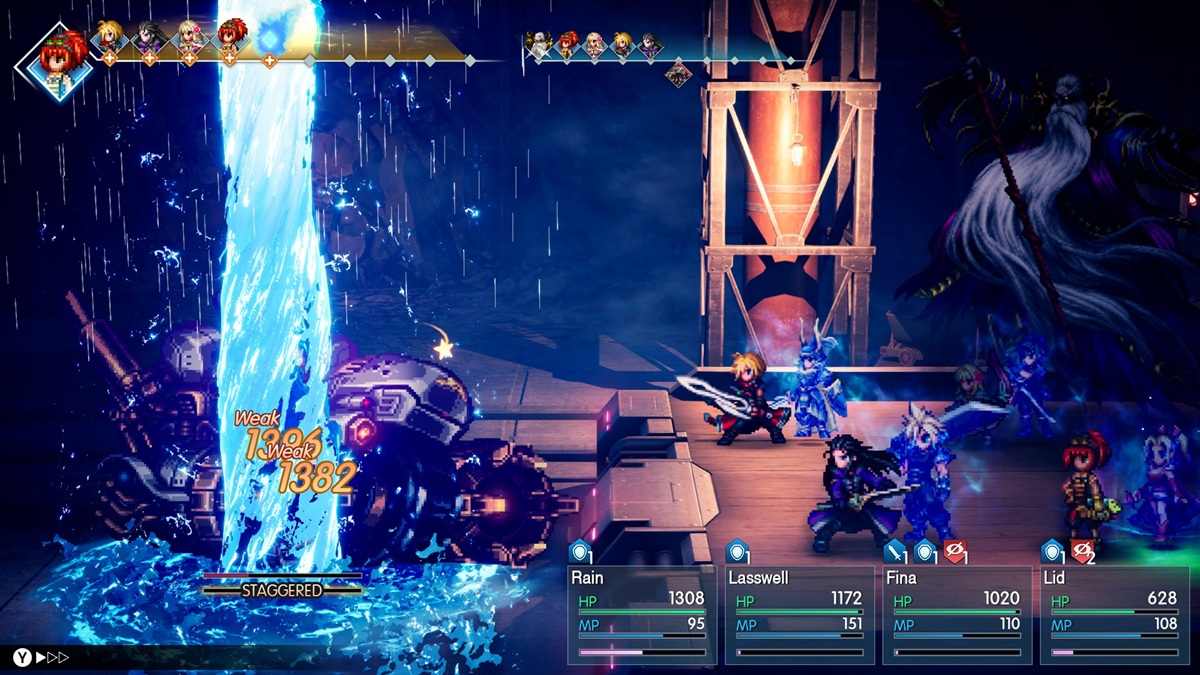
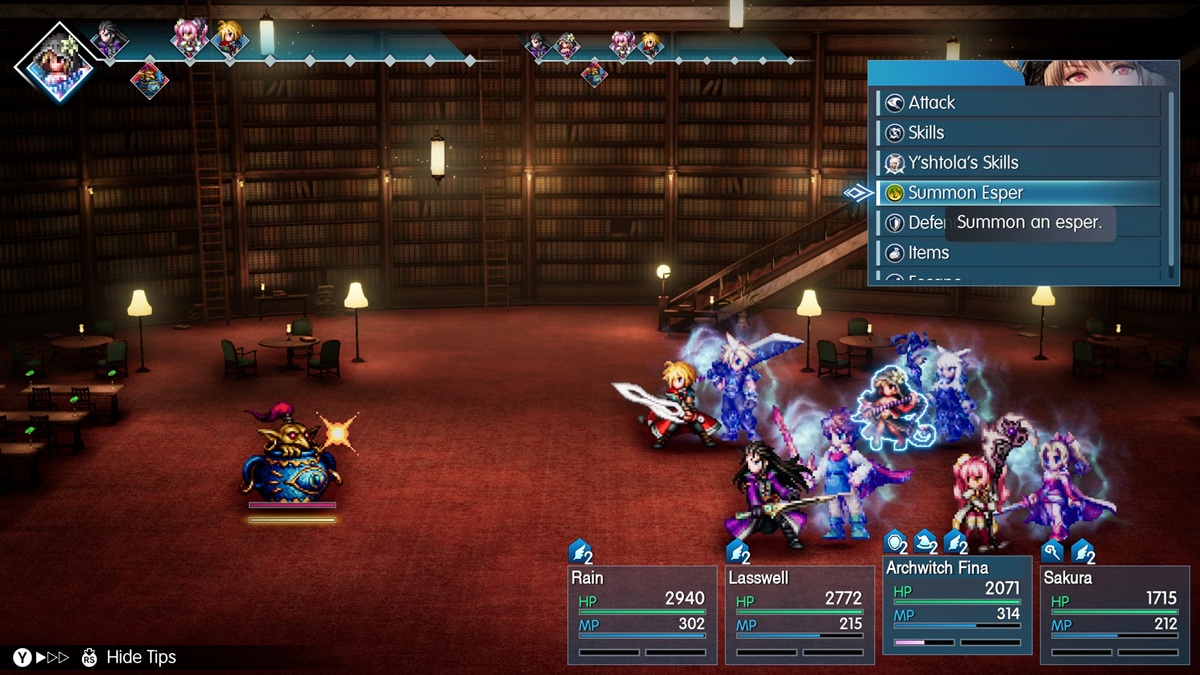
What really makes this game shine is its combat. Final Fantasy Resonance is the first turn-based game in the series in a long time. As a Team Asano joint, combat borrows somewhat from Octopath Traveler. For example, it takes from the aforementioned game’s elemental weakness system and transforms it into a stagger gauge. This, the Vision system, and turn economy are the main features. Each character can equip a Vision, which includes the main protagonist of every numbered Final Fantasy entry and some characters from Final Fantasy Brave Exvius. This acts as the game’s job system.
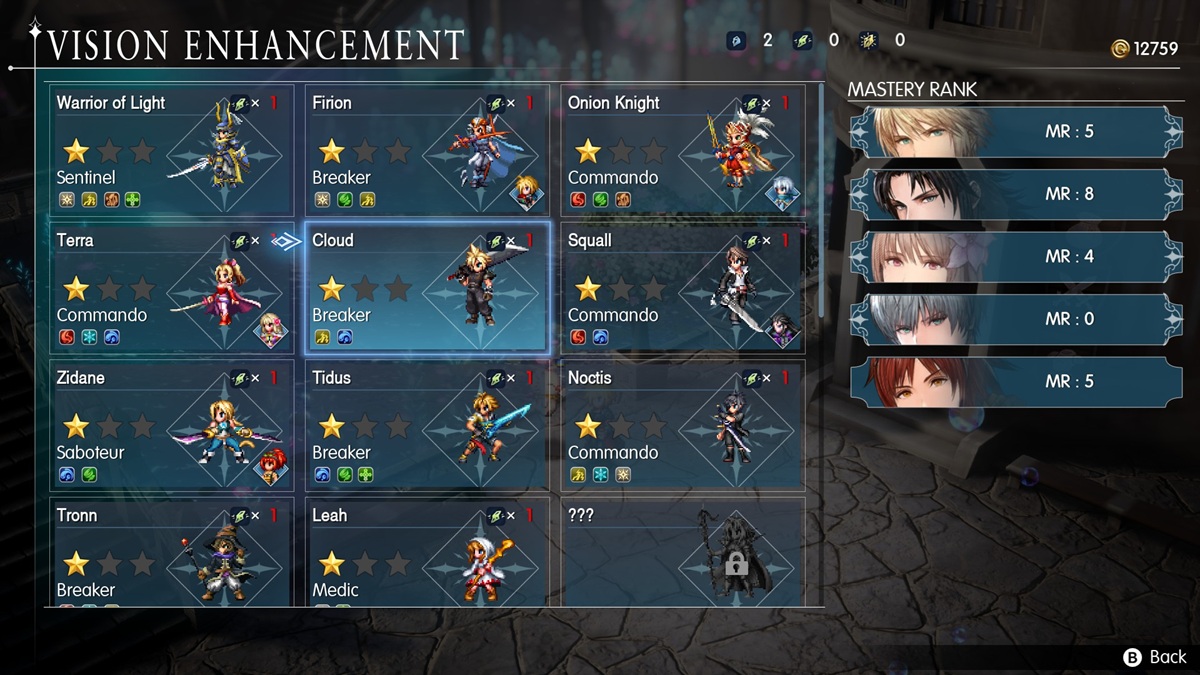
While each party member has their own set of abilities and a role, Visions help a character specialize in their job or cover for their weaknesses. For example, Rain is a high Defense and HP character that specializes in fire attacks and will most likely always act last. By pairing him with Tidus, you can turn him into a character that will act much faster, provide some buffs, and be able to deal water and wind damage. Meanwhile, if you give him Cecil, Rain will become an even bulkier character that can cover allies from damage, and will gain light and darkness attacks.
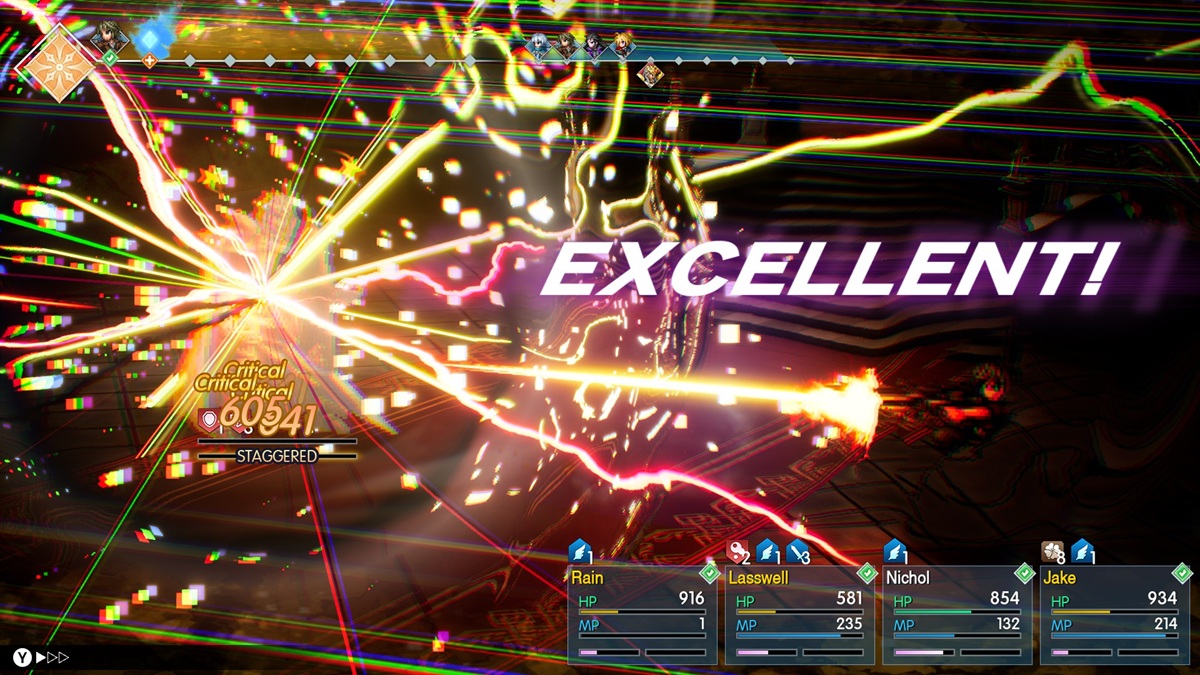
The Vision system draws a lot from Final Fantasy V, and it shows. By the endgame, I was turning one character’s turn into eight actions. The stagger system also plays into the turn economy. Unlike in FFX, characters can only act once per round. When a character breaks an enemy’s stagger by repeatedly exploiting a weakness, the character gains a bonus turn. After all the enemies on screen are staggered, the entire party gains a round and a Vision’s Resonance attack can be used. These are the equivalent of a Limit Break. For being sort of special, exclusive attack, it’s very easy to use them often. Which is pretty cool, since they are accompanied by a spectacular CGI. My only complain about the Vision system is that the classic FF characters were always more interesting to use than the FFBE original characters. I wished there were more of them instead.
Final Fantasy Resonance is the most interesting game in the series in a long time. While its story is a bit cliché, it’s still an earnest one that feels right at home next to the mainline Final Fantasy games. It’s the gameplay and the stunning variety of the game’s world that made it memorable for me. It’s also what made me put nearly 90 hours, even though it’s fairly easy to beat the story in 30 to 40 hours. I hope that this isn’t the last crunchy, deep, turn-based Final Fantasy game we see.
Final Fantasy Resonance will come to the Switch, Switch 2, PS5, Xbox Series X, and PC via Steam on October 22, 2026, and a demo is out now.
