


 By
By 
With Fire Emblem: Fortune’s Weave, Intelligent Systems delivers a massive epic for the Switch 2 and one of the meatiest entries in the series. The developer doesn’t shy away from going places with the story! It tries things when it comes to mechanics for the different lords’ stories and abilities! We see how an empire changes over periods of time! There are even quality of life measures to keep it from getting overwhelming. I wouldn’t be exaggerating to say some of the campaign and paralogue maps here left me feeling as satisfied as ones from Fire Emblem Fates: Conquest. Fire Emblem: Fortune’s Weave is a wonderful entry for a new platform and worthy follow-up to Fire Emblem: Three Houses. That said, there are times when I feel the size can get in its way and do a disservice to characters who aren’t focal points, especially iwhen it comes to the series’ trademark Supports.
Now, I don’t refer to this game as an “epic” here lightly. It spans multiple periods of time, starting with a brief prologue as player-avatar Eshmel learning about the current state of a ravaged Dagda and returning to a now-ruined city of Dagsion. Teaming up with the goddess Fortuna, they influence events in the past Heroic Games to ensure the four main competitors of that event survive them to become the lords who can assist in righting this timeline gone wrong. By getting them through that first part, we can then carry on to additional arcs to face more conflicts and perhaps save the world.
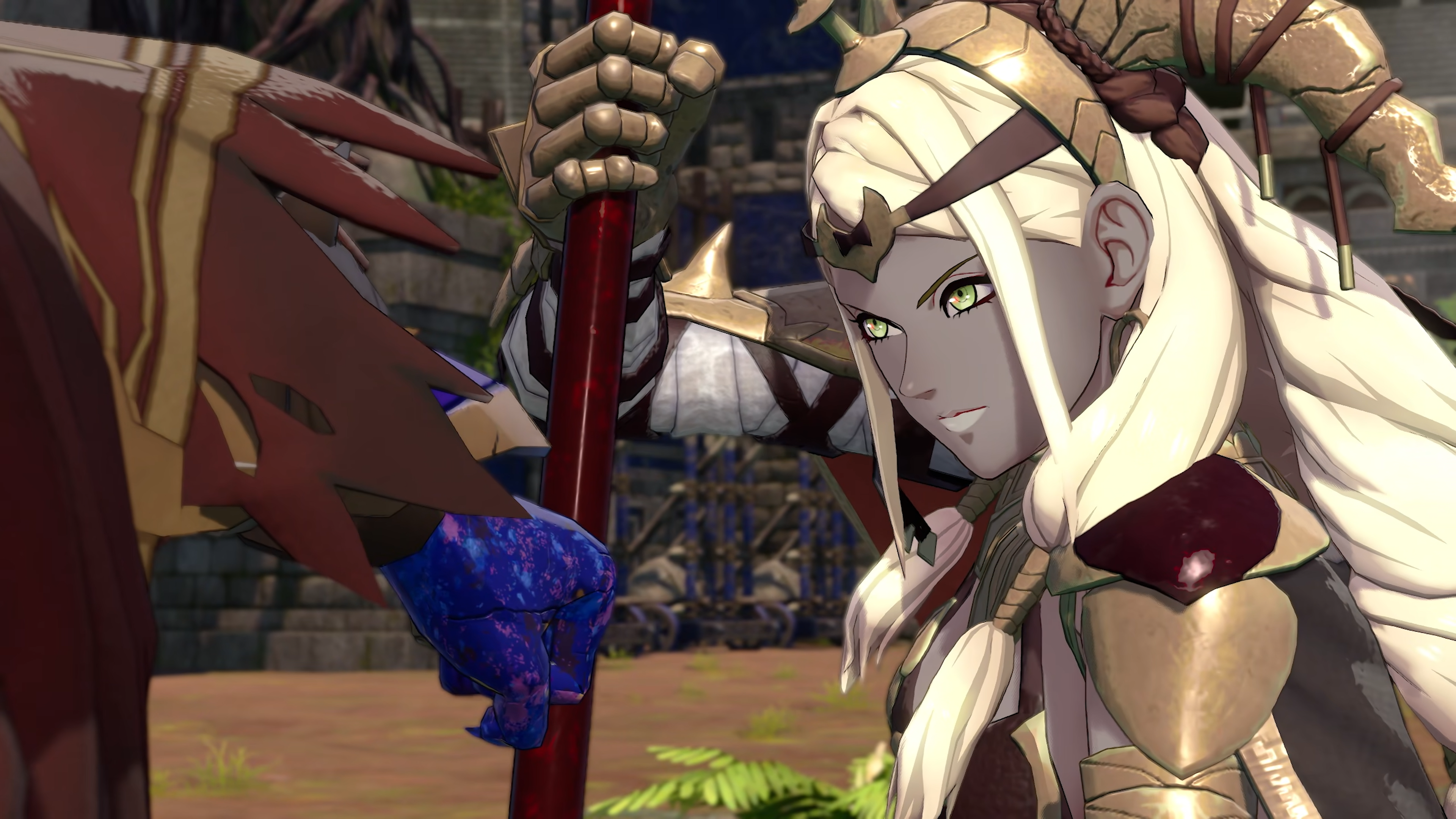
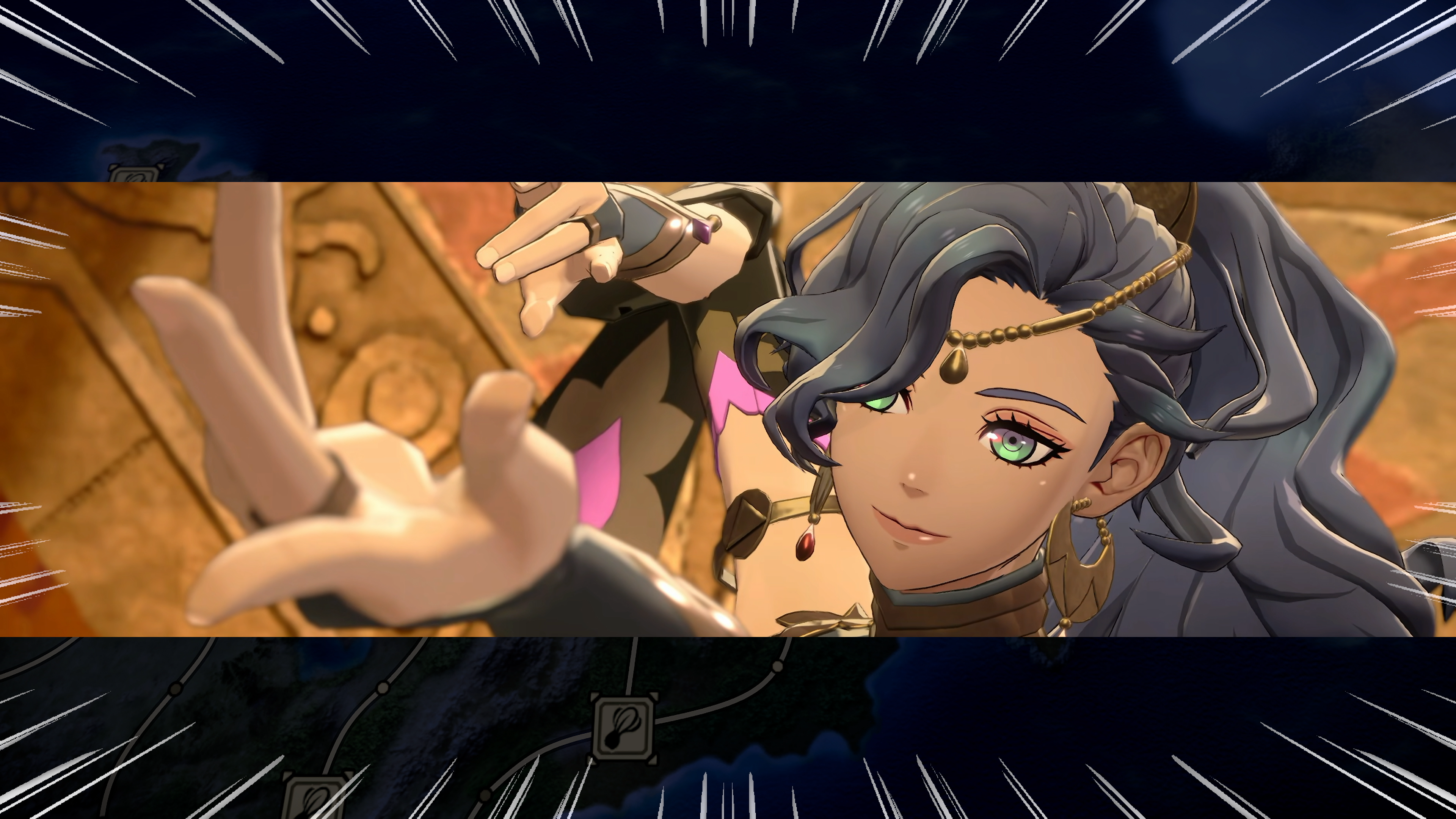
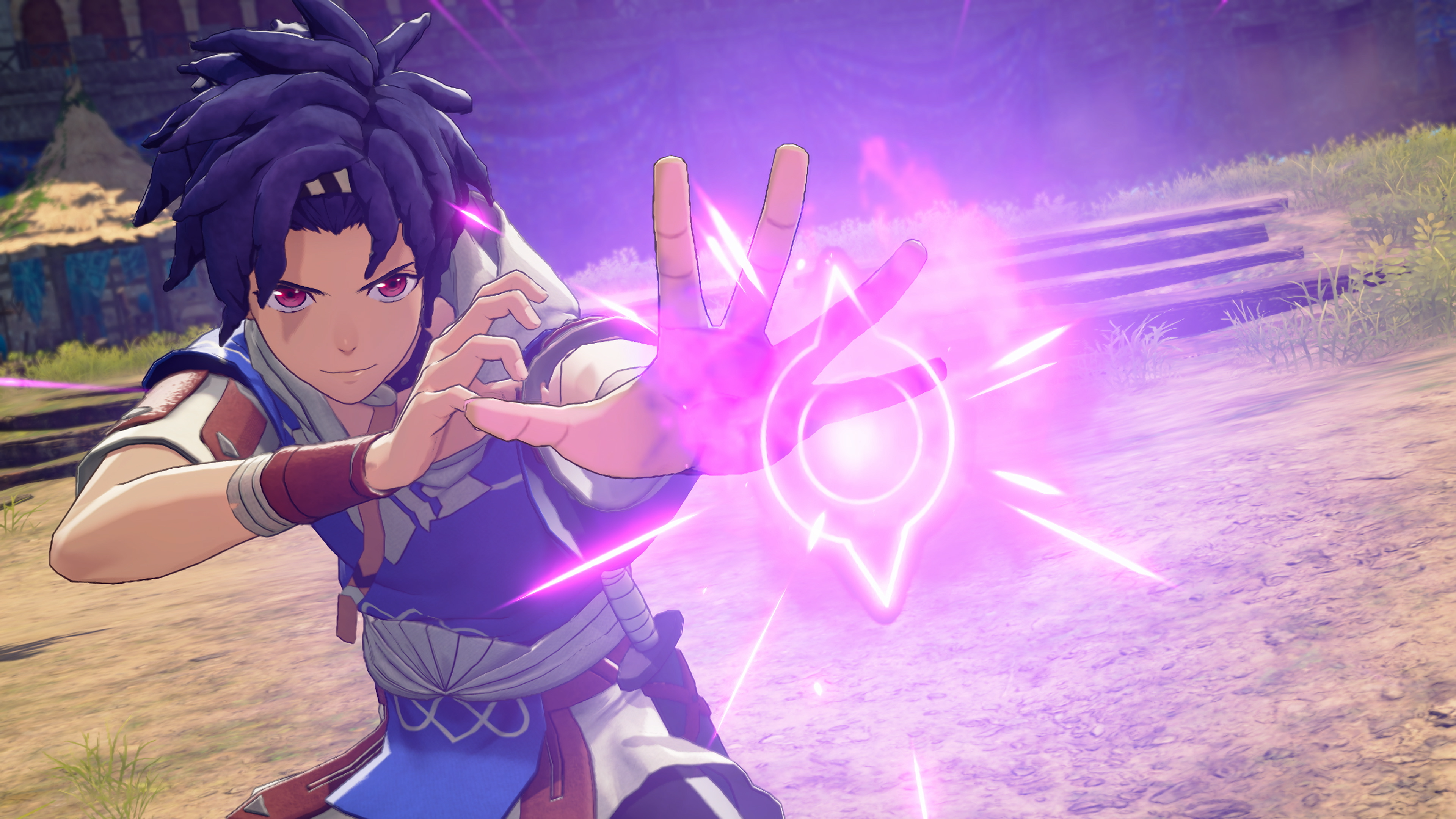
Of course, along the way we also witness what happens to these major warriors! We see as Cai deals with trying to save his incarcerated father, Dietrich looks to challenge the mighty beast that left him shipwrecked, Leda looks to avenge her murdered father, and Theodora’s drive to succeed her assassinated father as rightful and unquestioned queen of Saramis. There are also some less prominent factions that are equally enthralling, like Anatolia and Talimun’s, which makes me wonder if the “in-game purchases” referenced in the ESRB rating on the eShop page could be tied to seeing what they were up to during certain periods.
Since I’m going to be doing a lot of gushing about the things I feel this entry gets right, let’s start with what bothered me. As much as I do appreciate and enjoy elements of Fire Emblem: Fortune’s Weave, Intelligent Systems let me down with the Support system. This is one of the series’ most unique features and what made me fall in love with it. I replayed games like the original GBA entries Fire Emblem and Fire Emblem: Sacred Stones to see what happened when other people were paired up, what their conversations looked like, how those bonds worked tactically, and what endings might ensue. Now, I can understand abandoning romance for an installment. We sort of saw that happen with Fire Emblem: Engage. But there are so many characters with minimal Support conversations, and that’s heartbreaking! It’s like I felt little motivation to actually use some folks since they had so few people to talk to! And if someone is considered a mercenary? Sorry, Catania and Io. Barely anybody has time for you, even if you spent 25+ hours in a third of the campaign together. I will say Intelligent Systems gave most people who do get Supports some fun and enlightening interactions. I just wish there was the same sense of community and connection like I saw in entries like Fire Emblem: Three Houses.
Likewise, I found myself feeling disconnected from the main protagonist Eshmel for similar reasons. While the individual is an original, customizable avatar like Robin in Fire Emblem Awakening and our window into things like Byleth in Fire Emblem: Three Houses, they’re only truly at the forefront for the third part of the campaign. We spend far more time with our initial lords Cai, Dietrich, Leda, and Theodora, and my connections to them felt far more meaningful to me as a result. I even didn’t bother with Bird Time as a result. It isn’t that avatar doesn’t get their own development once that (also substantial) portion of the story hits. But in many ways, it often feels like Cai, Dietrich, Leda, Theodora, and those closest to them are the ones who matter most, with our protagonist there to support them and save the world.
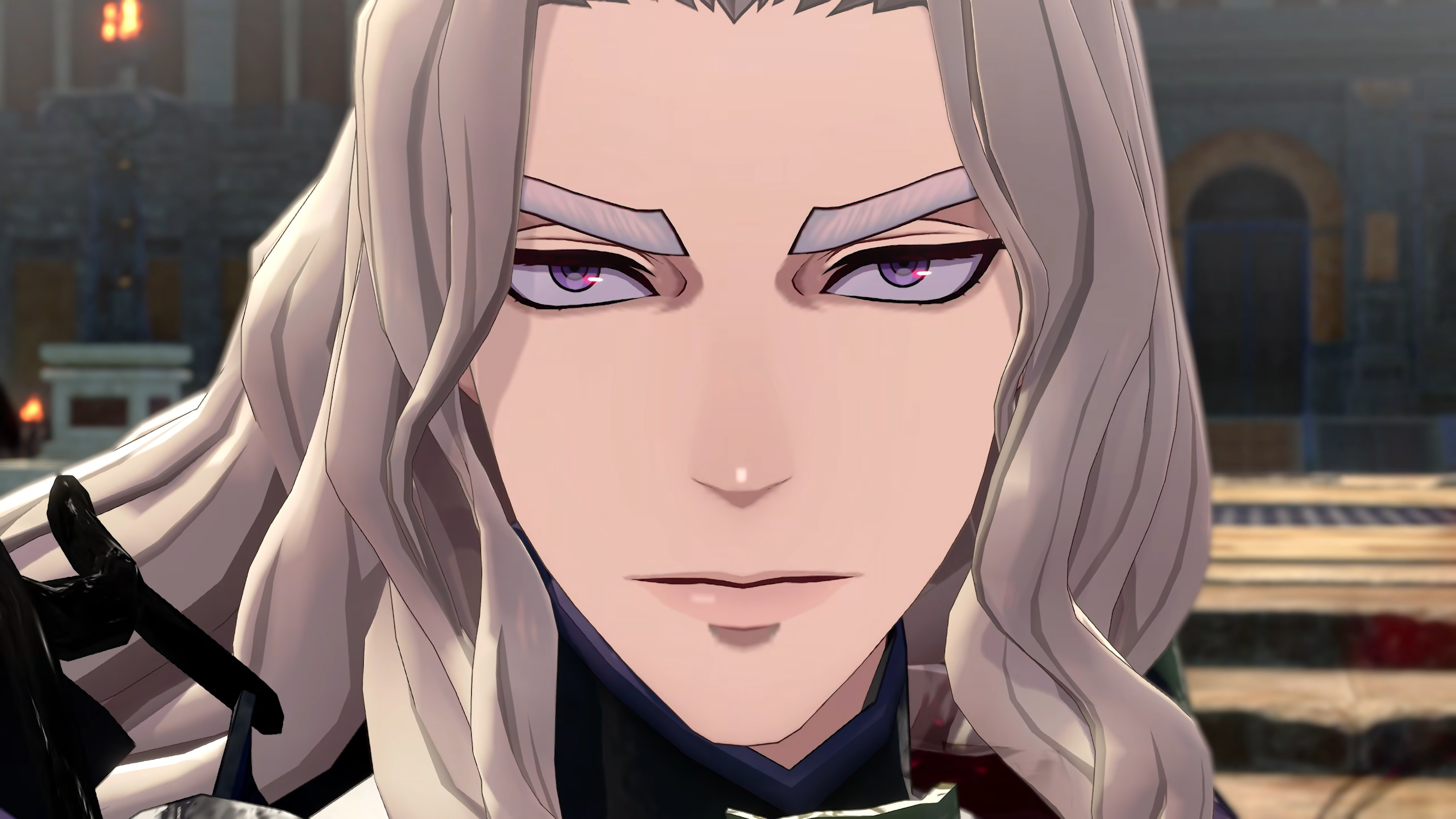
I will say that if Intelligent Systems decided a character mattered, like the lords, the people in their canon inner circle, folks tied to factions like Anatolia, Orchel’s, and Talimun’s parties, and antagonists, then the team did a wonderful job of defining them as individuals, showing their personal growth and relationships develop, and highlighting how their journeys and campaigns affect Dagsion. The four main lords are all fantastic in their own ways, and the way they and their main parties seem to come together is encouraging. The other factions and their leaders, whose stories can come up in Paralogues, also feel like they add to the narrative and tone. (Talimun’s is my favorite, though I also like Orchel’s.) Seeing how elements and plot points from one route, like Leda’s, come up via other characters’ actions and decisions in someone’s like Dietrich’s are fascinating too.
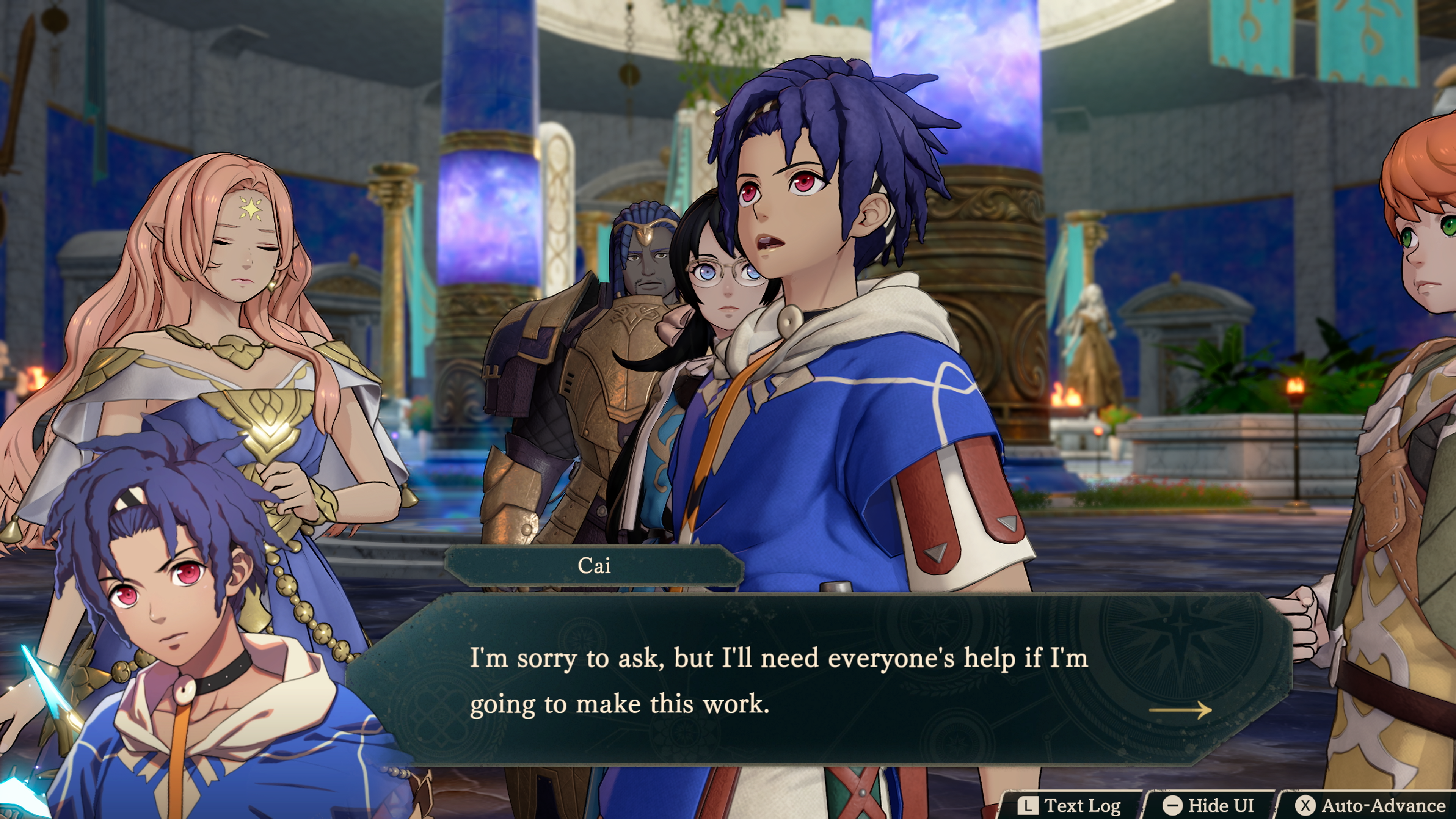
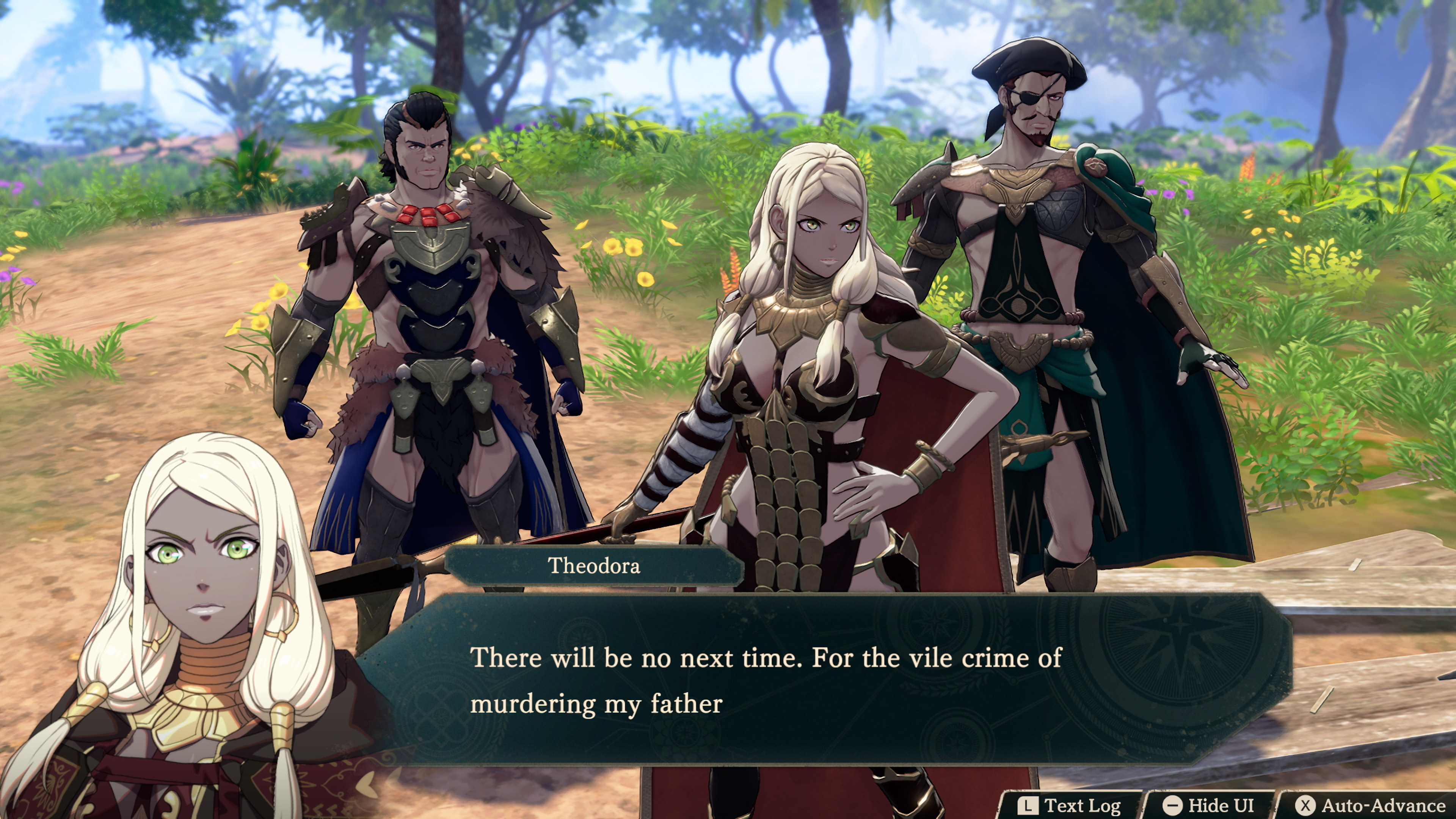
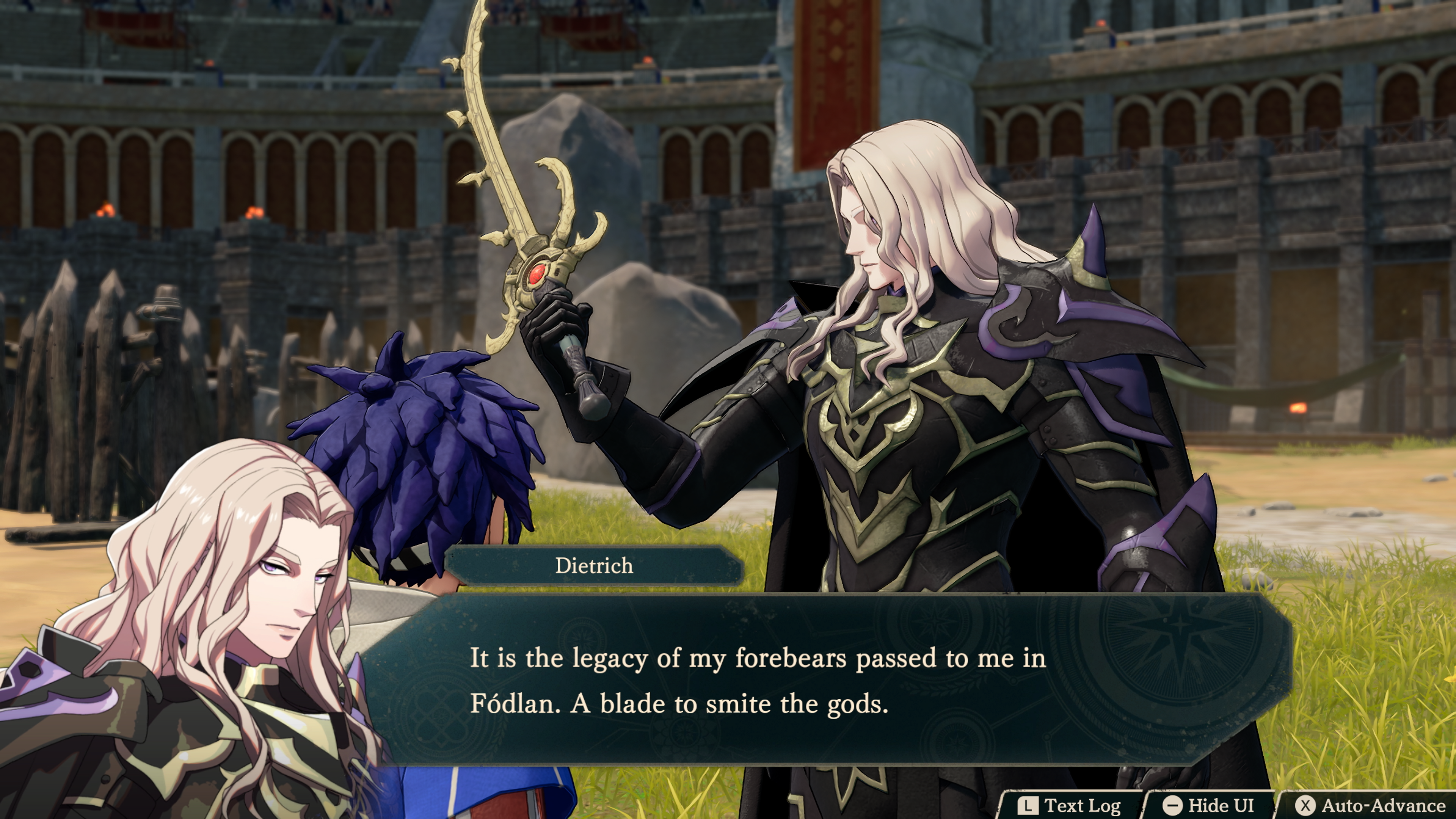
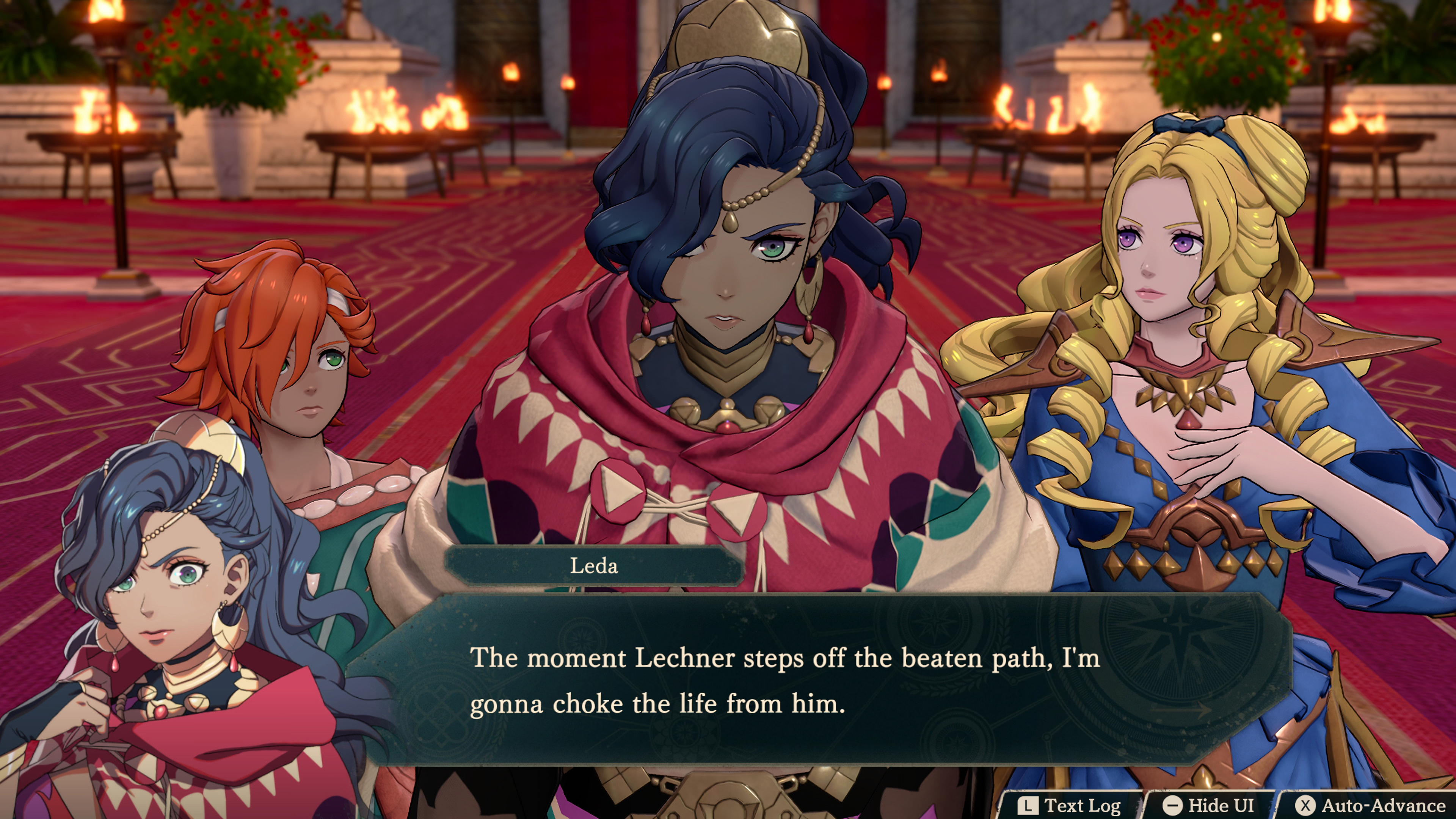
The decision to split the Fire Emblem: Fortune’s Weave into multiple routes in different parts is also fascinating. With the first two parts, routes are split into four with Cai, Dietrich, Leda, and Theodora each as the main characters. The first part segments are lengthy, multi-chapter affairs that involve training up immediate allies, recruiting more to assist, traversing the world map to take on side quests, face skirmish battles, head into dungeons with turn-based battles more akin to a JRPG, shop, and gather materials. That’s also punctuated by paralogues for certain other factions and major campaign encounters. A calendar and time-of-day system is in place here, which means you could temporarily miss an in-town event, side quest, or paralogue. (However, it is possible to replay chapters if that happens!) The second feels a bit more like an older, traditional Fire Emblem game such as the first GBA installment or Mystery of the Emblem, given you aren’t wandering around Dagsion and the world map or keeping track of calendar dates. Then the third portion is the culmination with Eshmel and every character you’ve kept alive for the “present” that’s now changed due to the way we handled the “past” in the first and second parts.
I will say that with that division does come a number of quality of life features like that option to replay or restart a chapter that make dealing with all those storylines easier to bear. Some Nintendo talked about already! These are things like the ability to return to the hub and jump between character storylines and the way character data merges between runs. You earn points for “achievements,” which you can put toward EXP boosts or cheaper fees in shops or when using the carriage in future playthroughs. Map data carries over, which makes traversing Dagda easier. There are times when you can skip over things, setting characters to engage in auto-activities while time passes. Fast travel is present too, both via carriages and temple portals for the world map and by just selecting locations from the Dagsion map. Also handy are the Base Map details for characters, which will show their recruit Support level, Renown level, and additional requirements, as well as if they are currently met so you can know if you need to teleport over to them. Once you get into the second part, QOL becomes even more obvious thanks to things like additional skipping options and capabilities to get additional allies up to the same level as folks you use more often to ensure they remain viable.
Which I especially appreciated since it let me focus more on the absolutely fantastic major maps and battles in Fire Emblem: Fortune’s Weave. While I did find myself a bit disappointed that some classes are locked behind milestones in characters’ first parts, which can mean you’re out of luck for Advanced flying units, the tactical options and approaches here are handled quite well. Outside of battle, you determine equipment like weapons, healing items, and learned Class Ability passives. You can also engage in class changes if conditions are met, and focused Arena Training to bolster certain areas. Before major encounters, an optional Foresight tip can be checked to see what the map would look like, get hints about unit types and equipment to use, and see a suggested level for your units. Before an actual fight, you can see the lay of the land, look at opposing units who will be present when the fight starts, swap around your units, and select who gets taken into that brawl. (Your lord is typically mandatory, and some guest or specific ally characters could be too.)
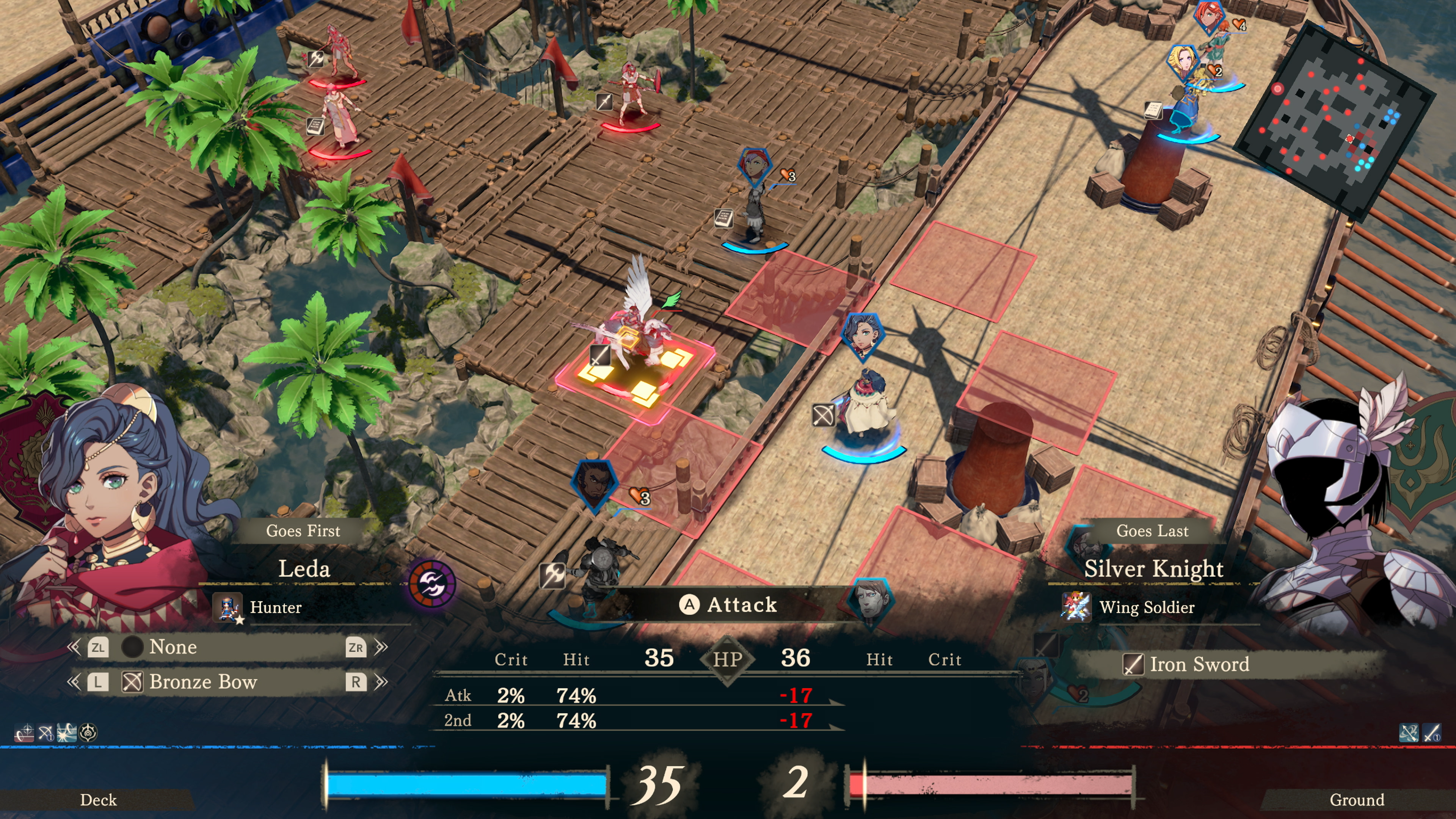
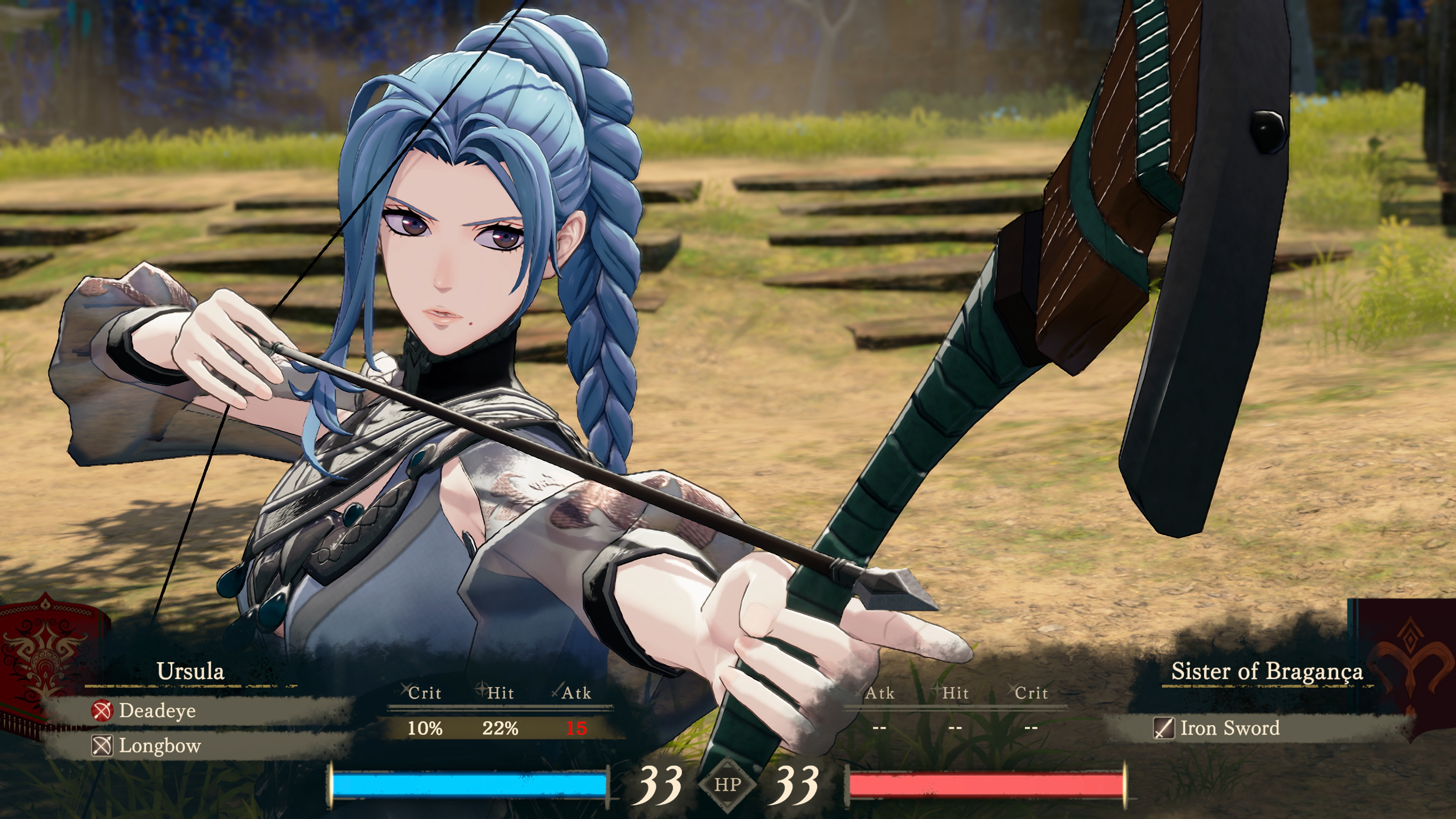
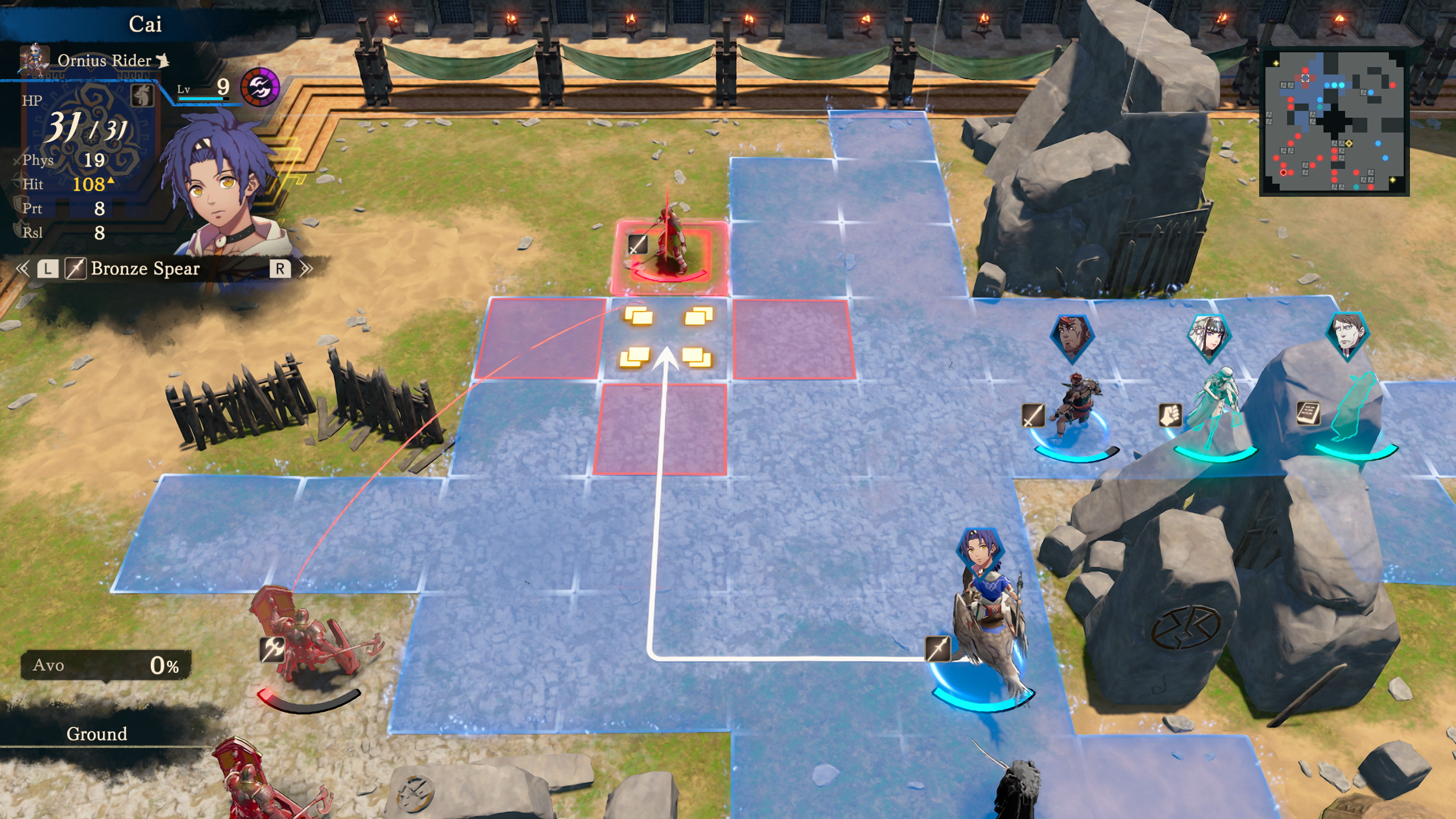
Once those encounters actually begin, they’ can be phenomenal. They’re traditional, grid-based strategy fights where you move your units on your turn, then enemy and uncontrolled guest units act. I referenced earlier that I found the Main Battle Fire Emblem: Fortune’s Weave maps to be as mechanically interesting and challenging as ones seen in games like the Conquest version of Fatesand some of the Engage encounters. While the random skirmishes you’ll run into can be downright boring and reuse the same handful of maps, these campaign quests are always well-designed from the outset. There are traps! We get situations where we’ll need to activate certain switches within the same turn to make something happen! Bosses might feature protections that are only lifted if you face certain minions first! You might need to really think about how you traverse an area or divide your army to get through certain spots! Antitoxins become an absolute necessity, as does keeping your lord character accessible so you can tap into Storage for things like Pure Water or additional weapons so you can use Combat Arts. (Combat Arts reduce durability, while standard attacks do not.) There are some incredible situations, including some “boss” fights that also involve working around certain opponents’ patterns to survive. It’s handled in a way that made me realize, “Oh, yes, I do need to recruit as many units as possible to be prepared for what could be thrown at me.” Because there will be maps where you need the healers who learned Physic or folks who are especially mobile.
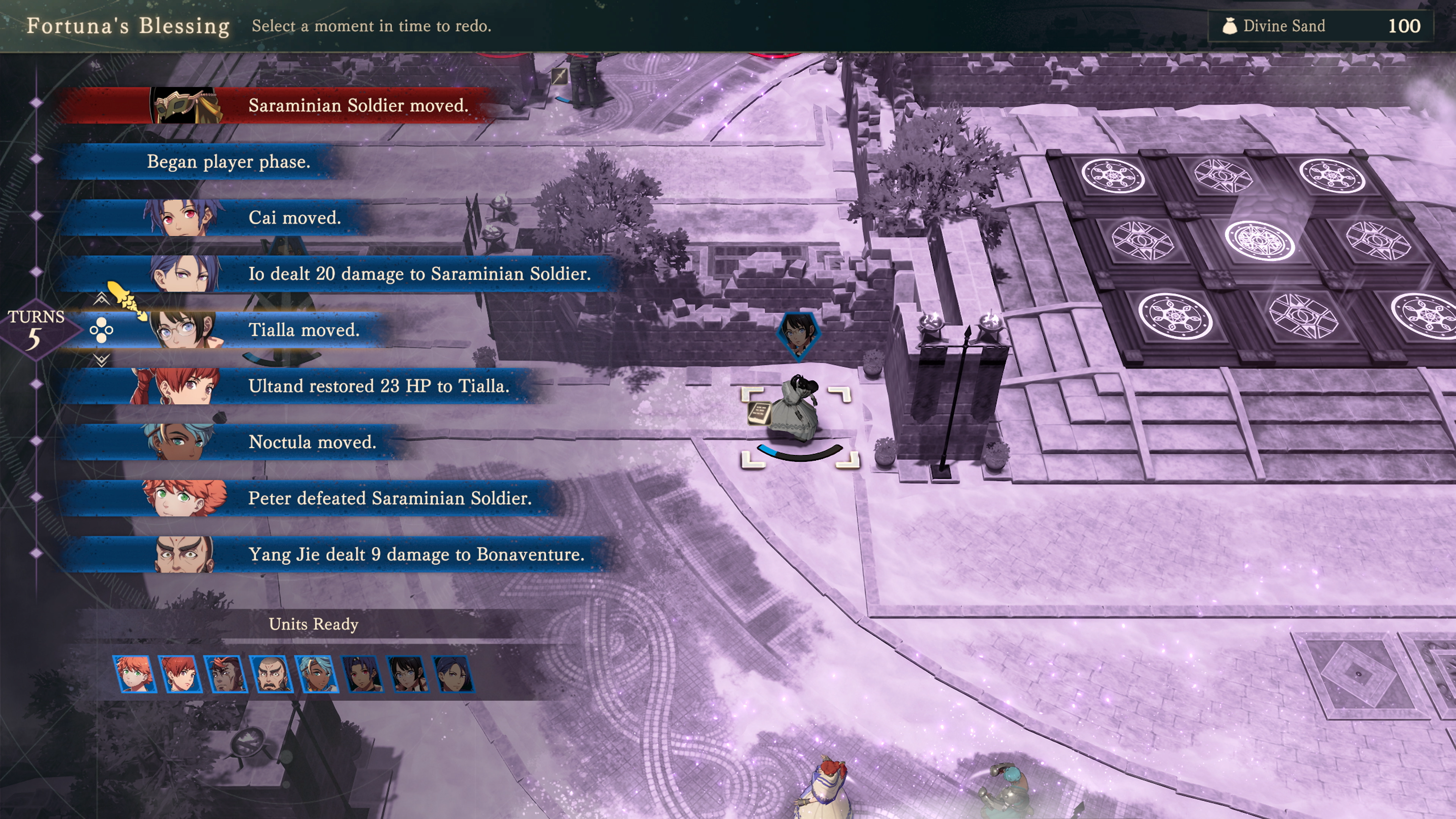
The difficulty also feels fantastic. As a disclosure, I did play on Normal and went with Casual for the purposes of the review due to the length of the game and time afforded me to get through all of Fire Emblem: Fortune’s Weave. Even so, it feels like a real challenge. The later encounters especially involve a lot of thought about when to attack and how. The Blessings from different gods, which can be increased by performing service in their temples, can come in quite handy. And there is the rewind mechanic via Fortuna’s ability. But there are some absolutely brutal baddies who need to be handled in certain ways to take them down with minimal compromises on the player’s part. Especially once you’re nearing the end of the first part. Which is exactly how a Fire Emblem should be.
There’s so much to do here, and the fact that unlocking certain classes, seeing paralogues, and recruiting all those folks might feel overwhelming at times. I did not play Fire Emblem: Fortune’s Weave in optimal conditions. I think the ideal situation would be to dedicate a full month or two to it and complete absolutely every route in the first part, your favorite character’s in the second, and then going ahead and skipping to part three with hopefully a full army. While nothing is missable due to the possibility of replaying, there also seem to be certain scenes that only show up if you’re in Dagsion at certain times. I found myself worrying that I did miss moments because my crew was out on the road. I know in one route, I definitely missed recruiting some people due to timing. It’s just… massive. I’d say it sometimes feels like a game and its sequel bundled up into one package like The Hundred Line: Last Defense Academy. Pacing yourself and taking time to fully enjoy it feels mandatory.
Fire Emblem: Fortune’s Weave is a gigantic undertaking on Intelligent Systems’ part, with incredible battles and a campaign that covers a significant portion of Dagda’s history during “interesting times.” There’s so much to it, and yet the developer made efforts to make it feel more manageable. If someone picks this up, they could spend at least full month playing and probably still not be “done.” I will forever lament the fact that the Support system doesn’t feel as rich as it did in Fire Emblem: Three Houses and past installments, but that’s my only real qualm with an otherwise excellent and extraordinary installment.
Fire Emblem: Fortune’s Weave will be available on the Switch 2 on September 17, 2026.
We may earn a commission if you purchase from certain links. Learn more here.